
do you already know what you are getting?

truth reflects reality
but what is reality
& what is then true?
knowledge implies truth
& who can claim to possess knowledge that
is purely true to reflect the real?
– Alex B. Hill (date written unknown)

Whether we all know it or not we are enslaved by a great system, a system that propagates discrimination based on race, division rooted in the ideas of economic class, military control bent on power, and a political will lacking the necessary passion to stand up for what can easily be perceived as right (as opposed to wrong). Right: equal rights for all people of the world, equal opportunity, fair wage and living standards, a smile from a stranger, an atypical helping hand when it may seem uncouth, truth spoken from the mouth of a fellow on the misdeeds of a few who would wield a vast power in the name of many, not denying people their basic needs. Wrong is spewed from the system in many ways, most are unrecognized and more unknown to the general populace than one might think.
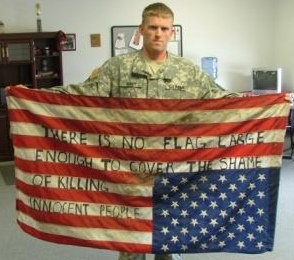
I just went to the movies tonight and what was most striking was not the movie itself, but the previews. I nearly forgot that a movie was to follow. There was a new film on beating the US Treasury’s money shredder, one on the fictional assassination of a US presidential double and the preceding systematic cover-up, a film decrying US torture in wartime, the government extending a soldiers’ contracts: Stop Loss. The current climate of things is more than ready for a movement away from destruction and into progress. When I say progress I am not talking about reform, there is no place for reform in the current system. There needs to be change, as in complete, no holds barred flip of the system. People need to be the pinnacle of the equation – people in the sense that every man, woman, and child needs to be ensured that the reality they live with is not also the systematic structure that keeps them in poverty, at war, without proper clothing, or without the ability to pursue a higher dream. Here in the USA, we have the right to Life, Liberty, and the Pursuit of Happiness – why must it only be a pursuit and not a right?

Before this day at the movies, I had another similar excursion. An exciting day to go see the new political thriller just in theaters. Lions for Lambs was one of the best political thriller for our time, now. During World War I, the Prussian troops used to call the English grunt workers, on the frontlines, Lions because of the ferocity with which they worked and fought, these men were Lions for Lambs. The Lambs were the politicians who sat in their plush offices and said to reporters, “we will do whatever it takes to win,” as their men die by the thousands, day by day pouring the fiery passions of their hearts into their work. These men were only to be forgotten by the Man, the politician on the pedestal, the system for which they had risked their very lives to preserve – a construct that had no place for them and never will.

This is the overtone of the most recent political thriller to come out of movie making land. Sadly much of the message was lost to the American public before they had even seen the movie. It has become very common that political thrillers are not appealing to the American public. They don’t like the harsh realities coming to life on the big screen, they don’t like the messages, they don’t like being called out in the theater where they came to enjoy a little bang-bang shoot’em up action. And so in the end Americans do not see these movies and political thrillers, which very well may be later called the greatest films of their times, fall in the box offices to popular whim. I recently read a very poor review of Lions for Lambs in which the student author claimed the film relied too much on political generalities and made the message too confusing. I would say that this was the prime example of the audience being lost to the message. As this student was the target and missed the mark completely.

Warning: Possible spoiler of Lions for Lambs

The film opens, in a hypothetical situation mirroring the present circumstances, with a ‘liberal’ journalist meeting with the new, young, up-and-coming republican political star. They are to spend an hours time getting the ‘truth’ to the American people. The Republican, played by Tom Cruise, tells of a new strategy in Afghanistan to win because “America needs a win.” The typical Republican rhetoric of today played out very well as a representation of the current political situation. As the Republican explains this plan in detail the story cuts to a team of Army Rangers beginning to initiate this new strategy to win in Afghanistan. They tear across the sky in their Chinook helicopter to land and take the high ground in the mountains. Suddenly they are hit by anti-aircraft fire, the gunner is hit and one of the soldiers falls out the back of the helicopter. Another soldier hesitates and then jumps after him. We then cut to a student visiting his political science professor, played by Robert Redford, to talk about how his class involvement and grades have fallen as well as his attendance.

The Republican dishes his empty rhetoric, soldiers fall in a new push in the war on terror, and a student discusses his grades. The professor asks the young man why he has stopped attending his class yet has continued to do so well on his exams. The student hesitates and replies that there are girls, and his frat house obligations, and college social stuff. The professor cries bullshit and asks ominously, “Why have you stopped caring?” when before the student used to spark debates and challenge ideas. The student responds that he is fed up. He is fed up with the shit that is the political system and he can no longer see the point. The professor begins to tell the story of two of his former students who used to give him as much hope as he had now in this fed up young man. They came from a tough area of LA where they grew up fighting just to live another day in the ghettos. Guns, drugs, gangs – when they made it to college on baseball scholarships they did not waste their time and jumped right into the political science course. As a class project they presented on how to solve America’s problems.

Their solution made a lot of sense. They noted how good we are with deployment abroad with US troops stationed across the world, but in America there is very little ‘deployment.’ They proposed that the Junior year of High School not involve the formal classroom setting at all. Juniors would be placed in either a Peace Corps type program, AmeriCorps program, or an ROTC program. They followed up this plan by noting the great and terrible disparities in America in literacy, access to opportunity, and potential in life. Drawing from their tough experiences as young people from the ghettos they saw this as an incredible way to get people involved. I have to admit that when they talked about this program in the film I could not help but think how amazing it would be if this were an actual program. Another student asks them, “You both talk a big game, but how serious are you?” They then place their military enrollment dispatches on the overhead. They are headed for the Army. They figured what good is it to talk and not be involved in something if you want to make change.

Cut back to Afghanistan. The soldier who fell out of the helicopter is unconscious and the other has a broken leg trapped in the snow. These soldiers are the two students that the professor talked so highly. Alone, trapped on the top of an enemy infested mountain the two former students, now soldiers, await their fate as the enemy closes in on their position. At the same time the Army is sending in rescue missions to help them, the Republican is getting the bad news that this new plan is failing, and the student meeting with his professor is wondering what he is supposed to do. Airstrikes to drive back the Taliban fighters fails and the two soldiers are shot dead just as help is on the way, the reporter refuses to write the politically charged article on the Afghanistan plan to boost the Republican party presidential hopeful, and the professor says to his student, “What if I give you a straight B, no plus no minus for the rest of the semester. If you don’t show up, don’t do your reading, and don’t turn anything in. A straight B.” The student doesn’t know what to say, but time is up and it is another person’s turn to have a meeting.

Back at his frat house the student is asked by another frat brother what the meeting was for. He responds that it was a meeting about class and grades. He is then asked, “do you already know what you are getting?” End of movie. The high schoolers behind me couldn’t believe it as many who have reviewed this film couldn’t. “A terrible end to a terrible movie,” said one. “I don’t even get it,” said another. That is the point! The film is much deeper than the usual hollywood hit. There is more to it than typical partisan political arguments and explosions with soldiers. This is a call for involvement, political action, doing something! We can no longer just sit by and watch things happen and complain about them later. Do we already know what we are getting? More importantly are you fine with that, are you satisfied? The end of the film noted how politicians bank on the apathy of the general public. They count on our ignorance of the situation. Great minds die in unnecessary combat, others get fed-up studying politics, and still others refuse to be manipulated by politics to give them good press – but for some reason that has become their job. All I can ask is “where are we going?”

All this has made me think and this post has been sitting in my draft box for a long while. “Why have I stopped caring?” Why should I care when everything is so arbitrary and falsely constructed in a terribly flawed system! Why should I waste my time and effort “playing the game” when all it does is mislead and fulfill my thirst with the nothingness. A higher education, while it is a great privilege, is wrought with discrepencies and lies. I needed the opportunities and intellectual challenges (outside of class), but in the end it will mean nothing if I do nothing. I hate the system and the system hates me. I will be judged as a failure by the system and doors will be closed. I am already judged as a failure – my grade point, my dislike of the institution, and my perhaps ‘radical’ and challenging ideas. I know that a degree can be seen as a way to be judged as less of a failure, but what is the point anymore? (Don’t worry, I am not a nihilist) I know that in many regards I have been very successful, but those are all discounted (no matter how great) by my performance in school, by my calls against the current system, by my lack of respect for those ensnared by the system. I am called a “naive” white boy ‘saving’ the African continent. I am called a “naive” radical – speaking that my professors are full of unthought (in the sense that they regurgitate ideas rooted in the terrible foundations of the system). I am called a failure lacking purpose and knowledge of how things work in reality, but it is a false, constructed reality actualized by the few. I have learned so much from my friends, personal quests for understanding, and engagements with student organizations in thoughtful discussions. I am here, at college, because of societal structure and expectations. I am here because this is what I am supposed to be doing.

Back again to Lions for Lambs. Do you already know what you are getting? Do you understand what you are already getting and are you satisfied? Is it enough to be able to say that I at least tried? For me that is not good enough. To be able to say I changed it, I destroyed it, I made it right is good enough. I am told that, “sometimes you have to play the game.” In no way, shape, or form will I play this game. I do not care to be recognized in this game. I will not don the jersey of this system to sit on the bench to watch the game from the sidelines. The system counts on our collective apathy, but that can easily be changed. Apathy is what fuels this game. An apathy that leads to a game of destruction, discrimination, and death. I already know what I will get if I continue to follow this system without thinking and acting for myself. I know the planned structural violence that plays out day to day – and I am not satisfied. Are you? What will you do?

—————-
Now playing: J-Live – Satisfied
via FoxyTunes

the continuous scramble for africa

From the so called great scramble to the new scramble, I believe that there never really is any difference or change in scrambling. The imperialist tendencies and actions towards Africa have been concentrated in one continuous scramble – for resources: land, people, minerals, diamonds, timber, markets, etc. A continuous scramble and a systematic exploitation and looting of the African continent. Globalization and the global political economy are generally not looked at through the African perspective. While I can hardly offer that perspective, I work to understand.

For a long while many people, non-Africans, Europeans and African alike have understood the systematic destruction of Africa. Quoted in an article in Alternatives: A book written by Walter Rodney in the 1970s was titled “how Europe underdeveloped Africa” and Karl Marx noted in his Critique of the Political Economy that the “hunt for black skins” signaled the dawn of capitalism. It seems the African continent may have been doomed from the birth of the capitalist dream.

The Scramble for Africa began long before the Berlin Conference of 1884-5, when the African cake was divided by European powers for land claims and resources (slave trade). The scramble, however, did not end after that conference. The European powers were not appeased with just staking claim to the land. Oppressive and brutal remained in control and increased their thirst for more, and more. The Alternatives article notes that there now exists NEPAD, the WTO, EU, AGOA, EPA, and I think you could place any international agreement that places the wants of those in power over the long exploited African people.

The article also notes the increase and spread of the Chinese influence in African markets seeking to gain access to fossil fuels and resources. There is now considerable critique into the effects and practices of the Chinese (I have been part of this). However, this makes the practices of the EU and the USA almost completely fall from the picture. Well the Chinese may be pursuing extremely detrimental practices in Africa they cannot be left as the scapegoat for why Africa is “under-developed,” exploited and robbed of resources to spur growth. The European powers and the USA need to be exposed and the ills of their actions need to be dissected and understood as well. These “historically-structurally disadvantaged societies” need leaders who will place the interests of their country-people above their own advancement. A lot needs to happen if the scramble is to end, but that requires a recognition to the problem and a plan to empower local communities. Resources do not have to be the downfall of a country. As long as the resources are used properly and agreements are in place so that the benefit reaches the people resource can be a positive. It is my opinion that African countries need to adopt a near protectionist policy in regards to socio-economic matters if the scramble and following exploit is to stop.

China is pouring money into Africa for “development” flooding markets and building infrastructure with money that will flow right back into China, the US is militarizing the continent at a frightening rate (nothing new) to “fight terrorism” and gain access to resources in their “triangle of interest,” Brazil, India, Russia, and countless other countries are positioning themselves to yet again eat from the African cake. This competition can work as a positive for Africa, but only as long as the minority of elites need to recognize the great need of their people.

rastafarian confusion

This summer while in Ghana, I befriended a group of Rastafarian drum makers and performers. The Rastafarians became the good friends and highlight of my study abroad group’s time in Ghana, but I remained skeptical. The day that I first met the Rastas was a day in the market. I am an avid (extreme amateur) hand drummer and was drawn to their drum stand in the National Market for Art and Culture in the capital of Accra. Well these Rastas became our good friends and guides around the city we were constantly warned by others to be wary because Rastas are known to steal your things and women. I remained wary as the talks of their beliefs did not match up with their actions. I began to wonder what exactly were the beliefs of a Rastafarian and why? Why did they always seem high with happiness and love? “One love” was their favorite phrase. They would always tell us that we were all brothers ans sisters, no matter the color of our skin because we bleed the same underneath and we had the same color pupils. While many told us to be wary others revered the Rastas for the skills that they shared and the knowledge they imparted. With the great rhetoric they spoke, there always seemed to be an underlying end goal.

Upon returning to Ghana I immediately jumped on the knowledge train that we call the internet to learn more about the Rastafarian movement. Ethiopian Emperor Haile Selassie I is considered God incarnate and also as the Messiah of the Holy Trinity (in the Bible), since he is the only black leader of an independent African country. Rastafari comes from the Ethiopian term “Ras” which means head or the equivalent of duke. The religion employs the spiritual use of cannabis and a number of afrocentric teachings, inspired by the works of Jamaican, Marcus Garvey well known for his “Back to Africa movement in the US, 1920s. The Rastafari movement gained popularity through reggae music and well known artist, Bob Marley (his wife still lives in Ghana). The “first Rasta,” Leonard Howell, built a commune that grew to over 5000 in Jamaica.

The teachings of Rastafari focus on love and respect for all living things. Born of an oppressed people, forced into slavery, Rastafari is seen as a response to the racist negation to black people. It gave cause for black people to have pride in themselves and their heritage. Stressing closeness to nature ganja, dreadlocks and ital foods are common characteristics of Rastas. Well there is a lot more to the belief systems of the Rastafari, one of my favorite teachings is the rejection of -isms because they have created so many schisms in modern society.

Back to my experience in Ghana – I saw some of these teachings espoused by the Rastas we met. However there was a gap in the actions and it seemed there was an undertone of making a profit off of the American students and getting close to the American ladies. But I cannot say that I have met anyone who has abided by the creed they profess in the lives they lead. No Christian, Muslim, Rastafarian, or any other follower of a doctrine (that I have met) has never swayed from their belief system. So well the Rastas in Ghana may have seemed to be shady individuals, they really taught me more than I could have imagined. From drumming and advice in Ghana, to my later pondering back in the US.

Index of blog post series on Ghana.

death by modernization

According to National Geographic, “Every 14 days a language dies. By the year 2100, over half of the more than 7,000 languages spoken on Earth — many of them never yet recorded — will likely disappear, taking with them a wealth of knowledge about history, culture, the natural environment, and how the human brain works.”

It has always been my opinion that language is free and language is fluid, but those two conditions cannot be met if a language dies. But why are languages dying? Both a difficult and nearly obvious answer exists. Earth is slowly developing into a single civilization. Traditional societies and languages are dying; disappearing and waves of rapid modernization aid in the erosion of tradition. The answer cannot be left at just that however, because there are many reasons, effects, and causes intertwined in the death of a language.

The most common ’cause of death’ comes from globalization – colonization and the growth capitalism. Dominant languages forced on populations by colonization or global capitalism leave the traditional language to wither in the dust. Children then learn the dominant language and miss the traditions and histories of their traditional people since language is a huge factor in history and tradition. As with the growth of global capitalism, the rate of death for smaller languages is increasing rapidly.

There are programs working to document and revitalize dying languages. This past year my swahili professor, Deo Ngonyani, traveled to northern Malawi to learn and document a disappearing language. He has previously documented two other languages, but these were not in danger of dying out. He was given a grant for a few years study of the language and culture of the traditional people associated with the language. There is also an organization called Living Tongues, which is associated with National Geographic Enduring Languages program. Living Tongues works with communities to document and preserve languages in danger of dying out. They enter communities and train the people to document their own language. Intellectual property rights of the community is the primary concern of Living Tongues. The communities grant Living Tongues permission to document and disseminate the research they gain from the endangered communities. Living Tongues has said that extinction of traditional and ancestral languages is one of the greatest socio-cultural threats of the 21st Century.

Dominant languages become dominant by way of oppressive structures. It is difficult to say that this would not have happened – that civilizations would have developed differently, but we cannot try to rewrite the past. With booming technology, traditional societies are becoming whitewashed at the expense of political and economic gain. In the course of this boom entire histories and cultures of people are effectively erased. Can you imagine being erased from the face of the earth?

dogmatic america

Disclaimer: This is a piece of writing that I did in my sophomore year of High School for a presentation to attend Close-Up in Washington D.C. I rediscovered it and thought how sadly it has remained relevant nearly four years later. It was also an interesting look at how I was reacting to the growing “war on terror.”

11 November 2004

On one hand we are told by some that Bush is pushing war and bent on abandoning the international system of rules and instructions built up by previous presidents. Others argue that Bush has drawn a necessary line in the sand between America and a dangerous coalition of stateless terrorists and rogue nations.

As a presidential candidate Bush stressed the need for America to act like a humble nation in foreign policy and substitute narrow national interests. But, President Bush has led the nation in a less than humble manner. Since September 11th, the Bush Administration has aggressively deployed U.S. troops around the globe or has promised military aid to dozens of countries. Bush seems to have taken a very unilateral approach to global arms-control – all in the name of a “war on terrorism “. In these few months In these few months Bush has pledged or provided military aid and training to over two dozen countries, including Colombia, India, Pakistan, and Afghanistan in which the U.S. hope to establish a national army.

Some say it is because the Democrats had eight years to deal with challenges posed by Al-Qaeda and the proliferation of weapons of mass destruction and largely failed.

But, the real debate on Bush’s foreign policy is not discrediting Democrats or between divided political parties. Some argue that America is gaining overwhelming power and we strike out on our own with no allies. Unilateralism is putting the interests of the U.S. first in foreign affairs. This steps on the toes of our enemies as well as our allies. This policy produces anti-American sentiment which most recently has occurred in the Middle East.

Unilateralism and bypassing the UN are not new, however, there is a dramatically accelerated military build-up in response to September 11th, almost hidden from detection there are now U.S. armed forces all over the globe.

All these events go along well with a Pentagon document that was leaked. It plans for the world order enforced by the U.S. preventing the emergence of another rival world power. American military intervention will be seen as a constant and although the U.S. cannot become the world’s policeman it will assume selective responsibility for threats to American interests and that of its allies.

What is all this leading to? We know the Bush Administration can wage war well – what we don’t know is whether it can produce peace as well. Can Bush translate power into influence?

Israelis and Palestinians kill each other without American interference. North Korea marches on towards nuclear weapons as we argue who will negotiate with them. The conflict in Kosovo of ethnic cleansing is still not resolved. In the African country of Sudan hundreds of thousands are being murdered by their own government. Where is American intervention now? Today many countries fear American power more than anything. Our failure in international public diplomacy most likely is the cause for failure to build a UN supported coalition against Saddam Hussein. There is a rising violence in Iraq and it seems we are torn between being the sole player in establishing a democracy and letting outsider’s impact the politics of the small yet diverse country of Iraq.

The Bush Administration needs to apply the same energy and focus to peace making as it has, since September 11th, to war making. The transition may not be easy, but the greater risk our country now faces is the world population will become convinced that the U.S. is the enemy of positive progress and change. We need to show the people of our interdependent globe that America is not a risk.

We must demonstrate that we can be as unified and directed in the pursuit of peace as we have proven in war.

music to your ears: this year with hiv/aids

This year, 2007, there is some good news about the HIV/AIDS pandemic. The percentage of people living with AIDS has leveled off and the number of new cases has fallen. This is attributed to the prevention programs. However, risk remains high in sub-Saharan Africa. Eight sub-Saharan African countries represent one-third of all new cases and total deaths around the globe. This year there are still 33.2 million people living with AIDS, 2.5 million newly infected, and 2.1 million deaths. (Read the 2007 AIDS epidemic update) As with all good reports, “much good has been done, but more is needed.” Events are happening all across the continent with dedication and promises. The theme of this year’s World AIDS Day is leadership and “Stop AIDS, Keep the Promise!” While there is a lot of talk (read the statements) already this year about what will be done about the HIV/AIDS epidemic.

It is not very often that the news of HIV/AIDS is music to the ears, but this may be one case. In Uganda, where HIV/AIDS was first discovered in the continent in 1981, there is a rising musical movement to increase education and promote prevention. Beginning to make her mark as a rising vocalist in the Ugandan pop music scene, Sylvia Nakibuule chose to go on television to declare her status as HIV positive. Sylvia gained became well known through her work with The AIDS Support Organization (TASO), which regularly puts on performances to educate people about the dangers of HIV/AIDS and how to prevent spreading the disease. Sylvia tells the youth, “I never wanted this to happen to me, so I don’t want it to happen to you. The message I want to give the youth is let us do our best to have a virus-free young generation. Be careful in the way you handle yourself.”

In Malawi, the BBC has been following the village of Njoho and their responses to the AIDS epidemic. Six months earlier one of the village elders had little hope for the people in the village to change their behavior to combat the effects. Now there is only hope. The stigma has left the village; Orphaned children are given help, there are monthly talks and support groups for people dealing with the burden of disease, and there are training programs on education and prevention. The village is fighting back. However, the recent efforts have been hindered by a lack of adequate medical facilities. The local hospital is not equipped to give HIV testing or to distribute anti-retrovirals. Patients with AIDS-related disease are instead sent to a district hospital 10 km away and most villagers cannot afford the bus fare. Yet again the lack of basic healthcare infrastructure adds another complication to an issue already too complex. But there is always hope. Njoho will be starting a clinic next year for voluntary counseling and testing, mother to child transmission prevention, and will provide bus fare for those who need anti-retrovirals.

how do you unite a continent?

A term first coined by the African activist, Marcus Garvey, the United States of Africa is far from a new idea. As a staunch Pan-Africanist, Ghana’s first president, Kwame Nkrumah, was a strong supporter of African unity. Now the push for “One Africa” is being lead by Liyba’s coup empowered leader, Muammar Gaddafi. In July of 2007 the African Union (AU) met to discuss the idea of one union government for the continent. Gaddafi traveled by land to drum up the support of the people on his way to the summit in Ghana. Countries such as Ghana and Senegal, symbols of democracy and stability, are in support of the idea. Among the supporters is another African leader with a reputation, President Mugabe of Zimbabwe.

In 2002 the Organization for African Unity (OAU) was rebranded as the AU, it has continued to struggle to be more than a place of all talk and no action. Most recently its inability to persuade any country other than Uganda to send troops into Mogadishu to patrol the streets and the lack of pressure placed on Sudan to end the Darfur crisis have weakened its credibility. The lavish sums spent by the rotating hosts of the twice-yearly summits have also done little to make the organization feel close to the 850 million ordinary Africans it is supposed to represent. Many leaders want to see African unity grow regionally before it is tackled as an umbrella political entity for the continent.

Gaddafi has been promoting the idea as the only way that the continent can deal with extreme poverty and a variety of other problems including the challenges of globalization. Supporters look to the creation of the European Union (EU). It took many years for the EU to form. If a United States of Africa is to be successful the continent will need key countries that are politically and economically strong with regional economic and infrastructure-building projects in place. The EU is a union of relatively wealthy and stable countries, as opposed to Africa where it is a continent of the poorest and least stable countries making the task seem to be much more daunting. However, many see signs of great hope with the increase in freedoms: expression, movement across the continent, elections, and the growth of democracy.

This coming March I will be Chairing a simulation committee on the African Union and the crises they face. From the economic crisis in Zimbabwe, to the on-going conflict in the DRC, child soldiers in Uganda, building health infrastructures, to the new US military presence through AFRICOM. In my opinion the United States of Africa will not work. In my limited travels of the continent I have seen so much. Africa is a land full of so much culture, so many peoples with so many varying l languages and traditions. In my six weeks studying in Ghana I traveled south, east, west, and central. Each time I embarked on those limited travels I was told that I would experience something that I had never yet seen in Ghana – and it was true. Even the small country of Ghana had so many differences. How can an entire continent be unified under one government? I would venture to say that Africa is far less homogeneous – in cultural, geography, religion, and politics – than either the USA or Europe. Nkrumah, Appiah, the Rastafarians, Pan-Africanists, and even the West would like to see Africa as one united entity. This idea could not be more rooted in imperialist thought. To quote John Ryle, “The very word Africa—that sonorous trisyllable—seems to invite grandiloquence.”