a small bite can topple a giant; malaria


This first story takes me back six years when I first became involved in basic healthcare activism for Africa. This story comes from my mother’s first trip to Uganda in 2001. My family became very good friends with Fr. Joseph from Uganda in the summer of 2000. He dealt with many medical issues in his traveling from village to village fulfilling his priestly duties, but he did not have any medical background. He asked my mother, who is a registered nurse, medical questions when he was here and sometimes called from Uganda to ask the best medical procedure or prognosis. She had found it very difficult since we had such a limited knowledge of what conditions were like in Uganda. So, that following summer my mother made the journey across the ocean to see the medical situation first hand. While she was there the realities were painfully obvious. Fr. Joseph owned a donated Toyota pick-up truck and while my mom was there she traveled around with him on his day to day work. An important note to make is that the pick-up truck doubled as the area ambulance. On one particular day, at a village stop to give mass, a pregnant mother needed transportation to the hospital because there were some complications. The nearest health clinic was seven hours away on the red, dusty, hole ridden ‘roads’. I can only imagine the ride in the back of a pick-up truck, dust thrown about, bouncing along so that a child may have a better chance. En route the pregnant mother went into labor. Still hours from the hospital the mother gave birth to a healthy baby girl and then died. They decided to name the baby after my mother – Baby Elizabeth. A family from the village adopted baby Elizabeth and she seemed to have a good chance in the world. Later the next year we were told that baby Eilzabeth had died. She had contracted malaria and since she lived in such a remote village, she and her family had no access to the $1- $2 medication that could have saved her life. If the access had been there baby Elizabeth might have lived to her fifth birthday, a rare occurance in many African communities due to poverty and disease.

Malaria is a parasite that is carried from human to human by mosquito. Malaria is a very preventable disease, yet kills over a million people each year. Over 90% of malaria deaths occuring in Africa making it Africa’s leading cause of death for children under five. Just recently President George W. Bush has said eight more African countries have joined a $1.2 billion US program to fight malaria. The five-year program works to provide funds to limit malaria’s spread by using insecticides and anti-mosquito bed nets, and also to provide drugs to people already infected. The renewed enthusism for the program has brought the World Bank and billionaire philanthropist, Bill Gates on board. Also on the scene are recent scientific advances, such as progress towards a vaccine, which prove to offer great hope to defeating one of the world’s great killers. A new treatment developed by British scientists collaborating with Kenyan experts is based on a technique for fluid replacement for children ill with malaria. The problem is that intensive care methods, only available at pediatric units in developed countries, is needed to treat infected children.

It is estimated that through partnerships working in Uganda, Tanzania, and Angola – US taxpayers already have helped approximately 6 million people to treat and prevent malaria. There are great hopes for the future prevention and defeat of malaria, but it requires the continued support of people in the developed world. US taxpayers need to push the Bush administration and future adminstrations to remain dedicated to the mission of saving lives affected by preventable disease. President Bush also announced at the Washington Summit on Malaria that the US Volunteers for Prosperity program will be expanded to recruit skilled US volunteers, doctors, and nurses to travel to at-risk countries to train local health care workers. The Gates Foundation has also expanded the number of projects it funds to research new malaria treatments. Likewise, there is a large private sector effort, such as, Nothing But Nets and the Acumen Fund, among others. Check out the blog of an Acumen Fellow working with a mosquito net facotry in Tanzania. There are so many opportunites to donate, to get involved, to volunteer, and to save a life. Check out some of the links posted and make a difference today!
know the stories, know the issues

Along with knowing that there is a problem comes the equally important realization that something needs to be done. Along with understanding that YOU are the person to do something comes the actualization of what to do and how to do it. Along with that actualization comes the needs to know the facts, a need to know the stories and faces behind the issues.

Many people become overwhelmed by the multitude of problems and the sheer magnitude of the issues. But we all need to stop and look beyond the numbers and visit the places where the faces behind the numbers live. We need to meet the statistics face to face. Do not be overwhelmed. Here is a great story that my mom once told me. The story has many variations, but I will tell it as it was told to me:

On a beautiful evening with an incredible sunset and a brisk breeze coming from the ocean, an old man is walking along the beach. As he enjoys his walk along the seaside he comes across a little boy quickly and almost frantically running back and forth from beach to the water. The old man notices that each time he runs back and forth, the little boy picks up a sea star and flings it back into the ocean. The shore is littered with sea stars caught on the sand after the high tide has gone out. He stops and says, ” Little boy how can you possibly hope to save all those sea stars from dying? There is no way that you can help them all.” The little boy looks up at the old man, bends down, grabs another sea star, flings it into the ocean and says, “it mattered to that one.”

Do not be overwhelmed. No matter what you do, as long as you have influenced one life, then you have made a difference. There is a myriad of problems in the world, but we cannot be discouraged by them because we must remember what is at the root of those problems. At the root is people like you and me. I have met those people, I have seen the faces of people who are no longer here and so I tell you – and still I tell you don’t be discouraged. We need to remember why we are working to solve the world’s problems. My memory flashes to the faces that are gone. For the next few weeks I will be posting stories about people affected by various issues on the African continent and how you can get involved.

beyond the tragedy, the hope of africa

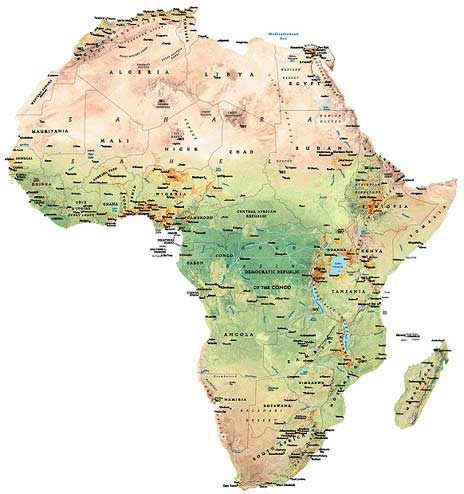
Africa is far from being without tragedy, but when you look past all the blaring news article headlines you will see that there are many reasons to be optimistic for the future of African and its people. Beyond the Western media’s fixation with the African tragedy there is so much hope and joy that gets pushed under the rug. Why? Is it because there is an othering and the problems and issues are over there? Is it because there is no hope on the ‘dark’ continent? Is it because the West would rather not admit that Africa is ‘developing’ and is really doing well? There are plenty of articles in the news that would deter even the staunchest optimist. Most of Africa lives in extreme and absolute poverty. Crises in Cote d’Ivoire, Sierra Leone, Zimbabwe, Uganda, and a few other countries are far from resolved. The conflict in the DRC has been inflamed by its recent free election results. Uganda is moving closer to a peaceful resolution of its conflict, but the rebels have backed out again. There is growing tension between Somalia and Ethiopia. And now Chadian rebels are storming across the country capturing major cities. The conflict in the western Darfur region of the Sudan is becoming further and further from resolution it seems. The African Union peacekeeping force’s mandate has been extended, but a UN force is still being rejected. All these armed conflicts are frightening, but then there is also many preventable diseases and basic essential needs that kill more people each year. HIV/AIDS is a growing problem and has yet to reach its peak in Africa.

The first great example of African hope is the amazing diversity of ideas and cultures. The people are shaping a better future for themselves and advancements are being made. African culture is thriving. Before we, who are not in Africa, can begin to understand how to assist Africa we have to first understand the intricate links between Africa’s people, culture, and wildlife. Africa’s middle class is growing, African entrepeneurs are becoming more prominent and have incredible ideas and solutions to problems that they know and live with.

On the continent the advances in medicine, technology, and science are taking hold. I remember when I was in Africa almost everyone had a cell phone and could easily stay connected. Advances in medicine are slow to be adopted mostly because of their costly nature, but there are growing efforts to provide services. We all need to remember that Africans are not just vulnerable people, but also solvers of problems. They may live in dire situations, but they still have the capacity to run a more effective program that pinpoints the real issue, which many times Western donors miss. The greatest innovation that I have seen developed so far has been the PlayPump. Discovered and designed by a man visiting South Africa. The pumps are set up to provide children a way to release their energy on a roundabout and also pump clean water for their community. There is a wealth of children’s energy, but a lack of means to use that energy. The water pumped through play is then stored in a 600 gallon container with billboards promoting HIV/AIDS education and other healthy messages. These billboards assist in paying for upkeep and maintenance of the pump. No worries children are not forced to play or pump, they just enjoy playing and that helps their community to have clean water. Water-related diseases are the leading cause of death in Africa and the ‘developing’ world. It is estimated that two out of every five Africans live without a clean water source. With the PlayPump children are able to stay in school instead of getting water. Women and children benefit from less injuries due to carrying heavy water containers over long distance. Women can focus more on their families and children with extra time not spent on water fetching. Some women have been able to start-up small businesses to provide an added income source and more food for their families.

Beyond the calls of corruption, falsified elections, and conflict between candidates, there is an increase in credible leaders in African countries. The first woman leader was elected last year. Leadership is growing as Africans step up to help one another and show their fellow citizens effective ways to improve life. There has also been a venture launched by an African millionaire to combat corruption within African governments. Mo Ibrahim, a Sudanese multi-millionaire, is offering $5 million to African heads of state who deliver security, health, and economic development to its people. The Mo Ibrahim Prize for Achievement in African Leadership was launched on the 28th of November this year. This is obviously a very controversial idea and many have stated that African leaders that are oppressing and killing their people will continue to do just that. Mo Ibrahim has said, “The day we do not need any aid will be the most wonderful day in my life.” The award will be given out as $200,000 for 10 years after the leader is out of office, so that the African leaders will have a life after office. Secretary General Annan has thanked Ibrahim for offering such a generous prize, but many still remain skeptical. Keep a watch on this one, time will tell if it will be successful.

Along with all the innovation and advancement there is also a great opportunity fro those of us in the ‘developed’ Western world. Doing your research, finding a sustainable project to assist, and becoming personally involved in working for Africa provides so many opportunities for personal development and happiness. I can tell you working in Africa is a joy and an amazing way to self-actualize your potential to change the world. Don’t wait, jump in – each year that you wait is a missed opportunity, each day that you do not challenge yourself is a wasted day, each minute is a lost life.

today in africa

As you may have heard Sudan has accepted a ‘hybrid’ UN peacekeeping force to help in the conflict torn Darfur region. Secretary General of the UN, Kofi Annan, is awaiting a letter from Sudan and his top aide is warning of an ‘abyss’ of suffering if something doesn’t happen soon. Currently there is a mini-summit of African leaders happening in Libya to discuss Darfur. Also in the Eastern/ Central region, Uganda has taken great steps closer to peace. More is needed to make this peace successful. The Lord’s Resistance Army (LRA) has signed an agreement with the Ugandan Government to cease hostilities and release non-combatants, but more is needed to encourage regular face to face talks because the rebel leadership is still cautious. In the Democratic Republic of the Congo (DRC) the election has been finished and Joseph Kabila, son of Laurent Kabila, has been declared winner with a majority of votes coming from the Eastern region of the DRC. The opposition party has not taken the lose very well and there has been rioting and clashes with police in the DRC capitol of Kinshasa. Kabila has set an ultimatum for when UN peacekeeping forces can remove the rival soldiers from Kinshasa. The droughts in the Horn of Africa (namely Somalia, Ethiopia) and Kenya have ended, but now there has been flooding. It is estimated over 100 have died in the flooding. In France, arrest warrants were issued for nine aides to Rwandan President Kagame. They are accused of involvement in shooting down the plane of the former Rwandan president, one of the events leading to the genocide. Illegal immigration into Europe is worrying many EU leaders as the issue grows with the numbers of Africans seeking a better life in Europe. The HIV/ AIDS epidemic “is getting worse” and African baby deaths are “preventable.”

I know all this news may be a lot to take all at once, but this is what some people live with everyday, every single day of their lives is full of turmoil and strife. However, it is imperative to note that even as crisises grow and troubles spark – Africans love life and enjoying sharing their love with everyone. I can tell you first hand from my experience in Africa never had I seen such poverty and pain, never had I seen such joy and happiness. This news may seem all ‘bad’ news, but what I see is progress. African organizations are working to build stronger relationships, peace is closer than ever in many areas, drought is ending, and people are being held accountable for terrible pasts. I encourage you all to read the news from around the world from many sources and develop a global perspective.

africa here i come

Exciting news! This summer I will be traveling back to Africa! I am so excited I can hardly wait for the regular school year to finish! I will begin by participating in a study abroad program in Ghana studying the disparities in healthcare along with Ghanaian culture.

I then plan to travel back to Uganda. I was offered a chance to help a graduate student conduct research in an area of southern Uganda. I also hope to visit the health center that S.C.O.U.T. B.A.N.A.N.A. has funded for the past 5 years and see how things are unfolding there. I would really like to possibly make it to Gulu to see how the Invisible Children programs are being run, but I am not sure yet if that is possible.

My friends then mentioned that they would like to volunteer at an AIDS assistance program in Tanzania, so maybe I will cover 3 African countries in one summer! It will be very exciting to use my french and swahili in a country where the language is spoken by the population.

I really can’t wait as you may be able to tell. 4 years is a long time to be away from the land you have fallen in love with, from the people who have given you so much direction in life. I have a lot to catch up in from 4 years past. The toughest issue to deal with when working to help people in communities across the ocean is the great distance and displacement from the actual issue. Many people ask me how will I know that people’s lives are really being affected and changed? When will I be able to see the results of my donation? So many people want to see the direct result of their efforts and I can’t blame them. I have faith and I trust the organizations that S.C.O.U.T. B.A.N.A.N.A. supports, but I can definitely hear the request of the people who help. For the past 4 years I have been working so hard for communities so far away and I can’t wait to see the real impact that my efforts and the efforts of other dedicated individuals has had on the communities that I will visit this summer. I keep telling myself not to rush it because everything comes in due time and at its given time. For now I’ll keep learning about Africa in class and know from previous experience that there is no way any classroom or grade will even compare to an on the ground African experience.

aid bureaucracy?

Recently I read an article on the African BBC News about the effectiveness of development aid. Experts are arguing that it is trade not aid that brings people out of poverty. With the time ticking down until 2015 when poverty is supposed to be halved, the debate is more than necessary. Some want to argue that more aid is not needed, but I would say these people are more interested in using their excess money for self-interest than to use it to help others. Trade and not aid? Trade is dominated by wealthy countries and the corporations within those countries, aid is also dominated by the wealthy countries.

A book released by an NYU economics professor, William Easterly, calls into question the role of international aid bureaucrats. Easterly writes that there are ‘searchers’ and ‘planners.’ ‘Searchers being the people who struggle and strive to make a living through the market and ‘planners’ being the army of aid bureaucrats such as the International Monetary Fund (IMF), UNICEF, the World Health Organization *WHO), and various development banks.

These planners attempt to create ‘grandiose’ plans and try to do too much, which in the end leads to doing nothing. Easterly says that aid agencies should act more like private companies to satisfy their customers. These customers being the world’s poor. If aid agencies think of the those they help as customers instead of human beings in desperate need then I believe we are in trouble. Calling the world’s poor customers is taking away the basic human emotion and essential element of compassion. I feel that the real problem is bureaucracy. These large aid agencies are all in the business of setting regulations and standards which do more harm than good for the world’s poor and those most in need of the agencies help. However aid encompasses both large aid agencies and small non-governmental organizations (NGOs). Professor Easterly is less critical of the NGOs than he is of the aid bureaucracies. The key to aid development to to cut regulations and standards of large bureaucracies and governments. It has been proven to expand and foster dramatic economic growth. Isn’t there an old saying that less is more. Easterly says, “The best tonic for poverty is growth, and the growth has come where the government has de-controlled and allowed competition and enterprise to flourish.” I would also agree with Professor Easterly when he says that he would rather see rich countries give monetary aid to private NGOs and let them run effective programs than to see the rich countries give money to governments.

What is the underlying issue of aid? What is the real solution to the aid dilemma? I can’t say that I am an economics major or that I am an expert in the way of development for the world’s poor, but I can say that I have a fair understanding of how aid should be administered and where it should go. Through my experience I have found that small scale NGOs that work on the ground are key to creating growth and sustainable development of communities in poverty. Large aid bureaucracies are not concerned with people and are more concerned with presenting a false picture of real aid success when in reality people are not being helped. Those who are on the ground doing the hard work need to be funded properly instead of large aid agencies and governments because the small NGOs are the ones who will create the real and lasting change and will impact people in the communities that most need the help.

growing impact; china’s investment in africa, where is the US?

When you think about where your life is going and what you want to do and why you want to do it, do you ever consider the impact your decision will have on others and not just yourself? I am an strong idealist and I with the work that I do I can’t see defining myself as anything else. I dream of a world with universal access to the necessary healthcare that all people need. I dream of a world where co-existance and peace are a norm, I dream of a world where everyone, whether they know it or not, is connected by their actions and decisions. However, I not only dream, but I envision and believe that such a world is a possibility.

At any rate, if you have been reading the news lately you very well have noticed that there are peace talks in Uganda and they seem to have gone very well, since a peace accord was signed late last month. This accord will end two decades of violence and will hopefully lead to a rebuilding and return to positive advances. Peace is growing in the region, yet as it does the crisis and genocide in Sudan continues as reports of indiscriminate aerial bombings by Sudanese government planes was reported today. Reconciliation talks continue in Rwanda, presidential elections in Gambia, and the Liberian president is recognized for her peaceful efforts.

The stability of the continent is growing, but is the western model the best? Is capitalism and democracy the only right way to run a country? Only time will tell, and of growing concern is the role of China in African Affairs. My friend is currently studying in Egypt and has said that he has seen the growing Chinese presence in Egypt within the tourism industry. The growing impact of China in Africa is alarming not for the fact that China is the last remaining communist state, but what is alarming is the policy that China presented in January of this year (2006). Click the title of this post to view the full Policy.

China and Africa have had a long relationship of political support. As China and various African states gained independence the relationship grew and, as China writes, increase in bi-lateral trade and economic cooperation. China outlines a number of cooperations, however as with most documents, everything looks good on paper and it makes me wonder if this is the last sweep and takeover of Africa. China is in search of natural resources and the resource rich African continent is ripe for the picking. With China and Africa’s history and China’s policy to assist any form of government to develop (regardless of a particular government’s disregard for human rights or caring for its people). What I take from this policy is that China will assist African leaders to build their infrastructure in exchange for natural resources. Will China finally suck Africa dry and leave its people to rot with no chances for sustainable development? Will the US or other Western powers not also take on a stronger policy on Africa? Will our leaders continue their policy of turning a blind eye toward the African continent. The US has carried this policy well. With our military failures and the tyrant leaders we propped up all leading to disaster, I feel the US has an even greater responsibility to invest in the continent and assist in its positive development to support its people. I am worried that China will toss aside the African continent like an empty candy wrapper after devouring the delicious chocolate inside before the African people can even rebuild their lives. Again only time will tell, but this is my call to the US government to adopt a strong African Policy based on investment for sustainable development and cooperation, as China has declared to do, but we owe it to the people. I hope to travel back to Africa soon, will I need to know Chinese to get around? (Note: I have nothing against the Chinese language or people, but its government’s history makes me worry)

what’s in a language? . . . what’d you say?

Language is a beautiful thing. The exciting flow of espanol, the beauty of french, the hard sound of german, the elegance of italian, the omnipresence of english. . . but wait those are all European languages, what is so great about them? This is a question that crosses my mind when I think of my dreams to live and work in Africa. I need to know English (got that down) to communicate in former British colonies. For example the national language of Uganda is English, but there are over 50 local languages. I will need to know French, which I am currently taking, to communicate in most West African, former French colonies, and Portuguese and German for some areas. I can’t say that I am too thrilled by that except that I love to learn languages. This year at University I am taking my first year of French and my second year of Swahili.

I won’t even begin to delve into the extremely impactful consequences of colonization, but I will say that I hope if you plan to travel for an extended period in Africa that you learn an African language. Before I graduate and move on from my undergraduate studies I plan on knowing Swahili, Arabic, French, some Hausa and some Zulu. I am prepared to be able to immerse myself into the culture of the people who I will meet and to communicate with those people in their native tongue.

The other day in my French class, the student from Zambia was having trouble pronouncing the difficult french words where you don’t pronounce half the word and the teacher was giving her quite a hard time about it. It is my first year taking French as well and I can understand the difficulty, but our teacher seemed to be overly harsh. She is a native French-speaker and I assume quite picky about how her language is articulated. The first thing that flashed to mt mind was the colonization of Africa and the colonizers forcing their language on the native-African people. Zambia was not colonized by the French, but the image is no less disturbing. How can someone even come to think that they have the greater knowledge on how to live and work than another? How can one person believe that they have the claim to walk all over someone else because they are not from the same area or background? This I don’t know, but it happens still today. Don’t be that person. Learn a greeting in a new language today!

new world discovered

Somewhere out there, in the deep and expansive universe there lies a world. Circling the misty reaches of space and swirling in an almost unrecognizable fog. A world where there are vast deserts and jungles, mountains and volcanoes, long droughts and rainy seasons. A world of vibrant color and cloaking mystery. In this world there lives a certain type of creature; a being so distant and unknown we would not even recognize its existence. Most of our society would consider this creature’s living condition to be less than their own. Our society would shun such a creature, let’s call this creature povertarius developinus.

Povertarius lives in the so called ‘third’ world. The world that orbits around the cerebral matter in our skulls encircling the first world, somewhere near the trajectory of the second world. Povertarius is trapped in this world because the inhabitants of the first world keep povertarius in a perpetual course so as to hinder povertarius’ ability to develop, whether known or not. What those in the first world do not realize is that povertarius is not the only creature developing.

Ok, so crawl back out of fantasy world before we go too deep into that illustration. The fact of the matter is that there is no such thing as the ‘third’ world. It is an idea that has been put into our heads by western society because there are members of this world that do not live at the same ‘standard’. That term seems to denote a high standing or ability, but is almost near opposite. There is only one world and we are all a part of its rotating wonder. The majority of the peoples on the continent of Africa are labeled as living in this ‘third’ world. Even as they develop and build they remain in the ‘developing’ state. As the President of Zambia, Mr. Mwanawasa said, “It is not easy to achieve everything at once like they are telling you. Even developed countries are still developing.” In the last five years, his administration worked hard to stabilise the economy and now time had come to improve the living standards of the people.

African countries may be in the process of developing, but so are we, the people in western countries. We are developing the way we see the world and how we react or act to the different situations that various people face. We are developing our ability to care and show compassion, the most basic human action, to those who need our help. We need to start developing a process to assist those who most need our help. We need to develop our government’s actions to fit the size of its big words and statements. The world’s people need to recognize that we are not separated by very much anymore, except maybe our prejudices and false perceptions. We are not so distant as to claim we live in different worlds any longer. The distance is only in our minds. Welcome to the world. This is your formal welcome, we’d love you to join us.

(I guess I really don’t have the authority to welcome you all to the world, but it sounded good in writing. I hope the collective peoples of the world welcome you with open arms, open eyes, open minds, and open hearts.)