
what apartheid has done with affordable transportation

A week of riots and clashes sparked in the capital as the government attempted to raise fuel prices by 50%. Mozambique is often unheard of in international news, but a week of violent riots in Maputo leaving 100 injured and four dead were enough to bring the world’s poorest country to the headlines. The fuel price jump was proposed as a response to the 14% rise in diesel fuel costs. Food prices have also experienced an increase due to the rise in fuel costs. The reason that riots erupted was not only because of rising fuel costs, but mainly because of the low wages that people in Mozambique make. The more interesting question may be why is Mozambique so poor and why would the government seek a 50% increase in price to meet the demand?
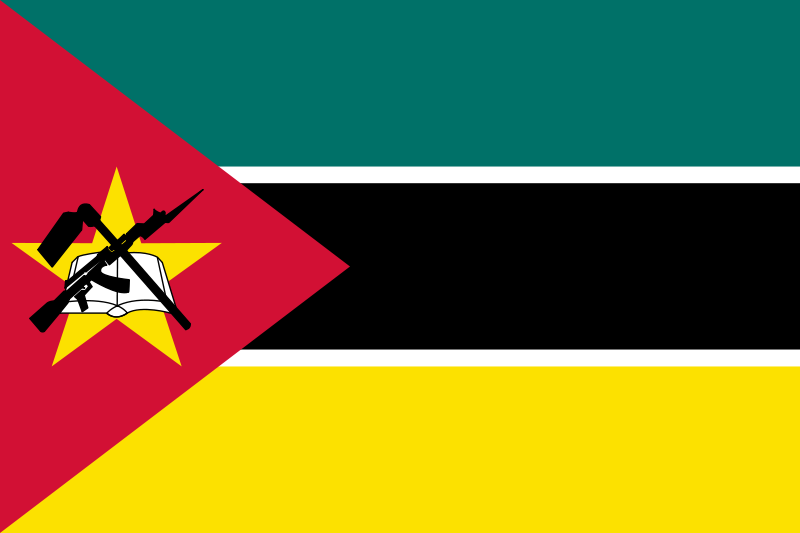
Mozambique is moderately large country on the East coast of Africa. With a history of Portuguese colonial rule, civil war, effects of apartheid, and a wide-reaching famine, Mozambique has had great difficulty in bringing its people out of desperate poverty. Mozambique gained independence in 1975, but was quickly pulled into war against white rule in Rhodesia and South Africa. The apartheid government of South Africa not only oppressed its own people, it engaged in near full-scale war with Angola and Mozambique as well as raiding and blockading Lesotho, Botswana, Zambia, Zimbabwe and Malawi. “This was a war against ordinary people, in which schools and health posts were primary targets and civilians were massacred on buses and trains. At least two million Mozambicans and Angolans died in the war South Africa waged against them; millions more had to flee their homes.” writes Action for Southern Africa and the World Development Movement in an Africa Action Report.

A generation of children never received education because schools were destroyed, mothers and children died because health services were devastated, and now the region cannot rebuild because they are asked to pay again for the injustices of the apartheid regime through debts. The war waged by the South African apartheid government made Mozambique one of the poorest countries in the world. Over one million people died between 1977 and 1992, the economy was destroyed along with the countryside, and the country was left with a legacy of landmines. The South African government supported a rebel group called RENAMO. RENAMO or Mozambican National Resistance was formed after independence as an anti-communist conservative political party. It fought against the FRELIMO (Mozambican Liberation Front) and the Zimbabwean government of Robert Mugabe which was overthrowing the white Rhodesian rule. RENAMO received support from South Africa as well as the Central Intelligence Organization of Rhodesia and the CIA of the United States. RENAMO was known for its widespread brutality and human rights abuses. It was instrumental in destroying the economy of Mozambique and ensuring that a southern African country under black rule could not be stable.

The US and South African backed RENAMO insurgency destroyed the basic infrastructure and industry of Mozambique. With this extreme loss of income Mozambique was forced to turn to the IMF and World Bank in order to create the infrastructure destroyed by apartheid. “Mozambique has been forced to delay universal primary education until 2010 because it has to repay the apartheid-caused debt.” notes the Africa Action Report. This debt cause by apartheid South Africa is easily deemed odious. Meaning the debts imposed were against the interests of the local populace, and as such should be written off as unlawful under international law.

On top of the apartheid debt and lack of infrastructure, in 2001 Mozambique experienced terrible flooding that has threatened nearly a quarter of the country with death by famine. Again in 2007 terrible flooding forced almost 60,000 people to be evacuated from the Zambezi River Valley. It was said to have been worse that the flooding in 2001. Roads were destroyed, bridges washed away, hundreds of homes disappeared under water – this on top of apartheid debt and a landmine scarred countryside. There is hope for Mozambique. Tourism is increasing and international investment is at a high, but at what cost? The government of Mozambique needs to ensure that it does not sell out its future in investment schemes that will rob indigenous peoples of their lands and leave the country empty of resources.

Mozambique has suffered and is still suffering from the white empowered South African apartheid government system backed by none other than the United States of America. If you would like to understand the current rioting in the capital of Maputo, you need only look back to apartheid to recognize why the 170th of 175 countries listed on the development index sits right next to the richest country in all of Africa.

more on politics in kenya

Relative calm has returned to Kenya, the Rift Valley saw nearly 1000 people killed and 170,000 flee to their ancestral homes. Business are reopened, roadblocks removed, and armed police patrol the streets. Those who have fled may not face the violence any longer, but life in the camps is made no less difficult by the recent rains. The taxi service has resume, but access to food and medications is a rising issue. The armed patrols that used to be known for ruthless brutality are now seen as protectors. Kisumu, which saw widespread rioting, is back to calm. Maseno University is still not open because it cannot ensure security to its students. The Nairobi slums have remained mostly calm as the negotiations with Kofi Annan are taking place, however the slums saw the worst of the post-election violence. There are some reports that say the slums are now divided by ethnic lines. Mombasa, contributing 15% of Kenya’s economy through tourism, saw no real trouble except for tourists canceling their vacations. While the calm has returned the hopes of the country seem to teeter on Annan’s ability to forge a coalition government. What cannot be forgotten as these talks begin is the political and colonial history of Kenya (read more here).

Kofi Annan arrived in Kenya to broker a deal to bring together the two opposing sides of most recent election. After selling out to large development interests with the Green Revolution in Africa (Gates, Rockefeller) my trust in Annan to work in the best interest of the Kenyan people is not very high. He is calling for a coalition government where both sides will work towards reform for free and fair elections. However, Annan has angered the Kibaki government side in the negotiations. He has made some statements that are said to have undermined the government’s position in the post-election political conflict. The negotiations are now said to be close to an end deal. Annan has said that the idea for a “broad based” government deal is near final stages. Both sides recognize the need for a political solution. However, I feel the call for a coalition or broad based government is not the answer. Along with others I see this as against new and free elections. What is most troubling is that both Kibaki’s government team and Odinga’s ODM party have tabled proposals for power sharing and Annan speaks as if this is the final deal.

Kibaki ran for President with the promise that the government would pay for tuition fees while parents cover boarding and uniform cost in order to provide free secondary education. With ethnic divides flaring up over recent election scandal, 1000 dead and 600,000 displaced, Kenyans now have access to free secondary education. This program now has minimal impact given the recent violence. The government faces an uphill battle to provide this free education access. Children cannot attend school amid conflict and crisis. In 2002 Kibaki’s government provided universal primary education. The Kenya National Union of Teachers has asked the government to first focus on providing for the safety and security of teachers and students as well as reconstructing schools destroyed by the recent violence.

As the violence has subsided, hundreds of thousands displaced, universal secondary education provided, on top of all of this President Bush has begun a tour of Africa. Bush has stated that he is in support of a power-sharing model. The same power-sharing model rejected by both political parties. Bush is set to highlight success in African countries by speaking on democratic reform, economic and military assistance, and combating HIV/AIDS. All of which are topics that Bush has no real place to talk. The notion of democracy in the US is wrought with hypocrisy, economic and military assistance are centered around gaining power and access to resources in Africa, and the Bush administration’s actions to combat HIV/AIDS have been minimal at best (with an abstinence only policy). Bush is using his tour of Liberia, Ghana, Benin, Rwanda and Tanzania to show a compassionate side of US foreign policy. I would argue that no such side exists in our current political system. Bush is supposedly sending the Secretary of State to Kenya to convey his message in support of power-sharing to solve political crisis. The US seems to not be the only international actor concerned with the situation in Kenya. What may be most important here is not to come to a solution that the international community might like to see, but rather a solution that works for the Kenyan people and creates a long-term solution to the political turmoil rooted in the colonial history of Kenya.

african slaves brought more than their bodies

Besides being the workhorses of a growing young nation, African slaves brought with them their music, art, culture, and food. All modern music can be traced back to roots in slavery and Africa: country, rock, jazz, and especially hip hop. The influences of African artistic expression and shared culture can easily be seen, but what is often looked over are the not so easily recognizable economic influences of African slaves.

At one point, when free labor was scarce and the trans-atlantic slave trade began to meet the labor demand, African slaves made up 40% of the American colonial population. Of the 6.5 million immigrants who crossed the Atlantic between 1492 and 1776, 5.5 million of them were African slaves. In our early history Africans filled the country that we now historically call white, anglo-saxon, and protestant. We talk about the start of our country as a haven for religious freedom, but where is that freedom represented in the 5.5 million enslaved African people? Now, we often talk about the foreign aid and development dollars that the US and other Western countries send to Africa, but what we often completely miss is how we gained that economic ability and power from the very people that we enslaved. Most every history book or other historical account will glide over the fact that while white Europeans were seeking new lives, the majority of the US population consisted of African slaves trapped in a structure that dictated their lives, and so the hypocrisy that is American began.

It is no mystery that African slaves brought many of their cultural traditions with them, but what many do not realize is the incredible impact those traditions have had and how those impacts continue today. The US used to grow and sell the top variety of rice, Carolina Gold. The first variety of rice ever grown in the US was brought over with African slaves. Owners of slave ships would take rice for the long journey to be able to deliver healthy slaves to the US .It is believed that this variety of rice has its origins in Africa. It is still unclear as to which part of Africa, but indicators are pointing towards somewhere in West Africa. This variety of rice was not only the first, but also one of the most lucrative crops in US history.

The National Geographic article states,

“The slaves used their rice-growing know-how to convert the swampy Carolina lowlands to thriving rice plantations replete with canals, dikes, and levies, which facilitated periodic flooding of the fields, McClung noted.”

Carolina Gold quickly became a top variety of rice because of its versatility and was a major export to Europe. The Carolina Gold variety of rice is just one example of how African slaves helped to build a US centered World Economy. From sugar, tobacco, cotton, and rice, African slaves laid the base for the production of agricultural commodities that would rule the colonial world and place the US at the top. Our economic power may come from the abundance of land in the US, natural resources, and our entrepreneurial spirit, but that spirit lay in the abilities of the African slaves, their agricultural knowledge and their utilization of the US land and other resources.

chinese exodus of influence

In the early days of African discovery soldiers, missionaries, and explorers led the way towards the attempted understanding of and preceding conquest of Africa. This push came from the world powers of the day in Western Europe – now we see a new wave of settlers moving in on the African continent. However, this exodus should not be a surprise. Lured by the increase in wealth, property, and life style, Chinese migrants are starting new lives in Africa. Approved by the Beijing government, the migrants are involved in agriculture reform, construction (which is a huge Chinese business in Africa), and trade.

The Chinese relationship with Africa is strong and this new development should not come as a surprise. “To build a unified front against imperialism,” was the Chinese goal in the 1950s. This involved supporting the growing African decolonization, nationalist movements, and revolutions. There is a strong history of economic ties between China and Africa. We can see this in Chinese blue and white porcelain found at African gravesites from the expeditions of Zheng He. Zheng He left the Cape of Good Hope with the gift of a giraffe. Trade relations with China only increased from there.

China began its first bilateral agreements in 1956 with Egypt, Algeria, Morocco, Sudan, and Guinea. China had been in agreement with the Soviet Union in supporting African revolutions, but China became more interested in providing financial and military support for nationalist movements. In the 1960s there were nineteen African countries with official ties to Beijing. The recent wave of nearly 750,000 Chinese migrants are not the first. In the 1960s Mao Zedong sent people to forge political ties with the continent. This newest wave or Chinese people is to strengthen the Chinese claims over raw materials and markets. The head of the China Export-Import Bank has said that he will support this migration with “investment, project development, and help with the sale of products.” Mr. Li says,”There’s no harm in allowing [Chinese] farmers to leave the country to become farm owners [in Africa],” he added.

Mission of the China Export-Import Bank:

The main mandate of the Bank is to implement the state policies in industry, foreign trade and economy and finance to provide policy financial support so as to promote the export of Chinese mechanical and electronic products and high- and new-tech products, to support Chinese companies with comparative advantages to “go global” for offshore construction contracts and overseas investment projects, to develop and strengthen relations with foreign countries, and to enhance Sino-foreign economic and technological cooperation and exchanges.

Beyond the trade relations that are now ever growing, the political ties have been and remain strong. During the 1960s China provided military and financial to nationalist movements as well as increasing development dollars – $100 million. They also sent 150,000 technicians to implement projects in agriculture, transport, and infrastructure development. China was involved in numerous independence movements. In the build-up to democracy in the Democratic Republic of the Congo, China was providing financial support, but it wasn’t enough. After Lumumba was assassinated by the efforts of the CIA, the Chinese demonstrated en masse. Millions gathered in Peking, 400,000 in Shanghai which solidified the Chinese influence and support for further revolutionary movements. A new regime was supported in Tanzania (1964) until Nyerere took power. Nyerere even adopted the Mao-style uniform. Chinese engineers built a railroad from Zambia to Dar es Salaam, Tanzania showing the Chinese economic might and proving that China was serious in Africa. China supported many nationalist and revolutionary movements (see map) with arms, money, medical supplies, scholarships, and guerrilla trainings and camps.

In 1971 China received 76 votes for a permanent UN Security Council seat. Of those votes 26 were from African countries and by the 1980s fourty-four African countries had established diplomatic ties with Beijing. These ties soon faded out, but have recently been rekindled in the 1990s and more recently in 2006. In the third China-Africa forum 48 African countries were represented. China now represents the leading Asian developing giant, above India, Singapore, and Thailand. China now rivals OECD countries or the developed West in providing foreign aid (rogue aid). China now outbids the World Bank and in 2006-2008 provided over $10 billion in loans to African countries.

China has regained its strong influence in African countries. Their power is unmatched and their recent wave of settlement unprecedented. This is a point of contention for both Western powers who may be afraid of the growing Chinese power and the people of African countries who should be wary of another exploiter. The Chinese may have a history of support, development, and influence, but that does not justify current action.

Featured entry on The Issue: China in Africa

kenya’s political history of turmoil

If it happens in Africa it must just be the primal instinct based in tribalism. The mass media has been covering the situation in Kenya as a near exclusive tribal and ethnic conflict without accounting for the history of Kenya’s political turmoil and where ethnicity is put into a colonial context. The crisis in Kenya is not solely ethnic and tribal. It is a crisis based on democracy and fueled by past divisions created by British colonial rule.

What we have seen recently is a devolution of ‘democratic’ elections into ethnic conflict. The Presidential incumbent, Mwai Kibaki, was made President in previous elections as the opposition candidate was declared unable to run by the constitution. Moving into the most recent elections Kibaki did not have the majority support. However, in the end tallies of votes Kibaki came out ahead of the opposition candidate, Raila Odinga. Odinga was running with his Orange Democratic Movement behind him. European Union observers declared Kibaki’s second term as stolen when the national vote counts came back different than the district vote counts, putting Kibaki as the winner. What we then saw was a devolution of a ‘stable democracy’ in to “tribal” conflict. But, before we can even begin to grasp what this means in Kenya we have to examine and understand Kenya’s history of colonial violence and created ethnic tension.

In 1888, the British took over the area known as Kenya as part of the 1885 Berlin Conference that divided the land area of Africa between the major European powers. The Germans formerly controlled the land. The colony known as British East Africa remained uninvolved in World War I. By the twentieth century 30,000 white British settlers began establishing themselves in the fertile highlands growing coffee and tea and commanding unjust political and economic power in the country. The highlands had traditionally been home to the Kikuyu people, who were forced off of their land and had to then seek jobs on their own former land under the employ of white settler farmers for a meager wage of newly imposed British currency. This injustice set off the start of the Mau-Mau rebellion lead by the Kikuyu people and the Land and Army Freedom movement in 1952. The country was placed under martial-rule. The British Long Rifles, the Home Guard (Kenyan soldiers), and the British army backed by Winston Churchill‘s command came together strongly against the movement and killed 42% of the rebel fighters. The capture and execution of Dedan Kimathi in 1956, the Mau Mau leader, essentially ended the rebellion. The Kikuyu rebellion was destroyed. The British consciously divided the Kikuyu and Luo people for fear that they would be too strong of a unifying force against their colonial empire. The Kenyan elites were able to take power with the election of the Kikuyu elite, Jomo Kenyatta.

The first elections in Kenya were in 1957. To the dismay of the British, the election was won by Kenyatta backed by his Kenya African National Union (KANU) party instead of the ‘moderate’ Africans the British had hoped for, but this was their own product of favoring the Kikuyu. Upon Kenyatta’s death Daniel arap-Moi took power, stepping up from his Vice Presidential role. His succession to president was strongly opposed by the Kikuyu elite, known as the Kiambu Mafia. He held power in uncontested single-party elections from 1978 until 2002. Moi dismissed political opponents and consolidated his power. He put down Kikuyu coup attempts through execution of coup leaders. Moi was central in the perpetuating Kenyatta’s single-party state, reflected in the constitution. In his 2002 and 2007 election wins, Moi exploited the mixed ethnic composition of Kenya and with a divided opposition of smaller tribes – Moi won. Moi represented an ethnic minority, the Kalenjin, that kept the Kikuyu out of power for many years. I am not sure if we are to assume the role of Moi as Vice President to Kenyatta was to appease the ethnic minority, but the Kikuyu’s role as a benefiting elite was lost with Moi’s succession.

Kenya’s 36 million people are divided among more than 40 ethnic groups, each with its own identity, cultural traditions and practices, and separate language. The main groups are Kikuyu (22%), Luhya (14%), Luo (13%), Kalenjin (12%) and Kamba (11%), according to government figures. Now we see the colonial policy of “divide and conquer” lives on. The tradition of corruption in Kenyan politics continues and Kikuyu is pitted against the various ethnic groups. However, this is a created ethnic conflict in a country where ethnicity and politics are conjoined. Kenyatta was a Kikuyu elite created by the British colonialism, Moi was essentially a dictator for 30 years, and Kibaki undemocratically stole power and now for a second time. Instead of a conflict rooted in tribalism this conflict, “suggests that the undemocratic historical trajectory that Kenya has been moving along was launched at the inception of British colonial rule more than a century ago.” What is most surprising is not that there is now an ethnic conflict in Kenya, but that it did not happen sooner.

Surprisingly, CNN acknowledged the roots of Kenya’s ethnic political troubles. Neither candidate in Kenya’s elections really represented the people or true democracy. Odinga’s (Luo) Orange Democratic Movement was supported by Luhya and he promised to appoint a Luhya deputy if elected. Kibaki’s government has had troubles and scandals dealing with corruption and graft since beginning in 2002. The BBC also gives a more accurate account of the conflict in Kenya. They suggest that the headlines talking of tribalism should better read: “Tribal differences in Kenya, normally accepted peacefully, are exploited by politicians hungry for power who can manipulate poverty-stricken population.” But no one wants to read that. The main stream media has decided to final cover Africa as a front page story only because it provides a striking headline. As Kikuyu flee, the news wants to make Kenya out to be another Rwanda, but I wouldn’t venture so far to say that it has become that terrible. This sentiment of violence influences writers at every level. One student writer can only focus on the violence in her article.

The US has condemned the violence in Kenya. “We condemn the violence that occurred in Kenya as its citizens await these election results, and call on all Kenyans to remain calm while the vote tabulation process is concluded,” State Department spokesman Tom Casey said in a statement. The US would like to say how terrible it is that Kenyans have been denied democracy. However, I am not sure how we can claim to know democracy. Just as Kenyans, we too have never known real democracy in this two-party system full of government control and corruption. My swahili professor is from western Kenya, he is a Luo. The other day I asked him if his family was safe. He said they were, they had fled soon enough to miss the violence. I asked him about the history of ethnic favoring in Kenya and he said that it all started with Kenyatta. While this all goes on – colonial legacies of ethnic tension, stolen democracy, and a fear of continued turmoil, the US presidential primaries plug along. We as US citizens can only dream of democracy. While Obama, with Kenyan descent, gains popularity and primaries his family in Kenya watches. Will there be democracy gained anywhere? Will stolen votes bring conflict in the US too or maybe we do not have a knowledgeable enough electorate to protest.

the continuous scramble for africa

From the so called great scramble to the new scramble, I believe that there never really is any difference or change in scrambling. The imperialist tendencies and actions towards Africa have been concentrated in one continuous scramble – for resources: land, people, minerals, diamonds, timber, markets, etc. A continuous scramble and a systematic exploitation and looting of the African continent. Globalization and the global political economy are generally not looked at through the African perspective. While I can hardly offer that perspective, I work to understand.

For a long while many people, non-Africans, Europeans and African alike have understood the systematic destruction of Africa. Quoted in an article in Alternatives: A book written by Walter Rodney in the 1970s was titled “how Europe underdeveloped Africa” and Karl Marx noted in his Critique of the Political Economy that the “hunt for black skins” signaled the dawn of capitalism. It seems the African continent may have been doomed from the birth of the capitalist dream.

The Scramble for Africa began long before the Berlin Conference of 1884-5, when the African cake was divided by European powers for land claims and resources (slave trade). The scramble, however, did not end after that conference. The European powers were not appeased with just staking claim to the land. Oppressive and brutal remained in control and increased their thirst for more, and more. The Alternatives article notes that there now exists NEPAD, the WTO, EU, AGOA, EPA, and I think you could place any international agreement that places the wants of those in power over the long exploited African people.

The article also notes the increase and spread of the Chinese influence in African markets seeking to gain access to fossil fuels and resources. There is now considerable critique into the effects and practices of the Chinese (I have been part of this). However, this makes the practices of the EU and the USA almost completely fall from the picture. Well the Chinese may be pursuing extremely detrimental practices in Africa they cannot be left as the scapegoat for why Africa is “under-developed,” exploited and robbed of resources to spur growth. The European powers and the USA need to be exposed and the ills of their actions need to be dissected and understood as well. These “historically-structurally disadvantaged societies” need leaders who will place the interests of their country-people above their own advancement. A lot needs to happen if the scramble is to end, but that requires a recognition to the problem and a plan to empower local communities. Resources do not have to be the downfall of a country. As long as the resources are used properly and agreements are in place so that the benefit reaches the people resource can be a positive. It is my opinion that African countries need to adopt a near protectionist policy in regards to socio-economic matters if the scramble and following exploit is to stop.

China is pouring money into Africa for “development” flooding markets and building infrastructure with money that will flow right back into China, the US is militarizing the continent at a frightening rate (nothing new) to “fight terrorism” and gain access to resources in their “triangle of interest,” Brazil, India, Russia, and countless other countries are positioning themselves to yet again eat from the African cake. This competition can work as a positive for Africa, but only as long as the minority of elites need to recognize the great need of their people.

rastafarian confusion

This summer while in Ghana, I befriended a group of Rastafarian drum makers and performers. The Rastafarians became the good friends and highlight of my study abroad group’s time in Ghana, but I remained skeptical. The day that I first met the Rastas was a day in the market. I am an avid (extreme amateur) hand drummer and was drawn to their drum stand in the National Market for Art and Culture in the capital of Accra. Well these Rastas became our good friends and guides around the city we were constantly warned by others to be wary because Rastas are known to steal your things and women. I remained wary as the talks of their beliefs did not match up with their actions. I began to wonder what exactly were the beliefs of a Rastafarian and why? Why did they always seem high with happiness and love? “One love” was their favorite phrase. They would always tell us that we were all brothers ans sisters, no matter the color of our skin because we bleed the same underneath and we had the same color pupils. While many told us to be wary others revered the Rastas for the skills that they shared and the knowledge they imparted. With the great rhetoric they spoke, there always seemed to be an underlying end goal.

Upon returning to Ghana I immediately jumped on the knowledge train that we call the internet to learn more about the Rastafarian movement. Ethiopian Emperor Haile Selassie I is considered God incarnate and also as the Messiah of the Holy Trinity (in the Bible), since he is the only black leader of an independent African country. Rastafari comes from the Ethiopian term “Ras” which means head or the equivalent of duke. The religion employs the spiritual use of cannabis and a number of afrocentric teachings, inspired by the works of Jamaican, Marcus Garvey well known for his “Back to Africa movement in the US, 1920s. The Rastafari movement gained popularity through reggae music and well known artist, Bob Marley (his wife still lives in Ghana). The “first Rasta,” Leonard Howell, built a commune that grew to over 5000 in Jamaica.

The teachings of Rastafari focus on love and respect for all living things. Born of an oppressed people, forced into slavery, Rastafari is seen as a response to the racist negation to black people. It gave cause for black people to have pride in themselves and their heritage. Stressing closeness to nature ganja, dreadlocks and ital foods are common characteristics of Rastas. Well there is a lot more to the belief systems of the Rastafari, one of my favorite teachings is the rejection of -isms because they have created so many schisms in modern society.

Back to my experience in Ghana – I saw some of these teachings espoused by the Rastas we met. However there was a gap in the actions and it seemed there was an undertone of making a profit off of the American students and getting close to the American ladies. But I cannot say that I have met anyone who has abided by the creed they profess in the lives they lead. No Christian, Muslim, Rastafarian, or any other follower of a doctrine (that I have met) has never swayed from their belief system. So well the Rastas in Ghana may have seemed to be shady individuals, they really taught me more than I could have imagined. From drumming and advice in Ghana, to my later pondering back in the US.

Index of blog post series on Ghana.

death by modernization

According to National Geographic, “Every 14 days a language dies. By the year 2100, over half of the more than 7,000 languages spoken on Earth — many of them never yet recorded — will likely disappear, taking with them a wealth of knowledge about history, culture, the natural environment, and how the human brain works.”

It has always been my opinion that language is free and language is fluid, but those two conditions cannot be met if a language dies. But why are languages dying? Both a difficult and nearly obvious answer exists. Earth is slowly developing into a single civilization. Traditional societies and languages are dying; disappearing and waves of rapid modernization aid in the erosion of tradition. The answer cannot be left at just that however, because there are many reasons, effects, and causes intertwined in the death of a language.

The most common ’cause of death’ comes from globalization – colonization and the growth capitalism. Dominant languages forced on populations by colonization or global capitalism leave the traditional language to wither in the dust. Children then learn the dominant language and miss the traditions and histories of their traditional people since language is a huge factor in history and tradition. As with the growth of global capitalism, the rate of death for smaller languages is increasing rapidly.

There are programs working to document and revitalize dying languages. This past year my swahili professor, Deo Ngonyani, traveled to northern Malawi to learn and document a disappearing language. He has previously documented two other languages, but these were not in danger of dying out. He was given a grant for a few years study of the language and culture of the traditional people associated with the language. There is also an organization called Living Tongues, which is associated with National Geographic Enduring Languages program. Living Tongues works with communities to document and preserve languages in danger of dying out. They enter communities and train the people to document their own language. Intellectual property rights of the community is the primary concern of Living Tongues. The communities grant Living Tongues permission to document and disseminate the research they gain from the endangered communities. Living Tongues has said that extinction of traditional and ancestral languages is one of the greatest socio-cultural threats of the 21st Century.

Dominant languages become dominant by way of oppressive structures. It is difficult to say that this would not have happened – that civilizations would have developed differently, but we cannot try to rewrite the past. With booming technology, traditional societies are becoming whitewashed at the expense of political and economic gain. In the course of this boom entire histories and cultures of people are effectively erased. Can you imagine being erased from the face of the earth?

how do you unite a continent?

A term first coined by the African activist, Marcus Garvey, the United States of Africa is far from a new idea. As a staunch Pan-Africanist, Ghana’s first president, Kwame Nkrumah, was a strong supporter of African unity. Now the push for “One Africa” is being lead by Liyba’s coup empowered leader, Muammar Gaddafi. In July of 2007 the African Union (AU) met to discuss the idea of one union government for the continent. Gaddafi traveled by land to drum up the support of the people on his way to the summit in Ghana. Countries such as Ghana and Senegal, symbols of democracy and stability, are in support of the idea. Among the supporters is another African leader with a reputation, President Mugabe of Zimbabwe.

In 2002 the Organization for African Unity (OAU) was rebranded as the AU, it has continued to struggle to be more than a place of all talk and no action. Most recently its inability to persuade any country other than Uganda to send troops into Mogadishu to patrol the streets and the lack of pressure placed on Sudan to end the Darfur crisis have weakened its credibility. The lavish sums spent by the rotating hosts of the twice-yearly summits have also done little to make the organization feel close to the 850 million ordinary Africans it is supposed to represent. Many leaders want to see African unity grow regionally before it is tackled as an umbrella political entity for the continent.

Gaddafi has been promoting the idea as the only way that the continent can deal with extreme poverty and a variety of other problems including the challenges of globalization. Supporters look to the creation of the European Union (EU). It took many years for the EU to form. If a United States of Africa is to be successful the continent will need key countries that are politically and economically strong with regional economic and infrastructure-building projects in place. The EU is a union of relatively wealthy and stable countries, as opposed to Africa where it is a continent of the poorest and least stable countries making the task seem to be much more daunting. However, many see signs of great hope with the increase in freedoms: expression, movement across the continent, elections, and the growth of democracy.

This coming March I will be Chairing a simulation committee on the African Union and the crises they face. From the economic crisis in Zimbabwe, to the on-going conflict in the DRC, child soldiers in Uganda, building health infrastructures, to the new US military presence through AFRICOM. In my opinion the United States of Africa will not work. In my limited travels of the continent I have seen so much. Africa is a land full of so much culture, so many peoples with so many varying l languages and traditions. In my six weeks studying in Ghana I traveled south, east, west, and central. Each time I embarked on those limited travels I was told that I would experience something that I had never yet seen in Ghana – and it was true. Even the small country of Ghana had so many differences. How can an entire continent be unified under one government? I would venture to say that Africa is far less homogeneous – in cultural, geography, religion, and politics – than either the USA or Europe. Nkrumah, Appiah, the Rastafarians, Pan-Africanists, and even the West would like to see Africa as one united entity. This idea could not be more rooted in imperialist thought. To quote John Ryle, “The very word Africa—that sonorous trisyllable—seems to invite grandiloquence.”