what does genocide mean to you?

We are back again to the age old debate of language and the way it is used – this time however the consequences are much greater. Genocide, how do you define it? In a Slate News, Senator Obama’s comments are noted when referring to genocide. The article, titled “Getting comfy with genocide”, gets deep into the definition of genocide and the consequences of our current use of the term.

Lemkin’s definition, which was finally adopted in 1948 by the U.N. General Assembly, classified as genocide ‘acts committed with intent to destroy, in whole or in part, a national, ethnic, racial or religious group.’ It is a definition that has lasted nearly six decades, and it is important to remember that it refers not merely to war between nations or war within nations, however terrible. It is not about the death of soldiers in armed combat or in foreign or civil strife. It is about the mass murder of defenseless civilians—men, women, and children—because they belong to a certain kind of group. And it’s not just a matter of words. The United Nations convention on the prevention of genocide, signed by 138 nations, holds genocide to be a special category of crime that justifies “action appropriate for the prevention and suppression of genocide.” The convention does not exclude abrogation of the sovereignty of a nation engaged in genocide in order to effect a humanitarian military intervention. The problem is that while it’s going on, when it can still be stopped, it’s often not evident just how grave a crime is being committed or whether it will eventually result in genocide if it’s allowed to go unchecked. At what point, for instance, does “ethnic cleansing” become genocide? “Ethnic cleansing” can refer to the forced transfer of populations—bad enough—rather than the indiscriminate murder of them. “Ethnic cleansing,” that hideous euphemism, becomes genocide when it involves mass murder with the intent to exterminate. Genocide is about annihilation.

In the debate candidates were asked how they would handle the genocide in Darfur. Slate News says the real question should have been:

“What would you do if you saw another Rwanda developing? In other words, a genocide that has little to do with previous U.S. intervention and is not our fault in any direct way, but one we could prevent—at a cost: U.S. troops, U.S. lives. President Clinton has apologized for his failure to intervene in Rwanda. Do you agree that the United States should commit itself to preventing genocide anywhere it threatens to occur?”

We have come to talking about the genocide in Darfur in a ‘feel good’ way. We cover it in debates, make up solutions that are not so feasible, and attempt to show how much we care. Is it possible to get comfortable with genocide? I covered that idea that it is very difficult for our minds to fathom the extent of genocide and the amount of mass killing that it entails, but is this the reason that it is so easy for us to be comfortable? This could be part of the argument, but I think it may also lie in the political framing that the world loves to use.

At any rate, it is pointless to argue the fine points of language; the definition of genocide – and actual work to stop genocide. This can be done in the same ‘feel good’ manner, but it can also include actions that everyone can take at home. Currently, Michigan’s congress is working on bills of divestment from corporations that operate and support the government of Sudan. This would cut off a great deal of funding to the government of Sudan and hinder the country’s ability to further the killing of their own people. The bill has passed the Michigan House of Representatives and is not working to pass the Senate. This bill is expected to be much harder to pass in the Senate, so if you live in Michigan call your senator and ask them to support this bill. There are numerous advocacy groups around the world. Michigan State University’s campus has one such group associated with a national organization STAND: Students Taking Action Now Darfur. Check out what the MSU STAND: Spartans Taking Action Now Darfur chapter is doing and learn more about the genocide in Darfur. We can say “genocide is bad” as much as we want to, but it is still there looming, killing, waiting for us to completely forget – don’t allow yourself to forget.

what is a failed state?

After reading the question of the title, the first country that comes to mind is Somalia and a slew of African countries. Somalia always seems to be at the top of the list and always seems to fit the necessary criteria of a failed state no matter what happens. On returning from Ghana I was talking with my uncle about Africa and was very surprised about his views and ideas, especially when came to the subject of conflict. He wondered whether it would have made a difference if there had been no colonizers? Wouldn’t Africans still be fighting each other regardless of the colonial ‘divide and conquer’ strategy? Could it have been worse if the colonizers never ‘intervened?’

The failed states index states:

“For the second year in a row, Sudan tops the rankings as the state most at risk of failure. The primary cause of its instability, violence in the country’s western region of Darfur, is as well known as it is tragic. At least 200,000 people—and perhaps as many as 400,000—have been killed in the past four years by janjaweed militias armed by the government, and 2 to 3 million people have fled their torched villages for squalid camps as the violence has spilled into the Central African Republic and Chad. These countries were hardly pictures of stability prior to the influx of refugees and rebels across their borders; the Central African Republic plays host to a modern-day slave trade, and rebels attacked Chad’s capital in April 2006 in a failed coup attempt. But the spillover effects from Sudan have a great deal to do with the countries’ tumble in the rankings, demonstrating that the dangers of failing states often bleed across borders. That is especially worrying for a few select regions. This year, eight of the world’s 10 most vulnerable states are in sub-Saharan Africa, up from six last year and seven in 2005.”

Why is it that African countries grace the top of the list? This brings me back to my uncles pondering and the new myth of Africa. “Would Africans still be killing one another if European powers hadn’t ‘intervened’?” This is a difficult history to predict. From what I know of societies, kingdoms, and conflict in Africa I can venture to guess that the current political and conflict-related situations would not be worse. Africa consisted of a number of kingdoms and great societies. In the top failed state of Somalia there were consecutive kingdoms, sultanates, and rulers who conducted international trade with Asia and Europe. As in any region with multiple rulers and regions there was conflict over territory and resources. This was the same in Africa. Enter colonialism. Division of the territories of great kingdoms and peoples. Conquering of lands and resources as conflicts arose to fight the influences of colonialism, battle for resources taken away by colonialism, and heightened awareness of differences between ethnic groups and traditional territory. Africans were killing one another not because that was “what they did,” but because they were exploited, cheated, and decieved. Failed States may never have taken hold on the African continent if it hadn’t been for the wonderful legacy that colonial powers created and left behind.

It is important to note that Failed states are not restricted to sub-Saharan Africa as a few of the giants: China and Russia join with a group of Middle Eastern and former Soviet-block countries. The important thing to note is that the countries listed on the ‘Failed States Index’ have not yet failed.

cynicism from a jaded summer

I have been away from writing for a while and this is my attempt to convince myself that is it still important to share what I think. I have been doing a load of thinking since my summer travels. Upon returning from Ghana I started work back at my blue collar job full of racist, sexist, mostly ignorant co-workers, using the term ‘rednecks’ would be too clique, but I just did. At any rate they started off the extreme of the comments that I knew I would receive. Why would I go to Africa? Did I get a number of different diseases? Did I get AIDS? Many co-workers noted that they wouldn’t have even stepped foot off of the plane onto the African soil and I must be either very brave or stupid. These and other questions are starting to not even phase me. They still bother me, but not as much as they once did. The most common question with a hint of no interest behind it is, “How was Africa?” Well if I could easily sum it all up in the few short sentences that will hold your interest for more than two minutes, then I might try and let you know. Sadly the majority of people really do not know how Africa is or have the slightest inkling to discover. This is again not new territory for me and I am not surprised. This is what most worries me. Am I becoming jaded and cynical to a degree? I like to pride myself in working to not become jaded and to always be an optimist, however – people make that difficult, as much as they make it easy. There are just so many interesting things taking place on the African continent and so many thoughts and reflections that tag along that I cannot possibly focus an entry on just one instance – and that is the idea of this blog – to create a place for the contents of my mind that need to spill.

Since returning I have been doing a lot of work with my organization, S.C.O.U.T. B.A.N.A.N.A. We are launching our Year of Water Project in Michigan to fund community wells in 8 different African countries with an organization called Charity:Water. Chapter Action Boxes are being sent out to all 18 North American chapters. The ‘Handbook to Making a Difference’ is almost complete and now we are just waiting on the button order. I have found that applying myself in action has helped to combat the negativity of all the questions asked after returning from Ghana. I have stayed away from reading too much of the news of Africa, kept to the simple ways of a small city life, and have attempted to relax a bit. Now I can do so for no longer. There is too much happening on the African continent, there is too much to do here to raise awareness and there to save lives, there is too much to remain idle for too long. And so I am back at it. There is a wealth of issue I am set to cover, so there may be a large influx in entries over the next few days.

I didn’t have much time to do any great reading from my long ‘List of Good Books to Read,’ but there was one in particular that I enjoyed a lot. I would like add a brief review of a book that I finished this summer. The Power of One by Bryce Courtenay was a book that I had difficulty putting down. It is based in the time period before World War II (1939) and follows the life of a young british boy from his difficult days as a child at a Afrikaaner boarding school, to his climb to intellectual superiority in a new town, and later to his days as an accomplished teenager. All the while the boy is growing in his educational, spiritual, and professional capabilities – and working dedicatedly to one day becoming the boxing welterweight champion of the world. It is called a classic novel of South Africa and I think this tag fits because the book follows the development of South African society. The boy has no difficulty in accepting a person for who they are and often works diligently to assist the oppressed African people. The boy becomes respected by both Africans, for his language abilities and assistance, and white settler descendants, for his academic skills and athletic accomplishments, alike. Definitely a story that was spearheading for the future and one that gives an exciting story of adventure, accomplishment, and Africa.

Index of blog post series on Ghana.

the caramel apple of globalization

Crunch, Mmm, the peanut chunks trapped in delicious caramel tastes oh so good. You bite and are rewarded with a mouthful of inticing caramel and nut flavors – all of a sudden that deliciousness is tainted by an odd sourish, crunchy, mushy apple flavor. What? Where did this apple come from, I like the outside best. This is the caramel apple of globalization – the outside is so delicious and appealing, but once you hit the apple and core, the fun has ended. Granted this all matters if you run with the majority and toss aside the age-old wives tale of eating an apple a day to keep the doctor away. Too many of us see this doctor everyday – there is no escaping this doctor because all too often globalization is used for ill, just to get the caramel and nuts, not the healthy fruit of the free market, fair trade, and multi-lateral agreements.

Globalization is seen as the harbringer of much ill in the world and the truth of this idea is undebatable. All one needs to do is visit a small community in a ‘developing’ country and the negative impact is obviously seen. Globalization, being a negative, can, if used properly, be a positive and can lift poverty from oppressed peoples. Some of the caramel of globalization’s apple I have seen firsthand in my travels of Uganda and Ghana. Trash, more specifically plastic, has created a scar on the beautiful African landscapes sought by all. This trash is piled, burned, and thrown anywhere. The great evolution of plastic was an amazing invention, but has created problems elsewhere. This goes along with the ‘quest for the west’. The Western pop culture permeates everywhere. This an odd development if you ask me because the cultures evident in African societies are so strong and have such beautiful histories and traditions. Maybe the youth in those societies do not think so, that must be a youthful commonality – rejection of old tradition. Terrible western hip hop is loved, most everyone is walking around campus with their earphones in and MP3 players out – you would almost mistake this for an American campus, but for the heat and the obvious difference in setting and language. The love of technology and having a piece of technology is great. Many places we visited, the youth asked us if we had headphones to give them. This interest in technology could also develop into a positive of globalization. There is also the adoption of the word term ‘fastfood’ at typical Ghanaian food stands. Let me tell you, at least in Ghana, there was no such thing as fast food.

Globalization is defined as the sharing of ideas, technology, inventions, thoughts, education – it is an idea as old as the world itself, so why in recent years has it become such a harbringer of ill and a harsh word to the ears? Globalization brings in an international influence that can be seen as an extreme negative, but in some places international involvement is important to foster a strong economy. The idea is to make the right decision so that exploitation of people and resources does not happen. The economist, Joseph E. Stiglitz, attempted to write a book to explain this idea of ‘Making Globalization Work,’ I would recommend the book, but also look into other perspectives. Globalization can be used for as much good as it is used for ill. The important thing is to use the idea of globalization wisely, as with everything else at your disposal for power. I see the crises of black gold and other important resources in African countries ripping the people and governments apart. Globalization does not have to be the end, globalization is the means.

Index of blog post series on Ghana.

the land of culture; africa

Culture is not very easily defined. Anthropologists give us a few attempts at definition and the real meaning must lie somewhere in there. In 1871, Tylor called culture, “That complex whole which includes knowledge, belief, art, morals, law, custom, and any other capabilities and habits acquired by a man as a member of society.” Keesing and Stathern stress the idea of culture in their definition, “systems of shared ideas, systems of concepts and rules and meanings that underlie and are expressed in the ways that human beings live.” We can at least gather that culture is a set of guidelines, whether written or unwritten, which are meant to direct a society. We think less about our cultures as being guidelines and can see culture as more of a means or way of seeing things from a perspective. In Culture, Health, and Illness, we can learn that there are different levels of culture: culture as a ‘facade to the world at large,’ culture as the assumptions known to a group, and culture where the rules are taken for granted and implicit, impossible for the average person to be aware.

Africa is often called the ‘land of culture.’ This I believe is an accurate title. From my studies and travels I have come to see that there is most definitely these three levels of culture and so it is easy to see why this title was given. There is the outside view, often ignorant view, of Africa as a vibrant land, etc. There is the level of culture within the people, depending on where you travel, which you can easily be a part. There is the level of culture where it is easy to see that there is no way that you as a traveler can ever hope to understand or take part. Culture exists at these three defined levels and so much more. Africa truly is a land of culture. But what more is there to culture that we miss when we travel or study a country, a group of people, or a society? Do we often miss the deep nature of culture?

Here is a glimpse of the culture of Ghana by way of drum and dance. I had the joy of seeing this display of culture in my travels of Ghana and in each region we visited.

An aspect of culture that I found very intersting to my work and studies is the idea of investing in death. On our travels of Ghana we visited a special business of coffin making. These were no ordinary coffins. They were in the shape of fish, cars, trucks, castles, coke bottles, artillery, and deer. The coffin is made to represent the life of the deceased person. However there is a greater issue in the coffin business. Often there is no money spent on healthcare or medicines, but when the person finally dies from that lack of healthcare they are given a funeral where expenses are relatively lavish and much is spent to celebrate the person’s life. No matter how easily they could have been saved from an investment in their life, instead of their funeral and death. For this reason funeral ceremonies and deaths constitute a large part of Ghanaian life. Yes, death is part of life, but in this case death is becoming life. The Medical Health Insurance Scheme being promoted and launched in Ghana, so there is hope that there will be a greater investment in health and life.

Index of blog post series on Ghana.

bombs bursting in air. . .

Independence Day, the 4th of July, let freedom ring – but are we ‘free at last?’ Today is a day that means a lot to Americans, or at least it should. In many other countries, especially African countries, independence days receive more than just one day and have celebrations that take over weeks. Here we celebrate with fireworks, family get togethers, remembering the troops, community events, and other random events set for just one day. Independence Day is something we have come to take for granted. We know that we are independent and ‘free,’ but we do not really understand what that means. We shoot off fireworks, blasting explosions in the sky, shaking our bodies – but what we do not realize is that ‘bombs bursting in air’ means something completely different to the rest of the world. Explosions, bursts of light do not represent independence in many places – these are signs of danger and create fear. A rocket’s red glare has a frightening consequence and that does not end often in freedom. I began really thinking about how people from other parts of the world would view our independence day when I attended the Seeds of Peace International Camp in Maine the summer of 2003.

The camp brought together teens from areas of conflict to learn dialogue and conflict resolution and more importantly learn that kids on the other side of the conflict were just like them. It was an amazing experience and helped to set my future path studying international relations. While I was there the 4th of July happened and there was a worry that the booms and explosions from the fireworks might frighten or panic some of the campers during the night. This is when I became aware of the fact that while we enjoy setting off fireworks for fun, independence is not so fun in other parts of the world and, sadly, independence is not for everyone to enjoy.

Since I just returned from Ghana I can say that there were huge celebrations for Ghanaian independence, the first African country to gain independence from their European colonizers, Britiain. They had month long celebrations since it was their 50th anniversay of gaining independence and even while I was there three months after the celebrations, events to celebrate independence were still happening. Ghana is independent, but right after their independence not everyone was free. There was political, economic, and social troubles before Ghana reached its relatively stable situation today. I wonder if the US ever had this problem? Or have we even tackled this problem? We are independent from our ‘homeland,’ but does everyone have freedom. Is independence synonomous with freedom? We are free in the sense of George Washington and the founding fathers, but we are not free in the sense of Martin Luther King Jr. – the price of freedom is often talked about, but do we truly understand its full meaning? The price of freedom is at your doorstep and within your own self. What do you appreciate about being free?

when not in ghana

There is so much reflection and thought to write under this title, and the last. I will apologize now for the incohesive and random nature of my thought process and my failure of ability to express in words what you can only understand from experience.

I have been in Africa now for a month and a half – living, studying, and experiencing. Many people like to just leave it at that, but I like to be more specific. I was in the West African country of Ghana. A country with a relatively stable country and economy (some crises right now: electricity and fuel), full of culture and tradition, and even in its immense ‘development,’ Ghana remains with disparities like any other country – even the US. Africa is not a monolithic mass in the southern hemisphere of the world. So many people would rather chalk up the continent into one idea after reading, hearing, or experiencing a small aspect. Intellectuals, non-intellectuals, those who are from Africa, those who haven’t, and so many experts would rather clump the continent together. That just can’t be done. There is nothing about Africa as a whole that can sum up what it is. It is just like how in the US each state has its own special customs or accents or scenery – Africa as a continent is the same, but better. So many people would rather save time and refer to Africa as a monolithic mass. However, as I lived, traveled, and experienced Ghana the falsity of this idea was all too evident. Our MSU study abroad group was based in Accra, the capital city of Ghana and did much of our work at the University of Ghana. We took many field trips: Cape Coast, Volta Region, Kumasi, Villages near Danfa, and more. Every time that we would leave for a trip the Ghanaians that helped us would tell us that we would experience something so different from what we had seen before; something that we could only have seen in our dreams. They could not have prepared us more. Each region that we visited, each city, town, or village that we stayed in was completely different. We witnessed the many ethnic groups of Ghana, their music, traditions, and customs – the Akan of the Accra area, the Ewe of the Eastern Volta Region, the Asante of Ashanti Region. . . If there were so many differences and experiences in one of the smaller African countries, than what does that say for the massive continent itself?

One of the most obvious differences between Ghana and living in the US was the notion of time. In the States it is very hustle, bustle, go, go, go, exuding impatience – but in Ghana things will happen when they do. You can go for a meal order your drink, wait a bit, get your drink and order food, wait sometimes two hours (tops), get your food, and leave in about three hours from your dinner excursion. But its ok, what else were you going to do? Enjoy your food take your time, chat with your tablemates, tell jokes, enjoy the scenery, people watch – everything will happen in good time. I like that notion of time. I liked it so much that I stopped wearing my watch and often had to ask a Ghanaian with a cell phone for the time. I am not a rushed person, well at least not as rushed as most, and I like to take things as they come. Time should not be such a definitive aspect of your life. Time should work for you. One Ghanaian told me, “Here, we are manufacturers of time.” As opposed to we, in the States, who are the slave labourers to time. I return and time is back in my face again, cracking the whip. The ubiquitous tyrant of everyone’s lives will remain to be the arbitration of time.

Hurtling down the road at breakneck speed, I look over at the speedometer – hoping that we don’t nail a pedestrain or hawker – I see that the speedometer has been put out of commission, figures, they don’t want to know how fast they are going themselves. A mass of traffic appears and we, amazingly, stop in time to not die. The traffic lights have decided to work today. The car exhaust and black smoke flow into my front seat window as the hawkers walk by selling apples, ball floats, candy, posters, you name it. They are accompanied by those crippled by polio, beggars, and blind men walking with an aid. This is the taxi ride of Accra, you have not experienced Accra if you do not ride in the front seat of a taxi. Now back in the States I enjoy always smooth roads, no traffic backups (I don’t live in a very big city), and no death-defying driving skills. That is a fun little part of each day that I will miss.

We all take our health for granted. Everyone. In Ghana many of the students got sick, had diarreha, fever, something – back home we are rarely sick, we are rarely decommissioned for a day, we are rarely at odds with the world we live in as far as our health is concerned. I have the luck of owning an adaptable body and did not get sick in any regard. Thankfully whenever I travel nothing affects my internal health. The sun likes to affect my external health – my nose is still red with sunburn. We take our health for granted. Our professor who worked for over two years in the Peace Corps said she was always sick and while in Ghana I noticed this as well. Many people have fever, coughs, malaria, and who knows what. . . but, depending on location and class, they could not self medicate from the cabinet or see a doctor right away. They walk to get clean water, no faucet in the kitchen with clean water. We take our health for granted. I thought about this often when a group of us would go running. We would draw quite a crowd and get some cheers from school children. They must have all thought we were crazy – running miles in the hot sun at a fast pace, did we want to die? Well no, we Americans enjoy exercise, but for the Ghanaians we encountered and many Africans exercise is a way of life not a luxury to feel good. Will we ever stop taking our health for granted?

One of the sad reflections from Ghana is the idea of culture and tradition that is just not seen in the US. Ghanaians have a deep shared history and strong traditions rooted in their respective communities, which share much in common. There is a huge importance of family and the customs that are passed down. Many professions are passed from father to son, mother to daughter and the day to day of family life is passed down through traditions. In each of the villages we visited we were sure to make courtesy calls to all the local chiefs. The local chiefs still hold a great deal of power and we soon understood the protocol for visiting a chief. The importance of connections between people is huge. In some cases this cause corruption and nepotism, but there is an underlying good intention. Your connections with family are extremely important and you never lose that connection no matter what – if you decide to blow of family then you are looked down upon. You keep the family name, you name your children for past relatives, you visit often, and if you have a good paying job, you send support. This unknown emphasis on human connection is amazing. It goes beyond family to the people you meet in life. I couldn’t believe how many people could remember my name from a one time meeting. It must be the greeting ritual that makes it easier to remember. In Ghana you do not just wave and say, “Hi, how are you?” and receive the standard response, “Fine, thanks.” You stop talk, inquire about family, friends, and life. The nature of people in Ghana is just so much more cohesive and happy. I think it is because of the emphasis on people and getting to know them.

One of my favorite parts of Accra is that the grocery store is right at your vehicle window. While you are stuck in the mass of rush hour (sometimes it isn’t even rush hour) traffic, hawkers walk up and down the rows of cars, trucks, lorries, and taxis selling just about anything. Probably the oddest things I saw being sold were: a pair of puppies, toothpaste, a box of chickens, coffee mugs, umbrellas, the list goes on and on – pretty much anything that up might need is right outside your window. Besides the window side store and clubbing scene, I prefer to stay out of the big city. My best experiences on the etire trip were in the small villages of Otinibi and Danfa. The village life is so much more appealing and friendly. The village is a more closely knit community and is extremely welcoming.

Ghana was an amazing experience from all of the great classwork we did and, most of all, from the excursions we took as a group and adventures on our own. Meeting people was my favorite part and learning about their lives was most interesting. I don’t think I could have had a better experience in Ghana, unless maybe I spoke the language, but I am getting there. Ghana is an amazing place, an interesting beacon for the continent, and a force to be reconned with in the future of our global economy. I still have some very specific reflections from Ghana, so be sure to check back to learn about: investing in death, the discovery of oil in Ghana, and the confusion of the rastafaria movement.

Here are some random, artistic, super random pictures left over from Ghana:
Downtown Osu at night, Osu has many western style establishments that are run mostly by Lebanese.


An awesome tree at the Forex by the Center for Art and Culture.


The arc of Ghanaian independence just down the road from the presidential palace.


A fisherman’s association from the view of Cape Coast Castle.

A fisher and his boats taking a rest in the nook of Cape Coast Castle.


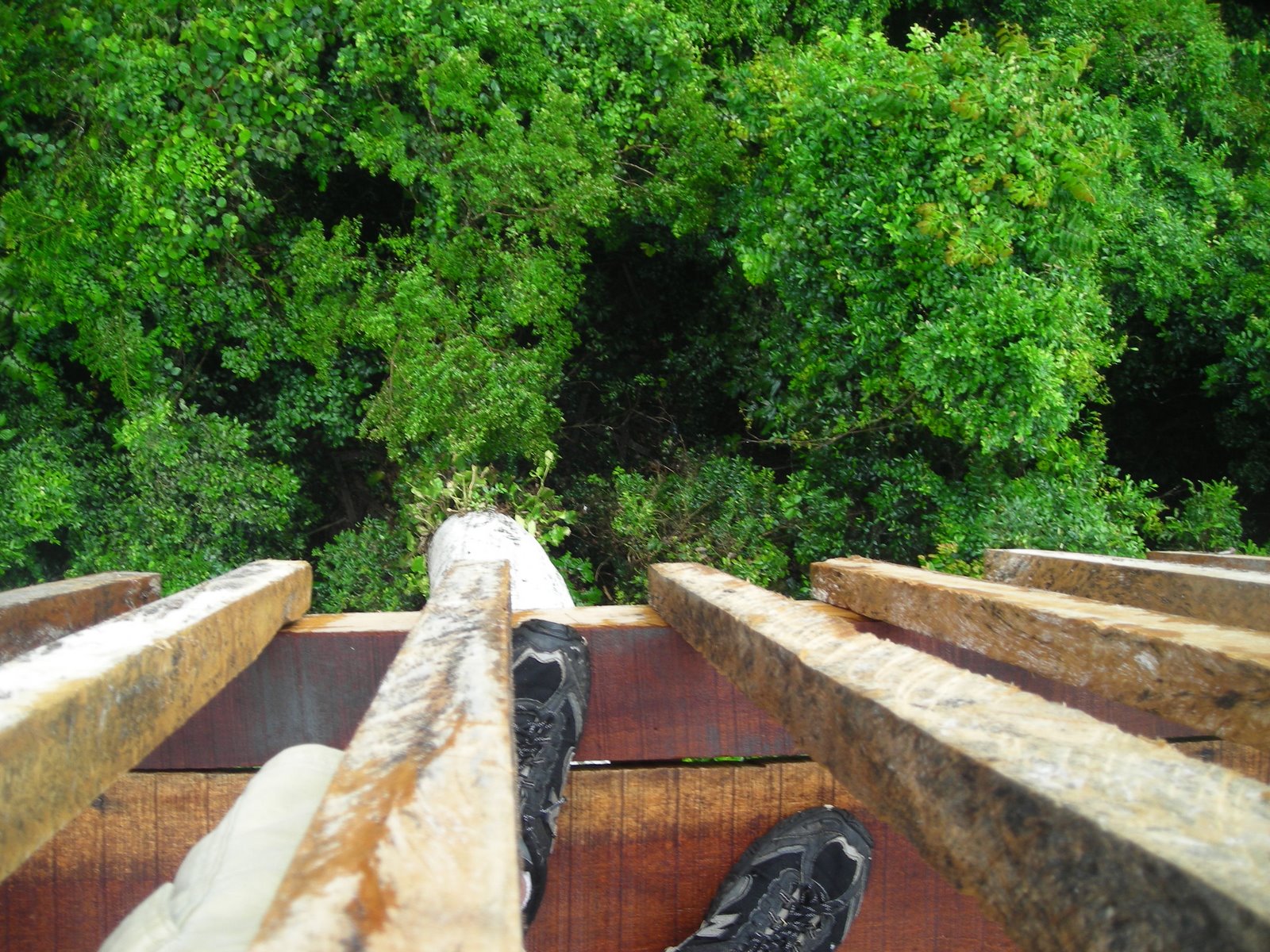
The canopy of Kakum National Forest, beautiful!


Don’t look down (from one of the canopy platforms.


Slightly frightening sign in Accra, just before we sped off. . .


This is the village area we stayed in, Shiashie, engulfed by the growing Accra.

The moon between palm trees at our hostel on Don’s 21st birthday.


A nice village scene in the Volta Region near Wli Falls, tallest in West Africa.


HIV/AIDS awareness and education.


Cool coke bottle shot, drink up.


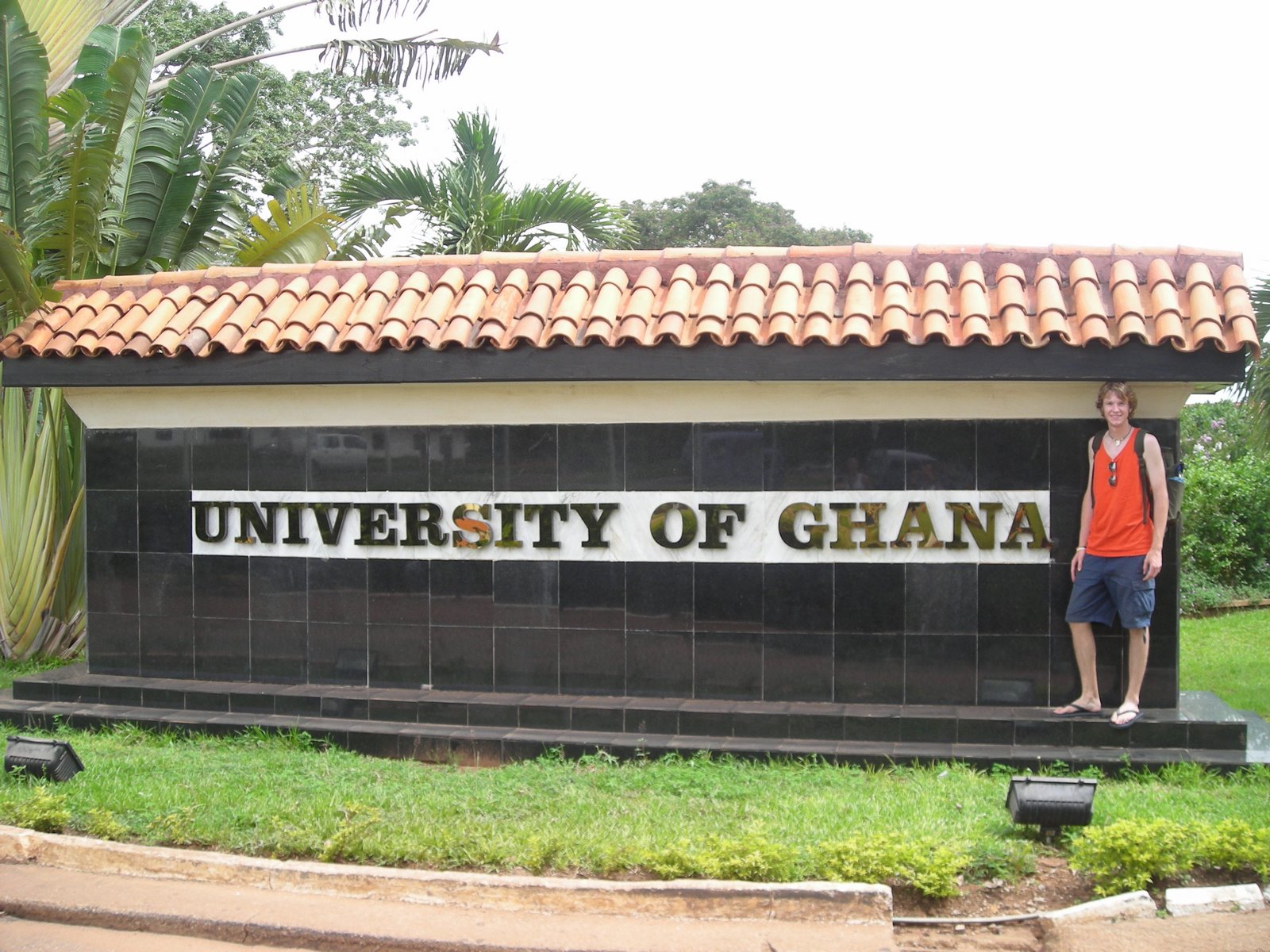
At the University of Ghana.


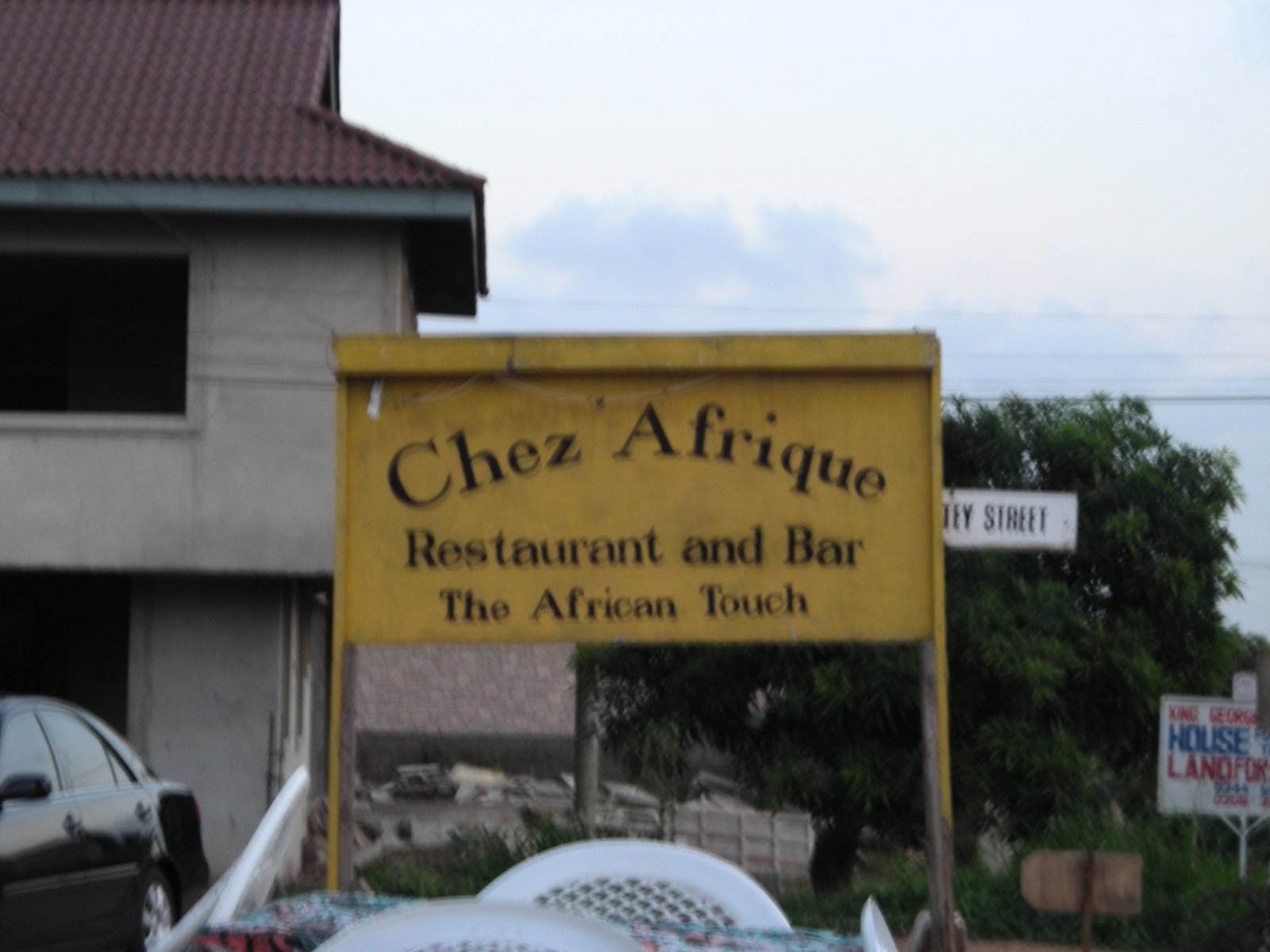
One of our favorite restaurants to visit, off the beaten path, but well worth a good Ghanaian meal.
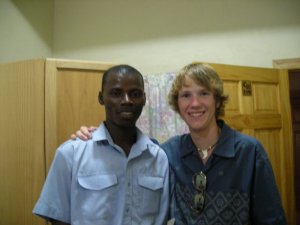

Me and Joseph, the most amazing hostel worker ever.

Index of blog post series on Ghana.

when in ghana

This is just a brief note before I leave Ghana from my six week study program. Our group is leaving for the airport in less than an hour and the despicable aspect of time and its restrictions have come to hit me full in the face. While in Ghana you come to forget about the importance of time – nothing is too fast (some would say that everything is too slow), there is no defined tiem to meet or eat or finish, everything is done as it comes and finished in whatever time it takes. This I have come to love and I dread the jump back into the society of extreme time management. I stopped wearing my watch 4 weeks ago and I stop asking for the time. I do things when they present themselves and never do I rush.

I have learned a lot in Ghana, not so much about myself, but more about other people and the way the world works. More importantly I have been able to think about and study how the world should work (obviously my opinion). I have loved my time here, but I do not want anyone to think that it is over. I will be back someday and I stil have much to write about related to Ghana, when I return. One of the most painful things that I have learned in Ghana is that here sunscreen doesn’t work. No matter how many times I apply SPF 50 to my body, especially my nose, I get a nice burn and peel. Sunscreen just has no place in Ghana – I would hate to think what would happen if I just didn’t wear any at all – I might have lost a limb.

At any rate this is goodbye for now from Ghana. I will resume with the regularly scheduled blogging about when I am not in Africa as soon as I get a nice long night’s sleep, some Mexican style food, and a tall glass of cold cow’s milk with a box of cheez-its. America here I come, you’d better be ready. Be sure to check back for some awesome videos of traditional drum and dance and other interesting thoughts on issues. I am sure I will have some interesting reflections on being back in the US after a month and a half in Ghana.

Signing off from Accra, Ghana. . .

Index of blog post series on Ghana.

the longest driveway

On our way to the village of Danfa, where we were to conduct our community health diagnosis, it all became clear to me why the roads that we had driven on were being so developed. I learned from one of our interpreters that there was a new presidential palace being constructed on the top of the mountain past Mampong Regional Hospital. I learned that the roads before had been very precarious and dangerous, but nevertheless the entire route from the main road near our hostel in Accra-Shiashie all the way up to the mountain communities near the palace saw road development to the extreme. It was to be the president’s new driveway. The longest driveway that I know of, but when you get a police motorcade that clears the roads to take you home, why not have a smooth path in the name of development? This makes me wonder. . . will the surrounding communities benefit? Will they get development help and road improvements? I think not as evidenced by the poor side roads and lack of interest in rural communities (or so it seems). Is a long driveway really necessary (too much snow in Michigan)?

17 June 2007
We arrived back in Danfa, as we had previously visited, and moved into our guest house near the community health clinic. The clinic was constructed back in 1969 with the help of the University of California (no one knows which one) and serves six local communities of over 60,000 people. Many medical students stay in the guest housing to conduct community health diagnoses. This is why ours was to be in the village of Otinibi, just down the road about two kilometers. We were to interview four individuals with pre-determined backgrounds to see how well the community was doing in regards to health. Here is where many students first saw a very rural village with not much development. However, here there was a fair degree of development due to the involvement of the University of California and other NGOs from the UK and Norway. This is where I felt most welcome and at ease. There is no rushing in the village, there are no hawkers, no one will lie to you for help, the scenery is beautiful – mountains in the background, heart wrenching picture opportunities of children, the freedom of the wilderness, there is just such a better atmosphere and disposition that it is very difficult to explain. It is because of villages like these that I fell in love with Africa. The guest house was a very nice place where we could all live, cook, clean, and work together. Everyone took turns cooking a meal and cleaning up, playing cards, singing songs, kicking a soccer ball around, and just having a good time. Hurrah for group bonding!

18 June 2007

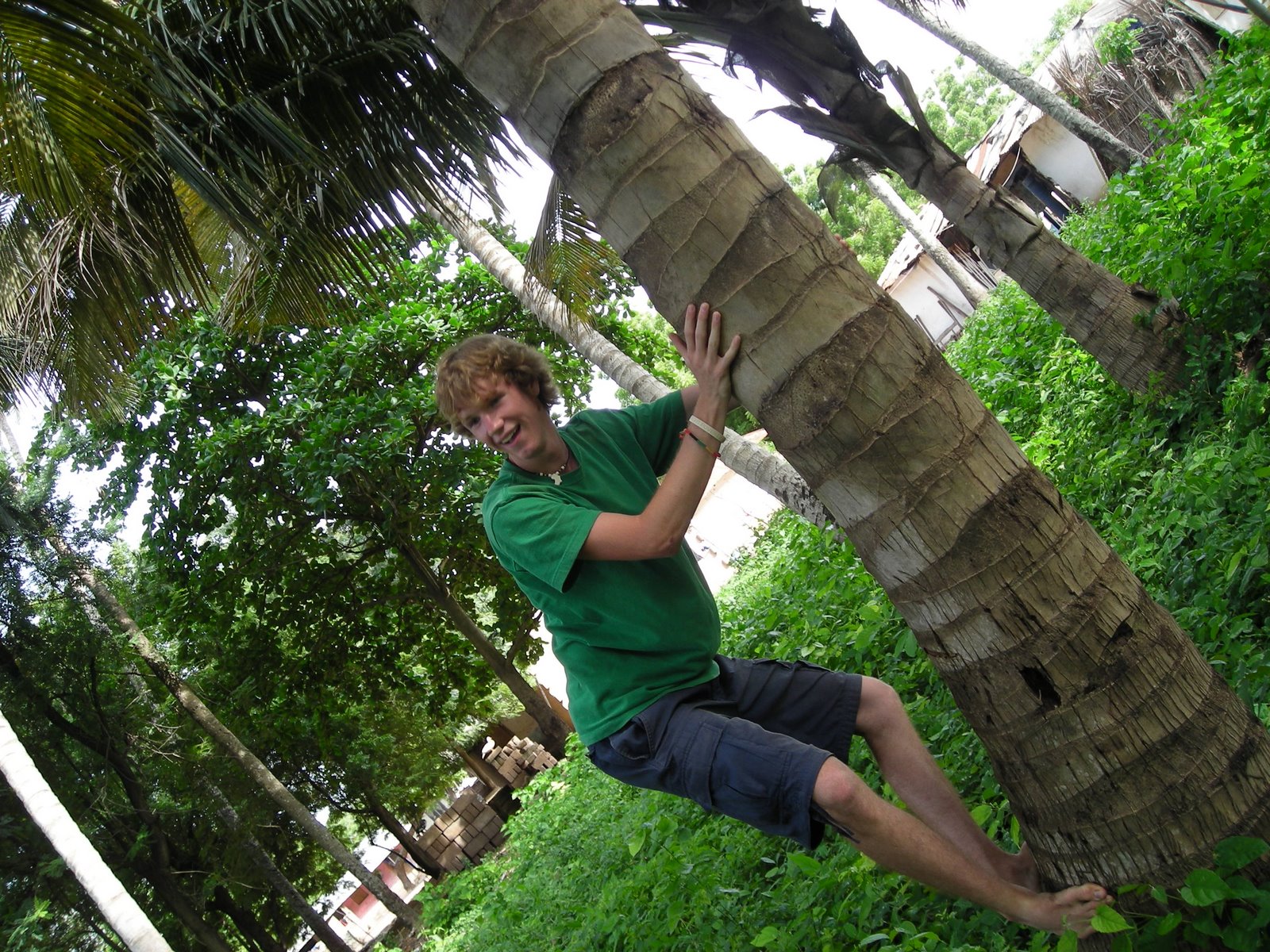
The very next day we awoke early to cook (Team 3) oats, eggs, and cinnamon toast – believe me this is an amazing breakfast. After eating we met our interpreters for the day. They would assist us in interviewing community members about health practices. We split into groups and were assigned an interpreter. Elkanne, 18 years old and son of our coordinator, was our interpreter. He was a very nice kid and was very good at helping us understand the health of the community. We walked the two kilometers to Otinibi and began interviewing. The village is like many that we have seen here. In the early stages of ‘development,’ a hardworking chief, mud buildings, sheet metal roofs, no defined pathways, a borehole for water, coconut trees, and lots of ‘bush.’ The village is beautiful and I can’t get enough of it. We conducted our interviews, meeting a great array of people from a man who spoke for his wife, a not so enthusiastic bachelor, and an awesome grandmother who supposedly grows the best of the best peppers. We learned of many different aspects of community health and saw a great deal of the community to assess its health. We chatted with the chief as he passed by and attempted to climb coconut trees. Elkanne was much better than I was.


While we were heading back to our guest house in Danfa, after completing interviews, we passed by a kente cloth weaving ‘factory’ of sorts. We came across a young boy weaving so fast and with such skill, it was amazing. Later we found out that this was a place of child labour and that these children did not attend school, which is against the law. On leaving we informed the chief and he said that he was going to register all the children in the area who were supposed to be in school. He would then confront the man running the operation and extend some help for the children.

The Interpreters:

Our Findings
We identified four key areas that contributed to the community health of Otinibi: Nutrition, Sanitation, Water Source, and Health Service Use. Each of the four people we interviewed told us that they ate only kenkey (pounded maize) and fufu (pounded cassava), none of then had anything else to supplement their diets. No fruits, no proteins, no vegetables. We wondered what effect this had on the community health as much of the diet was composed of starch. We then asked about waste removal and everyone told us that they used the dump by the bush, only the grandmother told us that sometimes they burned it. For human waste they all went to the bush, which as you may guess is very unhygenic. The public toilets have been broken for some years (collapsed). This moved us into asking where the families got their water. There is a newly installed pipe tap which everyone said they used, but we were told that it cost 200 cedis per bucket. Is this really the primary source of water? I can’t imagine everyone paying for a bucket of water every time they need it. Before the tap, the community used the borehole (pump well) to get water. Everyone told us that they knew the water was safe to drink because they drank it and didn’t get sick. Or did they? This is where we wondered if the common ailments of headache and fever, which were diagnosed as malaria, were really due to the water. There was also a stagnant pond that some people used to get water for bathing.

As far as the decision of what medicine to use, we observed self-medication, use of orthodox and traditional medicines. In the community everyone told us that the Danfa Clinic was their number one choice of medical care. I contributed this to the construction of the Danfa Clinic and the subsequent outreach programs conducted in the surrounding communities. No one, except the grandmother, even touched on the use of traditional medicine. The grandmother did not like the orthodox medicine because the pills made her sick. When we visited she was cooking some leaves from the bush for her fever and she said that these worked very well. However, she did not see an herbalist and knew what to use herself. This use of traditional practice when the modern approach does not work was also seen at the bonesetter’s clinic. One man did not want metal inserted in his arm another could not get placed in a modern clinic. In this scientific age the traditional herbalists/bonesetters are using modern x-rays to do their work and it seems to be working well. We also visited the traditional birth attendant (TBA). The one we visited happened to be trained and served the larger community including Otinibi. She was trained in 1996 and before that she just used her experiences and teachings from elders to do her work. We learned that in many cases traditional medicine is reverted to for reasons of proximity, emergency, and convenience. The vast majority of the Otinibi community used the modern medicine and ‘knew’ that it was the best option. The father we interviewed even went to the chemist (pharmacy) to pick up headache medication for his wife. When I asked Elkanne what he thought about traditional medicine he quickly responded that he only used the Danfa Clinic, but why not? His father worked at the Clinic and the parental influence is very strong in Otinibi. The parents we interviewed would take their children first to the clinic before themselves.

Our Recommendations
We observed a number of open pits and stagnant water sources. There was an old open well that had accumulated a disgusting degree of trash, fecal matter, and god knows what else. We recommended that these holes be filled in to reduce injury risk and mosquito breeding. Our next recommendation was for a separation of trash and regular removal. We also saw a positive in starting a composting project. This could help with the community’s subsistence farming. Since it was the rainy season many homes had closed windows and poor ventilation. For this we recommended screens or mosquito nets on the windows to keep out pests and provide ventilation. For nutrition we recommended maybe introducing beans to be grown and eaten as a source of protein. We also recommended that the people eat what they grow. A number of those interviewed grew vegetables and other foods, but only to sell. Eating the local fruits would also help the nutrition of the community. These were just the small ways that we saw to improve the community health. I would say that the community was for the most part healthy and just needed to act on some simple measures to ensure a greater wellbeing. I also noticed that there was a great lack of emergency transportation. There was none except for the local vehicles. I saw people hurriedly carrying sick people into the clinic, the TBA talked of childbirth emergencies with no transport, I have seen and heard this before – investing in an ambulance may help.

While in Danfa/ Otinibi we had number of delicious Ghanaian dishes:

Palava Sauce (spinachy) and Boiled Cassava

Groundnut Soup with Chicken and Rice Balls

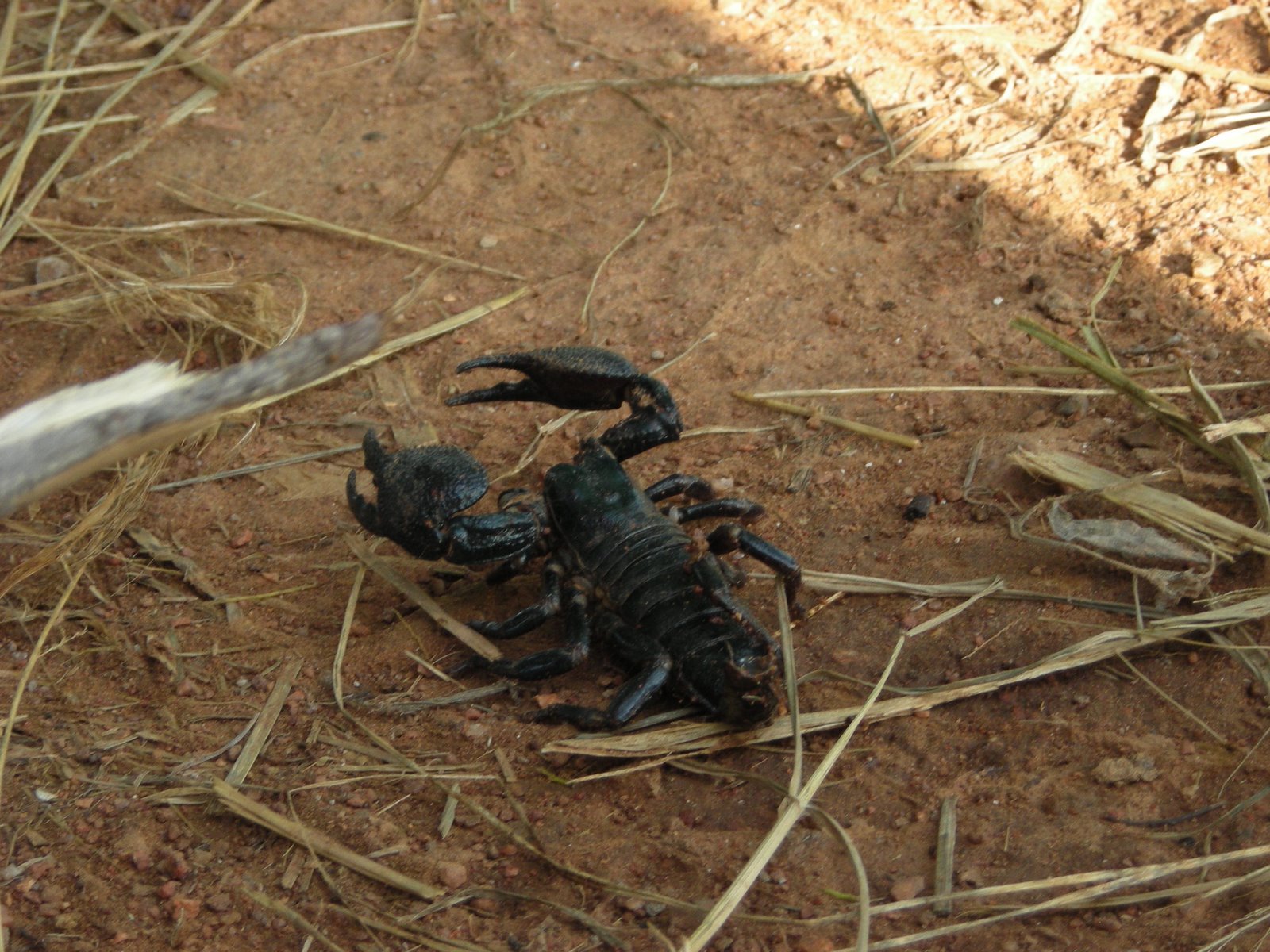
We saw a scorpion! In Ghana they are seen as very evil creatures and are the evil-doers of witches. This one was caught in the gutter and after we all took our pictures and left was probably smashed to a pulp. Scorpions are hated with the passion of a million fires in Ghana.

Index of blog post series on Ghana.