why #OccupyDetroit won’t work

The #OccupyWallStreet protests have been incredible to watch. The protestors picked a great target for their message, organized without planning for a one day event, and have been building support ever since. I’ve spoken with friends involved in spinoff occupations and many ask me when “Occupy Detroit” is going to begin. Since then I’ve been throwing the idea around in my head and it never quite fits for Detroit. Just today I discovered that “Occupy Detroit” has already started to be organized for October 21, 2011.

1. What to Occupy

Interestingly the meeting point chosen is the iconic Detroit symbol of “ruin and decay,” Michigan Central Station. A large, empty building near Corktown, privately owned is not a great location to bring a large group of people to protest. I understand it is just the meeting point and protests will take place downtown, but that is where everyone should meet – downtown. It seems like the larger problem is that there is a group of people interested in occupying something, but they aren’t sure what to occupy yet.

The biggest corporate symbol in Detroit is GM Tower, right downtown by the river. The problem with protesting GM is that Detroiters and Michiganders are sick of being angry at the auto companies. It is a protest fatigue, everyone and their grandmother has something to say against the auto companies. It is an argument that doesn’t hold passion anymore. So what is next? Therein lies the problem. Detroit, corporately, is pretty small. The best large corporations that are in the city worth protesting are the banks. Many of the banks backed out of home loans for many Detroit residents during the recession. Just recently Citizen’s Bank was taken to court because of racial discrimination and unequal lending practices in Detroit and Flint.

Corporations take advantage of Detroit’s population in poverty all the time. A perfect example is Chase Bank, they have their community giving initiatives to look good, but where does the money they give away come from? It comes from all the people whose houses they foreclosed. Chase has set up a number of simple drive-through banking stations across the city. They’ve used technology to offer their service and avoided placing people in buildings to serve communities. Chase is notorious for its predatory lending services for home mortgages.

Chase Tower is located downtown, in the middle of an area where many wealthy people from the suburbs like to frequent. A potential place to make a statement in Detroit.

In the end, occupation in Detroit will be difficult. Many people “camp out” everyday for lack of a home or place to sleep. It is a divide between those who choose to take to the streets and those who have no choice. Another issue is that much of Detroit is unoccupied, so the message of an #OccupyDetroit effort may be easily lost.

2. Who will Occupy?

The other major problem that I see is that the young, white activist community in Detroit is doing the organizing. This is a far cry from the locally run organizations and neighborhood block clubs where the real effects of corporate greed are hardest felt. Many times African American residents of Detroit are very skeptical of young, white people making a lot of noise.

When the United Stated Social Forum (USSF) came to Detroit in the summer of 2010, there was a deep divide between the white activist community in Detroit (and the US) and the majority African American residents of the city. I was asked by many people, “what is going on?” and “why are all of these people here?” That isn’t to say that there was no racial diversity at the USSF, but unfortunately those who represented Detroit were a majority white activists disconnected from those living in Detroit.

I recently attended TEDxDetroit which was again a majority white. Detroit’s population is 76% African American, but TEDxDetroit was easily 80% or more white individuals with ideas to bring into Detroit without involving those who already live here. Why can’t organizations find and highlight the work done by people already here?

Detroit is full of vibrant ideas and interesting people. The problem is that the residents of Detroit who are facing the most difficult issues aren’t downtown. Most residents of Detroit live out in the neighborhoods and can’t often benefit from the downtown developments created to bring people in from the suburbs.

3. Already Occupied?

It is safe to say that many of those who live below the poverty line are less concerned with occupying something downtown and instead working on advancing their status in life. Detroit has a high percentage of its population living below the poverty line, hungry, without health insurance, and many without good paying jobs. The residents of Detroit are already occupied with making their lives and city a better place.

The recent Census showed that Detroit’s population is decreasing. Many people that I have talked to, including, Detroit high school student talk about getting out of Detroit and leaving for something better. How can a generation that wants to get out of Detroit be motivated to occupy what they don’t want?

If there is any sort of occupation in Detroit, it will represent the economic and racial disparities in the city and demonstrate the deep need to build real connections across communities. A real movement in Detroit would involve Block Clubs and Neighborhood Associations.
congo is not a country

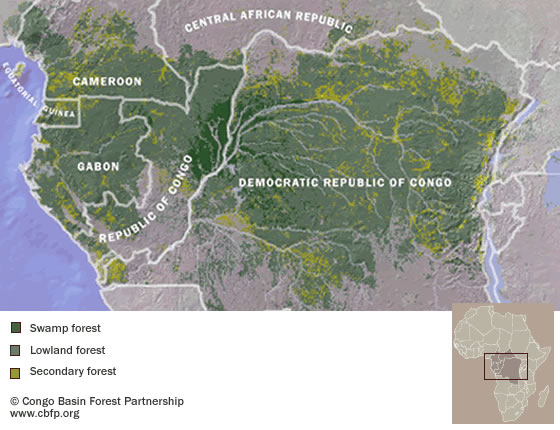
Recent research and commentary on atrocities in the Democratic Republic of the Congo (DRC) have fueled reference to a “Congo” that seems to include only one country, but “the Congo” is a large, resource rich region made up of many countries.

Traditionally “the Congo” refers to the region of Middle Africa (referred to as “Central Africa” by the UN) comprised of parts of ten (10) different countries, including: Angola, Cameroon, Central African Republic, Democratic Republic of the Congo, Republic of the Congo, Equatorial Guinea, Gabon, Sao Tome and Principe, Burundi and Rwanda.

The Congo is best understood as a geographic region, with lush tropical rainforests and a wealth of mineral deposits, that benefits from the drainage of the Congo River. As a result, interest in the Congo region has caused violence and atrocities arguably since its “discovery” by Henry Morton Stanley in the name of King Leopold II of Belgium. The King wanted to spread Western civilization and religion to the region, which has led to continually destabilization and conflict.

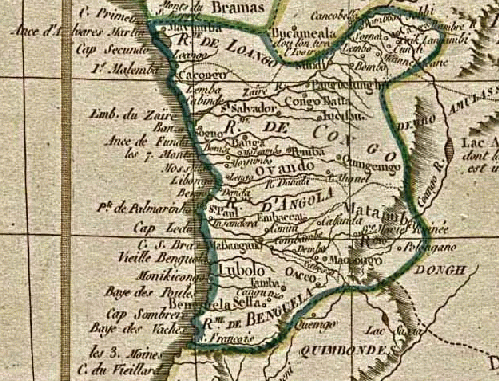
The geographic region known to us as “the Congo” was home to one of the advanced African civilizations as well as the Baka people (often referred to as pygmies). The Kingdom of the Kongo included parts of the DRC, Republic of Congo and Angola. As recorded by Europeans the Kingdom of Kongo was highly developed with a extensive trading network. As “explorers” and colonizers penetrated further into the interior of the African continent, the Kingdom of Kongo became a major source of slaves. As a result of political in-fighting, resource grabbing, and European invasion, the Congo region’s factions remained in civil war for almost forty years (1700).

Since European arrival, the Congo region has been in a regular flux of conflict either between political factions, against colonizers, or now among local militias fighting for control of areas of resource wealth.

Much like our misunderstandings of various aspects of the African continent, its history, and people fuel monolithic interpretations of Africa, so too do our misunderstandings of the Congo region’s governments, resources, and cultures.

Maybe our misunderstandings and myths of “the Congo” are driven by the Heart of Darkness (supposedly inspired by Henry Morton Stanley) narrative set on the Congo River that details atrocities committed against native peoples? Maybe history shows Western violence has created a culture of violence in the quest for control and resources? Either way Congo is not a country, but a vast region with deep history and amazing possibilities.

Bringing African Perspectives into US Activism (#USSFafrica)

Thursday and Friday I attended many of the Africa focused workshops – most were very exciting and engaging. They really brought the African perspective into the ideas of the US Social Forum and made delegates think about the US role in issues affecting communities on the African continent.

24 Thursday 10am-12pm

African Unity Towards What? (Pan-Africanism & Nationalism is not enough!) by: University of Kmt

I still haven’t exactly figured out this group and what they do. They run the Kmt Press which publishes books and journals, but all of their sessions that I attended were focused on teaching with an African historical perspective. Their missions states that they are dedicated to educating the new generation of African leaders. Interesting that they are in Detroit and I wonder if they know of the Detroit Public School (DPS) Initiative starting in 1992 where Africa was integrated into school curriculums from math to literature. 

24 Thursday 1-3pm

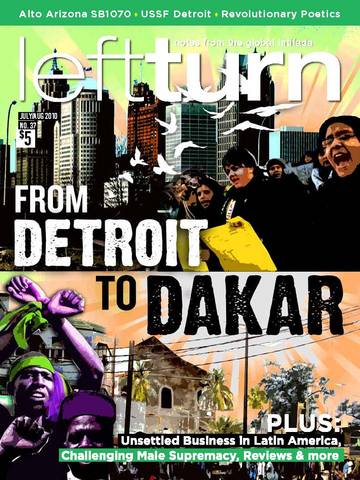
Prioritizing Africa & the African Diaspora Agenda from Detroit to Dakar (D2D) by: Priority Africa Network (PAN)

This People’s Movement Assembly was geared towards bringing African perspectives into the US Social Forum and continue the discussion as preparations are made for the 2011 World Social Forum in Dakar, Senegal. The room was full of delegates from many African countries, Detroit, and US Africa Advocacy groups. 

Briggs Bomba, Director of Campaigns at Africa Action, spoke strongly about building solidarity with those most affected in Africa. He said, “corporate led globalization has harshest effects on those in the perifery, the underdeveloped.” He reminded us that all of us the privilege to attend conferences like these and make the policies need to prioritize the communities most affected.

A delegate from South Africa spoke eloquently about the social apartheid of displacement – ideologically, locations, in decision-making and governments; in voting process lack of people power and transformational action, and in the social mainstream. “We cover many issues, but it is the same struggle. We come from different areas, but share common experiences.” (i.e. colonialism)

Some top issues that came out of the PMA:

  • Militarization in the Congo (DRC)
  • HIV & STDs from Detroit to Africa
  • political economy – effects seen in everyday Africa
  • African defense (defend communities), liberation (not yet liberated), and autonomy

An exciting and dynamic session that really makes me excited for the World Social Forum in Dakar!

24 Thursday 3:30-5:30pm

The New Africa Command & U.S. Military Involvement in Africa by: African Security Research Project (aka: Daniel Volman)

This session was an interesting overview of AFRICOM by some leading scholars on the topic of US national security interests in Africa. The attendees were less diverse than the Detroit to Dakar session and most people came to learn more because it looked interesting and had studied Africa to some small degree in the past. 

Most interesting was when the discussion turned to private military contractors (PMCs) in Africa responsible for fighting wars in Libera, Southern Sudan, and Somalia. A Ugandan delegate actually talked about being trained by PMCs in Iraq to then return and fight the Lord’s Resistance Army in Northern Uganda. Great to hear the perspective of the Ugandan delegate and Dan Volman as well as to see so many people interested in learning more about African issues!

25 Friday 1-3pm

Power-sharing Deals in Africa: Implications for Democracy – The Case of Zimbabwe & Kenya by: Africa Action

This was by far the most organized session that I attended at the US Social Forum. The Africa Action team did an amazing job of gathering great speakers, formatting the session, and bringing people into the room for the discussion. Many African voices were heard from delegates representing Zimbabwe and Kenya. 

In both cases of power-sharing, the speakers agreed that the power-sharing deal was a sigh of relief that stopped the fighting and opened their doors to the international community and economy again. However, they also all recognized that power-sharing was a positive in the short-term, but can be positive as in the case of South Africa when Mandela and de Klerk signed a power sharing deal until the national democratic elections.

Here are some take-aways:

  • A weak state can and will be manipulated (i.e. Museveni in Uganda – waiting for a similar situation as Kenya and Zimbabwe soon, elections next year)
  • “The people” are separated from the power – people-centered in needed
  • Power-sharing allows for lessened tensions and time to create national unity towards something better
  • Coalition governments show defeat of “people power”

Crossposted from SCOUT BANANA

The Africa Track at the US Social Forum (#USSFafrica)

There are a number Africa-related organizations represented at the US Social Forum focused on bringing Africa into the larger US social justice context and ensuring that there are African voices represented.

During the June 22-25 conference there will be 14 workshops presented by: Africa Action, TransAfrica, HealthGAP, Support Darfur Project, All African Peoples Revolutionary Party, University of Kmt, Priority Africa Network, Community Alliance for Global Justice, African Security Research Project, Athletes United for Peace, Detroit to Dakar, and International Development Exchange (IDEX). See list below:

24 Thursday (10am-12pm)

  • Africa & Pan- Africanism in this hemisphere: fighting neo-colonialism, racism, class, and gender oppression
    • All African Peoples Revolutionary Party @ Cobo Hall – Rm. W2-61
  • Building a Pan-African Solidarity Movement in North America
    • Support Darfur Project @ WC3 – Rm. 317
  • AIDS isn’t over: Solidarity in the fight for justice for people with AIDS worldwide
    • HealthGAP @ WA – Rm. 1472
  • Gender Militarism and US Corporate Violence in Oil Producing States
    • Priority Africa Network (PAN) @ Cobo Hall – Rm. O2-40

24 Thursday (1-3pm)

  • Africa Unity Toward What? (Pan-Africanism & Nationalism are not enough!)
    • University of Kmt @ Cobo Hall – Rm. O2-38
  • The Politics of Exploiting Need: AGRA (Alliance for a Green Revolution in Africa), the Gates Foundation, & the Food Crisis
    • Community Alliance for Global Justice @ UAW – Rm. Taurus
  • Migration & Militarization of U.S. and European Borders: A Comparison & Contrast
    • Priority Africa Network @ Cobo Hall- Rm. O2-40
  • Youth-led Activism in NYC’s Public High Schools
    • Support Darfur Project @ WBC – Rm. WB2
  • The World Cup, Sports & Social Justice: The Beautiful Game & Beautiful Struggle, Together
    • Athletes for Peace @ WSU S – Rm. 29

24 Thursday (3:30-5:30pm)

  • International Financial Institutions & Climate Change: Community Impacts in the Congo
    • Africa Action @ WC3 – Rm. 337
  • The New Africa Command & U.S. Military Involvement in Africa
    • African Security Research Project @ UAW – Rm. Pres

25 Friday (1-5pm)

  • Prioritizing Africa & the African Diaspora Agenda from Detroit to Dakar (D2D)
    • Priority Africa Network @ Cobo Hall – Rm. W2-69
  • Educating African People: K12 through Ph.D. levels
    • University of Kmt @ Cobo Hall – Rm. O2-38
  • GM Crops – the poisoned chalice: perspectives & victories from South Africa
    • International Development Exchange (IDEX) @ Cobo Hall – Rm. D3-23
  • Power Sharing Deals in Africa: Implications for Democracy – The Case of Zimbabwe & Kenya
    • Africa Action @ WSU S – Rm. 261

Crossposted from SCOUT BANANA.

Gray Panthers, Youth in Action, and the Non-Profit Industrial Complex (live blogging #USSF)

Here are summaries of some of the workshops I attended today:

Organizing Across Communities: Age & Youth in Action by the Gray Panthers of Metropolitan Washington

A workshop run by a sweet group of older (wise) people focused on bridging the gap of age in activism and building an intergenerational movement. Gray hair = gray panthers. Some critical thoughts on organizing with age in mind: 

  • #1 = Build Common Values!
  • utilize mentors – teach activist history, learn from older movements and successes
  • Listen! old and young listening to each other
  • Build skills – young activists can learn from old
  • Mutual RESPECT
  • Both young and old, ask each other for what is needed

Movement Building: Storytelling, Framing and Messaging by: Dream Act

Caught this workshop at the end with YP4 2008 Fellow, Sonia Guinansaca! Working with the Dream Act, Sonia spiced up the Youth Space (Basement of Cobo Hall near Michigan Rooms) with some excellent tips on telling your story to build support. She focused on making your cause personal. Awesome work! 

Growing Wings – Evolving out of the Nonprofit by: The Movement Strategy Center (MSC)

Tackling the concept of the Non-Profit Industrial Complex elegantly with a fun skit, one of the key members of the MSC who helped build the YP4 blueprint curriculum, Jidan Koon and colleagues from Serve the People, APAL, and Anak Bayan packed the 7th floor room of the Wayne State University Student Center. The building’s shifting and shaking could not deter the young leaders’ voices as they talked about operating within and without non-profits. Some key concepts to take away: 

  • Meet people where they are: house meetings, coffee shops, events at clubs
  • Connect to project with field trips
  • Create a collaborative/ cooperative organizational model
    • delegate responsibility
    • distribute leadership
    • collective decision-making/ agreements
    • build family/ organization culture of helping each other
    • create voluntary levels of involvement
  • Have a 40/60 gender rule to keep balance

reporting from "ground zero" (live blogging US Social Forum #USSF)

The United States Social Forum launched in 2007 based on the successes and excitement of the World Social Forums. The year 2010 is being marked by various regional events like the US Social Forum to take the place of the World Social Forum. So the fact that Detroit was chosen to host the US Social Forum (USSF) is very exciting.

As exciting as it is, it also happens to enable numerous aspects of privilege. As over 10,000 people converge on Detroit, people often to refer to the city as “ground zero” for the economic crisis. The weekend before the USSF, Young People For (YP4) held their regional training at the Renaissance Center for their Midwest fellows. I attended the opening event with alumni and partners to meet the new class of fellows. Like the World Social Forum, YP4 is breaking their national training into regionally based events. Many of the fellows noted that before they came to Detroit they had thought of the city as a place NOT to visit. With a view over the riverfront, looking across at Canada, many mentioned that they had no idea Detroit was so beautiful. Others commented that they had no idea Detroit had a downtown and tall buildings.

These large convergences of people bring Detroit into a brighter light and change the perceptions of many. There are plenty of things to be worried about in Detroit, but not just because it is “Detroit.” Likewise, as the city fills with activists and radicals of all shades, the majority of Detroit residents are unaware of what is even happening. YP4 Director, Rebecca Thompson, informed us that many of her family members in Detroit and friends had no idea that the USSF was happening the next day. I’ve worked with a few local Detroit organizations that canvassed some neighborhoods to let people know about the USSF, but the impact was minimal at best. How can this happen? How can residents of a city, businesses, and even some government not know that 10,000 people are coming to their city to infuse it with new ideas, people, and solutions to social problems?

This could be a result of the slightly disorganized activities of the USSF organizing committee. I won’t go into the stories that I have heard of the power struggles between organizations working to put this event together, but it is worth noting that thoughtful improvement can be made. A thought that occurred to me the other day was: What if the USSF was organized with local groups tackling specific issues host a topic and organize like-minded groups across the nation so that this conference is less focused on talking and more on building potential solutions that Detroit organizations can use and others can take home?

After hanging around, surveying the organizations tables with my girlfriend (Nichole :-D), we headed about 2 miles away for the march. We were a bit behind and stopped in the shade to watch the chanting crowd go by. At the length of almost 8 city blocks (or more) it was an incredible sight to see in a city often referred to as a “ghost town.” And yet privilege came out again as local Detroiters asked, “What is going on?!” and the Detroit Red Cross asked me, “Do you know what all these people are doing?” YP4 staffer, William noted that if this was in DC, everyone would know with posters, twitter updates like crazy, and just the general buzz.

Unfortunately residents of Detroit are not as privileged to be as connected as those in DC. Likewise, residents, in the case of the USSF, have not been a focus of organizing or informing. This has become a common theme that I have noted within government and other activities to rebuild Detroit. Focus on the people who are actually in Detroit! The activists who come for this weekend may hold some new ideas about the city, but in the end they will leave and what will be left for the city of Detroit?

community organizing as an outsider

Previous posting and following day’s entries: eruptions from fault lines: race is class

19 May 2008

Nothing seems weird to me (as many might think it should). As I look out across the settlement, across rows of RDP housing and sheet metal ‘peoples’ housing, across the open hazy sky dotted by tall, almost prison-like lights, across a silence broken only by crickets, the occasional rooster and the fighting dogs – nothing seems odd or out of place. Nothing screams at me, “you should not be here!” Yet again I feel “at home” in an African community abroad, and I can’t help but ponder, why? Is my family and home so bad? Is the USA so undesirable? Is there a welcoming atmosphere here that I am overtaken? The question remains unanswered, but will gain an answer as I open dialogue with my family when I return.

the dilemma of organizing
The difficulties of community organizing as an American ‘developed’ worlder: when is it ok to step in on community decision making? when is it ok to correct obvious, but mis-taught information – and how do you approach the correcting process? when is ti too over-reaching to make suggestions and execute programs? Evaluate!

We went to the library today – very nicely built, small inside, very slow internet, very very slow. . .

Vumundzuku-bya Vana ‘Our Children’s Future’
the children are the future and they are the only ones to hold the key, but there are many needed, required, to fashion such a key that will unlock the great, looming, double oak doors of the positive future if nothing else than there is love and those who pass will know the love of their friends, family, and community, but there is a greater purpose and potential here, one that cannot pass unmolded, the challenges are many, the obstacles great but no challenge is insurmountable without a helping hand, the hands in need are many – the hands held too few.

hope and change in 2008 politics

peace without sickness, failure without denial, and democracy without restriction

Hope and change have gained a great footing in not only the 2008 Presidential elections in the US, but also in the communities of Northern Uganda. Peace talk negotiations and a cease-fire in fighting have allowed children to return home, families to rebuild, and communities to begin creating lives without fear from conflict. The conflict in Northern Uganda is often tagged as a “civil war,” but largely centers on a rebel group called the Lord’s Resistance Army (LRA). (Read more here) Thousands displaced, abducted, lost – hundreds killed. The peace talks have been going well and two weeks ago (April 10th) Joseph Kony, leader of the LRA, was supposed to come out of hiding to sign the peace agreement. He did not show up and his spokesperson claimed he had been sick. Sick or afraid? Kony and his top officials are now on the top of the International Criminal Court’s arrest list. It seems he may have been sick with fear of being held accountable for his long-running violent resistance.

The election count in Zimbabwe has been delayed. After many have called for the results to be released from the election, electoral officials have decided to recount 23 out of the 210 seats. This will take 3 more days. There is fear that the recount will include vote-rigging, something that would not be new in Zimbabwean elections under Mugabe. It is well known that the Movement for Democratic Change (MDC) party has gained the majority over Mugabe’s Zanu-PF party. There are fears that the recount could reverse that majority. Hope for change in Zimbabwe is stalled yet again and there is no guess as to when election results will actually be released. Now hundreds of opposition supporters, fleeing “state-sponsored” violence, have been detained. Most will be charged with inciting election violence as the scapegoats for Mugabe’s government response to political opposition.

Opposition candidates have been arrested, people stayed away from the polls, rising cost of food and decline in wages have lead to a popular discontent with the Egyptian government. People are more concerned with getting bread on the table than on turning out in the polls. The main opposition party in Egypt has been officially banned and their candidates have been arrested and detained so that they cannot campaign. The hope for change has been squashed by the current government, but not without at least some opposition. The Muslim Brotherhood, with its candidates banned, boycotted the elections and clashed with police. There is fear in the government that they will lose more support to the “pro-Islamist independents” who seem to have the backing of the people. The US is not the only country where the rise in power of Islamic groups has produced an unfounded fear and caused actions that are far from democratic.

Kenyan politicians have reached a deal to allow a coalition government. Mwai Kibaki will remain President and his opponent, Raila Odinga, will serve as Prime Minister. It is not clear how the people will react to this evolution. The next major task of the coalition government is to work on relocating the hundreds of thousands of displaced peoples as a result of their “election” or move to power. Nearly 140,000 people are living in tents and depend on food handouts to live. Adding difficulty, there is disagreement in the parliament as to what actions should be taken first: returning the displaced or preaching co-existence and reconciliation. The historical rifts in Kenyan politics will need to be handled as soon as possible if Kenya is to move forward with the stability of the past.

In all four cases there is an extensive past to learn in order to fully understand the current situations. Each case represents a direct outcome of former colonial systems perpetuated (especially their failures), oppressed populations, and a push for democracy that seems to be historically flawed in its practice and exportation. Hope and change may just become buzz words for the 2008 election year, but they also have the great potential to live up to the aspirations of many looking for a new way of handling governments and societies.

the definition debate: what is a progressive?

Throughout history many banners have flown in the name of freedom, many different colors and styles spurred movements on to revolution and victory. From the Star Spangled Banner of the American Revolution to the red banners in the streets of China to the political banners of modern times. These streaming bits of cloth are more than physical symbols born by flag bearers. These banners are accompanied by boxes of thought and explicit doctrines of belief. We rally around banners, they lead us to freedom, they lead us to liberty, and they lead us to justice. But this what the banners of the past have lead us to today? We are now forced to rally behind one banner or another, we are forced to make a choice, we are forced to fight for freedom with conditions – yet freedom is unconditional.

Breaking over the horizon atop a mound of inequalities, injustices, and failed ideas rises a new banner, however this banner has no one flag bearer. It is a banner that waves and weaves between many people and multiple beliefs. This banner is a meshed quilt of the banners long since past and new lengths of fabric, innovately designed banners. This banner of sorts also bears a title: Progressive. However this title is unlike the titles from the banners of the past. This banner changes shape as it is held aloft to unite for a common cause.

The defining and constricting of this term, progressive, was a topic of great contention at the 4th Annual National Summit for Progressive Leaders of 2008 run by Young People For(YP4). I had many long discussion about what it means, the implications of the term, and the worries of a dogma growing within the progressive movement. To give a starting point:

From my “Hella Pone” workshop group representing Northern California, Oklahoma, and Wisconsin –

A progressive is: open minded, inclusive, compassionate, proactive and engaged in positive change, innovative, sustainable, optimistic, idealistic, for equality and justice, informed and conscious, evolving, and a leader challenging the status quo

The most important thing to remember is that the term progressive has a long historical and political connotation. Progressivism grew in the 1920s as a response to industrialization and traditional conservativism as well as to the more radical socialist and anarchist movements of the time. The American Progressive Party was born in the 1930s and advanced under Theodore Roosevelt, William Taft, Woodrow Wilson (?), and Franklin Roosevelt. Historically “progressives” advocated for worker’s rights and social justice. Early progressives were proponents of anti-trust laws and the regulation of large corporations and monopolies, as well as government-funded environmentalism and the creation of National Parks and Wildlife Refuges. The principles of Progressivism and the early Progressive Movement would lay the foundation for future progressive thought and politics. Even wikipedia notes that the precise criteria for what constitutes “progressivism” varies worldwide. Here are some of the common (historical) progressive tenets outlined:

Ballot initiatives where citizens approve proposed laws through a direct vote, initiatives where citizens could proposed laws for legislation, direct primary, direct election of US Senators, referendum where citizens could vote to rescind laws, and women’s suffrage. Early progressives also called for a centralization of government to reduce the number of officials and eliminate overlapping authority. At the start of the Progressive Movement government corruption was near an all time high. They sought to promote professional administrators to deal with this issue. Trust-busting, socialism (government working for the public good), laissez-faire market belief, and regulation of large corporations represented the economic tenets. Environmentally progressives called for increases in national parks. On the social justice side, early progressives supported the development of professional social workers, the creation of settlement housing (basically a community center operated by professional social workers to increase the standard of living in inner cities), enacting child labor laws (to end children in the workplace), promoting organized labor and the prohibition (alcohol was a deterrent to achieving success for the cause).

For our purposes I think we are, in a way, giving the term a boost. Where progressive used to represent a political party or economic theory, it now represents a set of basic values that seem very simple for everyone to agree upon. Young People For lists the issues that fall under the progressive title as: civil rights, constitutional liberty, immigrant rights, independent judiciary, LGBT rights, marriage equality, access to higher education, religious freedom, environmental protection, voting rights, civic participation, women’s rights, worker’s rights, human rights, international issues, environmental justice, equal rights, I think John Halpin, senior advisor on the staff of the Center for American Progress said it best, “Progressivism is an orientation towards politics, It’s not a long-standing ideology like liberalism, but an historically-grounded concept… that accepts the world as dynamic.” Progressives see it as an attitude towards the politics of today. It is a thought process that is broader than conservatism vs. liberalism, which attempts to break free from what they consider to be a false and divisive dichotomy of ideologies. There is an excellent article (click here) on what progressivism means today in WireTap magazine written by a young person.

For our purposes today I believe the term progressive is a way to develop a focused set of values while encompassing many issue bases. The progressive term allows people to live and work outside the boxes of society. You can be a republican, a democrat, liberal, economically conservative, socialist, black, white, red, blue – you are not forced to conform to a certain norm – you can fall under the progressive terminology if you share the same values and visions for our world. This is a dangerous area in any movement when we begin to confine our thought and set a type of dogma for ourselves to follow. If you are a republican you are no less progressive, if you are a socialist you are not too radically progressive, if you are not a vegetarian you are no less progressive, if you embody the full range of progressive thought that does not mean that you are not and cannot be a progressive. It is often difficult to allow for this openness of a term because we are stuck in an old way of thinking that limits our abilities to accept. We are trapped by our own postmodern love of labeling ourselves and creating the other.

We stream to the progressive banner seeking a doctrine, an ideology, or a mantra to rule the day. But the banner needs to be People. As one of my good philosophy friends explained to me, and I paraphrase, at the end of the day we are all just fictional characters living in a world that we have created for ourselves. Our identities are all constructed from what we choose to think or what history has developed We label and fit ourselves into methods The banner is not Progressivism, but it is People. If we lose sight of that idea, then the rebirth of the progressive movement has already failed. People are our end goal and focus. We are not here to advance our self-interest or force our ideology. Within the progressive movement our focus is People not Progressivism and we cannot forget. The banner needs to remain people or we as the progressive movement will just become another title, another dogma of boxed thought – we need to remain open and innovative and changing, we need ensure that we do not become more than an applied method of thinking. The banner is not Progressive, the banner is People.

From Associated Progress, the essential progressive news network.

Previously posted on the Young People For Blog.