
do you already know what you are getting?

truth reflects reality
but what is reality
& what is then true?
knowledge implies truth
& who can claim to possess knowledge that
is purely true to reflect the real?
– Alex B. Hill (date written unknown)

Whether we all know it or not we are enslaved by a great system, a system that propagates discrimination based on race, division rooted in the ideas of economic class, military control bent on power, and a political will lacking the necessary passion to stand up for what can easily be perceived as right (as opposed to wrong). Right: equal rights for all people of the world, equal opportunity, fair wage and living standards, a smile from a stranger, an atypical helping hand when it may seem uncouth, truth spoken from the mouth of a fellow on the misdeeds of a few who would wield a vast power in the name of many, not denying people their basic needs. Wrong is spewed from the system in many ways, most are unrecognized and more unknown to the general populace than one might think.
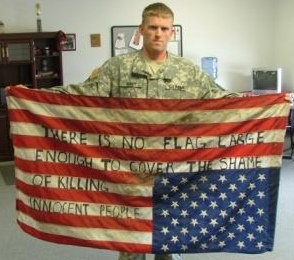
I just went to the movies tonight and what was most striking was not the movie itself, but the previews. I nearly forgot that a movie was to follow. There was a new film on beating the US Treasury’s money shredder, one on the fictional assassination of a US presidential double and the preceding systematic cover-up, a film decrying US torture in wartime, the government extending a soldiers’ contracts: Stop Loss. The current climate of things is more than ready for a movement away from destruction and into progress. When I say progress I am not talking about reform, there is no place for reform in the current system. There needs to be change, as in complete, no holds barred flip of the system. People need to be the pinnacle of the equation – people in the sense that every man, woman, and child needs to be ensured that the reality they live with is not also the systematic structure that keeps them in poverty, at war, without proper clothing, or without the ability to pursue a higher dream. Here in the USA, we have the right to Life, Liberty, and the Pursuit of Happiness – why must it only be a pursuit and not a right?

Before this day at the movies, I had another similar excursion. An exciting day to go see the new political thriller just in theaters. Lions for Lambs was one of the best political thriller for our time, now. During World War I, the Prussian troops used to call the English grunt workers, on the frontlines, Lions because of the ferocity with which they worked and fought, these men were Lions for Lambs. The Lambs were the politicians who sat in their plush offices and said to reporters, “we will do whatever it takes to win,” as their men die by the thousands, day by day pouring the fiery passions of their hearts into their work. These men were only to be forgotten by the Man, the politician on the pedestal, the system for which they had risked their very lives to preserve – a construct that had no place for them and never will.

This is the overtone of the most recent political thriller to come out of movie making land. Sadly much of the message was lost to the American public before they had even seen the movie. It has become very common that political thrillers are not appealing to the American public. They don’t like the harsh realities coming to life on the big screen, they don’t like the messages, they don’t like being called out in the theater where they came to enjoy a little bang-bang shoot’em up action. And so in the end Americans do not see these movies and political thrillers, which very well may be later called the greatest films of their times, fall in the box offices to popular whim. I recently read a very poor review of Lions for Lambs in which the student author claimed the film relied too much on political generalities and made the message too confusing. I would say that this was the prime example of the audience being lost to the message. As this student was the target and missed the mark completely.

Warning: Possible spoiler of Lions for Lambs

The film opens, in a hypothetical situation mirroring the present circumstances, with a ‘liberal’ journalist meeting with the new, young, up-and-coming republican political star. They are to spend an hours time getting the ‘truth’ to the American people. The Republican, played by Tom Cruise, tells of a new strategy in Afghanistan to win because “America needs a win.” The typical Republican rhetoric of today played out very well as a representation of the current political situation. As the Republican explains this plan in detail the story cuts to a team of Army Rangers beginning to initiate this new strategy to win in Afghanistan. They tear across the sky in their Chinook helicopter to land and take the high ground in the mountains. Suddenly they are hit by anti-aircraft fire, the gunner is hit and one of the soldiers falls out the back of the helicopter. Another soldier hesitates and then jumps after him. We then cut to a student visiting his political science professor, played by Robert Redford, to talk about how his class involvement and grades have fallen as well as his attendance.

The Republican dishes his empty rhetoric, soldiers fall in a new push in the war on terror, and a student discusses his grades. The professor asks the young man why he has stopped attending his class yet has continued to do so well on his exams. The student hesitates and replies that there are girls, and his frat house obligations, and college social stuff. The professor cries bullshit and asks ominously, “Why have you stopped caring?” when before the student used to spark debates and challenge ideas. The student responds that he is fed up. He is fed up with the shit that is the political system and he can no longer see the point. The professor begins to tell the story of two of his former students who used to give him as much hope as he had now in this fed up young man. They came from a tough area of LA where they grew up fighting just to live another day in the ghettos. Guns, drugs, gangs – when they made it to college on baseball scholarships they did not waste their time and jumped right into the political science course. As a class project they presented on how to solve America’s problems.

Their solution made a lot of sense. They noted how good we are with deployment abroad with US troops stationed across the world, but in America there is very little ‘deployment.’ They proposed that the Junior year of High School not involve the formal classroom setting at all. Juniors would be placed in either a Peace Corps type program, AmeriCorps program, or an ROTC program. They followed up this plan by noting the great and terrible disparities in America in literacy, access to opportunity, and potential in life. Drawing from their tough experiences as young people from the ghettos they saw this as an incredible way to get people involved. I have to admit that when they talked about this program in the film I could not help but think how amazing it would be if this were an actual program. Another student asks them, “You both talk a big game, but how serious are you?” They then place their military enrollment dispatches on the overhead. They are headed for the Army. They figured what good is it to talk and not be involved in something if you want to make change.

Cut back to Afghanistan. The soldier who fell out of the helicopter is unconscious and the other has a broken leg trapped in the snow. These soldiers are the two students that the professor talked so highly. Alone, trapped on the top of an enemy infested mountain the two former students, now soldiers, await their fate as the enemy closes in on their position. At the same time the Army is sending in rescue missions to help them, the Republican is getting the bad news that this new plan is failing, and the student meeting with his professor is wondering what he is supposed to do. Airstrikes to drive back the Taliban fighters fails and the two soldiers are shot dead just as help is on the way, the reporter refuses to write the politically charged article on the Afghanistan plan to boost the Republican party presidential hopeful, and the professor says to his student, “What if I give you a straight B, no plus no minus for the rest of the semester. If you don’t show up, don’t do your reading, and don’t turn anything in. A straight B.” The student doesn’t know what to say, but time is up and it is another person’s turn to have a meeting.

Back at his frat house the student is asked by another frat brother what the meeting was for. He responds that it was a meeting about class and grades. He is then asked, “do you already know what you are getting?” End of movie. The high schoolers behind me couldn’t believe it as many who have reviewed this film couldn’t. “A terrible end to a terrible movie,” said one. “I don’t even get it,” said another. That is the point! The film is much deeper than the usual hollywood hit. There is more to it than typical partisan political arguments and explosions with soldiers. This is a call for involvement, political action, doing something! We can no longer just sit by and watch things happen and complain about them later. Do we already know what we are getting? More importantly are you fine with that, are you satisfied? The end of the film noted how politicians bank on the apathy of the general public. They count on our ignorance of the situation. Great minds die in unnecessary combat, others get fed-up studying politics, and still others refuse to be manipulated by politics to give them good press – but for some reason that has become their job. All I can ask is “where are we going?”

All this has made me think and this post has been sitting in my draft box for a long while. “Why have I stopped caring?” Why should I care when everything is so arbitrary and falsely constructed in a terribly flawed system! Why should I waste my time and effort “playing the game” when all it does is mislead and fulfill my thirst with the nothingness. A higher education, while it is a great privilege, is wrought with discrepencies and lies. I needed the opportunities and intellectual challenges (outside of class), but in the end it will mean nothing if I do nothing. I hate the system and the system hates me. I will be judged as a failure by the system and doors will be closed. I am already judged as a failure – my grade point, my dislike of the institution, and my perhaps ‘radical’ and challenging ideas. I know that a degree can be seen as a way to be judged as less of a failure, but what is the point anymore? (Don’t worry, I am not a nihilist) I know that in many regards I have been very successful, but those are all discounted (no matter how great) by my performance in school, by my calls against the current system, by my lack of respect for those ensnared by the system. I am called a “naive” white boy ‘saving’ the African continent. I am called a “naive” radical – speaking that my professors are full of unthought (in the sense that they regurgitate ideas rooted in the terrible foundations of the system). I am called a failure lacking purpose and knowledge of how things work in reality, but it is a false, constructed reality actualized by the few. I have learned so much from my friends, personal quests for understanding, and engagements with student organizations in thoughtful discussions. I am here, at college, because of societal structure and expectations. I am here because this is what I am supposed to be doing.

Back again to Lions for Lambs. Do you already know what you are getting? Do you understand what you are already getting and are you satisfied? Is it enough to be able to say that I at least tried? For me that is not good enough. To be able to say I changed it, I destroyed it, I made it right is good enough. I am told that, “sometimes you have to play the game.” In no way, shape, or form will I play this game. I do not care to be recognized in this game. I will not don the jersey of this system to sit on the bench to watch the game from the sidelines. The system counts on our collective apathy, but that can easily be changed. Apathy is what fuels this game. An apathy that leads to a game of destruction, discrimination, and death. I already know what I will get if I continue to follow this system without thinking and acting for myself. I know the planned structural violence that plays out day to day – and I am not satisfied. Are you? What will you do?

—————-
Now playing: J-Live – Satisfied
via FoxyTunes

dogmatic america

Disclaimer: This is a piece of writing that I did in my sophomore year of High School for a presentation to attend Close-Up in Washington D.C. I rediscovered it and thought how sadly it has remained relevant nearly four years later. It was also an interesting look at how I was reacting to the growing “war on terror.”

11 November 2004

On one hand we are told by some that Bush is pushing war and bent on abandoning the international system of rules and instructions built up by previous presidents. Others argue that Bush has drawn a necessary line in the sand between America and a dangerous coalition of stateless terrorists and rogue nations.

As a presidential candidate Bush stressed the need for America to act like a humble nation in foreign policy and substitute narrow national interests. But, President Bush has led the nation in a less than humble manner. Since September 11th, the Bush Administration has aggressively deployed U.S. troops around the globe or has promised military aid to dozens of countries. Bush seems to have taken a very unilateral approach to global arms-control – all in the name of a “war on terrorism “. In these few months In these few months Bush has pledged or provided military aid and training to over two dozen countries, including Colombia, India, Pakistan, and Afghanistan in which the U.S. hope to establish a national army.

Some say it is because the Democrats had eight years to deal with challenges posed by Al-Qaeda and the proliferation of weapons of mass destruction and largely failed.

But, the real debate on Bush’s foreign policy is not discrediting Democrats or between divided political parties. Some argue that America is gaining overwhelming power and we strike out on our own with no allies. Unilateralism is putting the interests of the U.S. first in foreign affairs. This steps on the toes of our enemies as well as our allies. This policy produces anti-American sentiment which most recently has occurred in the Middle East.

Unilateralism and bypassing the UN are not new, however, there is a dramatically accelerated military build-up in response to September 11th, almost hidden from detection there are now U.S. armed forces all over the globe.

All these events go along well with a Pentagon document that was leaked. It plans for the world order enforced by the U.S. preventing the emergence of another rival world power. American military intervention will be seen as a constant and although the U.S. cannot become the world’s policeman it will assume selective responsibility for threats to American interests and that of its allies.

What is all this leading to? We know the Bush Administration can wage war well – what we don’t know is whether it can produce peace as well. Can Bush translate power into influence?

Israelis and Palestinians kill each other without American interference. North Korea marches on towards nuclear weapons as we argue who will negotiate with them. The conflict in Kosovo of ethnic cleansing is still not resolved. In the African country of Sudan hundreds of thousands are being murdered by their own government. Where is American intervention now? Today many countries fear American power more than anything. Our failure in international public diplomacy most likely is the cause for failure to build a UN supported coalition against Saddam Hussein. There is a rising violence in Iraq and it seems we are torn between being the sole player in establishing a democracy and letting outsider’s impact the politics of the small yet diverse country of Iraq.

The Bush Administration needs to apply the same energy and focus to peace making as it has, since September 11th, to war making. The transition may not be easy, but the greater risk our country now faces is the world population will become convinced that the U.S. is the enemy of positive progress and change. We need to show the people of our interdependent globe that America is not a risk.

We must demonstrate that we can be as unified and directed in the pursuit of peace as we have proven in war.

young people are the key drivers of social change

Harry S. Truman Scholarship Policy Proposal by: Alex B. Hill

Problem Statement
International development is a vast and complex issue. With over 18 million people dying each year from the lack of development assistance in health infrastructure something new needs to be done. Within the US there is a trend that foreign aid dollars are coming more from private NGOs and nonprofits as opposed to official government agencies. For so many years international development was tackled in simplified single-issue campaigns, which only created any effect in the short-term. This can be attributed to the fact that most Americans have a limited worldview. Most Americans have not traveled internationally, especially to developing countries. Therefore international development issues remain remote and abstract to most Americans. International development is a long-term issue. It is inherently complex and difficult to understand. There is no single enemy, and outcomes are rarely clear-cut or translatable through numbers. Faced with this challenge, some countries have opted to undertake broad-based efforts to build increased public understanding of development issues.4 There are a number of programs that promote volunteering and global engagement, such as the Peace Corps and Volunteers for Prosperity, through USA Freedom Corps. While these programs offer opportunities for highly educated and skilled Americans there exists a great void for those who are inspired and motivated, but may not have the degree or skills to qualify for these programs. The way to bring about increased political will on development issues in the US will lie in the creation of a long-term cultural and social movement, spurred by young people, to change the way in which many Americans think about international development. If this movement is to achieve change, it will be vital to increase the knowledge and understanding of development issues among the public.

Proposed Solution
Young people are the key drivers of social change. Considering this fact, there needs to be a policy focused on engaging young people in order to build a domestic constituency for international development that will create lasting connections. The policies on education and participation related to international development need to change. Young people have grown up with internet, global popular culture, and easier communications and travel, which has made the world smaller, more connected, and more accessible. Young people, specifically college students, have the opportunities to study abroad and are almost constantly encouraged to participate in global exchanges. Young people are left out of the equation when they exist as the greatest asset to making change in the development sector. If the problem is to be remedied then there needs to be a two-step plan. The first step needs to be increased support for a development curriculum in middle and high schools. This is where the US has fallen far behind Europe. European education efforts have focused their resources on offering learning initiatives for young people. Focusing on youth has been a key strategy of both European NGOs and government for many years. Countries that have embraced a long-term vision of youth-focused development education have the highest public awareness and support for development. According to the OECD the US spends less per capita on development education than any other OECD country. The second step needs to combine the learning activities of the school curriculum with action opportunities. The traditional classroom will not be enough to keep the engagement necessary to build an active constituency for change. Having action programs for youth will be a great method of measuring the success of the educational component. Pivotal to both steps will be increased support for a collaborative body dedicated to promoting development education. The US Development Education Alliance has been largely ineffective because it lacks support from both NGOs and the government agencies. This body needs to be coordinated at the national level and networked internationally so that efforts can be combined for maximum effect.

Major Obstacles/ Implementation Challenges
The major challenge facing this policy proposal is the US education system. In the US is largely determined locally, as opposed to Europe, where national governments set education policy standards. This will be the greatest difficulty in implementing a development-oriented curriculum. The next challenge will be government support. Having a coherent government platform to support development education will lend recognition and incredible support to the effort. Without a government backing, the policy will likely fail. Likewise, the US Development Education Alliance will need greater support from NGOs and government agencies, such as the USA Freedom Corps, Peace Corps, and USAID, in order to push for a change in policy.

Check out the Development Education Association, based out of the UK, it is a network of all development education organizations.

africans care about activism too

Many times I hear that I am fighting a losing battle here in the US trying to get people to care about providing access to basic healthcare in Africa because ‘Africans’ don’t care. I am told that the African people who I am trying to help are not at all trying to help themselves, so why do I bother? Now you see this claim could not be more bogus. Just looking back at the history of African action in the news media it is easy to see that ‘Africans’ care. Recently I came across a WireTap article on African Activism which provides numerous examples of people in Africa working towards progress.

The WireTap article highlights pushes towards democracy in Senegal and the use of hip hop to involve more people in the February 2007 presidential elections, especially involvement of young people. The article goes on to note other youth-led activist organizations working across Africa. In Bling: A Planet Rock, GenerationEngage working with the UNDP, a set of screening were made to bring light to American MTV hip hop’s focus on diamonds and the detrimental effect on Sierra Leone and other countries where ‘conflict diamonds’ are mined. This is very much linked to the youth of Sierra Leone and American in that American youth promote the hip hop culture and the youth in Sierra Leone are affected by it.

In Cape Town, South Africa a youth development organisation uses the performing arts to teach the youth about cross-cultural understanding, leadership and non-violent conflict resolution. Named City at Peace the organization puts on workshops and trainings that allow youth to build dialogue in a diverse atmosphere. “participants are trained in leadership for social change as well as artistic training in drama, dance and music. They are required to create an original production based on the stories of their lives, which will tour around the city, and they will have to use the material of that production to initiate community change projects in their homes, schools and communities.”

Liberia’s Save My Future Foundation works to fight the impact of the Firestone rubber company and the effects of the civil war on youth in the country. The organization wants to end the tensions between groups and work to protect the environment as well as human rights.

Here is an interesting link to the blog of a Skoll Foundation (SocialEdge) Fellow working on grassroots initiatives for social change in Sierra Leone. Alyson will be stationed for a year in the country and her blog will attempt to tell of both struggles and successes.

do the presidential candidates know anything about africa?

Since my last visit to the White House webpage on the current “Africa Policy” not much has changed. Our current administration still lumps all African countries together and creates one broad policy to deal with all African governments. On the site there is a list of President Bush’s “Africa Accomplishments and Initiatives.” They include meeting with 25 African Heads of State, visiting Africa in his first term, providing the greatest level of monetary assistance, and promoting health, development, and peace & stability. Possibly a great list, but it all has to put into context. We need to look at what was discussed with African Heads of State, where he visited in Africa, what restrictions there are on his ‘development’ funding, and what constitutes peace and stability promotion?

As can be imagined, the administration has special agreements with certain strategic African governments. For example on my State Department search for the US policy on Africa, I came across a report titled: Foreign Military Training: Joint Report to Congress, Fiscal Years 2006 and 2007. This report, released by the Bureau of Political-Military Affairs, highlights the amount of training and funds spent on the “State Foreign Policy Objectives – African Region.” Angola, Benin, Botswana, Burkina Faso, Burundi, Cameroon, Cape Verde, Central African Republic, Chad, Comoros, Côte d’Ivoire, DRC, Dijbouti, Equatorial Guniea, Ethiopia, Gabon, Gambia, Ghana, Guinea, Guinea-Bissau, Kenya, Lesotho, Liberia, Madagascar, Malawi, Mali, Mauritania, Mauritius, Mozambique, Namibia, Niger, Nigeria, Congo, Rwanda, Sao Tome Principe, Senegal, Seychells, Sierra Leone, South Africa, Swaziland, Tanzania, Togo, Uganda, and Zambia all have recieved military training from the US government and all have a short brief on their strategic importance to US interests in the report. This is all not to mention the increase in US military presence in Djibouti during the Somali-Ethiopian conflict and the increase of ‘trainings’ in the oil-rich Sahel countries.

What will a future president bring to the table when working with African countries? Will he/she have a policy that deals with Africa as a whole, or will there be separate policies for separate countries? Do the current presidential candidates have what it takes to keep Africa at the forefront? The Council on Foreign Relations has just come out with a compilation of where the current candidates stand on issues in Africa. The issues that top the list are: the genocide in Darfur, the HIV/AIDS crisis, and focusing development aid. I have to say that these candidates probably have the best stances on African issues and are more aware of the issues, but that could be more that they need to be, rather than the fact that they are concerned about Africa and the US’s role on the continent. As CFR notes, Africa is seen now as more of a humanitarian issue, but I would argue that African countries are more than just humanitarian issues. They hold economic potential, diplomatic alliances, and deposits of natural resources for which the entire world is searching.

The responses to policy questions on African issues have no party divide and there is no clear party position on Africa. This is a positive I feel as people are taking stances on what they truly believe as opposed to what they are supposed to think because of party affiliation. Most of the candidates can only say that they have signed or supported a piece of paper, called a bill, to do something in or for Africa. Not many can say they have actually experienced or taken real steps to assist African countries or governments. A few highlights of candidates’ views. Joe Biden supports a 2,500 US force to end the genocide in Darfur – somehow 2,500 troops is going to solve everything. Hillary Clinton is all about education and has a bill before the Senate, she also wants a peacekeeping force for Darfur, supported by either the US or NATO. John Edwards is following Clinton’s lead. Barak Obama has traveled to Africa with Senator Brownback. He supports a no-fly zone in Darfur and is all about divestment from companies operating in Sudan. Bill Richardson has, in my opinion, the best appraoch to African issues. He has personally met with the Sudanese President to push for a peacekeeping force, he calls for a multi-lateral ‘Marshall Plan’ for Africa including health, education, and economic assistance. Sam Brownback follows Obama’s lead and also supports US aid going to health initiatives. Rudy Giuliani – don’t even count him as having an approach to Africa – he wants to continue Bush’s skewed programs and has a significant amount invested in companies operating in Sudan. McCain only has broad statements to make and no real ideas. Ron Paul ‘attributes widespread African poverty to “corruption that actually is fostered by Western aid.”’ He’s a keeper (sarcasm). Mitt Romney has praised Bono’s work in Africa, but holds investments in an oil company operating in Sudan. Tom Tancredo co-sponsored a bill on Darfur and sits on the House Sudan Caucus.

If I were a one-issue voter, which I am not, and this were the issue I would be voting (in order): Richardson, Obama, Clinton. Each of these candidates hasn’t said too much in the way of ‘African policy,’ but at least some of them have an idea of what is happening on the continent and plans that have potential to work well. There is so much going on, so much potential, and the US seems to be taking steps backward each day. We need a candidate that recognizes the importance of the world stage beyond the stereotypes and myths of the past. Africa is not a continent without importance, it is not a single entity to deal with, it is not just a humanitarian issue that we can all look away from when it becomes too complicated. We need a candidate that is willing to stare conflict, democracy, disease, corruption, success, and failure directly in the eyes. African countries, governments, peoples we have not forgotten you – let us now elect a leader who will also not forget.

bombs bursting in air. . .

Independence Day, the 4th of July, let freedom ring – but are we ‘free at last?’ Today is a day that means a lot to Americans, or at least it should. In many other countries, especially African countries, independence days receive more than just one day and have celebrations that take over weeks. Here we celebrate with fireworks, family get togethers, remembering the troops, community events, and other random events set for just one day. Independence Day is something we have come to take for granted. We know that we are independent and ‘free,’ but we do not really understand what that means. We shoot off fireworks, blasting explosions in the sky, shaking our bodies – but what we do not realize is that ‘bombs bursting in air’ means something completely different to the rest of the world. Explosions, bursts of light do not represent independence in many places – these are signs of danger and create fear. A rocket’s red glare has a frightening consequence and that does not end often in freedom. I began really thinking about how people from other parts of the world would view our independence day when I attended the Seeds of Peace International Camp in Maine the summer of 2003.

The camp brought together teens from areas of conflict to learn dialogue and conflict resolution and more importantly learn that kids on the other side of the conflict were just like them. It was an amazing experience and helped to set my future path studying international relations. While I was there the 4th of July happened and there was a worry that the booms and explosions from the fireworks might frighten or panic some of the campers during the night. This is when I became aware of the fact that while we enjoy setting off fireworks for fun, independence is not so fun in other parts of the world and, sadly, independence is not for everyone to enjoy.

Since I just returned from Ghana I can say that there were huge celebrations for Ghanaian independence, the first African country to gain independence from their European colonizers, Britiain. They had month long celebrations since it was their 50th anniversay of gaining independence and even while I was there three months after the celebrations, events to celebrate independence were still happening. Ghana is independent, but right after their independence not everyone was free. There was political, economic, and social troubles before Ghana reached its relatively stable situation today. I wonder if the US ever had this problem? Or have we even tackled this problem? We are independent from our ‘homeland,’ but does everyone have freedom. Is independence synonomous with freedom? We are free in the sense of George Washington and the founding fathers, but we are not free in the sense of Martin Luther King Jr. – the price of freedom is often talked about, but do we truly understand its full meaning? The price of freedom is at your doorstep and within your own self. What do you appreciate about being free?

displacement

Surrounded by the dead and decaying behemoths of industrialization and the monsters of the modernized, civilized, material world, as cars and trucks alike race down the expressway next door, we, the youth, stop to build a cardboard tent city in a once barren parking lot in the middle of the massive, jutting, Chicago jungle. In that empty and barren parking lot of Soldier Field, we filled the void with our hearts, our minds, and our bodies to raise awareness and bring an end to a war. With the warring interests of commercializm, business, capitalizm, and the fast paced, go-go american society, we will break for a brief twenty-four hour period to be displaced. Displace me!

Next week I will be entering my third decade of being, staying alive. Now you may wonder how can that be such a feat in today’s world, but there are so many places where this luxury is not present. On the other side of the world, a place many people relegate to disease, conflict, and poverty, there is a war that has paralleled my time alive on this earth. In that time so many have lost their lives, most of them children, but yet here I am, here I stand – alive and well and trying to understand what they have experienced in all those years when I had no idea.

The civil war in Northern Uganda is entering its twenty-first year. The longest running war in Africa is seeking an end, and soon! Roughly ten years ago the people of Northern Uganda were given 24 hours to pack up and leave their homes to enter Internally Displaced Peoples (IDP) camps. The government thought this would be a solution to the conflict with the rebel Lord’s Resistance Army (LRA). However, all it did was exacerbate the situation and increase the amount of death and suffering caused by the war. Last night, in 15 major cities across the US, people gathered to remind US and world leaders that there are over 1.5 million displaced Ugandans suffering from a nearly invisible war. No one should be invisible, no one’s troubles should go unknown for so long, no war should continue for such a long time. I can only imagine those my age in Uganda who know nothing but war, who know no home except for an IDP camp, who only know a life of suffering. If this war could end from a handful of the american populace displacing themselves, then we will truly know the power of people who care.

the greatest youth movement in history: mandela’s disciples

The beginning of arguable the greatest youth activism movement all began with twelve. Twelve young boys inspired by the ideas of Nelson Mandela left on a journey that would change their lives and so many others for years to come. This is the story of how Nelson Mandela’s movement began. Social movements often have symbolic leaders, but they are really comprised of thousands, thousands and thousands of local leaders and supporters. The first of these unsung heroes came from Bloemfontein. Most people have never heard of Bloemfontein, but they have heard of Soweto or Johannesburg or Cape Town. Bloemfontein is where the twelve came from.

After recently seeing the documentary ‘The Twelve Disciples of Mandela’ I began to learn about the real history of the anti-apartheid movement and its deep roots in youth activism. “Less well known is the experience of a generation of young men who left their country clandestinely to build the African National Congress (ANC) and spread its liberation message in places as far-flung as Dar Es Salaam, Belgrade, London, Havana and New York. Left to their own devices, hunted by the Afrikaner regime (and considered terrorists by the U.S. government), lacking legal status and often socially isolated, these foot soldiers of the anti-apartheid cause forged ahead as one of the century’s great freedom struggles stretched into 30 years of brutal conflict.” – this is the brief synopsis that is given about the compelling documentary. The film outlines the struggles for independence all across the continent and tells of how this group of twelve students blazed the trail for so many freedom fighters starting in the 1960s.

Beginning in 1952 the anti-apartheid campaign was defined as the ANC staged its first act of civil disobedience against the pass laws. In 1958 the Bantu education policy was imposed, where basically black South Africans were taught nothing of value, except how to serve their white counterparts. This is the where the journey of the twelve began. The burned their pass cards in response to the Bantu education law and set out on what would be a quest that would alter their lives forever. With the passage of the Bantu education, riots sprung up in Sharpville in 1960, where many innocents were killed and the concept of human dignity was questioned. As quoted from one interview, “[…] whether educated or uneducated, all realized they had to rise up against the system.”

The twelve began their journey from a jump point in Botswana, where many left and were deported back to start again. They had a desire to reach the newly independent Ghana. My class, ‘Africa and the World’ watched a documentary today on the rise of nationalism in Africa and how Ghana represented a great hope for the rest of the continent. Ghana’s independence raised hope everywhere especially in South Africa. The twelve sought education to build the movement and some made it to Tanganyika (before Tanzania was formed) through Sudan, where they met Mandela. They began studies in the capitol, Dar es Salaam. Others traveled to Cuba to be trained militarily and were mobilized for the October crisis. Around 1967, some members of the twelve made it to the US to continue studies in journalism, where the ANC was considered a communist, terrorist group. At Lincoln and Temple University members of the twelve grew in knowledge to fight apartheid.

1976 – the Soweto student marches and massacre, “We still have a long way to go.” This one event led to the uprising of young people all over the world in a hope for peaceful change. David Basilson stated in his documentary on the rise of nationalism that, “Freedom will bring peace.”

The ‘Twelve Disciples of Mandela’ documentary was extremely compelling and educational with its history aspects. The story of this youth movement is told by a son of one of the twelve. Thomas Allen Harris tells the story of his stepfather, Benjamin Pule Leinaeng, who met his mother in the Bronx while studying journalism. He always remembered his stepfather in his depression and drinking and often rebelled against his authority, but nothing prepared Harris for his father’s funeral in South Africa, which was the inspiration for the documentary. “In Bloemfontein, however, Harris discovered an image of Lee dramatically different from that of the moody, foreign stepfather. He was especially affected by the recollections of two of Lee’s associates, Moses Medupe (Dups) and Mochubela Seekoe (Wesi), who were among the group of 12 students, including Lee, who left Bloemfontein in 1960. Dups and Wesi spoke fondly of Lee as a young man and described what life was like for blacks in Bloemfontein under apartheid and during the long years of exile. Family and friends who gathered at the funeral to eulogize Lee spoke of a brave and cheerful youth setting out to battle apartheid, a comrade who never wavered in that struggle even as it wore him down. They all told stories of the ANC’s beginnings in Bloemfontein, in the heart of Afrikaner country, and of the terrible repressions that drove the organization underground and to establishing centers of resistance outside the country.”

This documentary runs through all these stories and more. Interviews with original members of the twelve and those who supported them inspires, recreations of actions taken by the twelve captivate, and the history of a young generation inspired to fight oppression motivates the mind to take action even today. Youth trapped in an oppressive world were able to battle the odds and pave the way for so many others to make a difference for South Africa, what is holding us back now?

who do you think you are? (identity, constructivism, and colonialism)

I am not an African, I am not an American, I am not white, I am not black, I am not a Michigander, I am not a catholic, I am from no country, I am of no nation. I like to consider myself a global citizen, a person of the world. The constructed boundaries of countries hold no bearing in my mind, I see no lines drawn upon the earth and I believe that no falsely imposed blockade of governments can hold me back. We are all people of this world and being so we all hold the same basic hopes and dreams. Everyone wants enough food to eat, clean water to drink, a shelter to be warm or safe, education for themselves and their children, and most importantly to be loved by one another. There are no boundaries when people care.

So you may be thinking, this guy is a crazy social constructivist and an idealist – sure if you’d like to use the language of old, white, men with too much time spent on picking at the elements of human nature, then sure I am a social constructivist and an idealist.

A recent article in the BBC: Identity: Who do you think you are? explores the changing roles of ‘African’ identity. Soon Ghana will be holding its 50th Anniversary of becoming independent from colonial rule. If you do not know the history of Africa and colonialism, the continent was divided at the Berlin Conference of 1884-5 by the leaders of Europe. These leaders gave no attention to ‘nations’ of people, or ethnic groups or lands held, or really anything that would pertain to the continent besides gaining the most property. This led to the division of nations within countries.

What I believe is the most important excerpt from the BBC article follows:

“People should be able to move freely and transcend all forms of mental and physical boundaries. Family and national belongings should not be used to divide us but to better understand each other and bridge our gaps because we have a lot that unites us. I have become a black man in Europe but I try to move beyond that and not to let others impose their will on me. I am what I am because of circumstances and choices I make in life. I believe I am my own country: the clothes I wear are my national flag; the song I sing in the shower is my national anthem and all my body parts are the different departments and ministries of my government. The social ministry goes to the eyes, mouth and ears. The home affairs ministry functions through the heart and the brain and my sexual organs have the most important portfolio covering foreign affairs. To be a human being is to understand oneself by understanding others. This can only be achieved by creating relationships with other fellow humans on the basis of true humanism: one love; one heart and one destiny.”

Who do you think you are? This question I feel goes along very well with YP4’s question of ‘What do you stand for?’ Do you identify with family, ethnicity, religon, region, or country? Who are you and what do you stand for?