An Intelligent Transit Center for Detroit’s Future

I won’t claim to be an expert on Detroit transit history, but public transit is a major issue in Detroit that no one living in or visiting Detroit can ignore. I just took my wife and my best friend for the first time on the Detroit People Mover (DPM). We parked near Cobo to avoid a Tiger’s game and the accompanying traffic/ parking insanity, then we took the DPM to Broadway station to grab dinner at Small Plates. The whole ride I kept thinking about the critical link between the amount of parking available downtown and the lack of reliable public transit.

Want to increase public transit? Get rid of parking

Parking could be an entire rant of its own, but I want to focus on public transit. Detroit’s most well known piece of industrial “ruin porn” is Michigan Central Station (MCS), originally owned by the New York Central Railroad and built by the same architectural firm that constructed Grand Central Station in New York City. The building was supposed to exude elegance and grandeur, but was marked as an oddity due to the disconnect between the three-story train station against a backdrop of an eighteen-story nondescript office tower.

A Real Public Transit System

The trains arrived in Michigan Central terminal and a passenger could decide to catch a streetcar down Michigan Avenue to downtown or choose to take a horse-drawn carriage (later replaced by taxis). At its peak in 1914, nearly 200 trains left the station each day and in the early 1940s over 4,000 passengers rode the trains daily. Henry Ford even had his own private car that he took between New York and Detroit. During the following years of World War II, streetcars were mandated over buses in order to conserve gasoline and rubber. These were the glory days of public transit in Detroit, when you could catch a regular train to Chicago or New York and had the option to take a working network of streetcars throughout the city. Michigan Central Station was a working transit center for the city. In the 1950s, rail travel dropped off significantly with the rise of the auto industry and the construction of the highways. By 1956, all of the streetcars had been converted into Ford coach buses. In 1975, MCS was sold to the newly formed Amtrak, but they couldn’t maintain the costs associated with the massive building with so few passengers and again sold MCS in 1985. With less than a dozen trains a day, the last train left for Chicago from MCS in 1988. Now the building sits on the historic registry, but is unsalvageable and unfeasible as a transit center any longer.

Detroit’s public transit system has been plagued by issues for years. Transit received a boost in 2005 when the Detroit Economic Growth Corporation (DEGC) announced plans for the Rosa Parks Transit Center, which would run alongside the Michigan Avenue People Mover station. The magnificent tensile roof structure wasn’t awarded a contract until 2007 and was finally completed in 2009. Unfortunately, it seems that the only long term planning that occurred was to place it next to a People Mover station. The Rosa Parks Transit Center is located in an odd section of downtown that does not lend itself to integration with a larger citywide or regional transit system. Detroit’s downtown has an iconic hub-and-spoke street design making it fun to look at on a map, but difficult to maneuver for public transit. Likewise, Rosa Parks Transit Center was not constructed to act like other transit centers in large cities.

In other large cities, which Detroit is arguably no where near similar, transit centers are located roughly an average 2 miles away from the city’s main tourist attractions. New York City is allowed to be different because of its high density and small area.

CITY TRANSIT MODES ATTRACTION DISTANCE
Chicago Union Station Amtrak, Metra Rail, “L” Rail, City Bus, Bike Share Navy Pier 2.4 mi
Washington D.C. Union Station Amtrak, Metro Subway, City Bus, Bike Share White House 2.4 mi
New York City Grand Central Amtrak, Subway, City Bus, Bike Share Times Square 0.8 mi
Detroit Rosa Parks City Bus, People Mover Rail Comerica Park/ Grand Circus 0.7 mi
PAST
Detroit Michigan Central Amtrak, Streetcar Rail, City Bus Comerica Park/ Grand Circus 2.0 mi
FUTURE
Detroit New Center Amtrak, M1-Rail, City Bus, Bike Share Comerica Park/ Grand Circus 2.5 mi

A good example of the lack of long term planning is the filming of movies downtown (i.e. Transformers 4). The Rosa Parks Transit Center was shutdown during filming due to its proximity to downtown. This begs the question, do we really think nothing else will happen in downtown Detroit that might cause a disruption of transit service? My bet is “No” we hope there will be a myriad of events and happenings downtown that will bring in crowds of people on a regular basis. Then why was a transit center planned in the middle of downtown? There needs to be distance between attractions and transit centers to make public transit systems a viable  alternative. The other key factor for a transit center is that they are multi-modal: Amtrak + local rail + bus system + bike-share, etc. Thankfully, Megabus also uses the Rosa Parks Transit Center as a pickup and drop-off point.

A New Transit Center in New Center

This all leads me to my pitch for a new and intelligent transit center for Detroit. The New Center area marked by the Fisher Building is a perfect area to house an intelligent transit center. There is plenty of space for parking, an existing large workforce that needs to commute, and an Amtrak train station – not to mention it will also be situated along the new M1-Rail line, which also meets up with DDOT bus stops. After mashing up transit pathways for DDOT, SMART, DPM, and the new M1-Rail I came to the conclusion that expanding the existing Amtrak station across the tracks would make sense to bring together a multi-modal transit system for the city where you could catch a DDOT bus off the M1-Rail or take the M1-Rail downtown to the People Mover or return to Detroit using the Amtrak and choose how you want to get home.

DETtransit_map

As I was preparing to write all these ideas down, I came across this video from America2050, which proposed a high-speed rail connecting Chicago and Detroit (developing “megaregions“) and depicted a new fictional transit center located exactly where I had imagined it should be! A new transit center in New Center matches what other large cities have with a multi-modal center located roughly 2.5 miles away from a city’s main attraction. New Center is also a nice way point between the suburbs, offices in New Center, and attractions downtown allowing people to utilize it for multiple reasons.

Working public transit is critical for more than just tourists and businesses. Residents, young people, and especially the working poor rely on public transit to be able to get jobs and keep them. A working public transit system has the potential to increase employment which in turn helps decrease poverty and crime. In an odd way public transit makes urban revitalization benefit people across a city.

Update 10/10/13

I have recently learned that the parking lot where I am proposing a new transit center near New Center is currently managed/ owned by MDOT/ DDOT. This could not be a more perfect scenario. There is no need to obtain the land or convince a business to hand it over for a transit project, it is already owned by the transit authorities.
Ebola, Disease Outbreaks, and Inadequate Health Systems

I vividly remember the Kagadi Hospital run by the Ministry of Health. In 2002, I was visiting the communities that would benefit from an ambulance fundraiser project. That evening the need for emergency transportation in the Kagadi-Nakuulabye area of the Kibaale District could not have been made more clear to me. Driving back to our housing one evening, our pickup truck was flagged down to help at the scene of a bicycle accident where two riders had collided head on in the dark. One man was bleeding from his ears and obviously needed advanced medical attention. We drove him, lying in the pickup truck bed, to the Kagadi Hospital only to be turned away because the staff said they didn’t have any supplies to treat the man. I remember looking into the hospital windows and seeing nothing but empty walls.

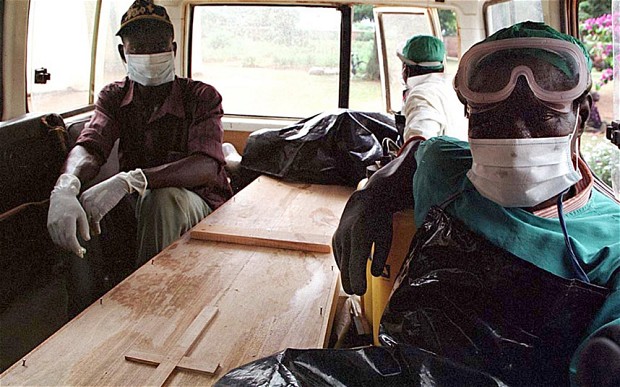
It came as a shock to read news of the Ebola outbreak in that very same area where I had visited 10 years ago: Kagadi, Kibaale District. My first thought was that the health care system couldn’t possibly respond quickly enough, but hopefully things had improved over the last decade. Reports noted that the Red Cross, Doctors Without Borders, CDC, and the World Health Organization (WHO) were assisting with the response. This was a positive sign since the area is rural, difficult to travel to, and as far as I knew lacking a strong health care system.

“This outbreak is occurring in the same area where the Red Cross is already responding to the growing crisis caused by the influx of Congolese refugees fleeing violence in their country” said Charlie Musoka, Regional Operations Coordinator for the International Federation of the Red Cross.

On top of dealing with the Ebola outbreak, the Ugandan Red Cross was also managing the influx of refugees into the country. My initial thought was that Ebola is easily transmitted by close contact between people and usually kills 90% of those infected. With the regular movement of people across the Uganda/ DRC border it could be just days before an Ebola outbreak occurs in the DRC.

Shortly after the Ebola outbreak, news broke that the Ugandan Ministry of Health needed Sh3 billion to be able to contain and manage the disease and necessary health care facilities. I was also contacted by the local health center in Kagadi and told that were having difficulty responding to the outbreak as well. My fears seemed to have been true and the health system was feeling the pressure of responding to an Ebola outbreak in an area where there was very little health care capacity.

Roughly, two weeks after the request for supporting funds by the Ugandan Ministry of Health, the Ebola outbreak is reported as contained in Uganda and a Ugandan team would be sent to the DRC to help contain the new outbreak there. Reports said that it was a different strain of Ebola, but the first reports were in a Uganda/DRC border town that is a regular crossing point between the two countries. I had worried about the lacking health care system in Uganda, but the health care system in the DRC is in an even more strained. There are limited health care workers and facilities, which are usually filled by casualties from the ongoing violent conflict in the region.

Early this month, the WHO declared Uganda Ebola free after there were no new cases reported after August 3rd (24 confirmed cases, 17 deaths). The facilities in Kibaale District remain on alert, but the larger Ebola crisis is in the DRC. The WHO confirmed the Ebola outbreak is a different strain (see map above) and not connected to the Ugandan outbreak, however there have already been 72 confirmed cases and 32 deaths. Health workers were reported infected in the Ugandan outbreak, but in the DRC so far 23 of the 32 deaths have been health care workers. Representatives of Medicines sans Frontiers note that the death of health care workers at hospitals scares people away from seeking treatment and they are more likely to continue the spread of Ebola. It seems that the DRC has been less equipped to deal with the Ebola outbreak or its just the nature of the area where the outbreak occurred that made it easier to spread.

Both of these examples of Ebola outbreaks in a remote region of Uganda and in a transit town in the DRC demonstrate the critical need for adequate health care systems and health care workers. Before conflict started in the DRC, the health care system was already underfunded and in need of investment. The United Nations reported that militias raided almost all of the health care facilities in rural areas where 70% of the populations lives. The conflict also disrupted transportation and everyone must travel by foot to get treatment. NGOs have tried to invest in the health care system, but Doctors Without Borders report regular attacks on their compounds. In Uganda, there has been similar conflict, but greater investment in the health system. However, a recent report highlighted the inadequate staffing and space in many key hospitals. In some areas there is 1 doctor for every 178,000 people. Due to financial constraints the Ugandan government has banned recruitment of health care workers.

No one can afford to not invest in health care capacity building. In these two countries it seems that health crises need to be managed by outside NGOs with additional funding. How can the international community better work to build the capacity of individual country’s health care systems?

Detroit’s Per Square Mile: Inequality from Space

Firstly, this was not my idea, but I wanted to test it out in Detroit. Tim De Chant posted on Per Square Mile that inequality can be visualized from space via satellite images on Google Maps/Earth. He previously wrote about the concept that the lack of urban trees represented the absence of wealth in certain areas of a city.

“Research published a few years ago shows a tight relationship between per capita income and forest cover. The study’s authors tallied total forest cover for 210 cities over 100,000 people in the contiguous United States using the U.S. Department of Agriculture’s natural resource inventory and satellite imagery. They also gathered economic data, including income, land prices, and disposable income.” (source)

The research basically stated that with an increase in income the demand for trees increased likewise decrease in income showed a decrease in demand for trees. As De Chant writes, the authors found that trees were seen as a luxury item.

This all made the gears turn in my head about how this research and De Chant’s image grabs from Google satellite imaging applied to Detroit.

48205 Osborn (“Deadliest” Zipcode)


I choose 48205 because, “The neighborhood of 44,000 residents accounts for 6 percent of the city’s population, but was home to 15 percent of its murders and 13 percent of its shooting victims.”

48221 Palmer Woods

I used to live in this zipcode, in the University District. I would often run around the Palmer Woods neighborhood because I was fascinated by how different running south past 6 Mile Rd. and running north above 7 Mile Rd. could be such different environments. Census data pegs this zipcode as one of the highest income areas of the city.

The idea seems to work well in Detroit neighborhoods, however the Greening of Detroit is working hard to plant more trees every day in both wealthy and poor neighborhoods.

“Between 1950 and 1980, around 500,000 trees were lost in Detroit to Dutch elm disease, urban expansion and attrition. During that same time period, economic constraints prohibited the city of Detroit from replacing those trees. […] In 1989, Detroit, a typical American city, was losing an average of four trees for every one planted.”

The organization is estimated to have planted over 65,000 trees since its inception in 1989.

Detroit is Not Your Blank Canvas

The rise of art as a means of revitalizing Detroit has become an exciting and controversial topic. I myself have been fairly skeptical and often view “art projects” with a certain about of disdain for their naivete and lack of real impact. Young gentrifiers and artists have called for Detroit to offer them more opportunities and good paying jobs, others have been drawn to the idea of “making” art in Detroit’s emptiness, and some artists have focused on Detroit as a place for only charity.

One well known example of art helping Detroit is the Heidelberg Project, which recently celebrated 25 years. The local artist who launched the project with his Grandfather is well known for taking vacant and litter-filled lots and turning them into “lots of art.” He has made his Eastside neighborhood more attractive with a mission to give young people a different vision of their neighborhoods and Detroit’s blight. Since the project began in it has faced demolition from the city and funding troubles. In 2011, the Center for Creative Community Development (C3D) conducted an economic impact study on the Hiedelberg project. The study found that:

[…] based on the nonprofit Heidelberg Project’s annual budget of $400,000 and an average 50,000 visitors per year, the annual economic impact in Wayne County is about $3.4 million. The exhibit also has led the creation of an estimated 40 jobs […]. The local economic impact — in areas of Detroit around Heidelberg — is about $2.8 million.

I have to be honest, I didn’t imagine that a neighborhood of art made from found objects could have had any impact bigger than the houses that it occupied. The Heidelberg Project is now in the process of building an art center to house the non-profit, its workshops, and other creative events. If anything the Heidelberg Project has shown that art can revitalize a community from the bottom-up.

However, there haven’t been any art projects that I have seen mirroring the example of the Heidelberg Project (have you? let me know in the comments). Most come from the outside; new arrivals to Detroit planning to make a mark on the “barren” city through art. The problem is that revitalizing Detroit needs more rooted efforts, art doesn’t always lead to economic impact, Detroit isn’t empty, and charity alone won’t solve the problems.

What about beautifying neighborhoods, painting houses that people do live in, or supporting community arts education programs?

The Allure of Revitalizing Detroit

Detroit has become a new kind of mecca for young people who want to make a difference and turn Michigan’s economy around. It has become “cool” to move to Detroit and work for a non-profit or other organization. This is all well and good and exciting, as long as young people who move to Detroit recognize that Detroit isn’t just about “saving” and doing whatever you want. There is a common misconception that Detroit is an empty landscape based on all the epic pictures dilapidated buildings taken by budding photographers, while the city has a lot of vacant properties and empty buildings downtown, the city is not empty or devoid of people. The people who remain in the city need to be engaged, included, and consulted on any project – citywide or neighborhood-based.

This often brings in the G-word: gentrification. I have written about my experiences living in Detroit, considering if I was a gentrifier, and calling for greater understanding of the city’s racial history and the privilege that many young artists bring into Detroit. Recently, Huffington Post Detroit, published a long article by Tommy Simon who wrote as a “young gentrifier” struggling to get by, but failed to realize that there is a large population in Detroit that has been struggling for much longer. He called for a stronger creative economy in Detroit that could provide senior level jobs for himself and his friends by noting that other young gentrifiers in other cities don’t have it this bad.

“Because I grew up in the suburbs and was mystified by the allure of being a part of the revitalization of Detroit. […] And while I hope I do not have to argue the importance of a city providing employment, I will clarify that I am not simply talking about any job, but a job that allows a young person like myself to put my education and creativity to good use.”

To me this represents the disconnect between wanting to revitalize Detroit and understanding that it isn’t a simple creative endeavor. In the name of “revitalization” artists can’t overlook existing efforts or forget to engage a neighborhood community. An excellent example of this is the fight over an “art house” in North Corktown.

“The art house people didn’t buy it, pay taxes, or intend to live in it,” said Samul. “They were just going to use it to play in.”

Often what the “Detroit is empty” misconception means for “art” is a disregard for existing Detroit efforts and communities in the name of revitalization. In this case the art house was framed as gentrification, but in the end the “art house” best represented the failure of art to connect to community. For any artists, this should be a lesson in talking to key community stakeholders before getting creative.

Art = Employment?

The Detroit Creative Corridor Center (DC3) is working on incubating and developing a creative economy in Detroit. In recent years there has been an upswing of art centers in Detroit from College for Creative Studies and the School for Creative Studies to MOCAD and Art Detroit Now  to the Detroit Design Festival (DDF) and Arts Corps Detroit, along with a long list of Detroit creative endeavors that have made art an important aspect of Detroit’s growth and image. The Knight Foundation released its list of grant winners of initiatives in Detroit that are “advancing contemporary life.” Among them were 2 groups working to advance the creative side of Detroit’s recovery, LOVELAND Technologies and the Mt. Elliot Makerspace.

But, does art and creative investment really drive jobs and economic growth?

For each dollar the state of Michigan spends on arts and culture, $51 goes back into the state economy. In Detroit alone, the 28 organizations included had total direct expenditures of more than $127 million and employed 2,657 staff. (source: about Report from ArtServe Michigan)

Art and the creative sector can no longer be ignored when talking about Detroit’s future growth. The impacts that have been measured thus far show that through programs like the Heidelberg Project the city and sometimes neighborhoods benefit from art.

“Vibrancy is probably the best proxy we have for the quality of place,” Coletta says. “Quality of place is essential for attracting and retaining human capital. And human capital is essential to the economic well-being of communities.” (source)

Art can no longer be ignored as an economic impactor, but if art can build vibrancy and revive communities it begs the question: for whom does art revive communities? For gentrifiers? For suburban weekend visitors? For the 1 million tourists who come to Detroit?

Artists need to consider their privilege, communities need to be engaged by artists interested in revitalizing Detroit, and art projects need to have a more direct impact for Detroit’s neighborhoods.

———-

From my quick and far from extensive research I have found very few instances of art and creativity benefiting Detroiters, neighborhoods, and those in need. One of my other favorite examples of a creative project that has actually impacted the Detroit community is the Empowerment Plan a versatile street coat/ sleeping bag created by a CCS student, Veronika, but developed in close cooperation with Detroit’s homeless population. As the project grew Veronika was able to employ some of the homeless individuals who helped her with the initial ideas.

Blue Helmets ineffective compared to US troops in Central Africa?

After operations in Somalia ended badly in 1993, the US seemed to have full blown “Black Hawk Down” syndrome when it came to military intervention on the African continent. Many have cited the Somalia event among other reasons for the Clinton Administration’s failure to act during the Rwandan genocide of 1994. However, the US has been involved in militarizing the African continent since the Cold War: propping up warlords, funding resistance movements, and even assassinating the newly (democratically) elected head of state of modern day Democratic Republic of Congo (DRC), Patrice Lumumba. Currently, the Obama Administration has shown no reason for restraint in sending troops to engage in African conflicts.

The UN has had a high degree of failure when it comes to peacekeeping missions in Africa. Largely due to limited mandates, UN troops in Rwanda, Darfur, and the DRC have been ineffective. The UN has had 15 deployments related to African conflicts, 8 of which are ongoing. The critical question is are UN peacekeepers more effective than US military interventions?

Darfur/ South Kordofan/ South Sudan

Sudan has presented a host of conflicts that seem to have baffled US and UN diplomats alike. Some have called for greater military intervention, but the US has focused on non-military negotiations and peace deals. The conflicts in the Sudanese region are largely based on the Sudanese government attacking other ethnic groups and attempting to maintain control of the remaining regions under their jurisdiction. The SPLA has become the main military of South Sudan and has an affiliate in Sudan (North) SPLM-N.

US

During the 2008 US Presidential race, on the campaign trail in 2007, Joe Biden called for a force of 2,500 US troops to end the genocide in Darfur. Hillary Clinton and John Edwards supported a plan for a peacekeeping force. Barack Obama called for a no-fly zone in Darfur and divestment from corporations supporting the Sudanese regime. Bill Richardson personally met with the Sudanese president to push for a peacekeeping force.

It is a little known fact that the Sudan People’s Liberation Army (SPLA) leader, John Garang, was trained at Fort Benning and that,

“The US government decided, in 1996, to send nearly $20 million of military equipment through the ‘front-line’ states of Ethiopia, Eritrea and Uganda to help the Sudanese opposition overthrow the Khartoum regime.” (Source)

President Bush was lauded for his role in the Comprehensive Peace Agreement (CPA) that ended the North-South civil war in 2005 which led to the popular vote dividing Sudan and South Sudan. However, there is no mention of the US’s military role in fueling the conflict.

The US has played a significant diplomatic role in the Sudanese region. There has been a lot of talk and agreements and support for peacekeepers, but there has been little accomplished in the way of ending the long running conflict between various groups. Could George Clooney get the US to send troops into Sudan?

UN

The UN has four current missions in the Sudanese region: UNAMID, UNMIS, UNISFA, UNMISS. The first of which, UNAMID, began operating in Darfur in 2007. Since, then 51 peacekeepers have been killed. Reports continue that the Sudanese government is targeting civilians.

Following the creation of South Sudan, a conflict arose over the area of South Kordofan in Abeyi. The  UN added missions in Abeyi to mitigate conflict in South Kordofan (UNIFSA) as well as a mission for South Sudan in general (UNMISS). By all accounts Darfur was a major failure of UN action and South Kordofan represented an equally prominent failure. Reports noted that UN troops stood by while Sudanese troops killed unarmed civilians.

In the Sudanese region, the UN has failed to end the killing of hundreds of thousands of people more than once and has suffered casualties of its own forces since becoming involved in the region. It is easy to quickly say that UN peacekeepers in the Sudanese region have failed, but would Joe Biden’s 2,500 US troops have done any better instead of the UN-AU peacekeeping force?

Actors:

  • Sudanese government troops
  • UNMIS (UN mission, 2005)
  • UNAMID with AU forces (UN-AU mission in Darfur, 2007)
  • SPLA (Sudan People’s Liberation Army)
  • SPLM-N (Sudan People’s Liberation Movement – North)
  • SLM/A – Sudan Liberation Movement/Army
  • JEM – Justice and Equality Movement
  • UNMISS (South Sudan, 2011)
  • UNIFSA (S. Kordofan, Abeyi, 2011)

Uganda/ Democratic Republic of Congo

The DRC has seen a high degree of conflict, which increased following the CIA assassination of Patrice Lumumba in 1961 and the US backed Mobutu coming to power for the next 32 years. Mobutu supported the Hutu militia (FDLR) responsible for the 1994 Rwandan genocide. The FDLR has been given refuge by the political establishment in DRC first with Mobutu and later with current President Joseph Kabila utilizing the FDLR to combat intervening forces (i.e. Rwanda & Uganda in 1996, 1998).

US

Since 2008, US military advisors have been on the ground in DRC helping to train the Congolese army (FARDC) to better maintain control of various regions of the vast country. It is unclear why military advisors were sent in the first place. Potentially it was a move by the US to counteract Chinese development programs targeting natural resources extraction.

The US has largely been absent from the conflicts of the DRC until recently. In 2011, President Obama announced that 100 US troops would be headed to Uganda to act as military advisors in the campaign to flush out the LRA leader, Joseph Kony. However, Kony and the LRA aren’t in Uganda anymore, they have been hiding out and operating from the DRC since 2006. New reports have come out saying that US troops are operating from bases in 4 countries are tracking down the LRA from bases in Uganda, South Sudan, DRC, and the Central African Republic.

The fact that the US is willing to devote military assets to routing a single militant group is extremely significant especially since there have been numerous bad actors operating in the region for decades and US actions in African conflicts haven’t been forthcoming. Since Ugandan president Yoweri Museveni took power and ensured that he kept getting elected, there have been 22 armed groups that have been formed to combat the government. Museveni has perpetuated the North-South ethnic divide held over from British colonial rule. As much as the LRA needs to be routed, Museveni needs to be engaged by the US to step down and allow real democracy to occur.

UN

UN troops have been operating in the DRC since 2008, but have often had to bend to the will of area militias. What real power does the MONUSCO have in the DRC? More recently, in 2009 and 2012, MONUSCO has been cooperating with FARDC (the Congolese army) on joint missions to take down the FDLR and other militant groups, including the LRA. On March 14th, a senior officer of the FDLR surrendered to the UN forces.

The UN mission in DRC has the largest budget of any peacekeeping mission, but is notably underfunded and ill-equipped. The main problem is the vastness of the mountainous region and the multiple militant groups that need to be negotiated with or militarily engaged. It just can’t manage all the space with the man power that it has, therefore it is unable to protect the population because it is just unable.

Some have credited MONUSCO with ending the violence in some of the regions of DRC as well as organizing successful country-wide elections. Potentially the UN missions is gaining ground in the conflict?

Support from both the UN mission and US military advisors is somewhat concerning since FARDC has been involved in some of the worst human rights violations in the conflict.

Actors:

  • FARDC (Congolese army)
  • MONUSCO (UN mission, 2010)
  • General Nkundu – split from Congolese army to lead Tutsi forces against FDLR
  • FDLR – former Interhamwe responsible for Rwandan genocide
  • Rally for Congolese Democracy (RCD) – backed by Rwanda
  • LRA (Lord’s Resistance Army) – from N. Uganda
  • UPDF (Uganda People’s Defense Force)


Will  the US replace the UN as primary peacekeepers in Africa? 

UN peacekeeping forces have tried to take on the Sudanese government and militias in the DRC, but have failed to keep peace or intervene in the killing of civilians. The UN almost always comes out with a statement condemning the killing of civilians by this or that group. Many peacekeepers have been killed in the various missions and there are only a few positive impacts noted from those missions. UN missions are notoriously plagued by underfunding, under-trained troops and a lack of adequate equipment.

In the past year the US has militarily intervened in 7 African countries with and without mandates or international support. They have trained the FARDC forces, which are now completing joint missions with MONUSCO to route militant groups. It seems as if Obama has taken up the Bush Doctrine to militarily intervene whenever he feels like it. Contrary to the UN missions, US military actions are rarely under-funded, troops are highly trained, and there is no lack of equipment.

On a side note, how can both the US and the UN overlook the atrocities committed by national armies (Sudanese government, FARDC, UPDF)? In these conflicts the UN/US create the narrative for who is the good guy and who is the bad guy, but there is a need for nuance. I understand that it isn’t possible to engage all sides and I can only hope that the UN/US missions are working to end atrocities committed by national armies, since those atrocities have often fueled conflicts further.

The UN is stretched and the US has the ability to send elite troops into conflict zones to rescue its citizens (Somalia). Can the US’s quick military interventions, anti-terrorism trainings, and military advisors create a more effective peace than the UN? After the LRA is eliminated will the US pick the next militant group to hunt down? Too many questions arise when analyzing military interventions. There is always cause for concern when conflict regions see an influx of militarization from the UN, US, and other countries with foreign policy interests.

samaritan’s dilemma: privilege & root causes

The world is full of incredible opportunities to do good. Many of us are raised with a background that informs us to serve others, particularly the “less fortunate.” Yet we face an ever increasing dilemma that requires us to check out prejudices at the door and delve deeper, beyond the surface of social issues.

We face these issues when encountering individuals in our own communities and when we choose to donate to well meaning organizations internationally (or work for them).

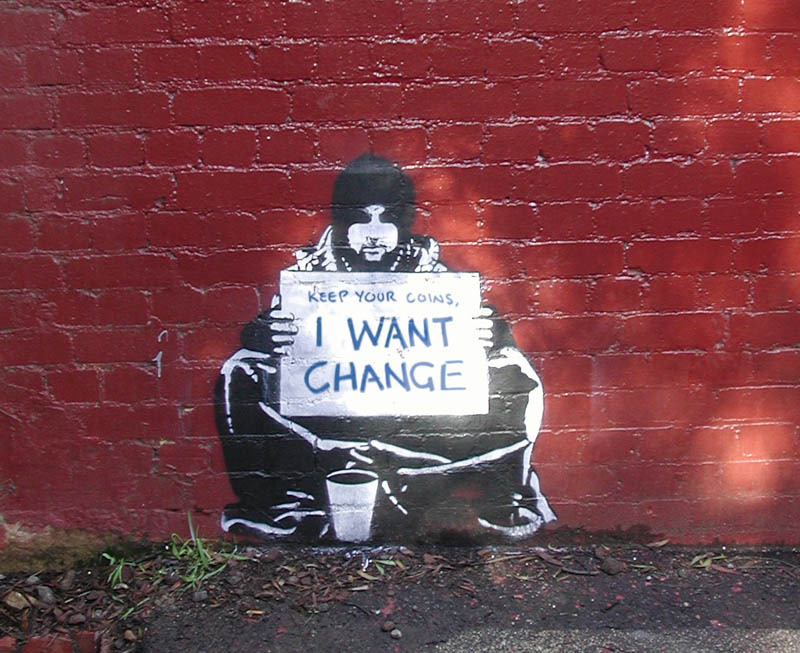
If you give a beggar money. . .

The homeless population and beggars around the world cause many to feel incredibly uncomfortable. We have mixed  emotions for a population that we feel equally empathetic and uncertain towards. Many religious texts tell us to serve the poor, clothe the naked, feed the hungry, etc., but we’ve all heard the horror stories of people who have faked being homeless or have been warned of giving money for fear that it might be used for drugs or alcohol.

“The ‘homeless’ guy I gave $5 to yesterday just paid to get on the bus- holding Starbucks and skates. Holiday generosity stock depleted.”

This seems to be credible dilemma, but it only skims the surface of the issue. How are we to know a stranger’s story? Is their predicament related to race and privilege, maybe societal power structures have adversely affected opportunities in their poor communities?

While at a social justice conference in Detroit with colleagues from around the country we were approached by a woman asking for money. It was a moment of questioning for all of us. Do we act as good social change agents and give some money or do we take a step back? In the end we all denied that we had any cash to give. Our discussion after that encounter came to the conclusion: “its always hard to know the best thing to do.”

What happens to your good intentions if you see them tomorrow?

Is it just a function of our privilege that we expect our small donation to a “less fortunate” person to change their life? Do we expect that since we took the time to be nice, that they will then no longer need to ask for more?

I’ll begin this section with a story.

A woman is approached by a middle-aged African-American couple in her quiet white suburb. They say their car broke down and they just need some money for bus fare to get home. She offers to give them the bus fare and give them a ride to the bus stop, but they say they’d just like the bus fare. A couple of days later, she sees the couple again at a department store telling the same story. The store employees scowl and say the couple is often there asking for money. This angers the woman and she feels cheated. Why does the couple have to cheat people who just want to be nice?

The real question should be: “What are the social implications that cause them to need to beg for money every day to get by?” Its all too easy to chalk up our failed giving expectations to a few bad apples, but there is often more to think about than the oversimplification of just one bad person.

Where did the person come from? What was their community like? Are these common issues that correspond with discrimination based on income level or race?

All of these questions are critical to being able to understand the root causes to the issues that people face. Very often there are dynamics of privilege and power at play. Historically, African-Americans have come from areas where they have been marginalized due to their race, which predisposes them to reduced opportunities in education and career, which can lead to lower incomes and continued discrimination.

Personally, I often struggle with the dynamics of being approached on the street and so I often neglect to give anything. Occasionally, I give a small amount to individuals who seem to be genuine, but that’s all too easy for me to pass judgment with my privilege. I guess I would prefer to donate to local organizations that work with the homeless instead of doing my own cash grants on the street.

Good intentions + organizations = addressing root causes?

The quick answer is “NO!”

We can’t begin to imagine that our choices to “do good” will completely change systems or flip our societal order in favor of the poor or racially discriminated. There is much more work to be done than handouts and volunteering if we are going to change entire systems and see change in our lifetimes. Social change takes many people working together over generations to make real and lasting impacts.

It is unfortunate that even humanitarian organizations can either be fake or completely off base. Here the samaritan’s dilemma becomes two-fold. What organizations should you donate your money to? and how do you know where (or to whom) that money is going?

Often service and development organizations fail to take the time to map out the root causes of the issues they work on and get trapped in actions that don’t address the root cause. To say that a beggar is homeless and on the street because they are addicted, lazy, or incompetent is an oversimplification. To say that a multi-country conflict is fueled by a single man shows a serious lack of historical understanding. We have to take the time to learn more and think critically about the social issues that we would like to amend and the people who we would like to help.

We cannot keep picking at the fruits of the social issues we see, we must start chopping at the trunks (institutions & policies) that perpetuate the root causes.

Tina Fey: international development is like. . . improv

“When you create something out of nothing, the first rule is to agree.” – Tina Fey

I’m not sure Tina Fey would attribute her words about improv as wisdom for international development, but there is a truth to the statement that can’t be ignored. Tina Fey might just be the best international development expert there is today and we all might need a little more improv training.

When we engage in development projects we are often creating something out of nothing. That is not to say that there is nothingness all around that needs to be “developed,” but many times development projects are creating new systems, organizations, norms, and terms of engagement. Before we can move into agreeing with our actual development project, we need to first take a step back and agree with the fact that we are outsiders, visiting unknown places, and often with no understanding of the history or culture of the people we are creating something with.

My Professor in my Capstone course in international development shared an excellent framing of how outsiders can engage in development work. I’m not sure if this concept can be attributed to her, but I have shared it many times since that course.

As development practitioners, aid workers, and humanitarians we can act in three unique roles, we can be:

Mirror – We can reflect back to a community what we see as an outsider. This can be beneficial  in letting others know how they are perceived and can lead to growth in areas that may have been overlooked by individuals who live with situations every day.

Echo – We can be a voice for a community that may be unheard or unknown. We can echo their concerns in our own communities and within the institutions that we work. We can extend their efforts further than they might be able, due to social or economic constraints.

Bridge – We can build connections between communities. We can assist development projects in landing grants and resources from outside institutions or organizations. We can create networks of support where they can be most beneficial for the community that we are working for.

At the very heart of development work, whether it is in a developing country or inner city, we must first remember to meet people where they are at. We cannot impose our understandings of reality on another if we hope to be successful. We must first take the time to learn the reality, culture, and everyday life of the community. Before we can start working to make something out of nothing, we must then follow the first rule of improv: to agree.

Obama’s Africa Policy is Military Policy

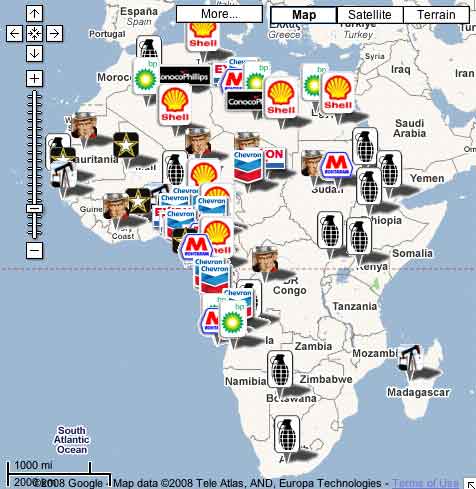
Oil and US Military Activities in Africa

Many people had high hopes for Obama’s presidency having a serious focus and positive impact on the African continent (including myself). The policies of past presidents relegated Africa to a single, monolithic policy for a continent of 55 countries. Under Bush, AFRICOM launched and a renewed focus on military engagement became the norm for US Africa Policy with the US military providing anti-terrorism training and the military implementing humanitarian aid projects typically conducted by USAID.

As Obama was campaigning as a Senator, I thought he had great potential to make changes in US Africa Policy. In 2007, I wrote:

Just last year the Illinois Senator went on an African tour visiting South Africa, Kenya, Ethiopia, and Chad – discussing the issues of the HIV/AIDS epidemic, the growing violence in Darfur, refugees from the Sudan conflict, the Kibera slums, and Africa becoming a new haven for terrorists. I wonder if he is in favor of the Africa Command? Obama presents a great hope for American political reform and rebirth, but also Obama presents a great hope for Africa and bringing about a more focused and effective and involved US African Policy that is not afraid to invest in the continent. (Written 01/06/2007)

President Obama began his presidency repairing the world’s view of the US after the extremely negative view the world population held of Bush and his wars in the Middle East. In 2009, Obama gave compelling speeches in Ghana and Egypt. To me, these speeches seemed to signify that the Obama Administration was going to engage countries in Africa as individual actors and place engagement in Africa as a higher priority.

My hopes aren’t as strong as Obama begins his campaign for a second term. It is no mystery that Obama’s focus has been on domestic issues during the last 4 years. Beyond the far reaching impacts of political unrest and change across North Africa and the Middle East, Obama’s Africa Policy has been kept at an arms length. Hillary Clinton has done a commendable job of managing the US’s image abroad, but Obama’s Administration has not engaged the continent the same way he has spoken to and about Africa.

How has Obama fared since his Africa Tour of 2006? What advances have been made in US Africa Policy? Here are the issues since 2006:

HIV/AIDS

Arguably the most prominent accomplishment of Obama’s term was passing Healthcare Reform. Much of his time and effort was focused on fighting, compromising, and pushing for this legislation. The strong domestic focus is expected, but its seems Obama only mentions HIV/AIDS on World AIDS Day. This past year (2011) Obama had a strong story and spoke of a growing commitment to “The End of AIDS.” However, we have also seen Congress push to slash our humanitarian aid budget to even less than 1% while at the same time the Global Fund is in a funding crisis. Bush often mention PEPFAR in his State of the Union speeches, but Obama never has. This may have just been political, Bush needed to deflect attention from his unpopular war-mongering and Obama needed to draw in his base of supporters for the upcoming election. Obama has said publicly that he will defend the US funding for PEPFAR and the Global Fund. Many people note that if Obama is elected to a second term he will likely be involved in more international issues. This seems to be one on Obama’s radar for future involvement.

Darfur, Sudan

While serving in the Senate, Obama was a staunch advocate for ending genocide in Darfur. After elected, he appointed strong anti-genocide advocates to key posts: Susan Rice, UN Representative for the US, and Hillary Clinton, Secretary of State. During Obama’s term, the world’s newest country was formed: South Sudan. Both Obama and Clinton have made statements affirming US support for the new country of South Sudan. Obama has made strong statements that South Sudan and Sudan need to move past long standing differences if they are to both prosper, but the reality on the ground is another story. The violence and bloodshed has not ended. Rhetorically I ask, why have no troops been sent to Darfur or South Sudan?

Slums

During his Africa Tour, Senator Obama visited the Kibera slum in Kenya. The AFRICOM 2011 statement of purpose notes the great need for increased economic support in Africa to bring stability and growth. This past year has seen revolutions and uprisings against governments across Africa, from human rights protests in Uganda, to full revolution in Egypt, armed conflict in Libya, land protests in South Africa, to #OccupyNigeria decrying the oil industry’s grip on the country. The slums in full view of skyscrapers are a common sight in many of the developing world’s major cities. Global inequality is not being ignored any longer and populations are taking things into their own hands. Obama has been known to be in close personal contact with African heads of state. US investment in Africa has not been as well publicized.

In 2011, Ambassador Demetrios Marantis spoke about the US’s Africa trade and investment policy. Marantis highlighted the small-scale, project by project, country by country investment related to the African Growth and Opportunity Act (AGOA) as well as the Millennium Challenge Corporation (MCC), but it seems that the glaring issues with these programs raised during the Bush administration have not been addressed. Marantis also spoke of the US’s efforts to sign bi-lateral trade agreements, 7 total, which will increase private investments. If you ask me this is a poor response and demonstrates a lack of imagination and innovation towards African engagement.

Terrorism

This has been by far the most prominent area of the Obama Administraion’s Africa Policy. Out of all issues focused on in Africa, the military intervention and on the ground action seems to be the “go to move” for African engagement. Since 2003, the US military has been conducting anti-terrorism trainings with many African militaries in the West African Sahel region, working to mitigate Al-Qaeda in the Islamic Magreb (AQIM). The US military has also been involved in the Somali conflict, helping Kenyan troops to protect their border and engaging Al-Shabab, these efforts have not been without civilian casualties. Recently, US special forces went into Somalia to rescue aid workers held by a Somali pirate group.

Obama authorized the US military to run support missions in Libya, carrying out the majority of flight missions attacking Libyan military installations. The US military presence was significant even though the UK and France were leading the mission. More recently in October 2011, Obama announced he would be sending around 100 troops to Uganda to assist in fighting the Lord’s Resistance Army (LRA) responsible for a long running conflict affecting Northern Uganda and neighboring regions.

This year, the bombing skills of Boko Haram have improved quickly and the Nigerian and US militaries believe AQIM is teaching militants in Nigeria to make better bombs. The attack on the US Embassy has lead the US to commit military efforts to helping the Nigerian government fight Boko Haram.

What will 2012 Bring?

Some have called these various efforts the “Pentagon’s shadow war in Africa,” however nothing has been veiled in shadows. The US holds nothing back to show it is there to militarily support African countries. The US Africa Policy has been revealed to be a focus on mitigation of terrorist groups that seem to be gaining ground and ensuring regional security before other economic or humanitarian efforts are increased.

“Africa is not big in Washington, there is no constituency that cares about Africa that much,” said Kwaku Nuamah, a Ghanaian professor at American University in Washington.  “I did not think the traditional contours of American foreign policy were going to change because there was somebody in the White House with ties to Africa, but of course a lot of people expected that.”

Like all presidents, Obama has many words and equally many unfulfilled commitments. As Obama is focused domestically, it has been the US military that has demonstrated his Africa Policy. Obama has chosen the sword over the pen in implementing policy across the continent and I can only continue to hope, like others, that a second term for Obama will mean more non-military engagement in Africa. This all goes without noting the US’s competition with China in Africa. . .

from the noble savage to the poor entrepreneur

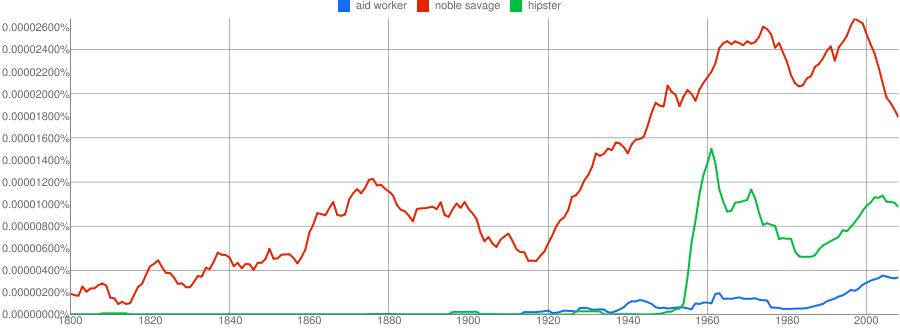
The idea of the “noble savage” has long held a lofty place in our American psyche. The desire to return to our roots, become “nature’s gentleman” (or nature’s lady), and live traditionally and without excess has been around since the early 17th century with the school of thought known as “romantic primitivism.”

In nature humans are essentially good – Earl of Shaftesbury

What we often forget in emulating the “noble savage” that we are utilizing our privilege to throw out the burdens of modernity, technology, and convenience when many who live “closer to nature” do not have the luxury of changing their social status or well-being by choice. We also forget that we sit in privileged positions where our culture is considered “on top” while other cultures are labeled as: savage, backward, weird, or crazy.

The Noble Savage

Thanks to Disney  (“Disneyification“) we all have a pretty good understanding of the “noble savage” from the movie, Pocahontas. The life of Pocahontas’ people is so appealing that John Smith desires to join them. An even more recent example comes from the movie, Avatar, where a marine from the “civilized” world works to be accepted by a the nature-connected native inhabitants of a newly discovered planet loaded with mineral wealth, which corporations want to exploit. These examples all go without mentioning classic tales of the first Thanksgiving, where “noble savages” show pilgrims how to farm and gave gifts of food to the starving new worlders.

We all like to look at the simple pleasures of natural living, hard work and closeness to nature that other cultures and ways of life exhibit, but we rarely think about the reality of how “simple” those lives really are. The beauty of nature and peoples unburdened by technology and “development” seem appealing, but we often hold misunderstandings about them and overlook the deep complexity of the “other.” More importantly we prefer to look past the hardships they face due to the impacts of our own country’s economic and political policies.

The Hipster

In our own American culture we have seen the inevitable rise of “hipster” driven by a desire to appear to live and enjoy a life of poverty as denoted by attachment to various social markers: old clothing, cheap beer, bicycles, and lofty ideals. Everyone has most likely encountered these noble savages in a city nearby. This has become a large sub-section of our popular culture. Sadly many of these individuals who appear “poor” are pretending; spending $500 on cool wheel sets for a custom fixed gear bike or purchasing expensive meat substitutes with food stamps.

Privilege is a pretty damn easy thing to deal with, it just takes self-awareness and humility. I suggest you get some.
(source: recoveringhipster.tumblr.com)

We are becoming “designer tribalists;” Working so hard to look a certain way in order to prove that we hold a morally high ground for being poor or downtrodden. The unfortunate side of this image effort is that being poor isn’t cool. Using our own social mobility and wealth to exploit the image of those who are actually poor only shows how misguided we are that “looking poor” is cool. If we truly cared about the poor we might change our image and instead use our privilege to support the poor.

The Aid Worker

Countless examples can be taken from individuals working internationally in the Peace Corps and other development organizations. We latch onto the new culture, language, and customs of the people with whom we are working with. We emulate the local culture, look down on tourists who don’t speak the local language, and sometimes prefer to identify with this new community as opposed to our own community back home. We become the perfect examples of those who follow the “noble savage” and desire to join them.

Often aid workers decide its their number one job to blend in: adopt local clothing, language, habits, etc.

You eat their food, you wear their clothes, you’ve learned enough of their language to buy food and clothes. If you blend in well enough, they might mistake you for one of them. And there is no higher honor for the expat aid worker than to be mistaken for local.
(source: stuffexpataidworkerslike.com)

Yet again this is an exercise of privilege. As aid workers we will only be involved for a short time. We can leave whenever we choose because of our international social mobility, yet the community that we have come to emulate is stuck and has no ability to travel beyond its country’s boundaries as we so easily do.

The Poor Entrepreneur

The noble savage seems to have shifted these days to rely less on primitive and traditional images of native peoples in nature to the idea of the resilient, “poor entrepreneur.” Individuals in the “developing” world who would been categorized as noble savages in an earlier century are now referred to as poor and entrepreneurial. Their poverty makes them business-minded and innovative, however this is not so much a  function of their ingenuity, but more a symbol of the growing inequality of our global system. To look at a person in poverty and say that their innovation is so pure is to remove their unprivileged history. They fashioned their own door hinges out of shoe soles because it was either too expensive to afford metal hinges or there was just nowhere to purchase them. They find new ways to keep cars running, use bicycles parts for windmills, and turn microfinance funds into a livelihood.

The “poor entrepreneur” is a social commentary on global inequality, and thus privilege, around the world. As aid organizations and micro-lending groups prop up the stories of these new “noble savages” we have to remember the reasons for innovation in poverty. If we all faced the same levels of oppression, inequality, and poverty – wouldn’t we all innovate a little more to improve our outlook on life?

Why are they poor in the first place?

This is the burning question. How do families, groups, or populations become poor in the first place? Through structural inequalities. How do the poor become “entrepreneurial?” Is it from Western education, funding, and influence or are the poor in “developing” countries already innovating for themselves? Many organizations and NGOs would have us believe that the poor have become entrepreneurs through their care and influence. However, there are countless examples that allow us to say that Western intervention or dollars are not required to make an entrepreneur. I don’t necessarily believe that entrepreneurs are born or taught, but rather it is a confluence of knowledge, circumstance, and opportunity. Anyone can be an entrepreneur, but not everyone has the same privilege or resources to overcome the structural inequalities that often block entrepreneurs from “developing” countries. We regard these poor people “entrepreneurs” without truly understanding the difficulties that they have faced trying to make ends meet and get their innovations recognized by large NGOs and companies.

Beyond the “developing” world, we are all attempting to become more entrepreneurial. As national economies struggle, we all face harsh economic times and often debt realities. If to be poor and innovative is to be an entrepreneur than to face an economic downturn must only be a bump in the road. There is more to poverty than innovation. The privilege of where you are born into the world is impossible to control and yet we still want to say that some people are better than others based on their income level. Privilege drives the world economy and it is a hard battle to take that privilege from the hands of those who have not earned it.