hangin’ in joburg

If you have been following this blog, I apologize for the extended interruption. The last post that I wrote was on the xenophobic violence, I was not a victim of that, no worries. The place where I am staying has very sporadic and unreliable internet, so my blogging and picture posting has been slowed because of that.

Short update: The xenophobia was near where I was staying (10km away), but never reached Zonkizizwe. I am still doing great and working hard at the VVOCF center for HIV/AIDS affected children. Yesterday was Zonke Testing Day, which was a huge success. Tomorrow I am leaving early in the morning to visit a Peace Corps friend in Mozambique.

Be sure to check back in later to read about the many adventures, success, and difficulties of my summer along with all the great pictures. My time in southern Africa is almost over as my flight leaves on the 10th of August. Sizobonana,

– Alex

a first glimpse: zonke

The next few entries will be a bit back logged since I have now been in South Africa for over 2 weeks. Many of the next entries will deal with issues and topic areas that I have encountered as opposed to the day to day happenings

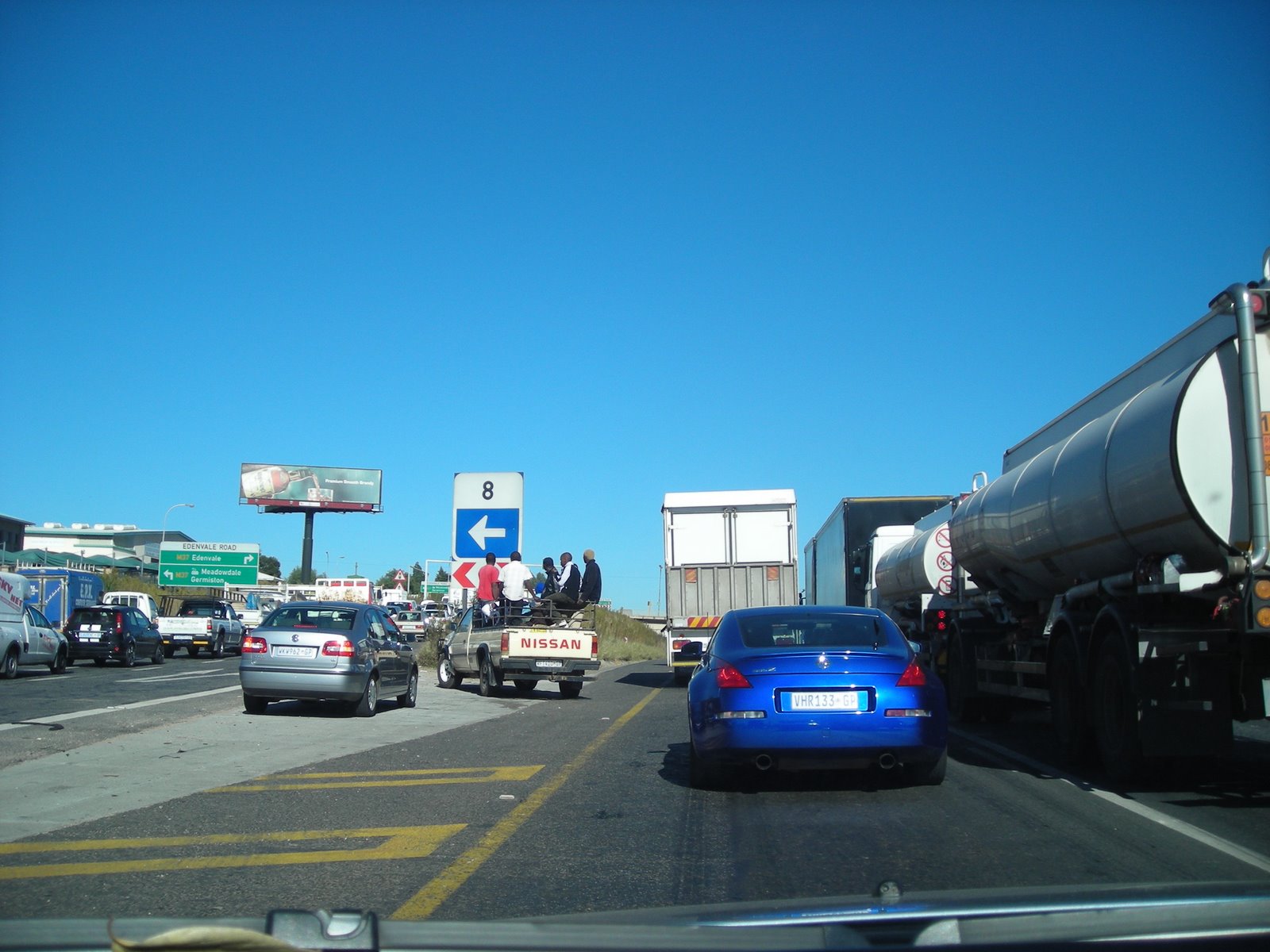
We woke up at 9am the next day to find our car nicely cooled down. I slept like a rock that night off the plane. We missed the breakfast at City Lodge and headed to Zonkiziwe. Rachel’s left-side driving is getting better. We were able to see more of Joburg in the light. It is like many African capital cities that I have visited – except wild driving is to a minimum (only on the shoulders), traffic lights work and road signs are followed, and there is the ever-present distinct smell of burning oil and gas. There were even police watching for speeders.

The informal settlements outside of Johannesburg are numerous and scenes from the Tsotsi movie were replicated in reality in an expansive wonder before my eyes. The South Africa seen by the majority of the population was nothing incredibly beautiful to behold – or was it? This would be my home for the next 3 months.

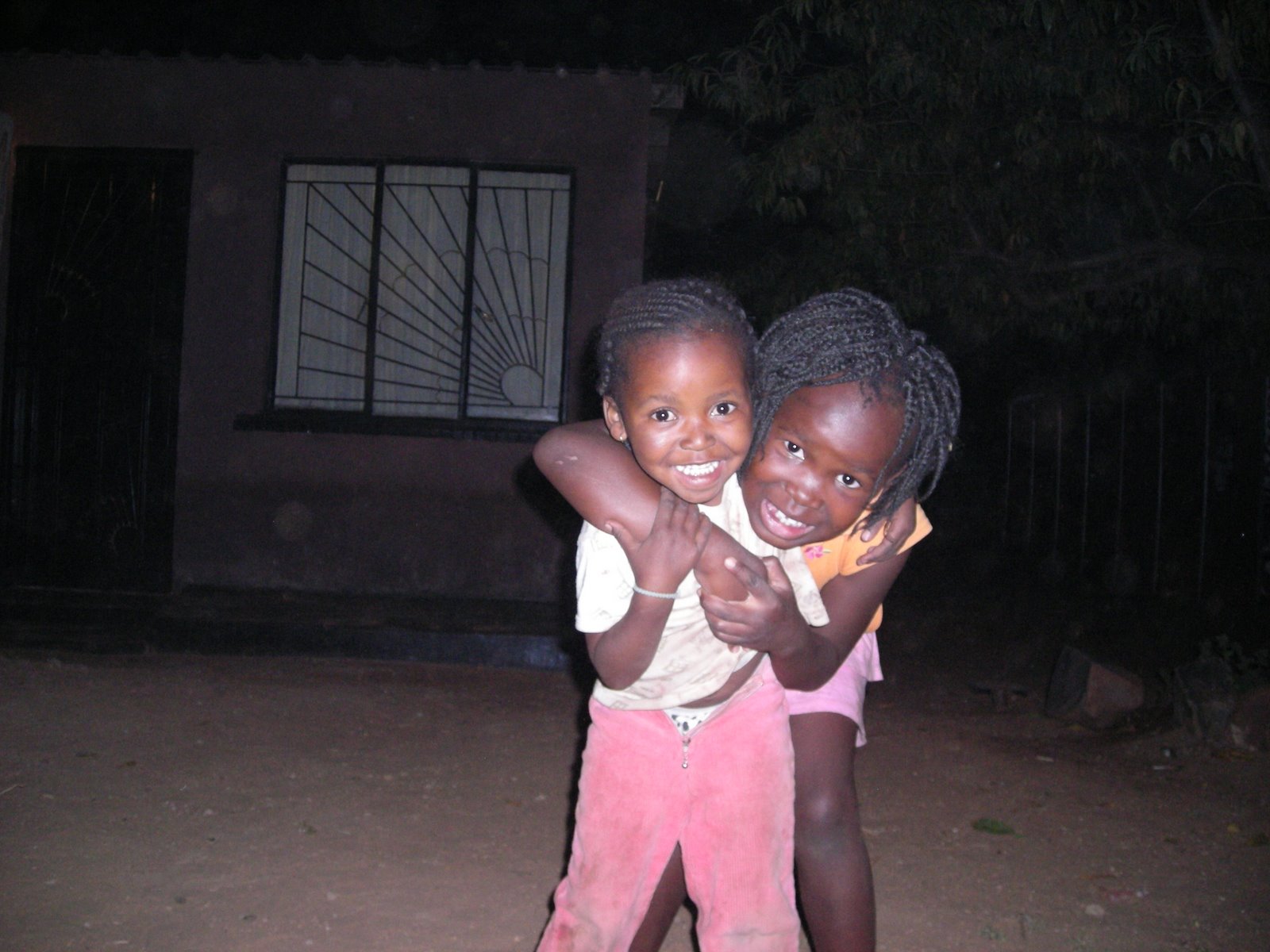
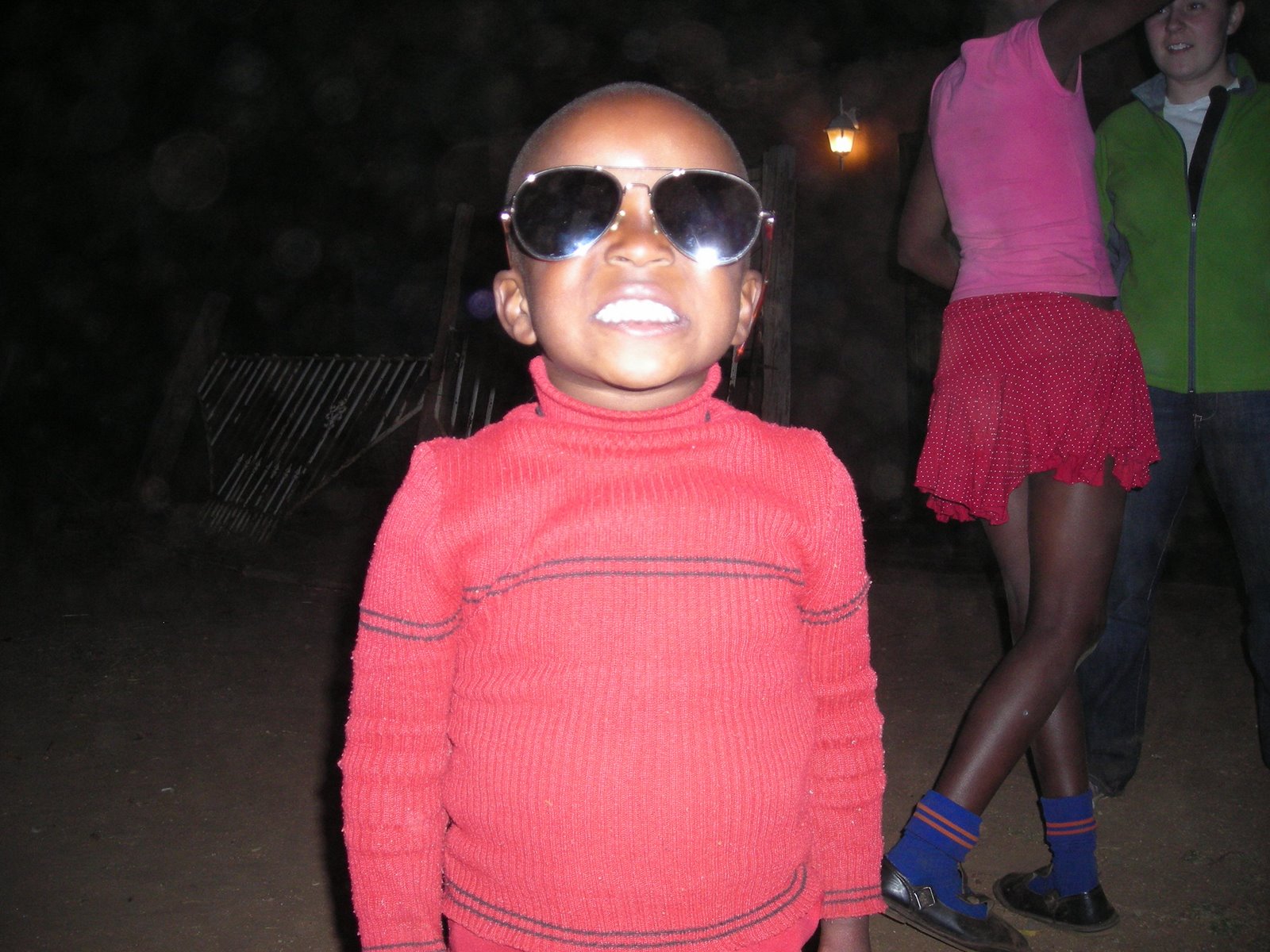
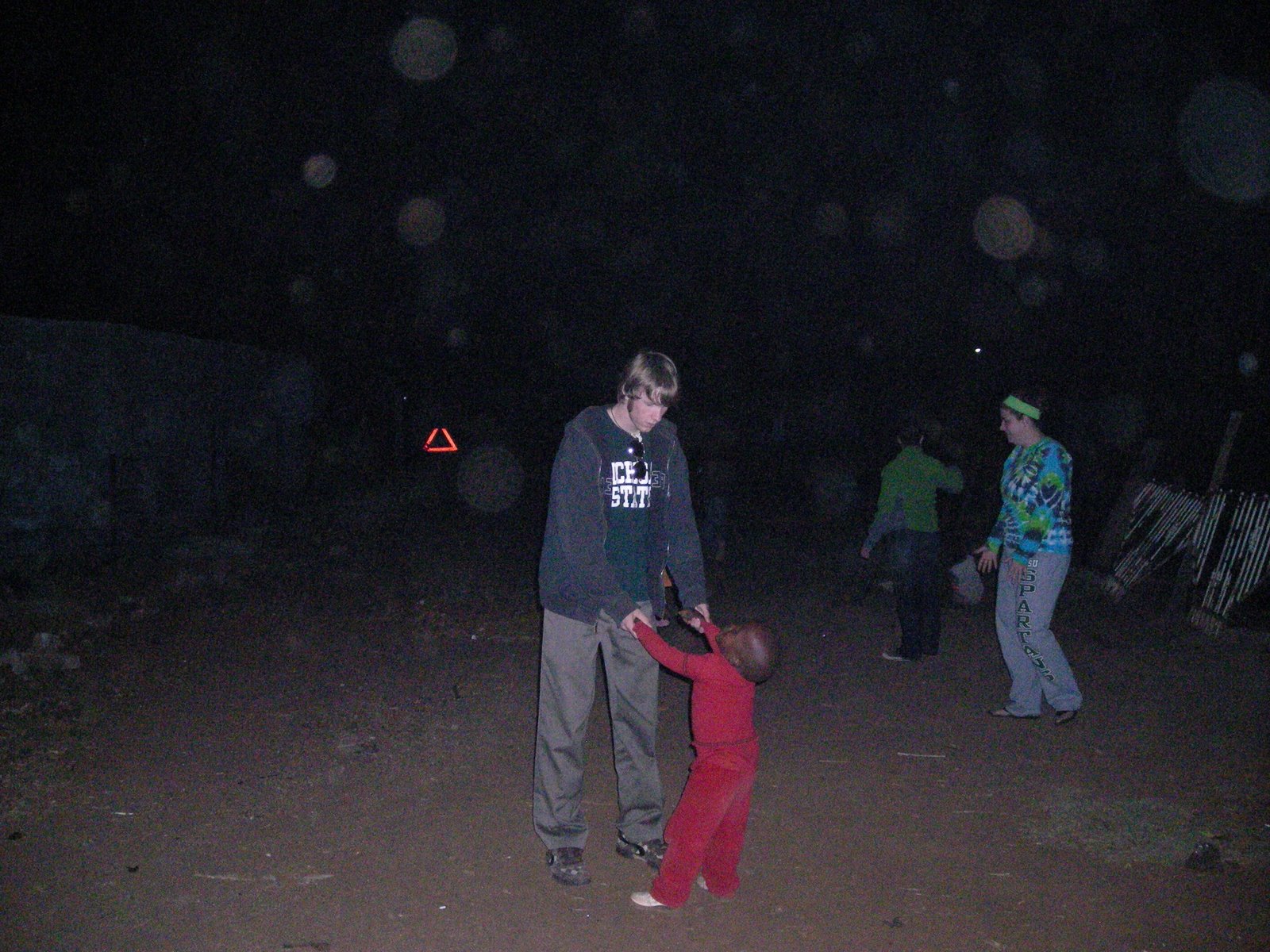
We finally found the correct, rock strewn street and arrived at the center. We met the director, Celumusa (Nomusa to those who cannot pronounce the click) and Phindile, China, and a whole group of excited youngsters. My introduction to the children was a lifting workout that included spinning one after another. China, not his real name, was very knowledgable and loved history. He likes to assert his dominance in repeating little remembered names and dates. We also later went shopping at a shopping center, very developed, but happened to almost take the wrong lane into head-on traffic.

It seems pictures will not work here either, wait a little bit longer.

Pictures Update: 29 December 2008
Sorry this is update is so late in coming, enjoy the newly posted pictures.

what are we to do when our children are dying?

Yesterday the headlines in South Africa’s Times newspaper read, “Our children are dying.” In South Africa 75,000 children die before they turn 5 each year. As one of 12 countries, South Africa has a rising child mortality rate. Of these 12 countries the top causes of a rise in child mortality is war and HIV/AIDS (and the UN Security Council disregarded HIV/AIDS as not important enough). The statistics come from a report released two days ago by the national health department, the Medical Research Council and the University of Pretoria.

South Africa is experiencing one of the most severe HIV/AIDS epidemics in the world. It is said that one in five people in South Africa has HIV/AIDS. The Avert organization cites sources that say more South Africans spend time at funerals than they do “shopping or having barbecues” and “twice as many people have been to funerals in the past month than have been to a wedding.” In 1992, Nelson Mandela took the first big steps to deal with the HIV/AIDS crisis when he addressed the National AIDS Convention of South Africa (NACOSA) to develop a national strategy. In six years (1996-2001) the HIV prevalence rate among pregnant women doubled and since 2002 has steadily increased. In 2003, South Africa announced a plan to provide antiretroviral treatment to the public. Following in 2004, the South African government’s treatment program began in Gauteng Province and soon included other Provinces. In 2005 the prevalence rate was at a high of over 30% in pregnant mothers.

Why has South Africa faced such a difficult and severe epidemic? Why has it taken so long to get a government response prepared? During the time period of the 1990s into 2003 South Africa was in the midst of major political and social turmoil. While HIV/AIDS was a growing problem, the political issues were at the forefront. Responses to and a recognition of the epidemic was glancing at best. The fall of apartheid allowed leaders to focus on dealing with the epidemic and Mandela led the charge. However the leaders that followed were far from Mandela’s original plan. In 2000, President Mbeki denied, in front of the UN Assembly, that HIV caused AIDS. He had put together a committee of AIDS deniers to advise his HIV/AIDS response plan. Mbeki denied that HIV caused AIDS and instead focused on the idea that poverty was to blame. While the official position of the government has been stated as “HIV causes AIDS” (2002), Mbeki continues to question such a strong correlation. In other headlines that spread across the globe, former Deputy-President, Jacob Zuma went on trial for the rape of an HIV positive woman. In the court questioning he told the court that, “he thought the risk from HIV was small, and that he had taken a shower immediately after the sexual intercourse on the night in question, because – he believed – it was one thing that might reduce the chances of contracting HIV.”

As with many health and development topics there is no clear cut issue to focus on and so if you want to talk comprehensively about HIV/AIDS in South Africa you have to talk about the effectiveness of treatment programs, the stigma of the disease, the rape and sexual abuse of women from gender inequality, the inadequacy of school systems, the responses of government, HIV testing programs, and the effects of HIV/AIDS on children. This last issue I will focus more.

Today I am flying to South Africa to work for the next three months at a care center in a remote (urban) informal settlement called Zonkizizwe. Zonkiziwe is in the Ekurhuleni township in Gauteng Province. The center assists children affected by HIV/AIDS and as you can guess that is every child. With the statistic that one in five people are infected there is no way that each child is not potentially already infected, has lost a parent, or knows someone who is affected. Many women who are HIV positive do not receive the drugs that they need and so the disease is passed on to their babies – thus creating one of highest child infection rates. In a Department of Health survey (2006), it was found that 260,000 children under age 15 were living with HIV in South Africa. In Zonkizizwe this prevalence rate coupled with a poor schooling system is contributing to a ‘hopeless’ outlook for the future. Life in a township is difficult with poverty and inadequate schooling, but when HIV/AIDS is added into the equation there are lost parents, children missing school to work, and children infected without testing or treatment available. On being hopeless, Justice Cameron said, “We don’t accept ‘sad realities’ in South Africa. If we accepted sad realities, we would still have a racist oligarchy here.”

The center, VumundzukuBya Vana “Our Children’s Future” (VVOCF), seeks to be a place where children can actualize their potential through educational programs, learning about health and nutrition, self expression, and life skills development. VVOCF has a feeding program, a school uniform fund, and a number of smaller projects to help the children of Zonkizizwe advance. VVOCF was started through a partnership fostered by Dr. Jeanne Gazel through her research of the impacts of HIV/AIDS. With her connection to VVOCF she was able to bring Zonkizizwe closer to the MSU community as a Professor and Director of MRULE (Multi-Racial Unity Living Experience) by way of a pen-pal program. I first learned of the center and got involved through the pen-pal program. This summer I am looking forward to meeting my pen-pal as well as contribute to the development of the VVOCF center. Over the three months I spend in Zonkizizwe I will be helping to develop after school programs that can continue, staff development, English instruction, possibly a book club, and setting up the internship program for other students in future years. I am excited to see Johannesburg and the surrounding area and hope to travel to see Soweto, Durban, Lesotho, and visit a friend in Mozambique.

This summer brings another new and exciting view of the African continent and I cannot wait to learn about the people and culture where I will be living. As with all my experiences I enter with an open mind and an unburdened quest to learn. While in Zonkizizwe, South Africa the majority of my time will be spent learning. Even though I am going as an intern to work there is no way that I will be the only one providing education. I am excited to learn Zulu, hone my soccer (football) skills, and learn of life in Zonkizizwe from my pen pal and all the children that I will meet.

Read the VVOCF Blog.

Join the cause on <a href="http://www.facebook.com/group.php?gid=4478917646
“>Facebook.

music to your ears: this year with hiv/aids

This year, 2007, there is some good news about the HIV/AIDS pandemic. The percentage of people living with AIDS has leveled off and the number of new cases has fallen. This is attributed to the prevention programs. However, risk remains high in sub-Saharan Africa. Eight sub-Saharan African countries represent one-third of all new cases and total deaths around the globe. This year there are still 33.2 million people living with AIDS, 2.5 million newly infected, and 2.1 million deaths. (Read the 2007 AIDS epidemic update) As with all good reports, “much good has been done, but more is needed.” Events are happening all across the continent with dedication and promises. The theme of this year’s World AIDS Day is leadership and “Stop AIDS, Keep the Promise!” While there is a lot of talk (read the statements) already this year about what will be done about the HIV/AIDS epidemic.

It is not very often that the news of HIV/AIDS is music to the ears, but this may be one case. In Uganda, where HIV/AIDS was first discovered in the continent in 1981, there is a rising musical movement to increase education and promote prevention. Beginning to make her mark as a rising vocalist in the Ugandan pop music scene, Sylvia Nakibuule chose to go on television to declare her status as HIV positive. Sylvia gained became well known through her work with The AIDS Support Organization (TASO), which regularly puts on performances to educate people about the dangers of HIV/AIDS and how to prevent spreading the disease. Sylvia tells the youth, “I never wanted this to happen to me, so I don’t want it to happen to you. The message I want to give the youth is let us do our best to have a virus-free young generation. Be careful in the way you handle yourself.”

In Malawi, the BBC has been following the village of Njoho and their responses to the AIDS epidemic. Six months earlier one of the village elders had little hope for the people in the village to change their behavior to combat the effects. Now there is only hope. The stigma has left the village; Orphaned children are given help, there are monthly talks and support groups for people dealing with the burden of disease, and there are training programs on education and prevention. The village is fighting back. However, the recent efforts have been hindered by a lack of adequate medical facilities. The local hospital is not equipped to give HIV testing or to distribute anti-retrovirals. Patients with AIDS-related disease are instead sent to a district hospital 10 km away and most villagers cannot afford the bus fare. Yet again the lack of basic healthcare infrastructure adds another complication to an issue already too complex. But there is always hope. Njoho will be starting a clinic next year for voluntary counseling and testing, mother to child transmission prevention, and will provide bus fare for those who need anti-retrovirals.

water is a human right, why is it so elusive?

Privatizing water has taken the world by storm. How many people would rather pay for cases of bottled water than take it from their tap? How many communities are deprived of water because a corporation moves in to contain and sell their water? The situations are similar to what happens here in the US and what is happening across Africa. The greatest new commodity essential to life in the world is a bottle of water. This is no more evident in the US where we are so caught up in the corporate farce that we prefer the tastes of different waters – or so we think. Here is also comes with the idea that it is safer, cleaner, and healthier to drink bottled water as opposed to tap water. ABC news presented a special on the myths of bottled water. The leading expert, used by the bottled water companies, said that there was no reason to say either tap or bottled water was better than the other. The also conducted a taste test with NYC tap water and five other bottled waters, including the top selling, french Evian. Tap water ranked fairly high at #3 with a bottled water and Evian ranked at the very bottom as the least good tasting water sample.

What is wrong with this picture? In the US we would rather pay five dollars for a gallon of water than drink the great tap water that is virtually free? How can this happen when there is such a huge scarcity of water in the world. Over 1.1 billion people in the world do not have access to clean, safe water to drink. We are talking about any drinkable water at all – but we would rather complain about taste and healthiness. In 2002, the Copenhagen Consensus determined that it was a government’s responsibility to ensure the right to water for all citizens. Sadly this has not been the case in far too many developing countries. So if the public sector fails to ensure the right to water, can the private sector fill the gap?

From Reason Magazine: “Contractors often drive tankers to poor districts, selling water by the can, in which case the very poorest of the world’s inhabitants are already exposed to market forces but on very unfair terms, because water obtained like this is on average twelve times more expensive than water from regular water mains, and often still more expensive than that.” Many times whole water supply and treatment systems are sold to private corporations. However, well many times privatization creates a price increase for a minority of people already connected to an ineffective government water system, a greater number of people without access to water are served. There are plenty of examples to argue both for and against water privatization. In the long-term, as with most development policies, when privatization is implemented correctly with the majority of people in focus then it works as a positive. Many activists de-cry water privatization as an evil and it can be. The new fear is the great “corporate water grab.” Just as with oil, policies need to be created to make sure the needs of people are met, not just business interests. In many African countries it is too late and privatization has taken a negative toll on the poor’s ability to access water.

As far as bottled water, just stop buying it. This drives up the cost of water and its increased privatization as well as created more pollution. Re-use a water container and drink the beautiful water from your tap.

from hope springs life

Duk, Sudan – a place of terrible memory and a place of hope. Muwt’s story began here, where will it end no one knows. By a extreme case of coincedience I met Muwt the other night at an African Culture Week student panel event. He talked about a group he was part of that was working to build a health clinic in their former home village. It sounded like a great opportunity for my own organization to get involved. After the event I talked to Muwt and found out that there was an art gallery event just nearby to benefit the health clinic. Since I had actually met the artist, who was putting on the show, a year earlier I decided to join him.

I knew Muwt was one of the many Lost Boys of Sudan living in the Lansing area, but I had not yet heard his story. The art was amazing – a collaborative effort of both the student artist and the Lost Boys. The art was created as a sort of art therapy project to help the Lost Boys express themselves as well as helping the artist express her emotions from learning the stories of the Lost Boys. As a child, Muwt lost his parents from the civil war between the North and South in Sudan which began over religious laws. He and other young boys fled so as not to be killed by the militias attempting to put down the South’s rebellion. The Lost Boys traveled across the vast deserts of Sudan, to the border to Ethiopia, chased away at gunpoint, back southern Sudan, to the border of Kenya, and finally into Kenya. This is a poor paraphrasing of the incredible tale he told so eloquently and I cannot hope to give voice to the difficult stories told by so many Lost Boys.

Muwt finally eneded with a degree of safety in a refugee camp in Kenya for nine years, until a group of Americans met him and wanted to bring him and some other lost boys back to the States. Muwt was set to leave for America on September 9th, 2001. He was caught up in the Amsterdam airport shortly after on September 11th. A defining day for the US’s foreign policy was shared as a defining day for Muwt. Lansing happens to be one of the top spots for refugee relocation and Muwt was assisted by the Lutheran Social Services to adjust to life in the US. Since that time Muwt and other Lost Boys have been brought into the US. They have gotten jobs at many of the area businesses and attend the local colleges and universities.

When they left Sudan the Lost Boys did not forget where they came from. For many there was no way that they could forget. Lost Boys have created organizations, written books, and given speaking presentations. The group of Lost Boys that Muwt is part of has started a foundation to build a health clinic in Duk Payuel to provide health services since any other medical facility is far away. A story of hope has given birth the a life giving clinic in an area of Sudan that has seen much war and destruction. From hope springs life.

when not in ghana

There is so much reflection and thought to write under this title, and the last. I will apologize now for the incohesive and random nature of my thought process and my failure of ability to express in words what you can only understand from experience.

I have been in Africa now for a month and a half – living, studying, and experiencing. Many people like to just leave it at that, but I like to be more specific. I was in the West African country of Ghana. A country with a relatively stable country and economy (some crises right now: electricity and fuel), full of culture and tradition, and even in its immense ‘development,’ Ghana remains with disparities like any other country – even the US. Africa is not a monolithic mass in the southern hemisphere of the world. So many people would rather chalk up the continent into one idea after reading, hearing, or experiencing a small aspect. Intellectuals, non-intellectuals, those who are from Africa, those who haven’t, and so many experts would rather clump the continent together. That just can’t be done. There is nothing about Africa as a whole that can sum up what it is. It is just like how in the US each state has its own special customs or accents or scenery – Africa as a continent is the same, but better. So many people would rather save time and refer to Africa as a monolithic mass. However, as I lived, traveled, and experienced Ghana the falsity of this idea was all too evident. Our MSU study abroad group was based in Accra, the capital city of Ghana and did much of our work at the University of Ghana. We took many field trips: Cape Coast, Volta Region, Kumasi, Villages near Danfa, and more. Every time that we would leave for a trip the Ghanaians that helped us would tell us that we would experience something so different from what we had seen before; something that we could only have seen in our dreams. They could not have prepared us more. Each region that we visited, each city, town, or village that we stayed in was completely different. We witnessed the many ethnic groups of Ghana, their music, traditions, and customs – the Akan of the Accra area, the Ewe of the Eastern Volta Region, the Asante of Ashanti Region. . . If there were so many differences and experiences in one of the smaller African countries, than what does that say for the massive continent itself?

One of the most obvious differences between Ghana and living in the US was the notion of time. In the States it is very hustle, bustle, go, go, go, exuding impatience – but in Ghana things will happen when they do. You can go for a meal order your drink, wait a bit, get your drink and order food, wait sometimes two hours (tops), get your food, and leave in about three hours from your dinner excursion. But its ok, what else were you going to do? Enjoy your food take your time, chat with your tablemates, tell jokes, enjoy the scenery, people watch – everything will happen in good time. I like that notion of time. I liked it so much that I stopped wearing my watch and often had to ask a Ghanaian with a cell phone for the time. I am not a rushed person, well at least not as rushed as most, and I like to take things as they come. Time should not be such a definitive aspect of your life. Time should work for you. One Ghanaian told me, “Here, we are manufacturers of time.” As opposed to we, in the States, who are the slave labourers to time. I return and time is back in my face again, cracking the whip. The ubiquitous tyrant of everyone’s lives will remain to be the arbitration of time.

Hurtling down the road at breakneck speed, I look over at the speedometer – hoping that we don’t nail a pedestrain or hawker – I see that the speedometer has been put out of commission, figures, they don’t want to know how fast they are going themselves. A mass of traffic appears and we, amazingly, stop in time to not die. The traffic lights have decided to work today. The car exhaust and black smoke flow into my front seat window as the hawkers walk by selling apples, ball floats, candy, posters, you name it. They are accompanied by those crippled by polio, beggars, and blind men walking with an aid. This is the taxi ride of Accra, you have not experienced Accra if you do not ride in the front seat of a taxi. Now back in the States I enjoy always smooth roads, no traffic backups (I don’t live in a very big city), and no death-defying driving skills. That is a fun little part of each day that I will miss.

We all take our health for granted. Everyone. In Ghana many of the students got sick, had diarreha, fever, something – back home we are rarely sick, we are rarely decommissioned for a day, we are rarely at odds with the world we live in as far as our health is concerned. I have the luck of owning an adaptable body and did not get sick in any regard. Thankfully whenever I travel nothing affects my internal health. The sun likes to affect my external health – my nose is still red with sunburn. We take our health for granted. Our professor who worked for over two years in the Peace Corps said she was always sick and while in Ghana I noticed this as well. Many people have fever, coughs, malaria, and who knows what. . . but, depending on location and class, they could not self medicate from the cabinet or see a doctor right away. They walk to get clean water, no faucet in the kitchen with clean water. We take our health for granted. I thought about this often when a group of us would go running. We would draw quite a crowd and get some cheers from school children. They must have all thought we were crazy – running miles in the hot sun at a fast pace, did we want to die? Well no, we Americans enjoy exercise, but for the Ghanaians we encountered and many Africans exercise is a way of life not a luxury to feel good. Will we ever stop taking our health for granted?

One of the sad reflections from Ghana is the idea of culture and tradition that is just not seen in the US. Ghanaians have a deep shared history and strong traditions rooted in their respective communities, which share much in common. There is a huge importance of family and the customs that are passed down. Many professions are passed from father to son, mother to daughter and the day to day of family life is passed down through traditions. In each of the villages we visited we were sure to make courtesy calls to all the local chiefs. The local chiefs still hold a great deal of power and we soon understood the protocol for visiting a chief. The importance of connections between people is huge. In some cases this cause corruption and nepotism, but there is an underlying good intention. Your connections with family are extremely important and you never lose that connection no matter what – if you decide to blow of family then you are looked down upon. You keep the family name, you name your children for past relatives, you visit often, and if you have a good paying job, you send support. This unknown emphasis on human connection is amazing. It goes beyond family to the people you meet in life. I couldn’t believe how many people could remember my name from a one time meeting. It must be the greeting ritual that makes it easier to remember. In Ghana you do not just wave and say, “Hi, how are you?” and receive the standard response, “Fine, thanks.” You stop talk, inquire about family, friends, and life. The nature of people in Ghana is just so much more cohesive and happy. I think it is because of the emphasis on people and getting to know them.

One of my favorite parts of Accra is that the grocery store is right at your vehicle window. While you are stuck in the mass of rush hour (sometimes it isn’t even rush hour) traffic, hawkers walk up and down the rows of cars, trucks, lorries, and taxis selling just about anything. Probably the oddest things I saw being sold were: a pair of puppies, toothpaste, a box of chickens, coffee mugs, umbrellas, the list goes on and on – pretty much anything that up might need is right outside your window. Besides the window side store and clubbing scene, I prefer to stay out of the big city. My best experiences on the etire trip were in the small villages of Otinibi and Danfa. The village life is so much more appealing and friendly. The village is a more closely knit community and is extremely welcoming.

Ghana was an amazing experience from all of the great classwork we did and, most of all, from the excursions we took as a group and adventures on our own. Meeting people was my favorite part and learning about their lives was most interesting. I don’t think I could have had a better experience in Ghana, unless maybe I spoke the language, but I am getting there. Ghana is an amazing place, an interesting beacon for the continent, and a force to be reconned with in the future of our global economy. I still have some very specific reflections from Ghana, so be sure to check back to learn about: investing in death, the discovery of oil in Ghana, and the confusion of the rastafaria movement.

Here are some random, artistic, super random pictures left over from Ghana:
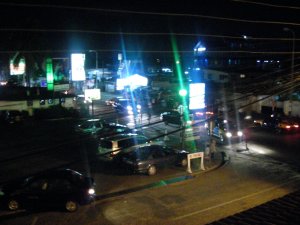
Downtown Osu at night, Osu has many western style establishments that are run mostly by Lebanese.


An awesome tree at the Forex by the Center for Art and Culture.


The arc of Ghanaian independence just down the road from the presidential palace.


A fisherman’s association from the view of Cape Coast Castle.
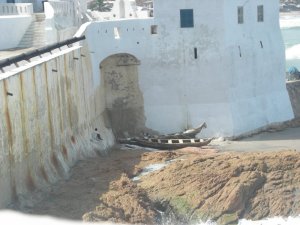

A fisher and his boats taking a rest in the nook of Cape Coast Castle.


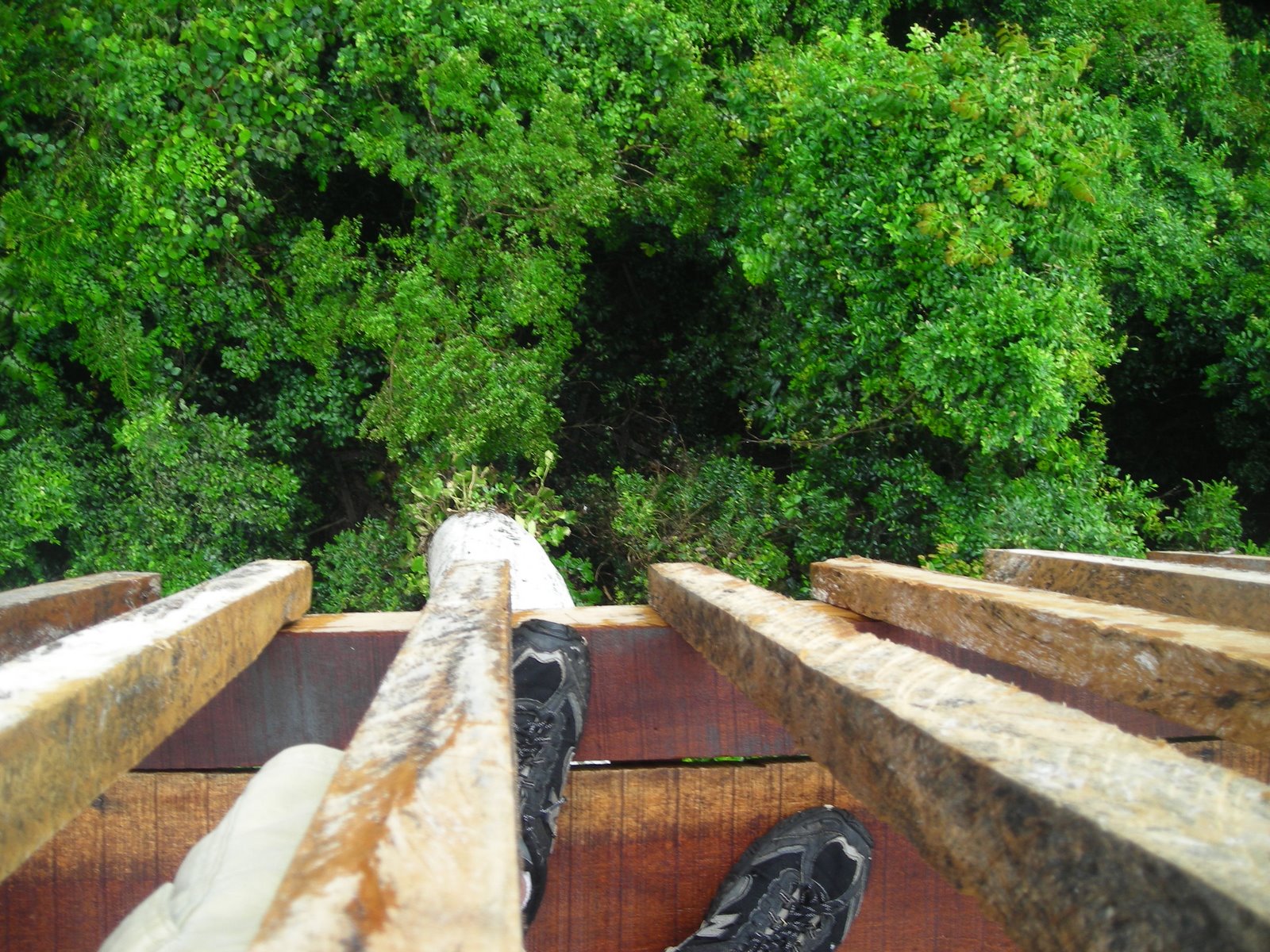
The canopy of Kakum National Forest, beautiful!


Don’t look down (from one of the canopy platforms.


Slightly frightening sign in Accra, just before we sped off. . .


This is the village area we stayed in, Shiashie, engulfed by the growing Accra.

The moon between palm trees at our hostel on Don’s 21st birthday.


A nice village scene in the Volta Region near Wli Falls, tallest in West Africa.


HIV/AIDS awareness and education.


Cool coke bottle shot, drink up.


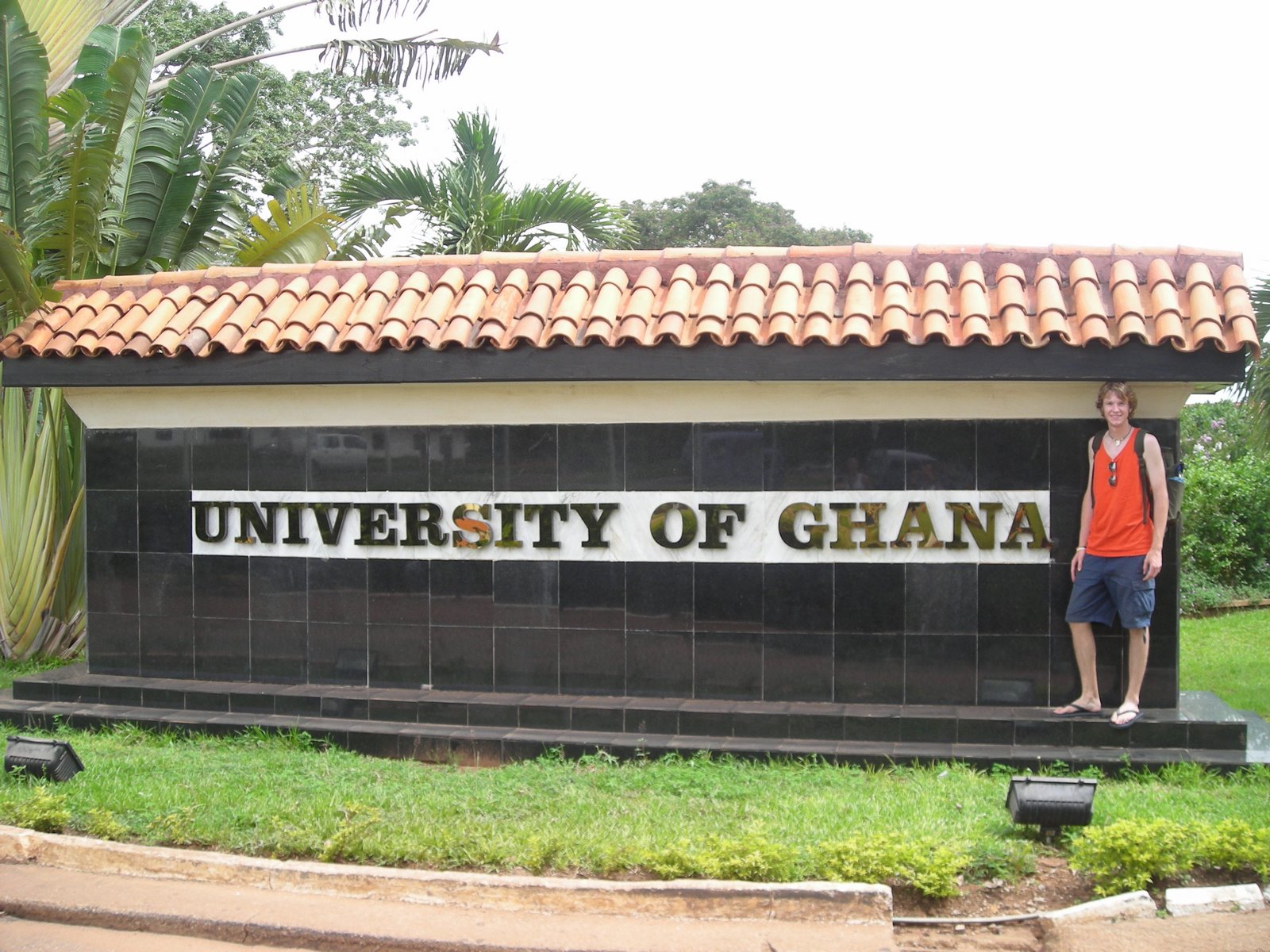
At the University of Ghana.


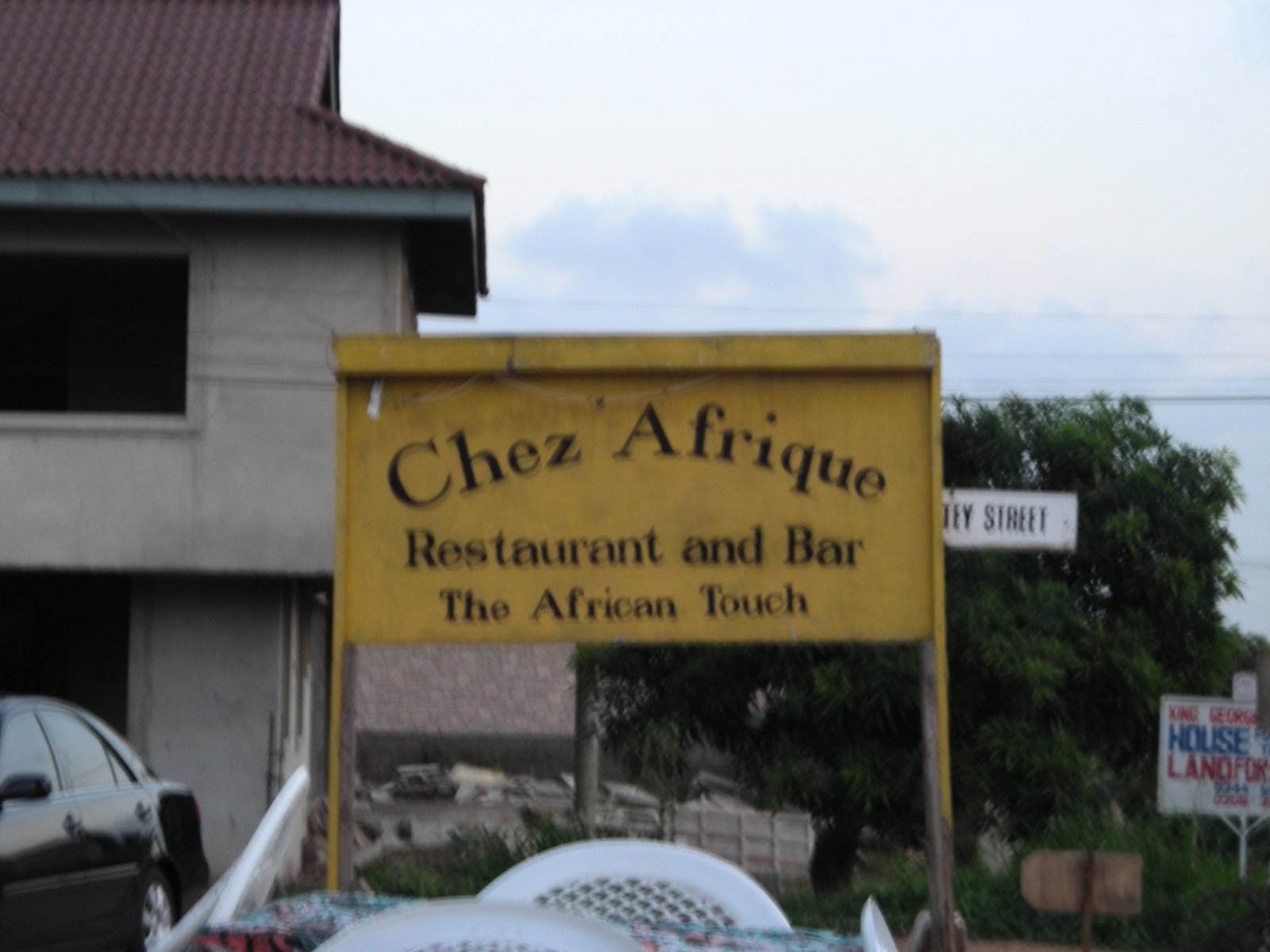
One of our favorite restaurants to visit, off the beaten path, but well worth a good Ghanaian meal.
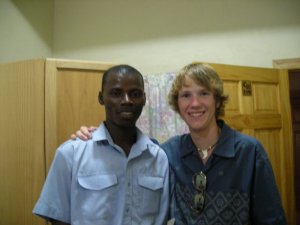

Me and Joseph, the most amazing hostel worker ever.

Index of blog post series on Ghana.

the longest driveway

On our way to the village of Danfa, where we were to conduct our community health diagnosis, it all became clear to me why the roads that we had driven on were being so developed. I learned from one of our interpreters that there was a new presidential palace being constructed on the top of the mountain past Mampong Regional Hospital. I learned that the roads before had been very precarious and dangerous, but nevertheless the entire route from the main road near our hostel in Accra-Shiashie all the way up to the mountain communities near the palace saw road development to the extreme. It was to be the president’s new driveway. The longest driveway that I know of, but when you get a police motorcade that clears the roads to take you home, why not have a smooth path in the name of development? This makes me wonder. . . will the surrounding communities benefit? Will they get development help and road improvements? I think not as evidenced by the poor side roads and lack of interest in rural communities (or so it seems). Is a long driveway really necessary (too much snow in Michigan)?

17 June 2007
We arrived back in Danfa, as we had previously visited, and moved into our guest house near the community health clinic. The clinic was constructed back in 1969 with the help of the University of California (no one knows which one) and serves six local communities of over 60,000 people. Many medical students stay in the guest housing to conduct community health diagnoses. This is why ours was to be in the village of Otinibi, just down the road about two kilometers. We were to interview four individuals with pre-determined backgrounds to see how well the community was doing in regards to health. Here is where many students first saw a very rural village with not much development. However, here there was a fair degree of development due to the involvement of the University of California and other NGOs from the UK and Norway. This is where I felt most welcome and at ease. There is no rushing in the village, there are no hawkers, no one will lie to you for help, the scenery is beautiful – mountains in the background, heart wrenching picture opportunities of children, the freedom of the wilderness, there is just such a better atmosphere and disposition that it is very difficult to explain. It is because of villages like these that I fell in love with Africa. The guest house was a very nice place where we could all live, cook, clean, and work together. Everyone took turns cooking a meal and cleaning up, playing cards, singing songs, kicking a soccer ball around, and just having a good time. Hurrah for group bonding!

18 June 2007

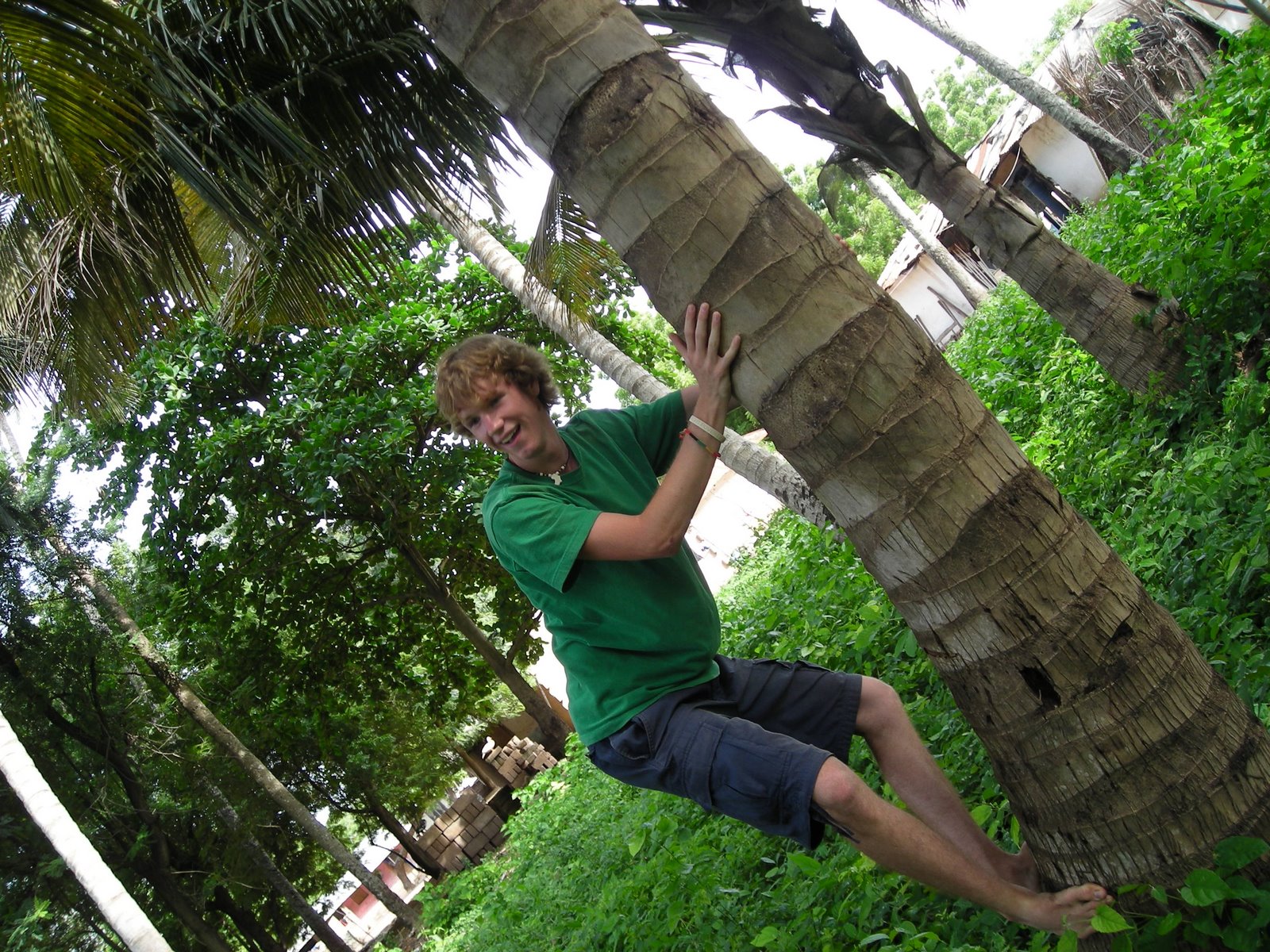
The very next day we awoke early to cook (Team 3) oats, eggs, and cinnamon toast – believe me this is an amazing breakfast. After eating we met our interpreters for the day. They would assist us in interviewing community members about health practices. We split into groups and were assigned an interpreter. Elkanne, 18 years old and son of our coordinator, was our interpreter. He was a very nice kid and was very good at helping us understand the health of the community. We walked the two kilometers to Otinibi and began interviewing. The village is like many that we have seen here. In the early stages of ‘development,’ a hardworking chief, mud buildings, sheet metal roofs, no defined pathways, a borehole for water, coconut trees, and lots of ‘bush.’ The village is beautiful and I can’t get enough of it. We conducted our interviews, meeting a great array of people from a man who spoke for his wife, a not so enthusiastic bachelor, and an awesome grandmother who supposedly grows the best of the best peppers. We learned of many different aspects of community health and saw a great deal of the community to assess its health. We chatted with the chief as he passed by and attempted to climb coconut trees. Elkanne was much better than I was.


While we were heading back to our guest house in Danfa, after completing interviews, we passed by a kente cloth weaving ‘factory’ of sorts. We came across a young boy weaving so fast and with such skill, it was amazing. Later we found out that this was a place of child labour and that these children did not attend school, which is against the law. On leaving we informed the chief and he said that he was going to register all the children in the area who were supposed to be in school. He would then confront the man running the operation and extend some help for the children.

The Interpreters:

Our Findings
We identified four key areas that contributed to the community health of Otinibi: Nutrition, Sanitation, Water Source, and Health Service Use. Each of the four people we interviewed told us that they ate only kenkey (pounded maize) and fufu (pounded cassava), none of then had anything else to supplement their diets. No fruits, no proteins, no vegetables. We wondered what effect this had on the community health as much of the diet was composed of starch. We then asked about waste removal and everyone told us that they used the dump by the bush, only the grandmother told us that sometimes they burned it. For human waste they all went to the bush, which as you may guess is very unhygenic. The public toilets have been broken for some years (collapsed). This moved us into asking where the families got their water. There is a newly installed pipe tap which everyone said they used, but we were told that it cost 200 cedis per bucket. Is this really the primary source of water? I can’t imagine everyone paying for a bucket of water every time they need it. Before the tap, the community used the borehole (pump well) to get water. Everyone told us that they knew the water was safe to drink because they drank it and didn’t get sick. Or did they? This is where we wondered if the common ailments of headache and fever, which were diagnosed as malaria, were really due to the water. There was also a stagnant pond that some people used to get water for bathing.

As far as the decision of what medicine to use, we observed self-medication, use of orthodox and traditional medicines. In the community everyone told us that the Danfa Clinic was their number one choice of medical care. I contributed this to the construction of the Danfa Clinic and the subsequent outreach programs conducted in the surrounding communities. No one, except the grandmother, even touched on the use of traditional medicine. The grandmother did not like the orthodox medicine because the pills made her sick. When we visited she was cooking some leaves from the bush for her fever and she said that these worked very well. However, she did not see an herbalist and knew what to use herself. This use of traditional practice when the modern approach does not work was also seen at the bonesetter’s clinic. One man did not want metal inserted in his arm another could not get placed in a modern clinic. In this scientific age the traditional herbalists/bonesetters are using modern x-rays to do their work and it seems to be working well. We also visited the traditional birth attendant (TBA). The one we visited happened to be trained and served the larger community including Otinibi. She was trained in 1996 and before that she just used her experiences and teachings from elders to do her work. We learned that in many cases traditional medicine is reverted to for reasons of proximity, emergency, and convenience. The vast majority of the Otinibi community used the modern medicine and ‘knew’ that it was the best option. The father we interviewed even went to the chemist (pharmacy) to pick up headache medication for his wife. When I asked Elkanne what he thought about traditional medicine he quickly responded that he only used the Danfa Clinic, but why not? His father worked at the Clinic and the parental influence is very strong in Otinibi. The parents we interviewed would take their children first to the clinic before themselves.

Our Recommendations
We observed a number of open pits and stagnant water sources. There was an old open well that had accumulated a disgusting degree of trash, fecal matter, and god knows what else. We recommended that these holes be filled in to reduce injury risk and mosquito breeding. Our next recommendation was for a separation of trash and regular removal. We also saw a positive in starting a composting project. This could help with the community’s subsistence farming. Since it was the rainy season many homes had closed windows and poor ventilation. For this we recommended screens or mosquito nets on the windows to keep out pests and provide ventilation. For nutrition we recommended maybe introducing beans to be grown and eaten as a source of protein. We also recommended that the people eat what they grow. A number of those interviewed grew vegetables and other foods, but only to sell. Eating the local fruits would also help the nutrition of the community. These were just the small ways that we saw to improve the community health. I would say that the community was for the most part healthy and just needed to act on some simple measures to ensure a greater wellbeing. I also noticed that there was a great lack of emergency transportation. There was none except for the local vehicles. I saw people hurriedly carrying sick people into the clinic, the TBA talked of childbirth emergencies with no transport, I have seen and heard this before – investing in an ambulance may help.

While in Danfa/ Otinibi we had number of delicious Ghanaian dishes:

Palava Sauce (spinachy) and Boiled Cassava

Groundnut Soup with Chicken and Rice Balls

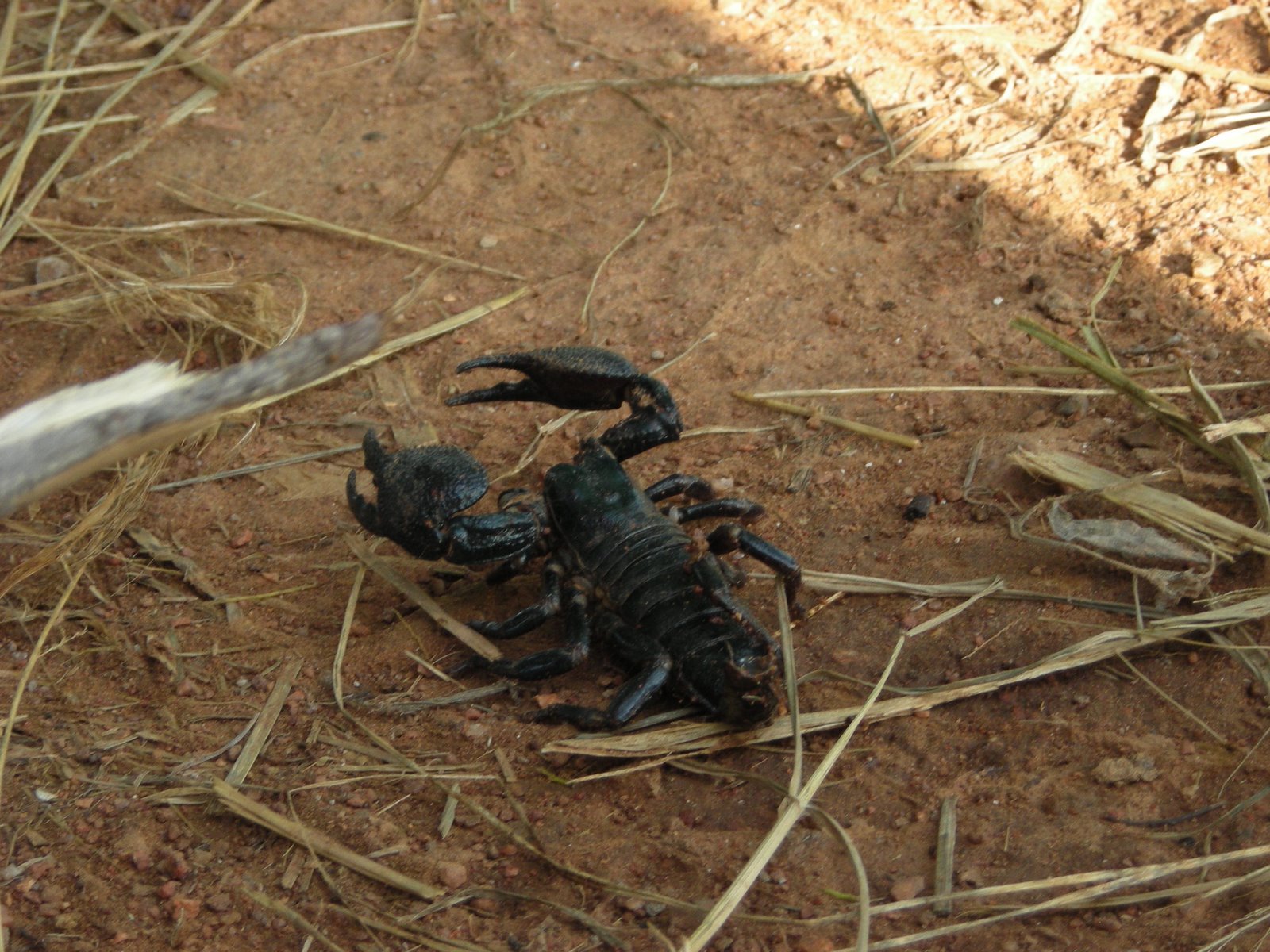
We saw a scorpion! In Ghana they are seen as very evil creatures and are the evil-doers of witches. This one was caught in the gutter and after we all took our pictures and left was probably smashed to a pulp. Scorpions are hated with the passion of a million fires in Ghana.

Index of blog post series on Ghana.
snapshot of health in ghana

We are now a week into our second course of out study abroad program, studying the disparities of the Ghanaian healthcare system. These disparitites range from Ghana to the US, urban to rural, and ever North to South. We have seen and learned about a number of different healthcare situations in Ghana. Since my interest is in access to basic healthcare I have been watching health clinics as we traveled around for the first 4 weeks and I have been trying to understand how the healthcare system worked, now all that I have observed is making more sense.
The Statistics
– one third of the 138 districts have no hospital
– high maternal mortality rate (hemorrage & infection)
– beyond the capital the road system is poor
– 40% of population is covered by the national insurance
– life expectancy is 57 (this has fallen with the emergence of HIV/AIDS)
– healthcare is geographically, financially, and culturally inaccessable

The key problem in Ghana is figuring out where the divide should be joined between traditional and western medicine. What is more interesting is the integration of traditional medicine into the very western Ghanaian health system. I noticed from my pre-healthcare course observations that there is a large number of missionary clinics, government hospitals, pharmacies, and other private health service centers in the Accra area. As we traveled from Cape Coast, Volta Region, and Kumasi I noticed that there was a lesser degree of healthcare services advertised or offered. Why was there such a change from the urban to rural was my first question. Even more so why was there such a disparity between the other regions and the Volta Region of Ewe people?

7 June 2007

Our first visit of the health systems in Ghana was to a health clinic and research center that was solely focused on using traditional medicines and herbs for cures of ailments. It was very interesting to observe the research being conducted and see that they were also running a full health clinic with their findings. The center claimed to have WHO (World Health Organization) funding, but I am not sure if that is true anymore. While there we met some students from the US who were interning at the center for the summer. This is a direct linkage between the traditional and western methods of medicine. This also brings up the issue of intellectual property rights – do the communities that the center learns from benefit from its revenue? Sure the health clinic, but otherwise? This is a reason that the center’s director gave for not partnering with large pharmaceutical companies – to not lose IP rights.


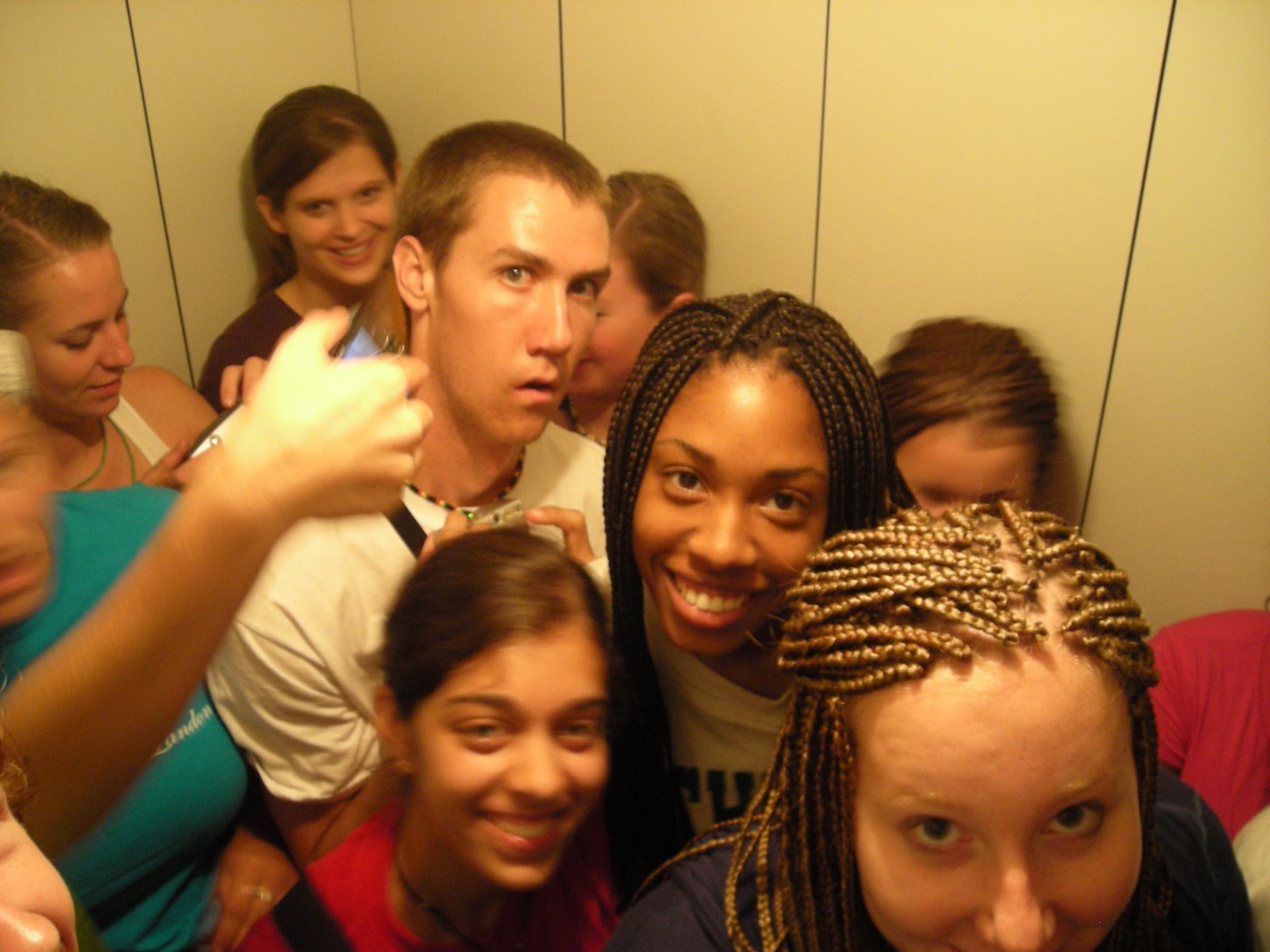
From there we went to the Mampong district outside of Accra to view the structure of the health systems and network of regional health services. We first visited the regional administration offices and talked with the head nurses. They gave us a very well run and organizaed outlook on healthcare in Ghana. At the offices there was also a counseling and testing clinic for HIV/AIDS and a peer educator class taking place. Here we learned that USAID (United States Agency for International Development) provided food rations for new mothers and mothers with malnourished children. I asked if this was true at all regional districts. The answer was yes, but I wonder if all the regions are as well established as Mampong. We then went to visit the regional hospital. It was a large, modern building, not very dissimilar from what you would find in America or Europe. But, there were obvious differences in the developed nature of the hospital. It was a nice hospital, but not one that I would want to stay in. We were given a tour of the entire premises and had a near-death experience in the elevator. Twenty plus people in an old hospital elevator in Ghana makes for exciting times. The elevator descended with the help of our weight and gravity – there was a loud bang as we hit the safety catch – there were still three floors to fall. The head nurse was not very keen on what to do next, but eventually we all climbed out from the gap left between the two floors to the wondering faces of what seemed like the entire hospital staff. Its the stairs from now on.
There seems to be a very good system of healthcare in the relatively developed areas of Ghana, but as for the villages I cannot say. It seems that we have visited mostly well put together centers and clinics. This made me think of the situation in Uganda, where it is the private and mission clinics that have all the supplies and the government run centers have absolutely nothing – very different.

At the Mampong regional administrative offices we learned that in many villages where there is no clinic or government hospital there is a nurse that lives in the community and is charged with the health of that community. However, I cannot speak to the degree of training or equipment that these community nurses have. This speaks to the obvious disparity between the urban and rural environments. There is not as much access to healthcare in the rural areas and so I wonder how much access there is in much of the rural North of Ghana? How many people do not have access?

11-13 June 2007
Some of the issues brought up in our classroom lectures about the health systems in Ghana relate to money. Not everything is covered and so some people cannot pay for access to services. There is bribery in medicine, we have not experienced this, but I do not doubt it. The basic insurance policy in Ghana costs about 72,000 cedis a year, this may not seem like a lot to ‘developed’ countries, but to a Ghanaian this could mean a great deal. In its health development, Ghana is still working on eradicating polio and guinea worm – even in metropolitian areas. Sanitation is a big problem. “The world is my toilet,” has become a joking phrase among the males in our group. If you are a male you can urinate just about anywhere, except where it says, “do not urinate here!” However, you still see people urinate by those signs. Sewage drains have stangant water and often do not drain anywhere. Trash is not collected and is often burned by the roadside. This reminded of Uganda where trash is just thrown out the window. In Kampala you cannot get away from the smell of burning trash, and there are not even drainage ditches.

Another issue brought up was that of ‘assembly line medicine.’ In Ghana there is such a high number of out patients (40% due to malaria) that the health workers often diagnos based on perception, not based on evidence. The issue of traditional and modern medicine is also a hotly contested topic. The health worker crisis in Africa seems to have been circumvented slightly in Ghana. Ghana has included traditional birth attendants in their health system and has just set up a new council for traditonal medical healers to have their say. The most fatal health issue in Ghana now is maternal motrality. Why? Good question, Ghana is ery developed in its understanding of health practices and so it makes no sense whatsoever that a mother should die due to complications of childbirth.

We next traveled to Ashesi University, a private, liberal arts university in Ghana (the most liberal in all of Africa, supposedly). Here we met a Fulbright fellow and a former fellow who is a profesor at Eastern Michigan University. Here we talked about the ‘brain drain’ and new ideas for Ghana’s health system. Currently a physician is in charge of managing the health center, but this means that often the physician has no idea how to manage and makes the staff unhappy and then does not practice medicine because he or she is too busy managing the center. The professor from EMU was working on publishing a study to help change this and introduce education for health managers. The incentives for staying in the country to work are minimal, but inticing. If you work in the Ministry of Health (MOH), then you can be sponsored to increase education and degree. The professor also talked of how Africa, “gets under your skin, you keep coming back.” It really made sense to me and I really don’t want to leave.

13 June 2007

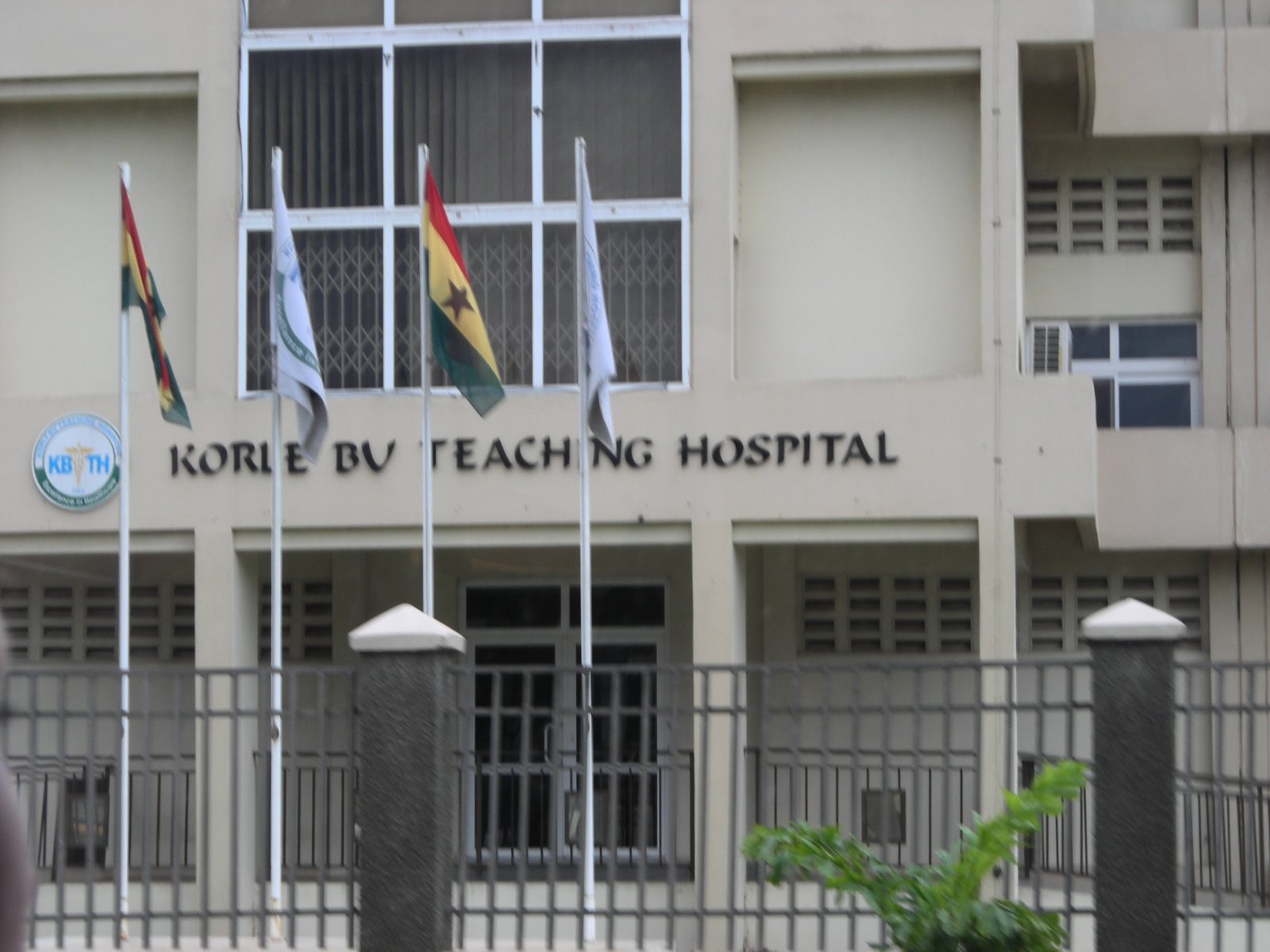
Today we visited the Korle Bu hospital, the best government hospital in all of Ghana. We were not able to tour the main clinic becuase we arrived late, but we did get a quick tour of the Department of Child Health. It was a very nice center, as you can tell from the pictures. This was again an amazing compund that constituted a village in itself. It was obvious that this center must receive a large amount of the government funding for health. There were a number of different center, housing for doctors and nurses, a bank, pharmacy, and a teaching hospital for the University of Ghana. Hopefully we can return later and get a tour of the main clinic to see how things are run there.

The recommended health center for the MSU program students, if they are to fall ill on the trip is Nyaho Clinic. It is a private center tucked away in a random area of Accra. We have had a few students go there, but I have not seen for myself the interior. I have heard it is very nice and Ghanaians in the health profession know it as a nice and expensive clinic.

So far most of the health systems we have seen are very well established and well run and seem to be in great condition. We have not seen the failings of the Ghanaian health systems and the picture for now seems very rosy. I have seen the many mission, private, and government hospitals and clinics in the fairly ‘developed’ regions of Ghana. What I have not seen is the lack of healthcare like I saw so vividly in Uganda. The EMU professor at Ashesi University told us stories of his experiences with health in Ghana. He told stories of overrun rural clinics, a family’s inability to pay for lifesaving medication, the long distances traveled wo receive attention when it is too late, the sheer numbers of people who just do not have access to basic healthcare. This is where I feel we should be, this is where it would make sense to me, this is where we can make a difference. We will now be leaving for the village of Otibini near Danfa to do a community health assessment. I think here is where we will get to feel the village life and true health crisis.
Index of blog post series on Ghana.