and the beat goes on. . .

i am about to tell you a story
of lives forgotten and an absence of glory
for i have seen the faces
of people who will never live again

and this is a mark of indelible pain
coursing forever through my viens
so i continue to tell their story and ask for help
because there is a great lacking
for solutions to write a new ending
to the story pending

because there they lie,
broken and dying
on the doorstep of humanity they are lying
waiting for someone to hear their cries
before another so needlessly dies
starving and forgotten
they know not what will become of their fate
in this terrible world of power, corruption, money and hate

on that bright sunny day
somewhere in the month of may,
i came across a drum
and that has made this vision come
as the story i am about to tell
is percussed from that drum’s resounding yell

i learned the rhythms
i learned the beats
and as i learned my sorrows increased
how can people be left to die
without a care
without emotion lost
without a helping hand
and without a hope?

this conflict is one from which we cannot fly
the beat goes on
and so many can no longer try,
to gain that basic right
in this world, that is society’s eternal fight.

and there they lie,
broken and dying
on the doorstep of humanity they are lying
waiting for someone to hear their cries
before another so needlessly dies
starving and forgotten
they know not what will become of their fate
in this terrible world of power, corruption, money and hate

power to the people
this movement flows like treacle
rise up against the institution
increased are the privileges of the western popullution
empower the oppressed and marginalized
why can we not make this effort prioritized?

progress is gained by change
and this idea alone.
this encompasses issues of a vast range
and our actions need to hone.
the beat goes on
and so many can no longer feel the pulse
the beat goes on
and so many are consumed by apathy
the beat goes on
and so many are no longer here,
this is what i fear.

stop. and hope.
when we work together we will be able to cope
joining our efforts we can change the world.
combining our passions we can shape that world.
believeing our dreams we can grow this world.
and the beat goes on
do you really care?
the beat goes on
share your story,
the beat goes on
bring your drum
and the beat goes on. . .

Alex B. Hill
written down on 28 February 2007, composed over the past year

. . . keep your promise!

Congratulations big sister Molly on graduating from Kettering University! Now the lifelong education starts which no school or curriculum can offer.

At the end of this week we traveled to the Ashanti Region to visit Kumasi and some of the surrounding villages. We began our travels just as the G8 Summit was ending and the news has been all over the importance this summit held for Africa and Ghana.

8 June 2007
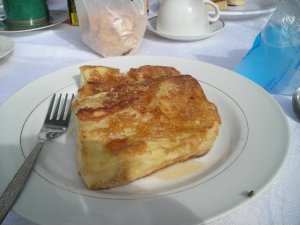
The eggs and toast constant has finally been broken with some glorious french toast – syrup, cinnamon, and a delightful change. No one in our group has ever appreciated or enjoyed french toast as much as we did that morning. The heat and sun have also returned from an absence. It has been a rainy and overcast week, but the sun emerged to greet us. Before hitting the road we stopped at the Forex to exchange some money. Aljazeera News was playing and the topic was the G8 keeping promises to African aid. They reported that $25 million is sent to Africa in aid each year, but that there is an $8 million shortfall. During this summit the G8 pledged to give $60 million to fight HIV/AIDS, TB, and malaria in Africa. Will these be promises kept?

We hit the road for the 5 hour trek to Kumasi. It would have been a very boring and tiresome ride, but I had my book and BBC radio to keep me company. Top stories included the role of the G8 in keeping promises and African nations also keeping promises, J.A. Kufor, President of Ghana, speaking on behalf of the African Union as chairman asking for G8 commitment, and a stunning story about female genital mutilation (FGM) in Cameroon – a boy ran from home with his younger sister to protest and to protect her from the harmful practice. Their father then went to the village council to plead with them to abandon the practice as it had taken his son and daughter away from him. The village then banned the practice and the children returned home knowing that now many girls would not have to suffer FGM. I had also purchased a novel from the University bookstore, The Last Duty. The book is about the Nigerian Civil War of 1964, which I knew nothing about in all of my studies of Nigeria. The book tells of the war and its effect from six different people’s views, all six are linked, and all six represent a different side of the story – except for the rebel view.

Our first stop before Kumasi was Bonwire village where we visited a Kente cloth weaving shop. We were mobbed by children here and people trying to get us to buy their stuff. It must have been one of those tourist common spots. It was interesting to see all the Kente cloth and Eric, out bus driver, helped me bargain for a Kente cloth tie – very awesome. Some of the sellers were very persistent. One, I forgot his name, stuck with me and haggled me for a long while. He tried to sell me bookmarks, then helped his friends sell me stuff, then asked for money for his grandmother, sister, and himself – the story always changes.

Gracious Living Hostel was situated on a road that I knew well. It was the typical African roads that I had come to know from Uganda and feel always in my hindquarters – not a smooth surface to be found, dust kicked in the air blinding all, and a tense body ready for the next impact. At the hostel there was some trouble with rooms and so we were a bit crowded in the beds, but hey this is Africa, we can deal. Some of us played a card game called ‘peanuts,’ but which I later found out was the game I knew as ‘nertz.’ It reminded me of some great afternoons with Grandpa.

9 June 2007
We began our day with a nice breakfast and went to the Kejeta Market in Kumasi. This is the largest open air market (in the world? in Ghana?). The market was much like Makola market, but much bigger and crazier. It was also much more fast paced and there were narrower alleyways and more grabby stall owners, there was just so much more happening. In the market is where I also witnessed the ‘travels of a t-shirt in the global economy.’ There were many stands sporting the latest Western fashions, but these were obvious imports. There were large groups of people sorting slacks, jeans, and t-shirts from piles of clothes imported from the ‘developed’ world.
Afterwards we headed to the village of Kurofuforum where we learned how brass figurines are made. It is such a long and tedious process with so many steps. It gave us a new appreciation of the artwork. The man showing and teaching us had scars all over his knees and arms and could pick just about anything directly out of the fire – so calloused and hardened by his work. We then went to Bosumtwi Lake. Here we were accompanied by local fishermen on their fishing boats to swim in the lake. The fishing boats are comprised of half of a tree log, that is it. It was a very good workout to paddle all the way to the middle and a joy to swim in the, what felt like, 90 degree water. What a great experience.

10 June 2007
We began today by stopping at an Adinkra village to see how cloth is stamped. We bought a cloth and witnessed some of our professor’s skill at arguing and bargaining in Twi to get a good price. We then all took turns stamping the cloth to take back with us as a reminder of our trip.

We happened to pass the regional bottling station for Coca-Cola in Kumasi. Coca-Cola is the drink of Ghana. It holds about 90% of the soda industry here against Pepsi.

We visited the Royal Court and Palace Museum of the Asantehene, the ruler of Asanteland in the Ashanti Region. No pictures were allowed and the outrageous price for foreigners followed us into the compound. We were first subjected to a propaganda video about the Asante people. The video claimed that the Asante were peace loving people, yet if you look at their history it is clearly evident that they were quite to use violence and were very aggressive people who instigated many conflicts. It was very interesting to learn about the history of the Asante people from the very place where their kingdom resides. It was especially interesting to learn directly about a people that I have studied so much.

On the way back to Accra from Kumasi, BBC doesn’t come in until you get closer to the greater Accra region, I finished my book and was finally able to listen on the BBC to debates about the G8 summit from an African’s perspective as callers from Tanzania and expats from other parts of the world voiced their opinions and reactions. Another interesting story was about the Burma Boys of Nigeria who fought in WWI for the British in Burma. The story was of colonized Nigerians fighting in Burma and being addressed by the Japanese fighters in perfect Hausa, one of the major language groups of northern Nigeria.

This weekend we have seen the greatness of the very western oriented Kumasi and the kingdom of the Asnatehene. We were able to see part of the reason that the British gave Ghana the colonial name of the Gold Coast from the wealth of the Asnate. We have experienced a region deeply rooted in tradition, powerful traditional rulers, and great wars with imperialist countries.

On the way to Kumasi our professor commented on how much has changed since the last year. She noted that there was so much money flowing into the country now as opposed to just a year ago. Is the G8 keeping promises in Ghana? we have passed so many road improvement projects that it is almost as if I am back in Michigan and experiencing the common ‘summer of orange barrels.’ Except that there is no such thing as orange barrels here, there is just random stuff in the road to divert traffic. The money and aid flowing into Ghana makes me wonder if there are any G8 promises not being kept here. The promises for keeping aid promises by G8 countries is rebuttled by the G8 calling for promises to be kept for good governance in Africa, and is again clashed with the argument by many African intellectuals to have foreign countries leave ‘development’ to the Africans.

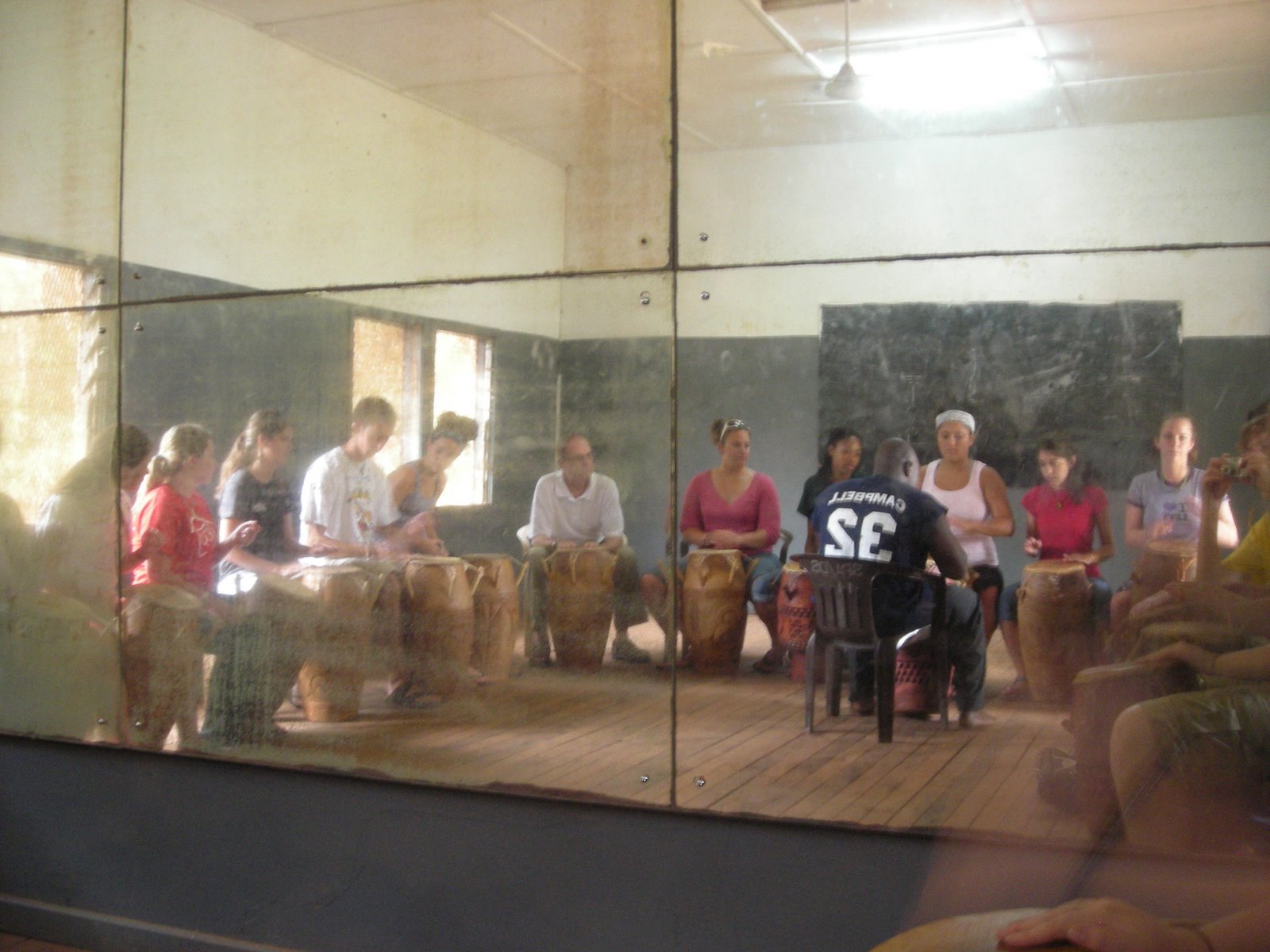
Check for new pictures of drumming and the Peace Corps in older posts.

Index of blog post series on Ghana.

definition of development

7 October 2008 Update:
Read a more comprehensive analysis of the definition of development in a more recent post here:
definition of development (revisited): beauty in the palm of your hand.

————————————————————————-

After lecture, and another drum lesson from master drummer Chris, on Monday I gathered a group of people interested in visiting the Peace Corps offices. Six of us worked to get taxis outside of the University with a certain degree of difficulty – probably because no driver knew where it was located. It seems that our group is very good at choosing destinations of which no one has heard. All we knew was that the office was located at 26 W. Cantonments Road – nothing more.

After a great deal of roundabout driving, a couple stops for directions, and some backwards driving (as in driving backwards) we found the offices located on Switchback Road near the house of the Ambassador of Cote D’Ivoire. It turns out with all our driving that we arrived right at closing time for the day with no appointment – I guess that helps. There happened to be a few volunteers at the check-in guard house and thankfully just as we were about to be turned away one of the volunteers claimed that he had gone to school with one of us and he just wanted to show us around.

Alex showed us around the compound and answered any and all questions we had about the Peace Corps. He also shared with us his experience. He is near completing his second year and is located in a very remote farming village in the north of the country. Originally from Nebraska, he was selected for the agriculture and natural resources area. His village is on the cliffs of the north where a ten year war has just ended between neighboring clans. He has started a cashew cooperative with 13 area villages, teaches at a secondary school, works in a hospital, started an HIV/AIDS club, and is attempting to work towards reconciliation between the former warring clans. The Ghana country coordinator had at first called Alex’s assignment ‘hell,’ but he is really enjoying himself and is working very hard to make the most difference that he can. After hours of talking we accompanied Alex to dinner, since we had made him late for a previous dinner engagement – it was ok he said, “they were just high schoolers.” It was really great talking to Alex and hearing his experiences and it really solidifies my plans to join the Peace Corps after college.

This discussion with Alex really made me think about ‘development’ as the word was thrown around a lot that night. Alex has said that he really likes the Peace Corps model because it deals with integration. A volunteer is placed in a village or area and works with the people to improve their situation. This as opposed to some large organization or institution just giving out money to big plans they believe will work. But, what is the definition of development? Who gets to determine what development is? Who is allowed to call one developed or developing or underdeveloped? Is development all based on a desire or push to become Western? Yes, I think in the very recent past it was and really still is to a degree, but for me development holds a different definition. Development for me mirrors positive progress in people’s lives. Development should be based on getting and giving people their basic needs (rights) for survival and life. Even in this regard the almighty ‘West’ needs development.

————–
Read a more comprehensive analysis of the definition of development in a more recent post here:
definition of development (revisited): beauty in the palm of your hand.

Index of blog post series on Ghana.

inside africa

It is very interesting to be actually in Africa and get the news about Africa. I am actually in the continent that I have covered and studies so much.

2 June 2007
Woke up at noon from a late Friday night. I jumped in the plan with some other students to go to the Makola market and then the beach. There is just something about Makola market that I love. It is not like the other markets or anywhere else in Accra. It may be crazy and seem very frightening and insane to some people, but I love it. The people are hospitable, they are nice, they are business people. They are there to make an honest sale, to run a business, to get you what you want. Many store owners who do not have what you want will direct you to where you need to go. They will not hold you up and try to get you to buy something that they have like most other places. I did not go to buy anything, but people watching is a favorite pasttime of mine. Sure, I am usually the one being watched, but I have come to find out how to be a less imposing and conspicious Obrooni. I have taken to wearing my flip flops often, as many Ghanaians do, my clothes are not flashy or ‘American,’ I have learned more Twi, and I carry only small bills, nothing larger than 10,000 cedi note ($1 USD). I am still obviously an Obrooni, but now after 3 weeks I am slightly more accepted because I know – to a tiny degree – Ghana.

The next day I watched the CNN special show called ‘Inside Africa.’ From being in Ghana (Africa) and getting the news about where I am is really exciting. Namibia is having troubles with illegal ivory trade, Tanzania is developing its gold production industry with foreign investment, Uganda is constructing a power plant on the Nile, Tony Blair is taking his last official Africa tour. He is calling for the West to keep promises of aid because it is a duty and in self-interest. During his term British aid tripled, and some citizens have called it, “… a waste of English time and tax dollars.” Bono was interviewed about the G8 summit in Germany – as usual he stated to keep the promises. He noted that now in the 21st Century people die from a simple mosquito bite – why? how? He also can see a social movement growing in the US and Europe. Finally in the news, the Nigerian president is sworn in, but are the people really happy with the status quo? In Nigeria 77% of the people live on less than one dollar a day, yet their president is re-elected.

Index of blog post series on Ghana.

image of america, the blinding lights

In many of the Africa-related courses that I have taken, the very first assignment is very often called ‘Image of Africa.’ This is a way for students to explore what they know or don’t know about Africa and what preconceived ideas they have about Africa. This is a great assignment that helps many students to change their ideas to a more clear and accurate image of the continent. However, what this assignment does not take into account is the ‘image of America.’ The assignment does not address the potential vice versa of the issue of an ‘image of Africa.’ What I have experienced in Ghana so far leads me to believe that perceptions and false images is a two lane highway.

So far I have met some great people in Ghana. They are very interested in talking about issues, watching soccer, and making sure that we are taken care of in Ghana. However, I have also met a great number of people who are not as concerned and are more interested in getting our American dollars. There is an interesting perception that if you are American then you must have a lot of money. Sure, yes we do as compared to the common Ghanaian, but we do not have money on trees at home. This false perception is evidenced through the numerous interactions that I have had with Ghanaians in my three weeks here.

There was the conversation with Richard and Joseph, who work at the hostel, about America. Richard could not believe that there is poverty in America and that certain stories he had been told, by a man who visited America, were extremely false (you are not shoot for turning the wrong way). There was a love of President Bush. He is a man for his actions in Iraq and they love him as a brother, even though the US government has nothing to do with Ghana. Later while playing soccer I met a coach who was very nice. The conversation turned to where I was from. As soon as he found out that I was from America he mentioned that maybe I would be interested in supporting his soccer program. The false perception of America was even more strongly enforced when I met a man, getting ready to bathe, on the streets of Osu as we searched for a jazz club. He was very nice and helpful, asked where I was from, and asked since I was American – if I was rich. I said that I am far from rich, I am a student. He replied with, “Yes, but you are American.”

All these experiences remind me of reading one of our course books, Our Sister Killjoy. The story is of a Ghanaian student who has to opportunity to travel to Europe. She had all these preconceived notions of Europe and ‘white’ people. They are slowly broken down over her stay in Germany and she comes to realize that many people have no knowledge of Africa. In the world perceptions can be very dangerous, as she learns, and these false perceptions can be created by anyone.

This false ‘image of America’ is a very interesting issue for me being here in Ghana. The greater question that comes to my mind is, ‘Where did this perception come from?’ Where does this blinding light of America come from. I think I have discovered the answer and it all comes from the media. The media is life. Here in Ghana, American pop culture has penetrated, as in most corners of the globe, the major media scene. American music is played everywhere and spin-offs of American TV shows dominate the airwaves. In the TV shows and the music videos the wealth and opulence of America is expounded. How is anyone to gain a different image of America if all that is shown is wealth and commercialism? The VOA radio show is advertised heavily and VOA runs the TV Africa channel. Foreign films are often shown and American talkshows are aired everyday.

The media rules all, here they have helped to create a false image of America. We encounter this image daily. Sadly the results of this false image can lead many people into cynicism and a jaded view can be developed. That is where I will cry foul because it is of no fault to the people who has been enamored with the ‘Image of America.’ Blame the media, blame your media, and blame yourself. We all create perceptions, many times false. No one is beyond making a false judgement on anything that they do not know much about. So many Americans make terribly false judgements about Africa. As I noted before these perceptions can go both ways and today making a world of perceptions can be very dangerous. I like to think that I do not create perceptions and I do not have expectations about places, but there is no way that I did not create some idea in my head about where I was going. Keeping an open mind and watching with open eyes is the only way that we can defeat perception and learn of reality.

Index of blog post series on Ghana.
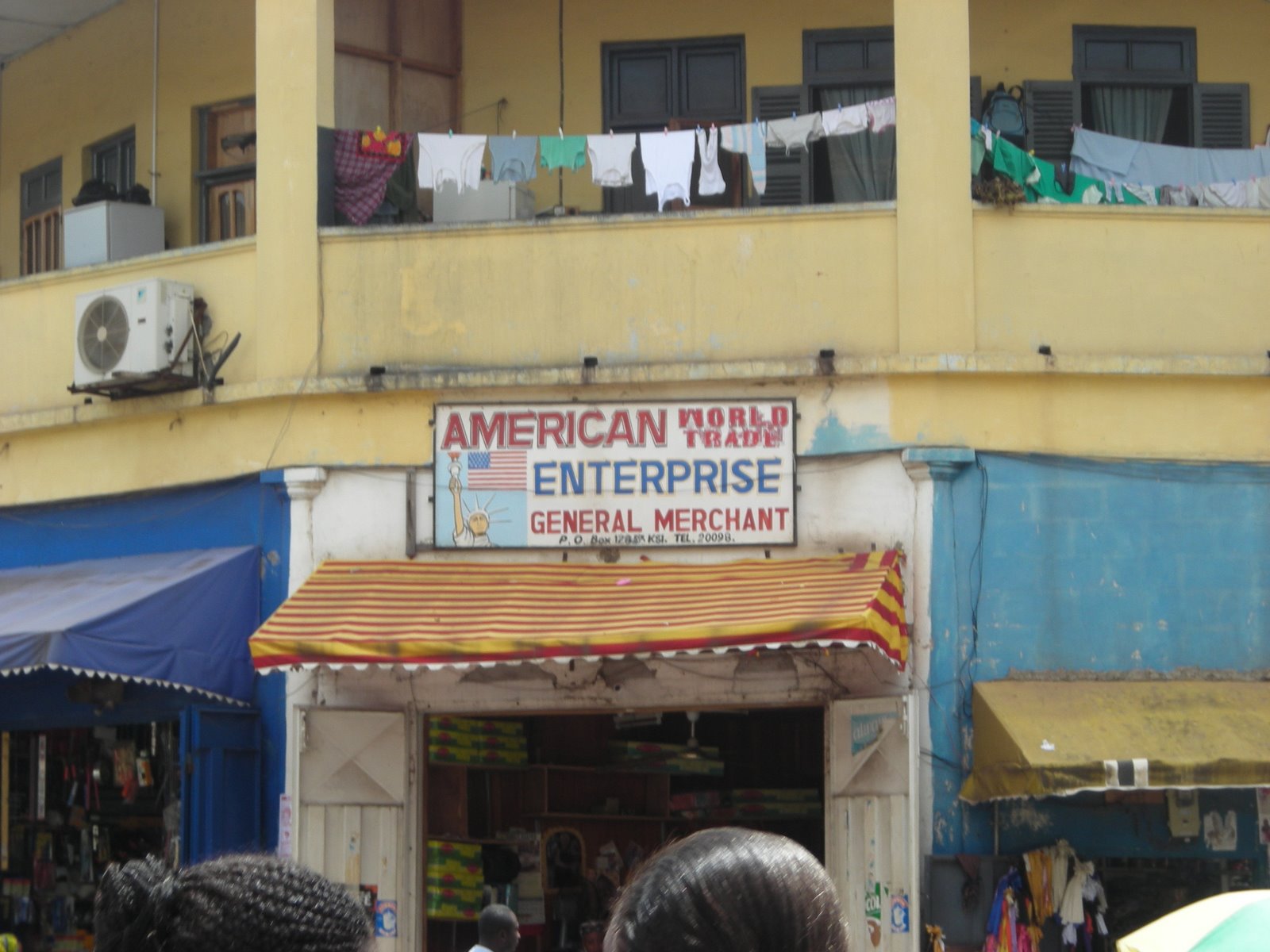
the nature of africa: rhythm and socialism

The nature of Africa is all about rhythm. Rhythm pervades everything. There is a great love of music that is almost unseen anywhere else. From the very birth of a child there is rhythm in that tiny life. The child enters the world with built in rhythm: crying, kicking, blinking. This child is then exposed to the natural rhythms of the world: frogs croaking, dogs barking, crickets chirping. We all move about our days in rhythm, we talk, chew, sneeze, laugh, go to the bathroom, speak, and walk in rhythm. A child develops this sense of rhythm in Africa as it swings wrapped on its mother’s back – she fetches water, walks, and dances and the child learns rhythm. Rhythm is present even on a less basic level. In many parts of Africa the ritual of greeting someone is very rhythmic – asking the health of the greeter, his family, and his work. This is all done in an almost sing-song rhythm.

This rhythm is transferred from the natural happenings of the world into the lives of the people through drumming and dance. Drums are a key part of life in Africa. Many communities still use drums for their traditional purpose of calling a community together and sending messages. The tradition of drum and dance is never lost in Africa, that is an aspect that I think will never be lost from the cultures. We have experienced a great deal of this drum and dance tradition as part of our escapades around Ghana and in our course on the art, music, and culture of Ghana. As soon as we arrived in Ghana the rhythm of drums surrounded us. I met the rastas on the second day and began learning from them right from the get go drumming in the market. In Cape Coast we had the performance by the traditional drum and dance group and interacted in the performance with our mostly unrhythmic attempts to dance. More recently we have been coordinating drum and music lessons with our professor and professional music teachers. We had a lesson from the University of Ghana,who is a master drummer, for one of our lectures. We used the traditional Ghanaian drums for this session, they hurt the hands a bit more.

We have also been receiving lessons from Kwasi, who has traveled extensively in the US performing and teaching drumming. He taught and did his dissertation at the University of Michigan. We took the bus to his home which was far from the center of Accra because there is a noise ban. The noise ban was in place from the government so as not to upset the gods before the harvest. Kwasi is an older, stylish and spunky man. He has a nice short afro, dark aviators, creased khakis, and an awesome tie. We start each session with creating random musical rhythms out of words that pop into Kwasi’s head and we often dance around his compound singing and stomping our feet to a rhythm. When we finally got to the drumming we were almost too tired from the dancing workout, you wonder why Africans are so fit – take up some type of African dance. Kwasi was amazing to learn from and was extremely excited to be involved with teaching students music again. He group is supposed to perform for us before we leave. we only have two more days of our course on art, music, and culture.

Along with rhythm consuming life in Africa, there is a certain natural socialism that seems to work quite well. The idea of socialism was attempted across the continent, but it failed – why – because the elites in power were too interested in keeping that power. In much of Africa, specifically in Ghana, people live in secluded hamlets (communes). These hamlets are often isolated, but they remain connected with one another through traditional festivals. In these housing groups there is an idea of communal labor. If your neighbor’s fence has a hole in it the community comes together to work and fix it. This concern for everyone in the community builds the connectivity and social care. This is also evidenced in the ritual greeting and concern for the well being of a fellow community member. Within the hamlet everyone learns how to do every job, everyone knows how to do everything – so everyone helps with everything. There is also a communal yard, court, open space for market, dance, festival, and meeting. I think that this natural socialism helps to build and grow the rhythm of the community.

Professor Dzokoto, lecturing us on the music of Ghana, told us that if you are not part of the community you will not know the rhythm of the community. If you are a stranger to the community you will not know the rhythm of the community. Rhythm pervades all. Kwasi told us that from a young age he began drumming, first on people’s heads. I like to think that I understand that rhythm. As far back as I can remember and as I am told, I was drumming on everything. From my leg, to my desk, to the church pew, to the dinner table – I loved rhythm, rhythm pervades all.

News from Africa:
If you may have missed the news President Bush has placed sanctions on Sudan over Darfur. This marks a great point in his botched presidency. Placing sanctions on companies that operate in Sudan or with Sudan will create a stronger push for a change and hopefully a peace in the Darfur region.

Today the government of Niger dissolved. Yes dissolved, their parliament voted no confidence in the Executive branch because of troubles and corruption in regards to money usage. What this means for Niger I cannot say, but this will definitely be something to keep watch.

Index of blog post series on Ghana.

two voltas, one ghana, three africas

The past two Thursdays we have traveled to the Volta region – one trip to witness tradition, the other to indulge in tourism. Both were early morning trips to the furthest eastern region of Ghana. The region is the major Ewe region of Ghana, it was decided by the British to slice Ewe-land in two after the defeat of the Germans in World War I. The major ethnic group and the remainder of Ewe-land is in Togo. The British were greedy. The route we took was a toll road, no speed bumps or potholes (relatively smooth ride) straight across from Accra into Togo. I couldn’t sleep and our guide accompanying us told us before we left that in the Volta Region we would see things that we may have only dreamed about. Everyone tells us that whenever we travel we will see something so different. This really say something for the small country of Ghana, that just traveling to a different corner of the country can be such a unique experience – this says something more for Africa, since Ghana is one of its smaller countries.

27 May 2007
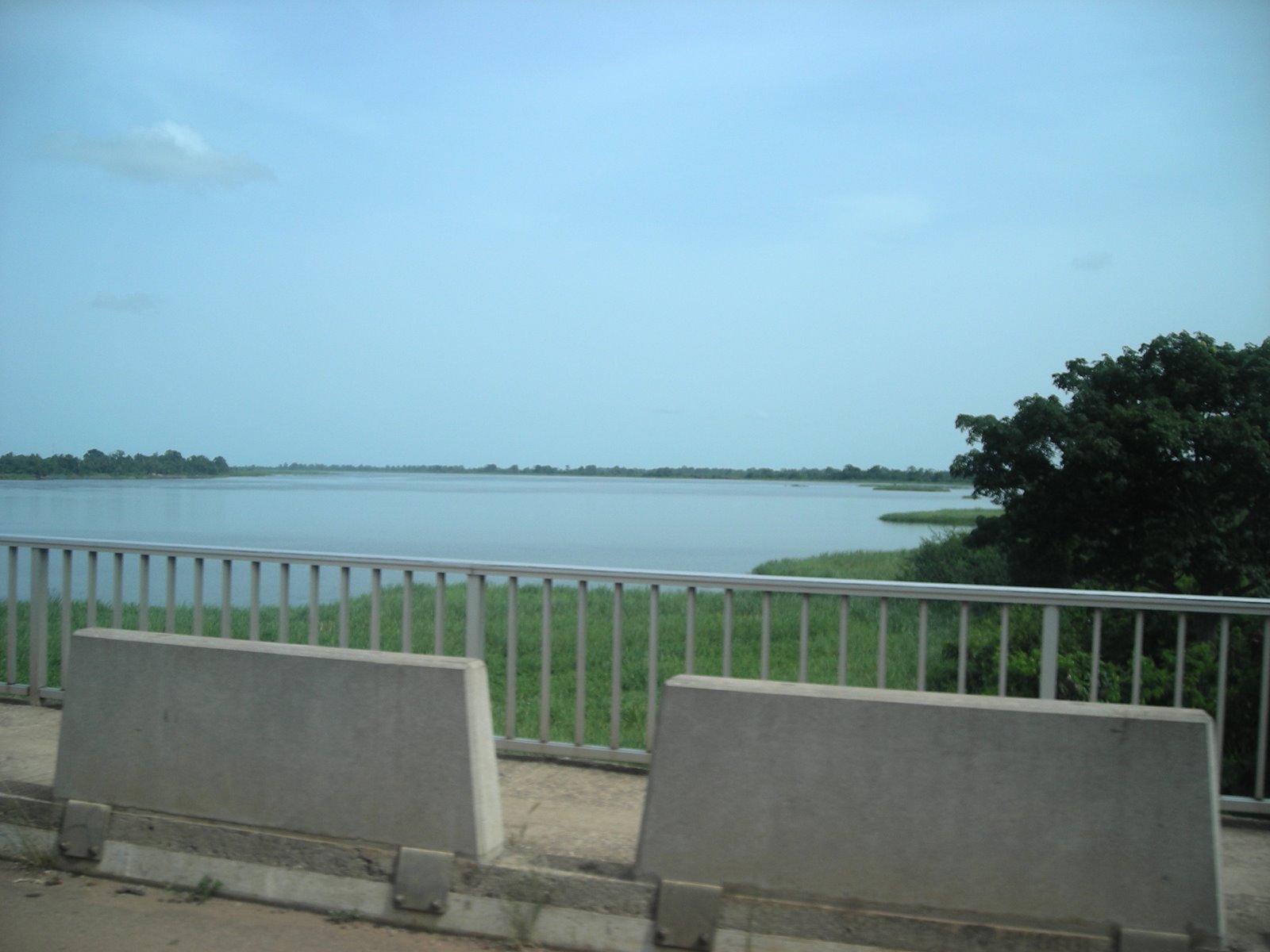
As we left the Accra area we passed many huge, mansion style, western homes built far from the city’s busy, crowded and slightly imposing character. These palatial (check that out mom) homes seemed to present a city of their own set above the rest. Further out was the land of big trucks and truck stops. Rows upon rows upon rows of trucks; tanker, flatbed, carrier, produce, waiting for cargo filled a long stretch of road. Even further from the city everything turned to green. Oh so green, we passed a lush landscape dotted with trees and two-person high mounds of red dirt – this was the kingdom of the termites. The mountains in the distance were highlighted by the rainclouds overhead. After crossing the man-made River Volta we were finally in the Volta Region. Here we were treated to a very different ride – massive potholes. The bus zigzagged the roadway to avoid the potholes and crevasses – it felt as if we were in a Star Wars asteroid field. It seems that the government does not have much to do with the region.

We first went to visit the local chief of the village of Klikor, which is one of the important settlements of the Ewe people. The chief has ruled over a kingdom that is over 400 years old. The chief commented on this related to development. He noted that they were much older than the US, but that they were less than one-tenth as developed. He orated a great history of his people, village, and how they eventually settled in Klikor. It was almost like living the reality of so many books that I have read. He also gave us a history of Ford and what he did for the US. He mentioned that everyone here (Klikor) had benefitted from the Ford Foundation, how I am not sure. But he did make a great point that President Ford was not one of the wealthiest men, but he left a great deal to charity and his foundation. The chief went on to tell us what to tell our friends back home, but instead jumped into a lecture on the US and Iraq. This is about the fourth such lecture that I have experienced on this trip. He made an important note that even the ‘smallest mistake of the US’ has an impact around the world. One of the students later commented on how “Africa-esk” that experience was – this is Africa!

We then traveled to another part of the village to experience traditional African religious practices. We were to see a ritual possession ceremony. Before the ceremony we were treated to the most simple, but delicious meal that I have had yet -the best tuna that I have ever eaten. We changed into the proper dress – a wrapped cloth. We were welcomed with drum and song and given kola nut and whiter clay as a sign of welcome along with a small, narrow, triple shot coconut cup of dry gin which tantalized the throat and assisted with the dancing later.


The possession had already begun and the high priestess already conveying messages from the sea-god. I have complete respect for the traditions of the village, but throughout the ceremony I could not help but think that this was a performance. I think Kyle put it best during our discussion of the ceremony, “It is like a choir performance, we may never understand what is happening, but it is still a performance.” The performers exchanged knowing looks and laughs and my thoughts were solidified. I mean no disrespect, and I really think that our experience would have been different had we been embedded in a village and taken part in the ceremony firsthand.

The rains had come as we ate and continued throughout the day. We left and our bus navigated the narrow ‘roads’ of the village where bikes and motorcycles dominate the streets. The typical houses were mud and thatch, the wealthy had cinder block houses. We returned home in the growing rainstorm.

31 May 2007
Memorial day spent in Ghana, I hope the water is not too cold for putting the dock in. This is the first time that I have really thought of home. It is plenty warm here to put a dock in any day.

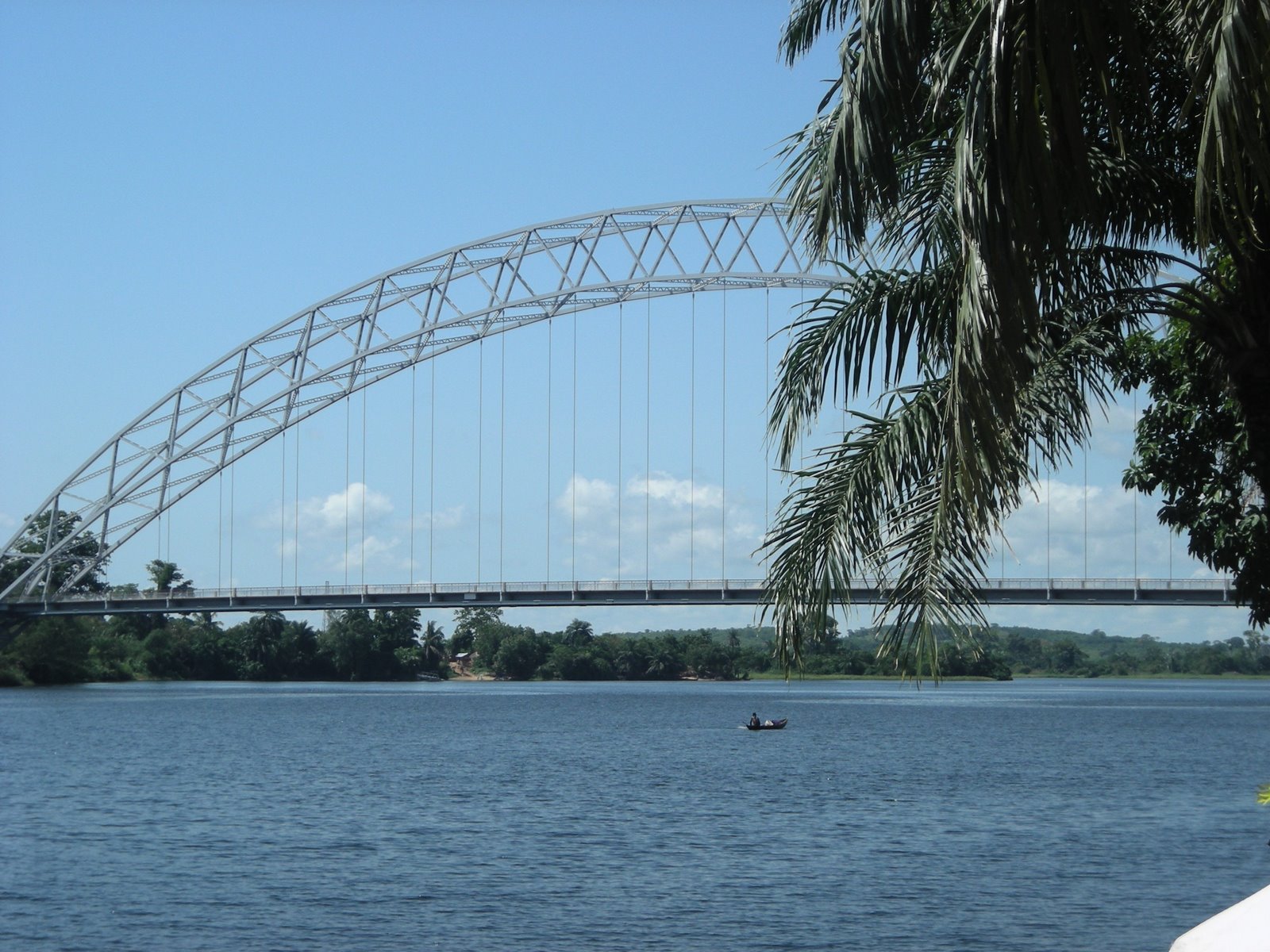
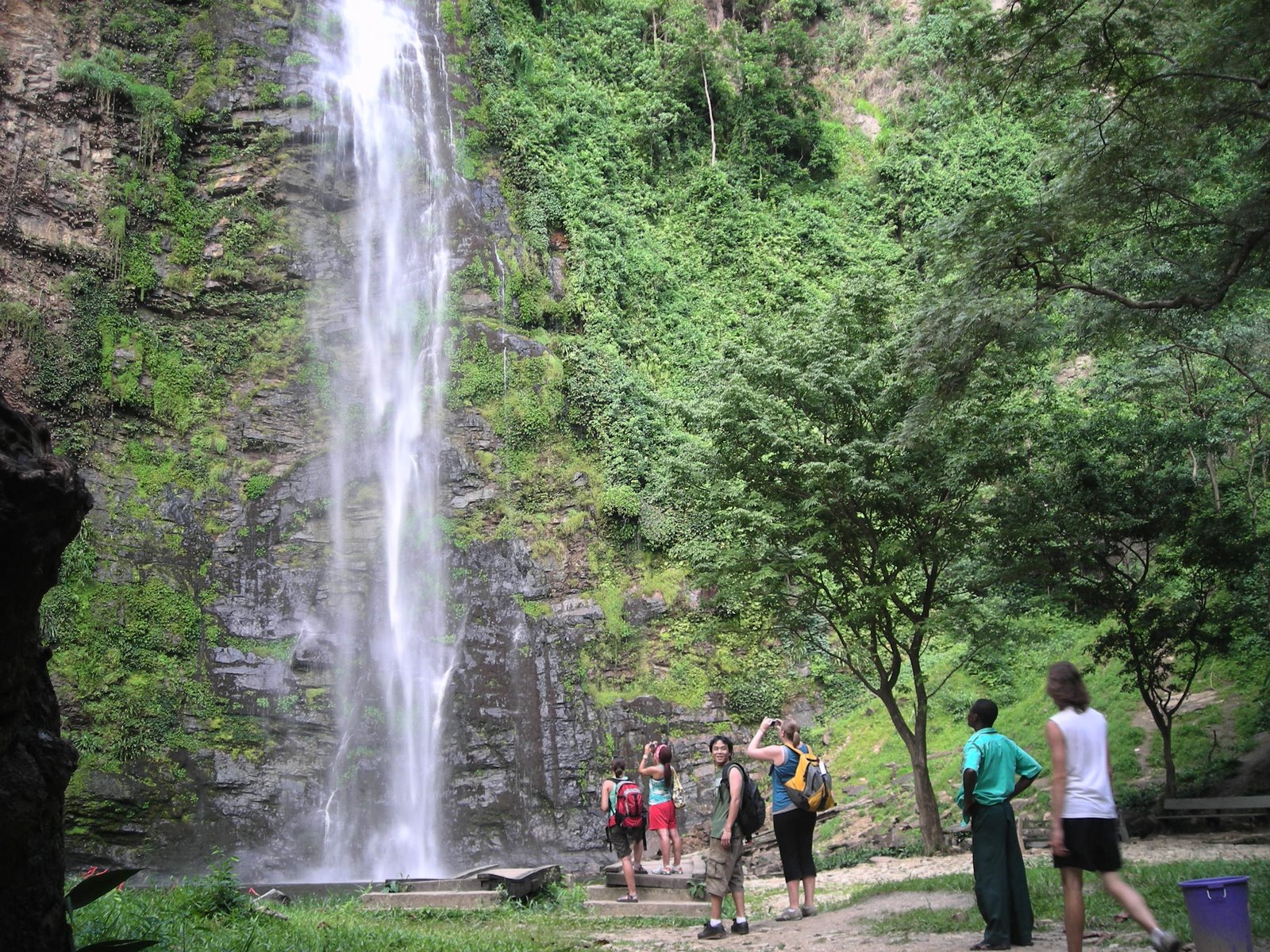
This was another early morning headed back to the Volta Region to see the waterfalls. We took a much different route than before since the falls are about 6 hours drive from Accra: three hours to Volta and then three hours more in Volta. This time as we crossed the Volta River, we stopped at a riverfront hotel. This hotel was very nice, a prime place to spot an Obrooni. There were none, but there were monkeys and exotic birds in cages. There were speedboats and jet skis to be rented and a very nice pool to swim in. We had entered the second Volta. We crossed the river this time by way of a nice large bridge. and the roads showed that the government had not neglected this tourist favorable side of Volta. We arrived at the falls and met our guide. He took us on the 40 minute walk to the falls and showed us some of the local trees and wildlife as we went. He told us that behind the mountain pictured was Togo, so close.

We journeyed through the beautiful wilderness and finally heard the sound of the falls and saw its wonder. The falls were amazing, the tallest in all of West Africa. The fruit bats covered the mountain side and screeched and sprang to life as the group screamed and swam in the falls below. It was incredible to see. I wish that I had not forgotten my swim trunks. Next time.

These experiences brought to life my thoughts that there are two Voltas in Ghana. We saw them both and I guess if you can bring the government tourist money then you will have paved roads, nice hotels, and the access to basic infrastructure like electricity. This also makes me think of George Packer’s chapter in The Village of Waiting titled ‘Three Africas.’ I think it is very interesting that what he explains in the pages of his book, I have seen in my limited African experience. I saw the ‘village’ Africa while traveling rural Uganda, the ‘tourist’ Africa in the Queen Elizabeth National Park of Uganda and the waterfalls of Volta, and the new, growing, struggling Africa in the booming city of Accra, Ghana. Full of new technology, development, and thriving with entrepreneurs. These three Africas can be seen on any travel to Africa, but most of the time these three very different Africas are only seen one at a time. Does that mean that I have seen the true and complete Africa? I think not, I have only traveled to three countries in Africa – there is so much more to see!

Index of blog post series on Ghana.

weekend of the obruni

This past weekend is when we began our intense American weekend. This was when we did the most Obrooni things and par-took in the delights and desires of an Obrooni. When you think of everything that a visiting Obrooni might do, we did it. Every place where an Obrooni was most comfortable, we went.

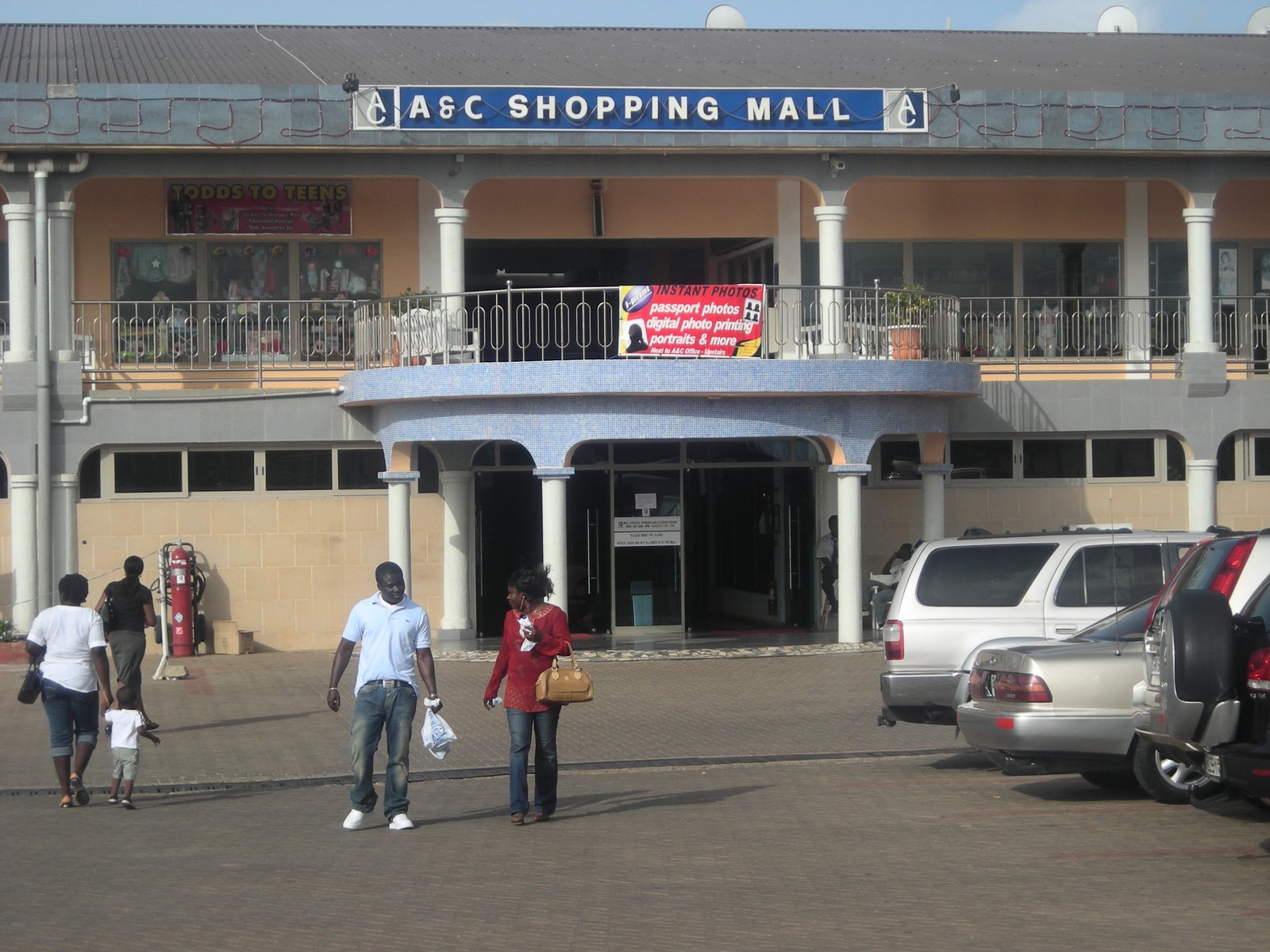
We started out by going to the shopping mall. Yes, a shopping mall It didn’t contain much that was amazing, but it was close enough to home for most of the area Obroonis to shop there. The shopping mall was tucked away, hidden almost, in the opulent, lavish, private homes of the wealthy – and Obroonis. There was a liquor store, jewlery store, ice cream, fedex, small grocery store, some beauty salons, offices, and a very nice internet cafe. It was easy to tell that Obroonis from the area and those working in Ghana frequented the shopping mall. It was easy to tell that these Obroonis flocked there for their daily needs, but it so much easier to get what you need on the street. This is also where I saw my first ‘real’ parking lot in Ghana.

We did some shopping and haggling in the ‘Center for National Culture’ and headed back to the hostle to eat some lunch.
It was a big meager and a bit Obrooni of us, but still good. We ended the eating session with some FanChoco, it is a plastic pouch, like the water, of frozen chocolate milk – so good during a hot day. A few of us decided to go for a run for the first time in Ghana. So far the only people running that I have seen are either training for soccer or are late for something. As we ran the back streets behind our hostel, people called out, “Obrooni, what are you doing?” Children ran to the street and callled ‘Obrooni’ to us. The children lined the road clapping, cheering, and chanting, ‘Obrooni.’ It was almost as if I was in a high school cross country race again. The best was the taxis who honked at us to see if we wanted a ride. No, just some silly Obroonis who want their excerise. It must really make no sense to most Ghanaians since most of their daily lives and jobs are excerise. Here they can’t choose when to excercise or not, it is run or just stop.

We had heard of a great recommended restaurant called Afrikiko and decided to go there for dinner, since there was also music. But we arrived and all the lights were off, it looked quite shady so we headed to another recommended place called ‘Home Touch.’ On the way to Home Touch, our taxi passed the new, under-construction american embassy. It was so disgustingly huge and unnecessarily gigantic. The US has pulled it foreign aid from Ghana, so why does it seek such an imposing presence? The compund was massive, many storied almost like a hotel, multpile gates, and numerous secuirty cameras. I couldn’t believe the extent of the new embassy. We arrived and got a big table and at the start of the evening we were the only people in the place. We drank and ate goat and fufu in a light soup. I am not sure what light soup means because my soup was so hot that my lips and throat burned with goodness afterwards. Some of the girls in our group sang with the live band (quite Obrooni) and made fools of themselves, but it was a great time. When we were given our bill it was about 200,000 cedis too much and we thought we were getting jipped, but oh well.

We had the rest of the weekend plus Friday off since we were traveling to the far eastern region of Volta on Sunday. We woke up early, for some reason unknown to me, for breakfast on Friday because some of the girls were picking up dresses made in Osu and some of the other girls were getting their hair braided. Most people returned to their beds to regain some lost sleep – which I hear is impossible to do, but I did likewise. I slept for a really long time and did some more reading, finishing The Village of Waiting. We then met up with hte group at Frankie’s to go out and Francis joined us. We first went to Epo’s bar with Francis and met and had some drinks. While we were there a big volunteer group from England arrived and we chatted it up. I talked to a girl who was stationed in a very rural village in the north of Ghana and found out that each person was stationed far off in a different area. The English people, with their beautiful accents, were headed to a nightclub called ‘Bliss,’ so we decided to tag along. It seems that no one, no taxi driver or otherwise, knows of Bliss or where it is. Finally we found a taxi driver who knew the place and headed there. We arrived and were treated to the most Western style bar and club that I have seen yet. It was full of Obroonis – American and English – no wonder no one had heard of the place.

Saturday we all slept in after the night of clubbing. I missed breakfast since I slept too late. Most of us stayed in our rooms sleeping, reading, or just hanging out. I didn’t emerge until 2pm and didn’t eat until very late. We all went in waves to the internet cafe and talked in the courtyard about our experiences in Ghana so far. What an Obrooni weekend – in style, food, company, experience, and habit. We ended up having a great Ghanaian meal at Cez Arfique, but otherwise so Obrooni.

Index of blog post series on Ghana.
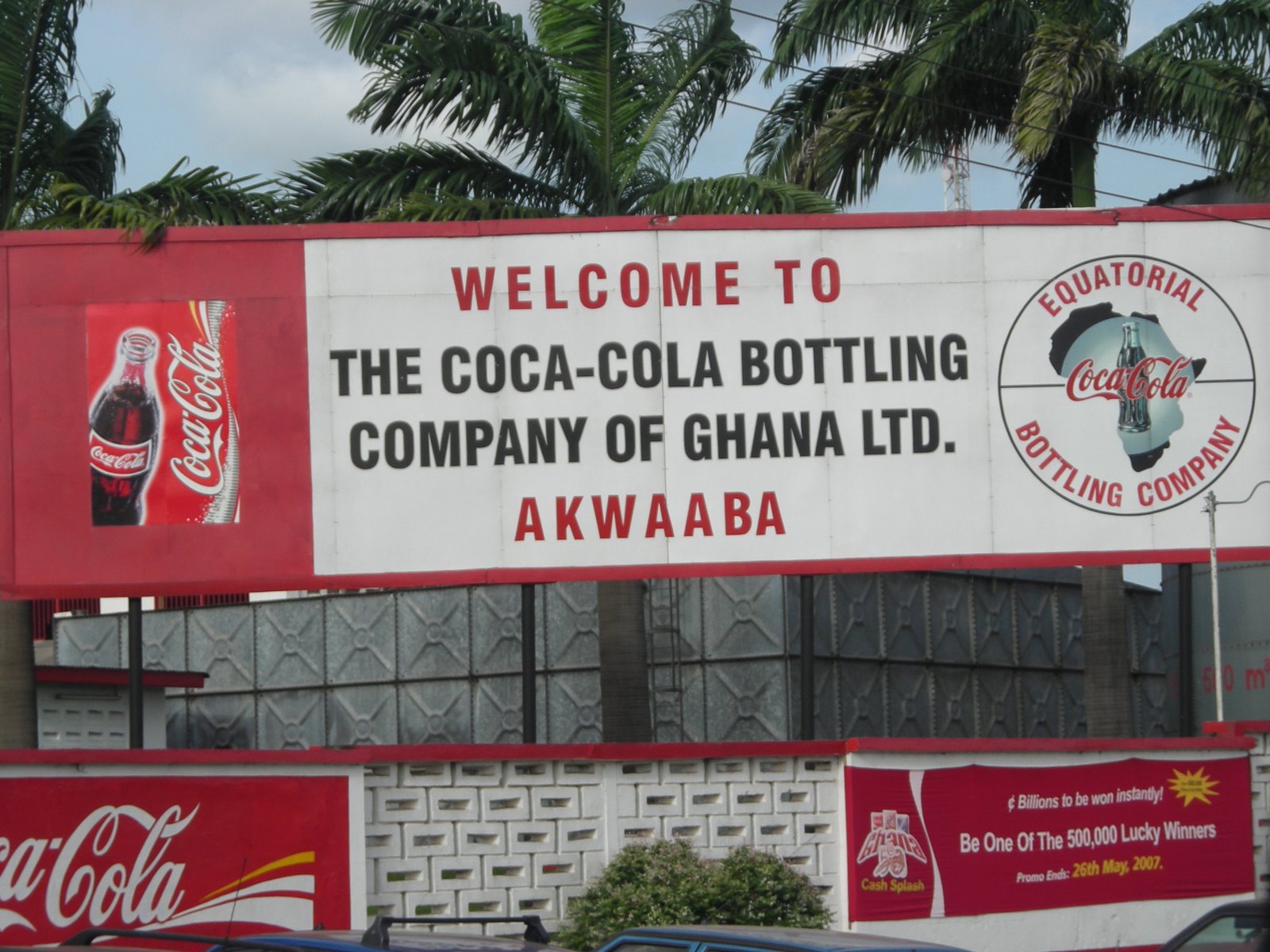
what is so important about ethnicity?

Day 12
We got up so early today. Egg salad sandwiches (Ghana style) for breakfast with a delicious multi-fruited juice. The bus was late because traffic was so thick, almost like pure, unprocessed groundnut paste, mmmmmm. Lecture today was on the ethnicities and ethnic relations in Ghana. I am going to begin writing more about thoughts and issues that come to mind while in Ghana now that I have covered the basics of where I am, what I am doing, and how it all happens.

Ghana is a state with many nations of people, many ethnic groups. Ghana is a state of nations and needs to be one united nation of people. There is a long history of ethnic tension and turmoil in Africa, you cannot lump every African experience with ethnic conflict into one ball of dough. You cannot think that every issue of ethnicity results in what you have seen in Hotel Rwanda.

Nigeria has had a long spat with ethnic tensions, especially in politics. This led to a civil war in 1964, of which I do not know much about. This war has created a tense ethnic political struggle as evidenced by the most recent elections and the numerous calls of foul. Nigeria now sits divided into 36 states, most based on ethnicities.

Cote d’Ivoire began an ‘open door’ policy and many people flocked to the country. However when elections rolled around only natural born Cote d’Ivoirians could run for the office of President even though now the country had so many new citizens from many differing places who felt the need to be represented.

The most well known example of ethnic tensions built into full blown conflict is that of Rwanda and Burundi. With the Tutsi minority given the reins of power by the colonial controllers, the Hutu majority did not appreciate this and built up the difference of ethnicity until this was such an important issue to cause genocide in 1994. However this conflict began well before 1994 and continues long after. The conflict spread into the DRC and countries such as Uganda became involved.

Among the many examples of ethnic tensions and conflict Ghana remains a fairly good example of how conflict and death can be avoided. As with many African countries Ghana was a country etched onto a map without regard to established nations of people or traditional ideas of territory. Because of this Ghana has a number of ethnic groups. Politically Ghana has avoided conflict by requiring, in the constitution, that each ethnic group should have representation within the Ministries of the government. Another point that has led to the uniting of ethnic groups for one Ghana is the secondary school system. The secondary school system is a boarding school model and most students travel long distances to go to the best schools in Cape Coast. While in school the student learn about the different ethnic groups and learn to live with one another. This creates more of a rivalry between school teams and less of a rivalry between ethnic groups. The issue of language often arises in Ghana. Most of the country is Akan speaking, yet it is considered politically incorrect to declare the major Akan language of Twi to be the official language. Therefore the country is united in language by English, but everyone says ‘Akwaaba.’ No matter where you are a Ghanaian will welcome you with this Twi phrase.

We had a field trip today to the National Museum of Ghana, which is also celebrating its 50th year of being open. The museum was really quite lame. There were some cool artifacts from the history of Ghana and other African countries and people, but it was again nothing that we had not already seen. The tour guide was a bit loopy too and told us most of the knowledge about Ghana that has been hammered into our heads from every tour we take. Back at the hostel we ate bananas (the short sweet ones), crackers with pure fat happy cow cheese, and vanilla wafer cookies. Kyle and I headed to the internet cafe. Our first ‘reflection’ paper is due on Thursday and some of the students are typing them out. I finished mine the old fashioned way. I reverted back to the good ole days of elementary school and handwriting a paper, it was very reminiscent – and yes it was legible.

We all gathered around the tv in the courtyard to get ready for the Champions Cup game between Liverpool FC and AC Milan. We were all pulling for Liverpool. They dominated the ball the entire match, but Milan’s ability to make a goal out of anything did them in. Milan took the match 2 – 1. What a let down. The ‘the value is the same commercials were quite entertaining as well,’ but more on that later. It was a sad ending. We also found out that our good friend Richard was fired. The story is that he supposedly took something from a room after a visitor had left and denied it.

That evening the rasta guys showed up to take us to the reggae club on the beach. We had been warned by our other Ghanaian friends about this because bad things had happened in the past. However, the majority of our group wanted to go and since most of them were girls we were not about to split the group. The rasta brought a trotro,one of them must have owned it, but we joked that they might have stolen it. It was my first ride in a trotro. They are the cheapest form of transport in Ghana, but not the safest. All 20 of us piled in and headed to Osu to pick up some more members of our group. We headed to the beach with a typical trotro load – packed like sardines. At the beach we were charged to get in, first it was 10,000 cedis, then it suddenly changed to 20,000 cedis. That made quite a hassle, but we finally entered the beach. The rasta for some mysterious reason did not have to pay (because they brought the white girls). We got to the beach, were given seats, and ordered drinks. The waves on the beach at night are amazing. They are massive and seemed to go in no particular rhythm as they usually do during the day. Glancing around the beach it was easy to see that all present were Obroonis or rastas looking to make friends with an Obrooni to get a drink or to get a girl. Our group stuck together, looked out for one another, enjoyed the music and dancing, and helped each other out of creepy and potentially bad situations. In the end it was a very fun evening, but this is where the true intentions of our rasta friends showed through. I hope everyone in our group now understands now my previous wariness.

The rasta are a very interesing group and fill a very odd and unimaginable role in Ghana. They worship Bob Marley and weed. If you get them talking they will go on and on for eternity about how it is ‘nice to be nice’ or ‘charity is carity.’ Many have great musical skills, but not such great skills when it comes to meeting a girl without creeping her out. Most are defined by their dreads, knit hats, drums, or weed wisdom.

Index of blog post series on Ghana.