the value is the same

As I wrote earlier, I will now be writing on issues and thoughts that come to my mind while in Ghana. This will range from day to day adventures to reflections to just plain critical thinking. I will still write about the numerous and various experiences and field trips that occur, but there will be less of the play by play of the day to day. In ‘The Village of Waiting,’ the author writes about the certain desire and longing to live in a developing country. I can completely understand what he means, however there is no way that I can verbally express that magnetism. I attempt here to give you a glimpse of my African experience, but it is just that a glimpse. The author goes on later in the book to discuss how Westerners and ‘white’ people will never be able to experience the true Africa. You can be a tourist, an accepted member of the workforce, and an honored volunteer, but you will never be able to step out of your skin – your permanent suit from your wedding day with your identity does not come off. And so with those thoughts in mind, here is what happens when I am in Africa, Ghana to be more correct.

While watching the Champions Cup match, at halftime the Ghana television channel took over the feed and displayed commercials to explain the new Ghanaian cedi. The commercials played over and over, repeating until halftime had expired. The commercials emphasized the phrase that we just can’t get enough of here in Ghana, “the value is the same.” Throughout the entire match the message scrolled along the bottom of the screen: “The new Ghanaian cedi and the current cedi will have the same value. The value is the same.” Up and down the roadways hawkers carry the signs to explain the new currency and to show the neat new bills and coins. We have seen these posters everywhere and even bumper stickers, it has become a running joke with our group now. The value is the same.

Next year the cedi is set to change. The value will be the same, but the numbers will change. Instead of carrying around a huge wad of bills you will have only a few to carry now. The 10,000 cedi note will turn into the new 1 Ghanaian cedi note. Joseph, at the hostel, explained to us that this was a political move since in the next few years there will be a West African Union established, like the European Union. The new West African Union will have its own new currency so it is completely unnecessary and frivolous to create a new cedi now. The politicians are using this new cedi as a push to emphasize their dedication to Ghana. Wouldn’t it make more sense to invest that money in the country’s infrastructure? To me this represents the complete disregard for the well being of a country’s people. Needless to say, the campaign has gained amazing ground and even we, who will be here for 6 short weeks, understand the change completely.

This is an important and potentially positive event in Ghana, but there is a question that will not leave my mind. Will the value of corruption remain the same as well? On the way back from the beach the other night, our taxi was stopped at the simple police check point of a section of bicycle fence across the road and a smiling policeman with his AK-47. We happened to have more than the acceptable number of passengers in our car, but the taxi driver told us not to worry. We pulled up and stopped, the policeman shone his flashlight around, he exchanged some words with our driver, and then the two men shook hands. However as they did so, a seemingly minor transaction took place. We drove off and the taxi driver explained that this happened often. He said that just about every policeman in Ghana could get paid off very easily. The economics of a badge and a gun continue. This seems to be a scene that is repeatedly described in developing countries.

Yesterday Kyle bought the Daily Graphic, the New York Times of Ghana. It has been the premier paper and also the longest running in Ghana. It was really a well put together piece of daily literature and the authors for their articles wrote compelling pieces. The most interesting to me was an article on the World Bank, Wolfowitz, and Ghana’s role as the chair of the African Union (AU). The president of the World Bank, Paul Wolfowitz is resigning under intense pressure. In the unwritten code of the development world the President of the United States gets to appoint the head of the World Bank. In its inception the World Bank was used as a US tool to aid the European governments in their reconstruction after World War II. The US used to be the largest development aider in the world and was owed much by Europe. Now China is the top aider and can easily match the World Bank in capacity to give aid, but China gives aid without requirements. The author of the article called for Ghana to use its power as the new AU chair to unite Africa and other ‘developing’ country groups to join in calling for a reform in the process of appointing the leader of the World Bank. Wolfowitz’s reign was marked by calls to end corruption and reform corrupt systems. Now there needs to be a push to reform the very processes that Wolfowitz championed in the most influential development agency. Does it make sense that a, possibly unqualified, American runs the world’s most important development group? Why would there not be a World Bank president from the ‘developing’ countries?

The value may be the same, but there is still a lot to do before values across the board will be the same. In the past few decades the gap between the Western world and Africa has grown exponentially. In our brief time here we will spend at least, or more than the per capita of the average Ghanaian. Per capita income is placed at $450, the goal is to have it be $1000 by the year 2020. Roughly 20 students from the States will spend well over the per capita income of most Ghanaians in a 6 week time period – this is a fact that I hope most of us will not look past when we return.

the quest for the west

Day 11
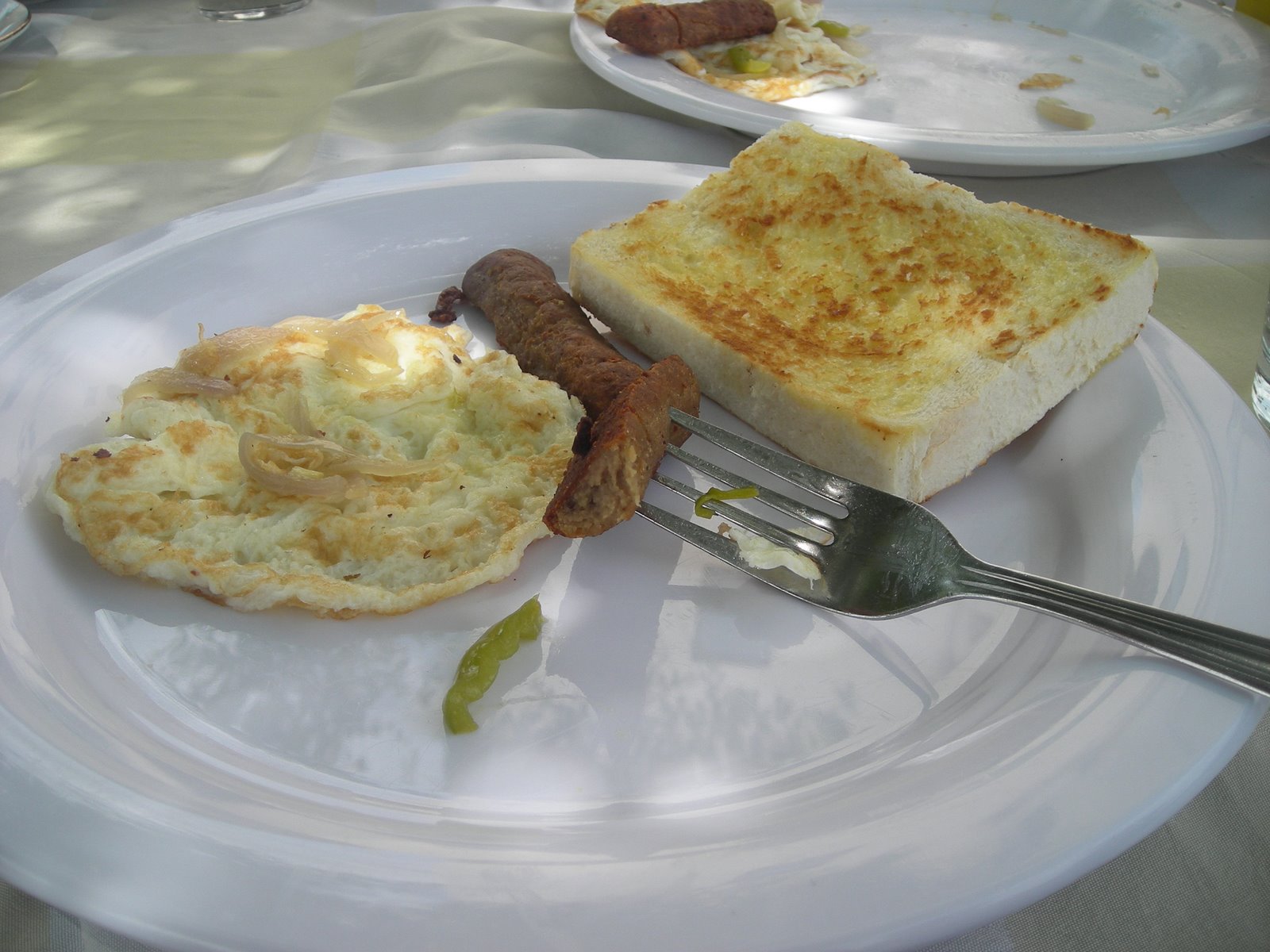
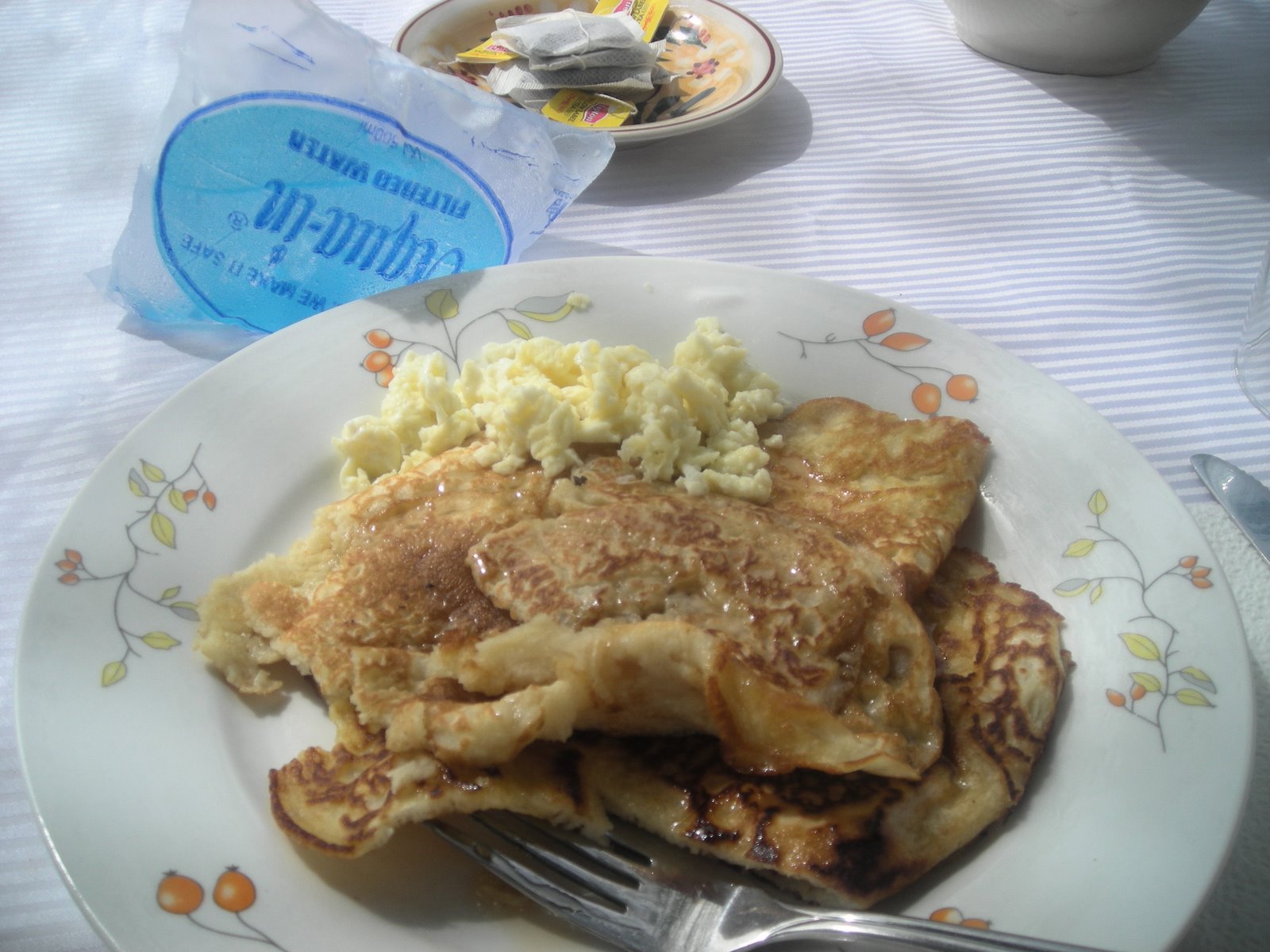
Applied lots of Aloe today. The sunburn is getting better. The bus arrived as we sat down to eat. Kyle and I always seem to be two steps behind. Breakfast was a large, thin, pancake thing with chicken sausage and some eggs, it was so good. At the seminar room today we got to bond with Ted (Prof. Tims). We talked about ourselves, majors, passions, and future plans. We then discussed the novel, The Beautyful Ones Are Not Yet Born. The book was mostly about corruption, the attainment of wealth, poverty, the quest to be western, and one man’s journey to live and work honestly. In the end of the book all he is left with is an “aching emptiness” and that is all the rest of his life could offer him. Kind of a downer, but it is interesting since the day before we met a woman working with some anti-corruption group doing a study on Ghana’s judicial system.

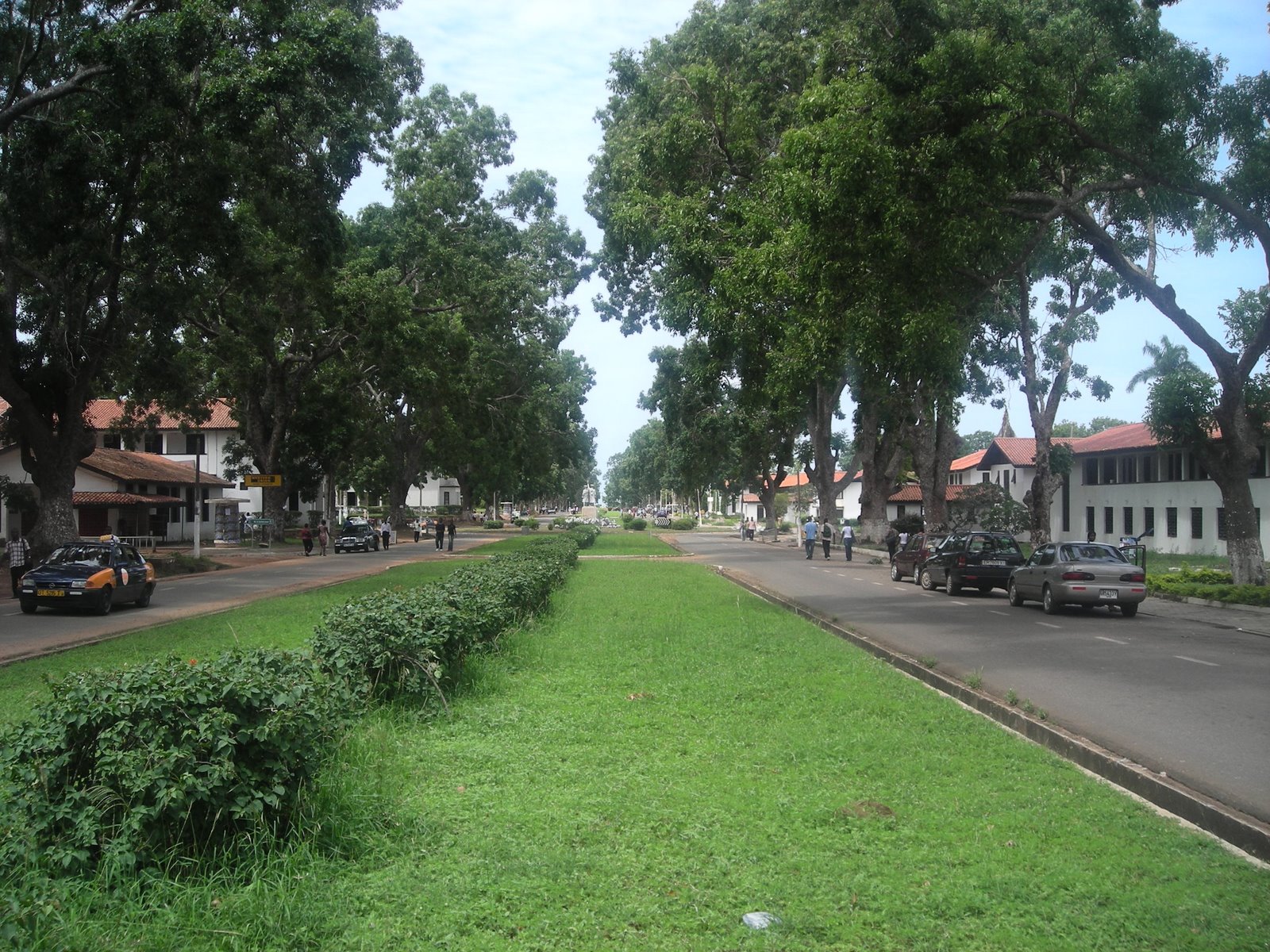
It was then lunchtime and breaktime. We wandered campus and explored some. We ventured all over the campus. We saw the Library, the Center for African Studies, the dorms, and much more. The campus is much like any you would see anywhere in the world, obviously it has its differences, but nothing too out of the ordinary. The biggest difference, as on any college or university campus, was the dorms. These are huge structures of block squares where four people live. When school is in session you see the clotheslines of each student strung out with brightly colored clothing drying in the Ghanaian sun. Surprisingly on campus you see many people walking around with ipod or MP3 headphones in their ears. Higher education in Ghana is still very much a place for those with the money. It is interesting to see, since we have come to know Ghana as a place that favors and loves human interaction, instead of the secluded american, music in ears, head to the ground, walk right past you attitude. This happens to be few students however, and most will greet you cheerily. The West cannot taint the Ghanaian tradition of greeting.

We settled down at an small cafe called ‘Tyme Out,’ got some cokes and played pool. This is where my mind recalled the idea of a hip hop planet. The walls of Tyme Out were adorned with posters of former great and popular rap artists and the music on the radio was their past hits. Even here this glorification and fascination of the gangsterism and commercialized hip hop culture exists. It is not surprising since West Africa is where hip hop was born. The radio often plays Ghanaian hits from the hip hop artists who brought the american style to Ghana. Why is the american style born from West Africa mirrored in the place of hip hop’s birth?

After lunch we learned more about Ted and his love and life of music. He was a music major turned music therapist. He has helped countless people recover from illness with music. He was trained as a concert pianist and this lecture brought us a drumming exercise. We first learned the history of drumming. The Europeans could not grasp the complex rhythms and beats of African drumming because it was like nothing they had heard before. Drumming was used to induce trances and was often used for social events. African drumming has many complex rhythms and patterns, but in the end they all come together to make one song. You cannot stop and listen to everything at once without being confused, you have to concentrate and focus from one beat to another. In this lecture we also discussed the aspects of health. The West decided to cut health to focus just on body. Where other cultures and societies looked at health as comprehensive in mind, body, and spirit. Music is a huge aspect of bringing together those aspects.

In the evening we went to a nearby Chinese restaurant. We ventured down our extremely busy road in Shiashie Accra to reach the restaurant. It was much bigger and fancier than we had thought. Sadly the food was also worse than we thought it would be. The menu was 20 pages long and didn’t really have much traditional Chinese foods. A let down at the least. I had the spring rolls, which just had cabbage and some random chunks of beef. A poor end to the evening, but tomorrow is another day.

Index of blog post series on Ghana.

imperialist footprints: the development story from the inside

Day 10 | May 21, 2007
We actually woke up on time today. It was probably because it was very difficult to sleep with sunburn. I kept tossing and turning to find the right angle to get some rest. Without the sheet it was too cold because of the AC on the sunburn, with the sheet it was too hot on some sunburned areas. Having sunburned hands I think s worse than sunburned feet or shoulders. When you even wash your hands it sends s shooting tingle through your hands. At any rate we were up and enjoyed toast and eggs for breakfast. It was a very overcast day and for once my sunglasses were not needed. Rain seemed imminent. The sky was so dark as we headed to the University for lecture. We arrived for lecture and the skies grew darker yet.

During lecture the lights flicked and soon the rain came pouring down. Our professor had to speak up to be heard over the roar of the rain on the roof. As the lecture progressed the rain seemed to increase and the ceiling began leaking profusely. Lecture was on colonialism again, with emphasis on de-colonizing and colonial legacies. Another day to zone out and relax. Sixty-eight years old, not an ounce of gray hair, and chasing 20 somethings across the African continent in his khakis, collared safari-style shirts, straw, old man hat, water bottle and bug spray clipped on his belt at the ready, he may not always hear us or understand what the Ghanaians say, but Ted Tims, Teddy Bear, T-bear will always be a great travel partner and has definitely, at his young age, not lost his passion and sense of adventure. Can you imagine 68 and still traveling the world? I sure hope I can do that and without gray hair.

As I sat in lecture I listened slightly and thought about how the colonial legacy was so strong in Ghana. The leading bank is Barclays, a prominent British bank, sponsor of the Premier League of Football in England. The tourists that I encounter are mostly from the UK and when you see an Obrooni it is most often a British accent that responds. The game of football is huge, this may not be a colonial legacy, but as I wrote before, many Ghanaians stopped for the final game in the British football league. Interestingly British Airways has the only flight that comes to Ghana from the US connections or Europe. Ghana is also marked by the English language – anglophons surrounded by francophones. The BBC is a top source for news in Ghana. The education system also is very English. One of the very prominent and important colonial legacies is religion. Almost 70% of Ghanaians are Christian and that shows from the motto and phrases pasted on the backs of taxis, trotros, trucks, and storefronts: ‘Trust God’, ‘Triumph’, ‘God’s Will’, ‘All to Him’, or ‘God is Great.’ These British footprints have a colonial legacy that is amplified by the political and economic implications of colonialism for Ghana.

Politically the Ghanaians adopted the English parliamentary system of governance. They even used to have a governor general like Canada and Australia, but eventually got rid of that stain by adopting the more American system with a Presidency along with a Parliament. The development story of Ghana has largely already been told in a earlier posting on the development of Ghana, but this is what I have been taught and seen from being in Ghana. From the colonial time period Ghana was made to produce cocoa and now they are trapped in that mono-crop (cocoa) production of raw goods. In the 1970s Ghana attempted some ISI (import substitution), but it failed to have an impact because this was just not possible with Ghana’s situation of having limited abilities for industry. From 1970 – 1980 is what is called the ‘lost decade of development’ for Ghana. Ghana began to liberalize its markets with the involvement of the IMF and World Bank and their Economic Recovery Programs (ERP). Ghana still struggled and had difficulty and was soon named an HIPC (highly indebted poor country). This title limited their possibilities for development and aid. Ghana was relieved of its HIPC status later when its debts were forgiven and it began taking, “ginger steps toward standing on our [its] own (Prof. Johnson). This is what Ghana is working on now. The ginger steps of development in this globalized economy driven world. As a few points of interest on development: the government has nothing to do with land ownership – only taxes on businesses, China is Ghana’s number one foreign aider (rogue aid? – see earlier post on subject), and so far I have only seen a handful of micro-finance and lending groups.

I have noticed that the only real developed region is the Accra region, where most ofthe people and aid organizations reside. The other areas to the north and even to the immediate south are left under-developed and neglected. Cocoa is their number one export, but if the country is to develop they need an industry established to produce a finished good with that cocoa. That is impossible however because that role is already set up in the Western industrialized countries. How is Ghana to develop? More foreign aid? I have noticed that there is an interesting relationship with Iran and some development projects. Not surprisingly the US has withdrawn its aid and has nothing to do with Ghana besides USA rice.

Our second lecture was more interesting, maybe because the lecturer was more interested in passing her knowledge to us. The topic was the role of the media in the political system and political change of Ghana. The media was huge in Ghana’s political development. It was first used to combat colonialism, then was controlled by the newly independent state government, used during this time as a public voice for dissent, and finally as a promoter and grower of democracy. In 2000 Ghana experienced, for the first time, a peaceful transition of power to a new administration. The new administration was the politicians who had opposed the government since 1992. This administration had fueled the media’s public dissent and made alliances with the media. The question now is: ‘Is the current media as critical of the new administration since it had alliances?’ Ghana has a very multi-lingual media and this allows for a more participatory democratic system and society.

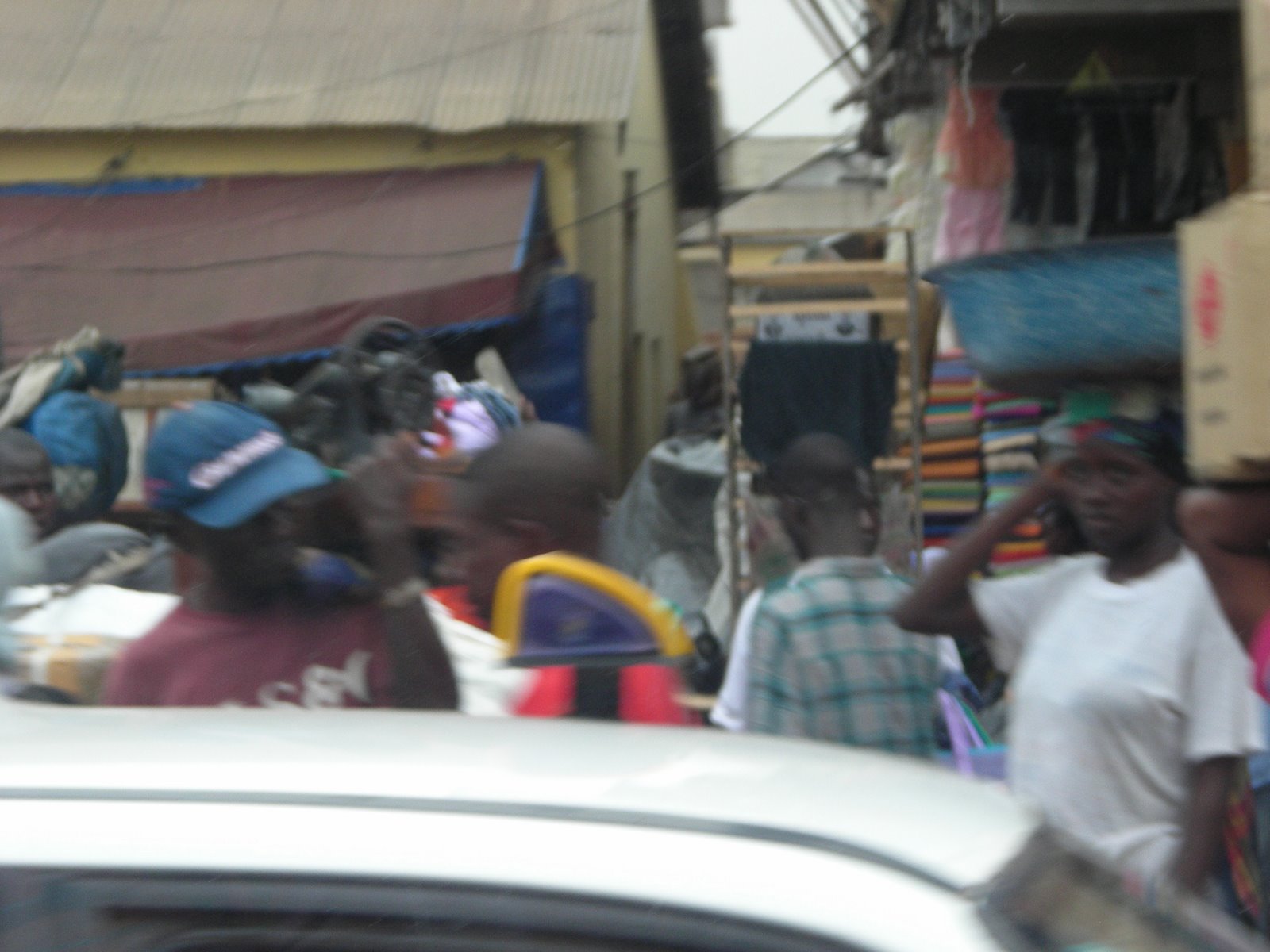
After lectures we headed to Makola market. Now you see whenever we tell anyone of our Ghanaian friends that we are going to Makola market they laugh, ask us if we are serious, and then tell us ‘goodluck,’ so we were a bit afraid and interested at the same time to go. After arriving it is easy to see why we got such a response – Makola market is pure insanity of commerce. Even though Makola market may seem like pure insanity there is definitely an order and control to the confusion. In the market everything has its place, there is a section for candies, clothing, luggage, seafood, crabs, fufu, pretty much anything you are looking for in Ghana is here. This is the real super (duper) market, the commercial center of the country. Most of us just went to look and experience It was actually very fun and not at all a bad experience as friends had warned. Navigating the alleyways and the crowds and seeing the extent of the market was amazing. So far this is the only place where I have experienced the real hustle and bustle and hurry. Girls with empty bowls rush back to their stands in the alley to refill and sell more, every second seems to be a lost opportunity to sell, so I often get out of their way quickly. Women call and haggle, sellers bother Obrooni and Obibini alike to make a sale. This was the first place where I heard the call “Obrooni! what are you doing here?” We responded with ‘Obibini’ and some other Twi that we had learned to the surprise of the market women. I saw quite a few Obroonis around the market that day.

I decided to not take any pictures while in the market because it had caused problems in the past – at least until we got back on the bus. Some pictures are a little blurry. Here in Makola, as in many places in Ghana and Africa, people everything on their head. At Makola I saw a new range of this skill as boxes and goods were stacked very high and carried aloft to the numerous stands. This market was nice and more fun and much more welcoming in comparison to the ‘art market’ in Osu. Probably because not many Obroonis dare to venture inside the beautiful chaos.

We arrived back at the hostel and toured the kitchen to see how we could save some money on eating costs. We decided to eat at Fresherz down the road, a very american-style restaurant with american foods. As per Ghanaian standards, after our drinks were ordered, it took nearly two hours for everyone to get their food. It was very tasty food after waiting two hours. Joseph later took us to a nice little market to get some inexpensive food. He got a taxi to take the seven of us for just 20,000 cedis ($2). First, the taxis here are very small cars, second, it is difficult to breath with someone on your lap in a small car. Five people crammed in the back, Don on my lap and two in the front. The bumps in the road were uncomfortable, but not a bad ride otherwise. Suddenly an unmarked black car drove in front of us and stopped. “Police?” we all asked, but Joseph said no. But it was the police and they began giving the driver an earful about taking seven people, Obroonis at that, in one taxi. They threatened to take his taxi sticker and asked if 20,000 cedis was worth his taxi career. In the end it was just a lecture for our driver and we were on our way again. Ghanaian police – don’t mess with them.

As we entered the small market we noticed huge flying bugs. They were very large and interesting. However they became less interesting and more bothersome as their numbers increased rapidly and they were drawn to the market lights. Large-winged, meaty flies filled the air and swarmed the lights of the market as we attempted to buy food. In our hair, faces, and brushing our legs these flies were not done kicking until their wings fell off and they all scurried away. Joseph told us that after a big rain these bugs come out and that some people catch, fry with salt, and eat them. I had heard of this before and it sounds like a treat. Maybe I can try some here.

We frequent an internet cafe down the road a ways from out hostel. We often walk in the dark to the cafe. I noticed on this night that the american tunes played in the cafe unconsciously were stuck in my head on the walk back and unknown to me I hummed them aloud. I also realized that since we were Obroonis walking on the street in the dark that we must want a taxi ride. When a taxi is empty and wants to give you a ride they honk at you. We must have been honked at over a dozen times! Can’t an Obrooni walk on the street!

aljazeera, acrobats, and aloe

Day 8
Today was a sleep-in day. It felt great , but still we woke up too early for me. We enjoyed the 103.7 FM top 30 songs on the shiny, red, shortwave radio at breakfast, before everyone disappeared again to fall asleep. Kyle and I had a nice french conversation with Joseph before also heading back into the hostel to rest. I slept until I was awakened by Kyle because people were heading to Osu to shop and eat. When we arrived I noticed that on a Saturday afternoon everyone in Accra is out and about. Today everyone is called to or hissed at (which is the most common way of getting someone’s attention) ‘sssss.’ It did not matter today if you were an Obrooni on the street or an Obibini (black or African). We first went to the bank for Kyle to try to use his ATM card. The result was not unexpected as it did not work again. We headed then to the internet for an hour.

This was by far the hottest day since we had been in Ghana. We were dripping as we just walked ‘the strip’ in Osu. We stopped at Frankie’s to get some amazing ice cream and chilled there for a while. We then ventured to the dressmaker so that the girls could order some traditional Ghanaian dresses. After getting lost a number of times and asking many directions we found the small shop that was unclearly marked. The girls looked at fabrics and we watched the game on the television in the back. Manchester United was playing Chelsea for the UEFA cup. The men in the shop gave us chairs and invited us to watch with them. We arrived just for the exciting part of the game. No goals had been scored in regular time or extra time, so now the game was in overtime. What a game, Chelsea came put on top much to the joy of the shop workers. I noticed that on the walk to the shop the streets had been mostly empty and no one was out. Everyone was tuned in to a radio or tv. The world really does stop for football – the world’s game.

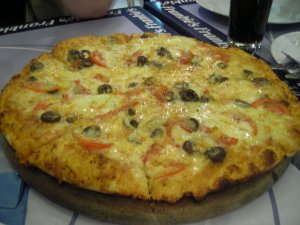
We met up with everyone near Frankie’s and headed to the Pizza Inn. This, as you can imagine, happened to be the next Obrooni and wealthy Ghanaian hangout. People sat in nice outfits, suits, some seemed to be on dates at what we would consider a fastfood court. We ordered a pizza and it was very good. However, we ordered an 8 slice pizza with 5 people eating the pizza. So we all had a slice and then we came up with a great communal solution. For the last 3 slices each person would take a bite and pass the slice until it was gone. This happened to be a great solution, at least a very interesting experience, until some people (Kyle) decided to take bigger bites than what is acceptable. This made Molly very sad and angered (see picture). Later that night some people went out, but mostly everyone hung out at the hostel enjoying pineapple, which we bought on the return trip from Kakum. We completely bought two ladies out of their pineapples for the day. The were very happy.

Day 9
We woke up early today to head to Labadi Beach. Breakfast was oats (oatmeal) and toasted jam. I am not too much of a fan of oats, but the toast was great. We were going to the beach to play soccer and enjoy the sun. After eating we hailed a taxi. The first wanted too much money, but the second agreed to a price of 35,000 cedis – I am getting very good at bargaining. It cost 20,000 cedis to enter the La Pleasure Beach,so we tried to sneak into the Labadi each Resort. Unfortunately half of our group decided to turn around and give us away – not good crashing technique you have to be confident.

We paid and were immediately grabbed by hawkers. A man who claimed to paint sat me down for nearly 20 minutes with a stack of paintings trying to get a price and a sale. However after the sixth time of telling him that I was not going to buy a painting he still couldn’t believe it. Finally I got away and we agreed to be friends. We set up with some cushioned chairs, played frisbee, soccer, and enjoyed the water and waves of the Atlantic. We body surfed and tackled the amazing waves. After exhausting my swimming, I went to sit down in the shade for a while. I met a drummer who taught me four traditional rhythms. He was very cool and would not finish the lesson until I had memorized the rhythms in the brief 30 minute period. He them wanted me to buy him a drink and I thought it a fair trade after a comprehensive drumming lesson.

Joseph from the hostel arrived and just as he did the beach acrobats were warming up. They were amazing. They were all extremely muscular and could balance just about anything of anyone on any part of their body. They jumped, balanced, yelled, juggled, and put on a really great show. I could not believe all that they could do with just three guys, a table, some straw hats, and a lot of practice. It was a nice break from the hawkers.

Kyle, Sarah, and I left early since we could feel our bodies being scorched by the Ghanaian sun. We had some trouble getting a taxi, but made it back. We got back and noticed how badly burned we were, SPF 30 just couldn’t hold up. I should have applied a second coat. After showering and applying lotion and aloe we watched the highlights of the UEFA league finals. As we watched we slowly dozed off and slept for four and a half hours! I have no idea how, the beach and sun just wear you out. Kyle woke me and asked if I wanted some PB&J since it was well past dinner time and it was dark out. It was some of the best PB&J that I have ever had. As we enjoyed the reduced fat, super crunchy Skippy peanut butter, raspberry jelly, and Ghanaian wheat bread we enjoyed also the courtyard TV playing the African version of ‘American Idol.’ The Mentor show has terrible singers and harsh judges just like it American counterpart. The Nigerian students staying in the hostel were absolutely loving the show. All of the music was bad and American. Most of what we watch on the TV is the football games and the news. The best news is Aljazeera News, it covers so much and they send reporters to a lot of places that usually no one will go. I enjoy the updates from Aljazeera even at home in the States.

There are no pictures from the beach because there was no time and there were enough sleezy guys taking care of that. The beach was like any in America or Europe, but the water was so much warmer.

Index of blog post series on Ghana.

scenery and speed bumps

Day 6
We left at 9am to head to Cape Coast to see the ocean and the slave castles. It was a very long ride and would take nearly 3 hours. Good thing, that means I could sleep some more. It took an hour to get out of Accra and then 2 more hours to reach Cape Coast. I decided to start out by doing some of our class reading from The Beautyful One Are Not Yet Born, but it was so difficult to read a book describing Ghana when the very country is passing by your window. My focused reading was punctuated often by the series of speed bumps. These speed bumps were not set in any sort of order, randomly plaed along the long route to Cape Coast in sets of 10, 5 far apart and 5 closer together. This made it very difficult to read or sleep, however many other students managed to catch some z’s. Also the difference between reading and seeing was just too great to pass up, so I spent my time looking out the window. Richard who started working at the hostel the day we arrived told us that we would see a very different Ghana. He was very right, this was the Ghana that I expected to see. There were numerous slums and rolling hills with so much greenery.

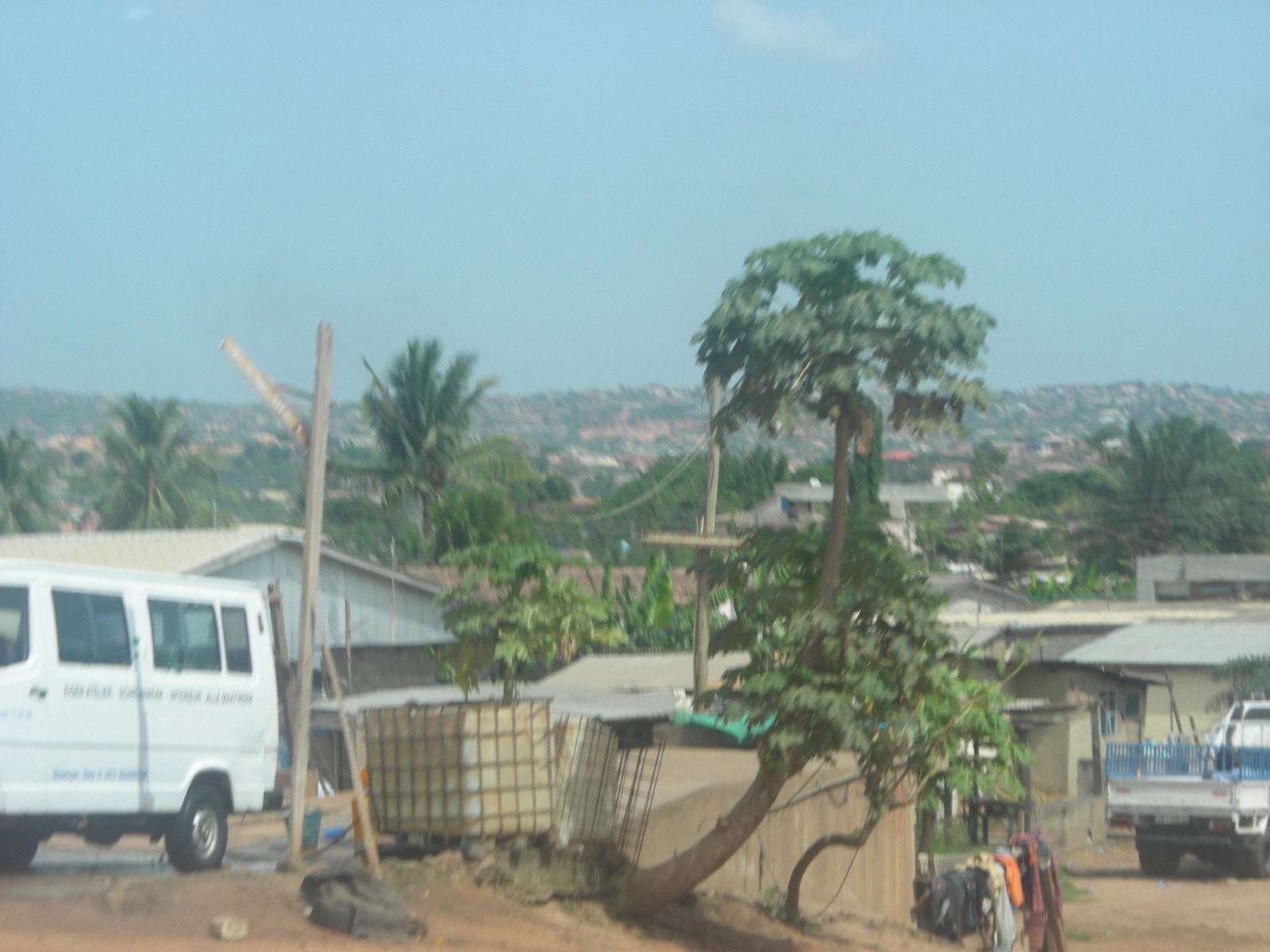
Here are some random snapshot from the road:


We arrived finally at the Cape Coast area and passed Fort Amsterdam, set up by the Dutch. As we neared the actually town center, the Cape Coast Castle stole the view and I was awedby what it stood for. We entered the castle, again hawkers followed us in, and readied ourselves for the tour by exploring the museum. History, artifacts, and knowledge on culture were thrown at us in neat displays, but these could not prepare us for the walking tour that awaited us.
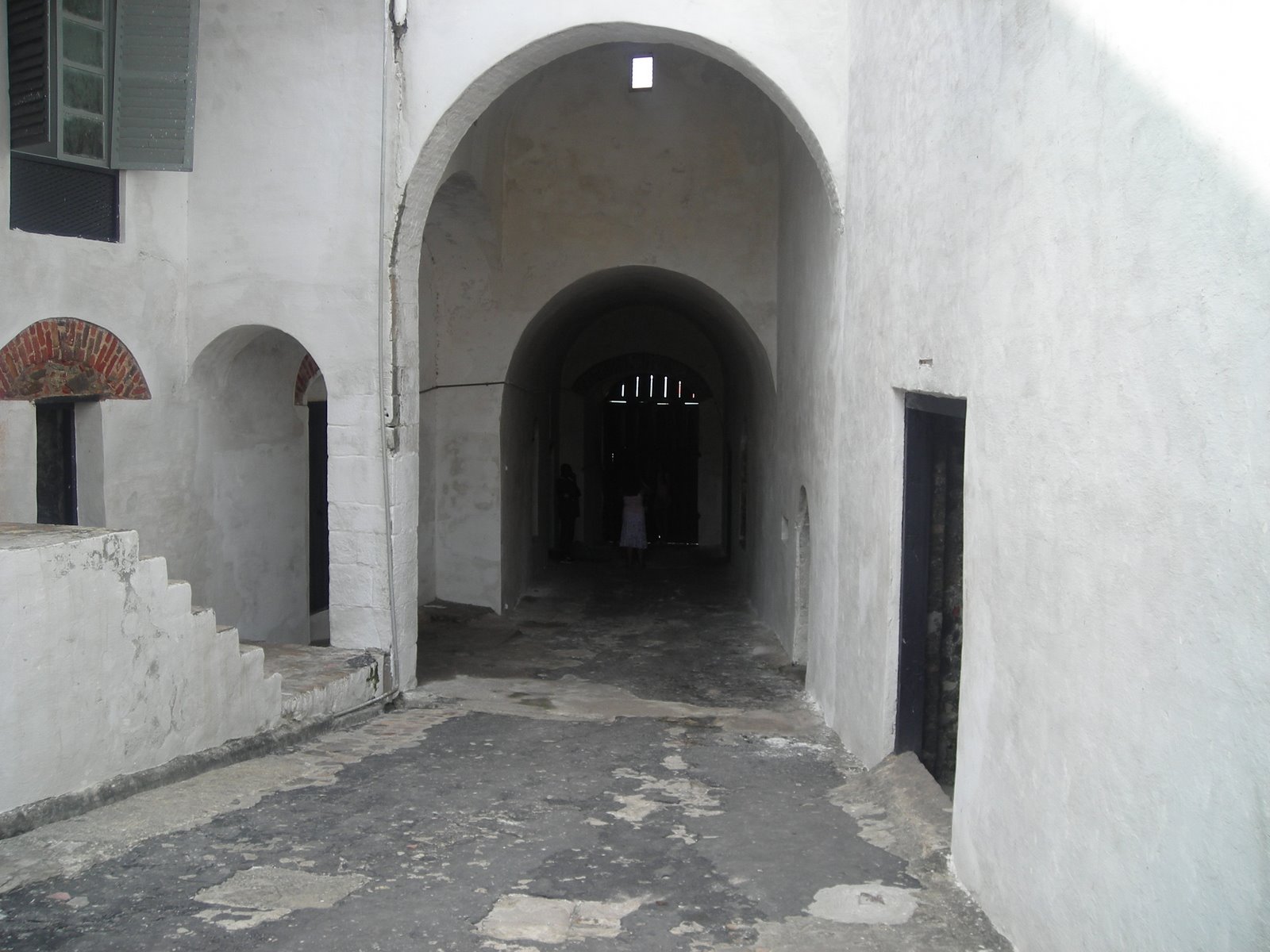
Our guide was a very somber Ghanaian who was very smart. We started in probably the hottest room in the castle, Palaver Hall, where the Bond of 6 March 1844 was signed to create peace between the warring Ashanti and the coastal groups. The tour was great and the views from the castle were breath taking. Near the end of the tour we entered the holding cells for the slaves. Many slaves passed through these cells, many starved, many died, and so many more exited Africa through the ‘door of no return.’ It was a sobering reminder of how our world used to operate and how our people used to treat others. What every happened to that neat ‘Golden Rule?’

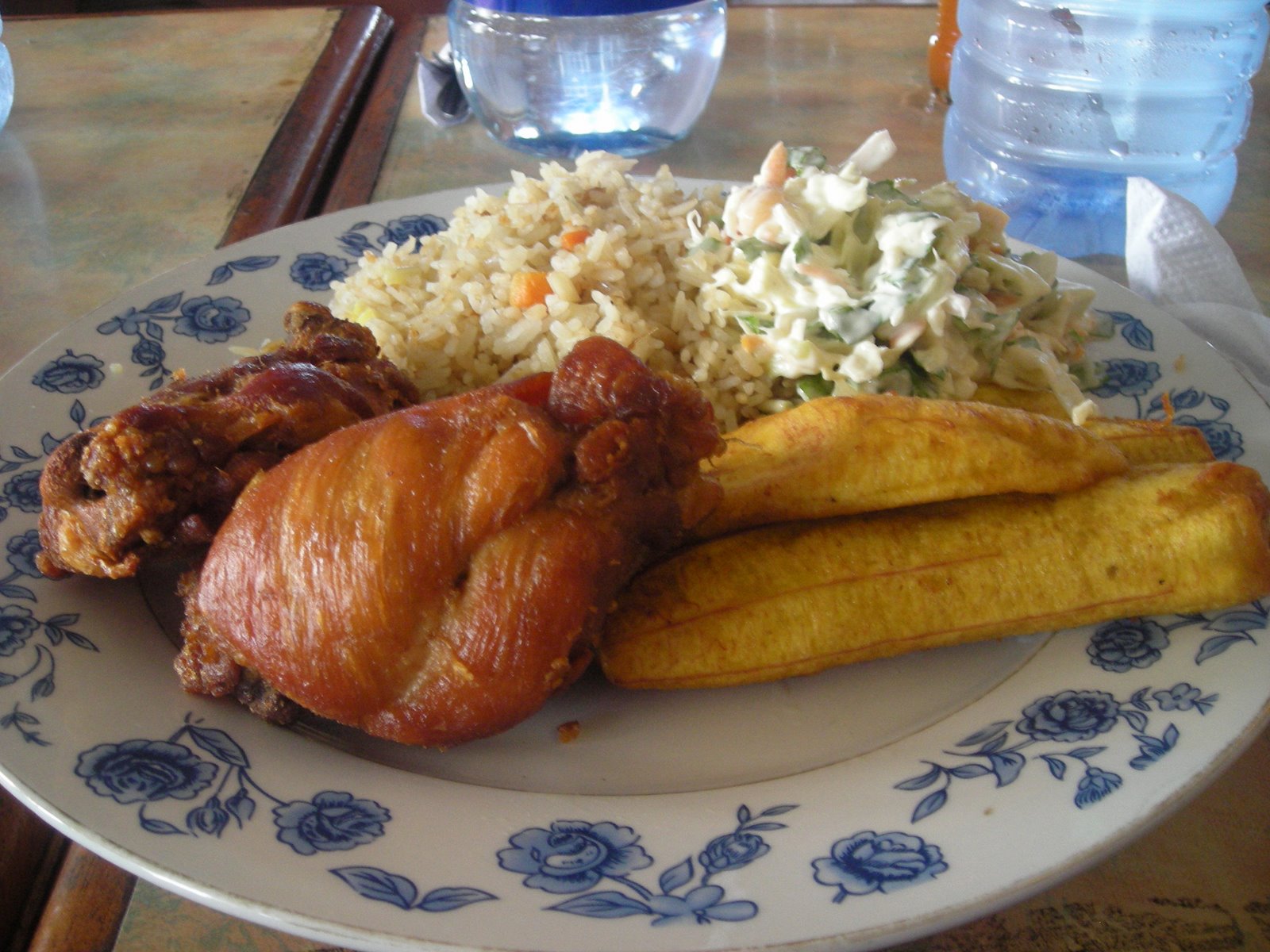
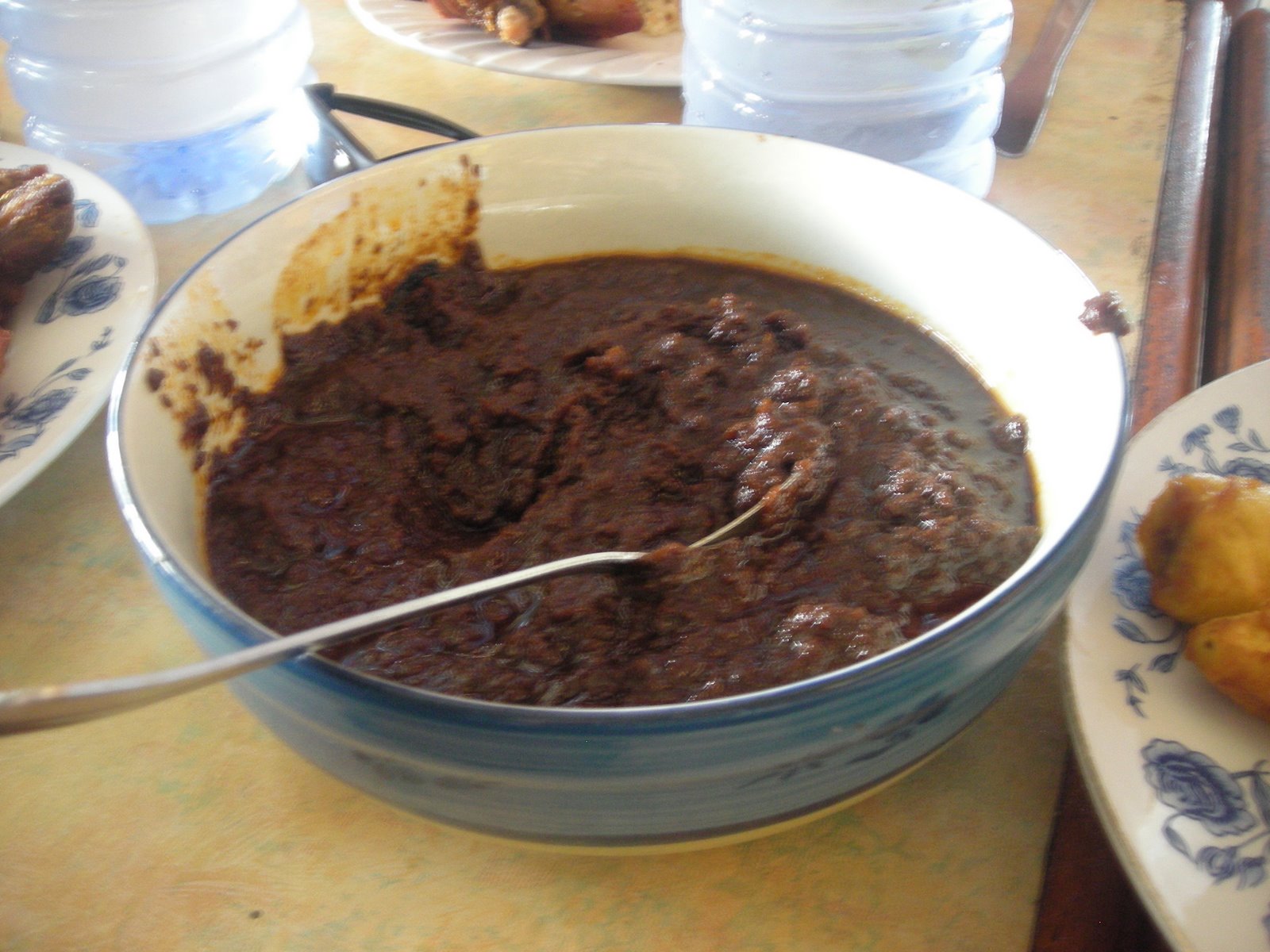
We ate lunch at the Cape Coast castle resturant. We had the usual meal of chicken and rice. Here they served a big bowl of what we call ‘hot.’ (Please pass ‘the hot’) We have determined that this is Ghanas’s equivalent to red hot sauce. It is so hot!

Next we took a short bus ride to the neighboring fort, Elmina Castle. Elmina as I wrote before was called ‘The Mine.’
It was used mostly as a trade and military based center, however many slaves did pass through its walls. We also had a tour here, but it was not as good. The guide was not as somber and heart felt for the deeds of the past. After our tour we went outside the castle. There is a bay area where all the fishing boats line the docks to sell their catch. They all have vibrant and multi-colored flags to adorn their vessels.
Here we bought bags of water from some very cute kids. Everyone took their picture so I didn’t want to add to the insanity of a photo op. They were extremely happy to have our business.

We then headed to our hostel for the night. We arrived by way of a very bumpy road. It was a bit confusing at first as we waited on the bus to get our rooms. Eric had us first check out the rooms since he thought they were not the nicest and there was no AC. I am not sure if he thought we could not take the heat or if he didn’t want to have to deal with the heat. The rooms were not bad and many students from the University of Cape Coast stay here. We all said the rooms were fine and we could handle no AC, little did we know. . . That evening we went out to the gazebo for dinner, beans, rice and chicken (getting a bit repetitive). This is where I got my first mosquito bites. By the end of the evening my ankles were eaten alive. Good thing that I am taking my anti-malarial. The Cape Coast is in the Central region, not really the center of the country, but central still, where the Fante people live. After dinner we had a performance by traditional drummers and dancers. It was an amazing performance and we were all made to try our skills at Ghanaian dance. The locals and students enjoyed our show just as much as the professionals. I wish could have taken a video to post here, but it was too dark out. Afterwards we met some UCC students and the performers. We got into a discussion about tradition and culture in America. I had to respond that we really have no culture, but a pop culture driven by sex, money, and fame. Tradition in America is all up to what a family wants to remember and practice or not. Just like keeping in touch with family or keeping a family name is completely optional in America, but it is just not so in Ghana.

We returned to our rooms for the night to the realization that the power had gone out. No power, no lights, no fans, no power – many people showered by flashlight and I wrote my journal in the hallway where the generator was keeping power on. It was an interesting experience as without even a fan the heat engulfs your body. It was so sticky to sleep. I decided to shower in the morning when I could see and when the cool shower would feel so much better. I actually slep very well and somehow encorporated the sounds of a barking dog (for 10 min.), a muslim call to prayer, and loud shouting into my dreams as I was the only one not awakened by the noises. I heard them, but never awoke.

Day 7
The power came back on at 6am and the breeze of the fan was a welcome relief from the stale heat. I had slept fine during the night, but most students said they could not sleep at all. The cool shower in the morning was amazing before breakfast – only to begin sweating in the heat again. I brought out my soccer ball and we all played a nice game of ‘one-touch.’ It was time to leave and I was dripping in sweat. We stopped again in Cape Coast to change money, get water, and saw the castle for one last time. On the bus ride to Kakum National Forest the movie, Blood Diamond was brought up again. Some students expressed fears that this conflict of diamonds would spread to where we were in Ghana. I could not help but speak out and explain the distance of the conflict, the history of Ghana, and the understanding that bad things that happen in one African country are not automatically replicated in another.

We arrived at Kakum National Forest from a short bus ride where we were able to see so much more of the beautiful countryside. It was so beautiful and green. Our tour guide was very nice and took us around the park.
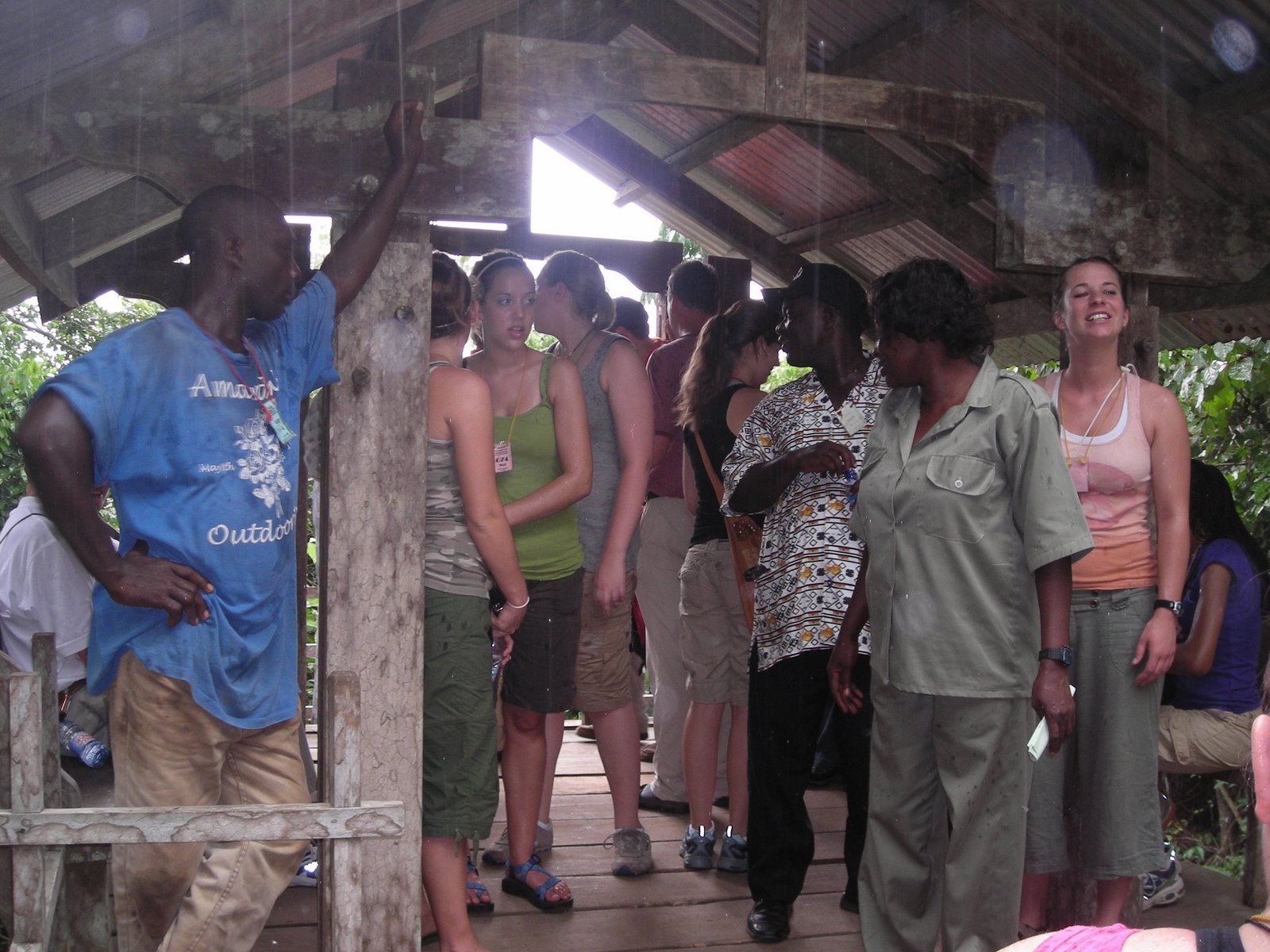
We trekked the steep stone steps through the forest. Our guide told us that we would not see much wildlife because they were all away from the tourist noise on the other side of the park. Just as we began our ascent of the first steps it began to rain. Would this be a typical African rain that I had experienced before? Oh yes. Rain in the rainforest, it poured. Many students sought shelter in the nearby roofed pavilion, but the rain felt so good. The rain let up for a bit and we walked to the next shelter to walk the canopy. As we reached the shelter, the rain poured down more heavily. We had time to meet a Ghanaian politician who had studied at MSU and another politician from Holland, doing an exchange program with the local Elminaian government council, who had also studied at MSU about 20 years ago. Everyone is a spartan even in the rainforest.


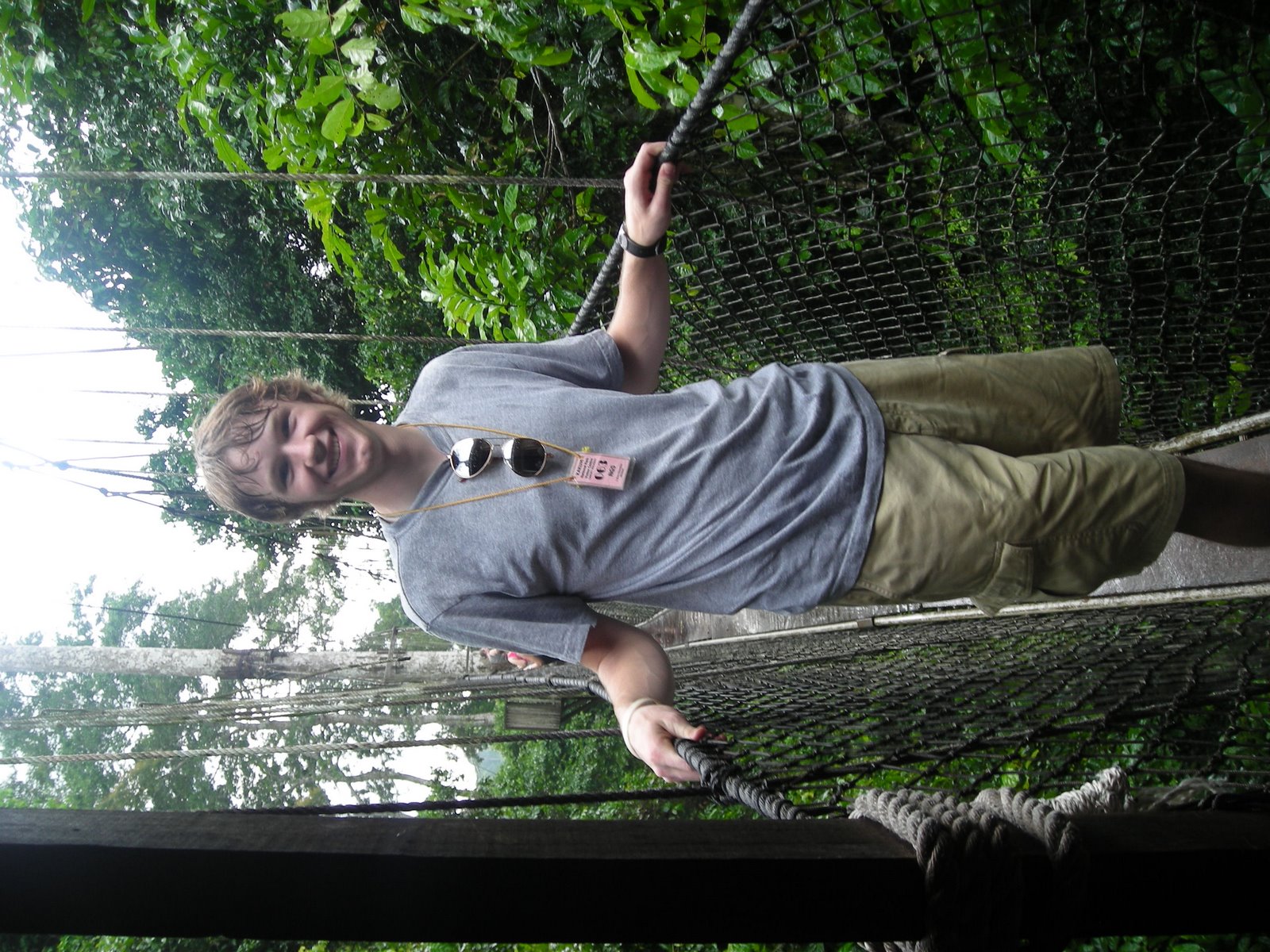
The canopy bridges are 316 meters long, there are seven rope bridges and six platforms. The bridges buckle and sway as more people get on, but you know you are safe. Some people had fears of heights, but the view was so beautiful and how many chances do you get to walk the canopy of a rainforest? We all made it across and received a hug from our guide since we survived. As we walked back I realized it was more difficlt descending the stone steeps than climbing. We waited while Don ate his food which he had ordered before our walk. Grrr, Don.

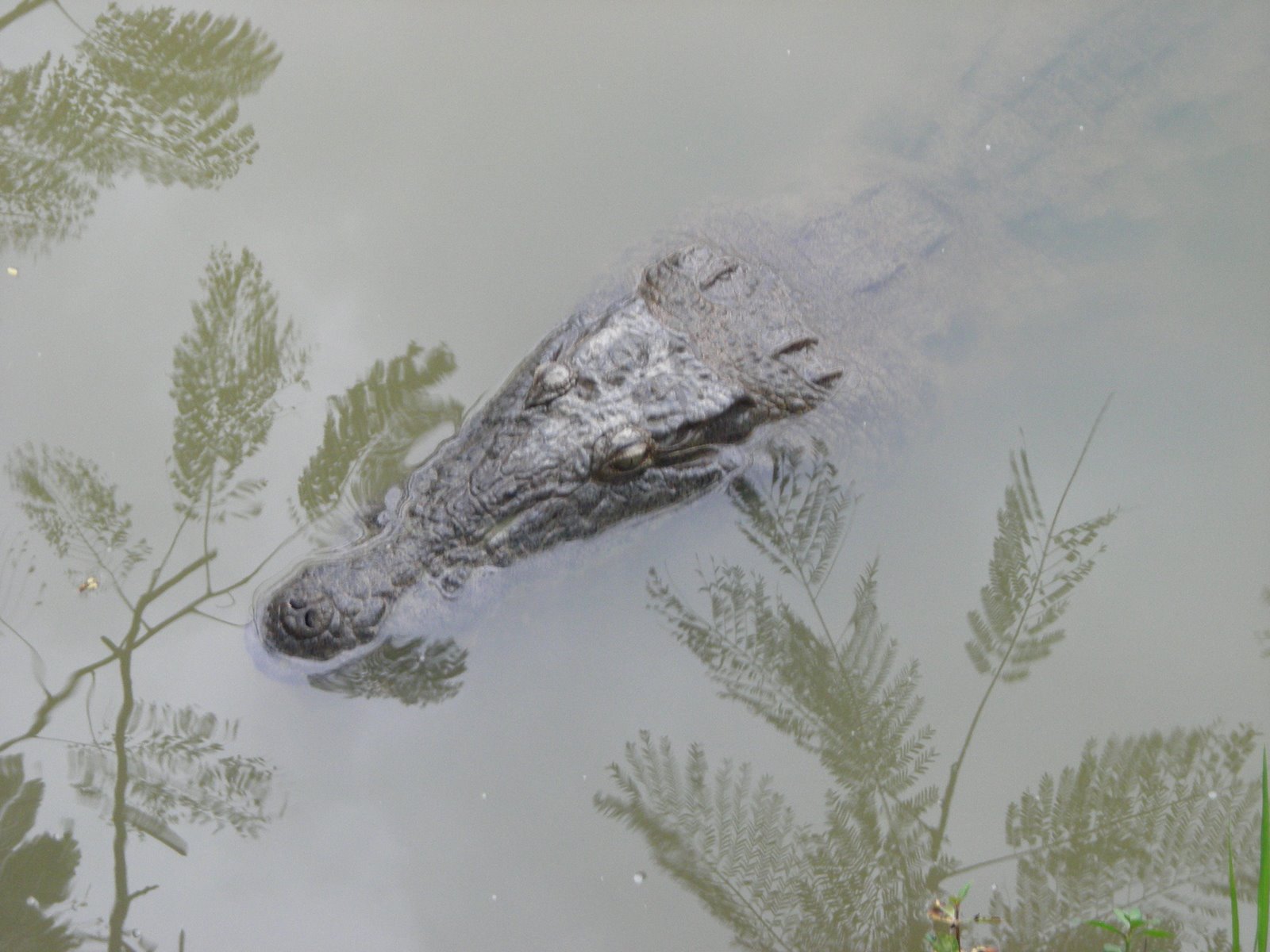
We all then boarded the bus to eat at the crocodile resturant and hotel that we had passed on the way to the park. It was a very nice and expensive place. There were crocodiles in a pond surrounding the resturant. The grounds keeper was showing off the crocs to some local school children. The crocs lunged at meat on the end of a stick and the children screamed and ran away. I sat down on the steps near the pond to relax. As I sat a large crocodile slowly swam towards me. It did not turn away so I stood up to the delight of the school children. It finally decided to run my relaxation and chill at the edge of the steps, probably envisioning me as a tasty morsal of meat. Maybe it had never seen an Obrooni?

We left for the long trip home and I slept most of the way. We stopped at a pump station (gas) and bought water and I got a coke. It tasted very similar to coke in Americ, but with less bite. Back in Accra, some people bought toilet paper through the window from the hawkers. 4 rolls for 10,000 cedis ($1). We unloaded at the hostel and got ready for a night out. Richard took us to a neaby pump station that supposedly had internet, but that was false, so we hailed taxis to get back. We had by now figured out the proper pricing and worked to get the right price instead of being ripped off Obrooni style. After the thrid taxi drove away, we conceded to a slightly higher price. This is what happens when Obroonis get tough, the tough get going and leave the Obroonis behind. We used the internet in Osu and later enjoyed some Gordon’s Spark (fruit and gin) and hit up the club with some drummer friends.

Index of blog post series on Ghana.

for the love of america

Be sure to check updated Days 3&4.

Day 5
Lecture this morning was on indigenous slavery and the Trans-Saharan slave trade. All of this I have learned about extensively because you cannot study Africa and skip over such a subject. So that is why I began journal writing during lecture. As I said before it is great to be an Africa Studies major studying in Africa, but I want to learn what I do not already know.

I remember the other day our bus driver Eric was listening to the radio and there was a discussion of the importance of local chiefs. The discussion was on the need to unify the chiefs and include them in the political process because it would not matter if a policy was adopted if the local chiefs with all the power did not agree. There is no way to get around the chiefs or work around them because they hold such power at the local level. If the government is to work smoothly then they will need to include the local chiefs in the political process. Now this is the type of African Studies that you just can’t get in the classroom.

The traffic goes by outside, a car alarm triggers, I am sitting in a classroom listening to a boring lecture – it is almost as if I am back at MSU, the AC masks the intense humidity and heat. The only difference is that the professor standing before me is actually teaching in his home country. I have had a total of 7 professors from Africa in my two short years in college, so there is nothing new: traditional dress, accent, and use of odd American sayings. Professor Passah likes to preach his own ideology and views to us during lectures. Today he brought up the Iraq conflict (falsely called a war). He noted that the money spent on the conflict could work towards the development of Africa. Not just Ghana, but the whole of Africa. I could not have agreed more. He then went into how Ghana became a target for international corporations and NGOs. He noted how this is seen as no problem and makes him very happy because a Ghanaian gets a lot of money in his pocket. He said to not think of him as a bad man for saying that, but this is where I worry. So he is not a bad man, but a man blinded by the Western desires promoted and unaware of the possibly and often negative effects of a huge international involvement and presence.

At the end of the lectures we were again on our own until 2pm. We went to the internet café again to check emails and blog some more. No time to eat. The University is very interesting because there are houses, living complexes, dorms, a primary school, fields, horses, and more all within the campus grounds. It is like a small city in itself. We boarded the bus to have our tour of Greater Accra. Accra is the second largest city in Africa behind Lagos, Nigeria. Eric showed us all around Accra. This is when we got to see the more impoverished parts of the city; the slums and rundown areas, the wood scrap and sheet metal housing, the shirtless and hungry. As we neared the coast the poverty seemed to increase and the development decreased. The wide streets, colonial fortresses now used as prisons, and the old style colonial shops have all slipped in to decay and have been abandoned to ruin. The wealth and high class has left the coast of Ghana. We toured the private homes area with their western styles, gates, barbed wire, guards, and tennis courts. We saw the president’s personal residence – no pictures – and the palace. As usual there are hawkers everywhere. Later we returned to the art market to exchange money and met up with some of our old ‘friends.’ This time the hawkers calls were more subdued, but nevertheless relentless.

This is the exchange for a $100 bill into Ghanaian cedis. It is quite a stack of money:

After manuvering the thick traffic we returned to Catters Hostel near the village od Shiashie, which we have learned is not a road name, but a village that was engulfed by the growth of Accra. You can’t help but notice the signs on the corner of every intersection telling you of the direction of each embassy, organization, hostel, hotel, business, or resturant. The foreign investment is at a very high level. So much for fighting neo-colonialism.

Sitting in the courtyard, listening to the birds in the tree overhead, hearing the end of the day traffic go by, looking at the clouded over sky, and nearby hotels, enjoying a Star beer – life in Ghana could not be any more relaxing. No one here walks fast or runs, unless they are making a sale, no one is rushed and everyone is involved in the customary tradition of greeting their fellow human being. Everything runs on GMT (Ghana Maybe Time). This is Africa, this is life. Last night one of the hostel workers was hanging out with us as we sat. When someone asked what we were doing tomorrow he responded, “This is today, it is now today, you will know when it is tomorrow when it becomes 12 o’clock. Then it is tomorrow.” I could not have agreed more, live always in the present.

After relaxing and writing for a bit, Kyle and I left for Osu to meet the group. The gatekeeper, Stephen, has started helping everyone to get taxis so as not to be charged the Obrooni price. We were supposed to meet up at the Asanka Local Chop Bar. Asanka means bowl, and local means you will be only eating the local foods out of that bowl. The directions we were given were to head down the street from Frankie’s and turn left. So we walked ‘the strip’ of downtown Osu at night. Quite an experience, not bad at all. An Obrooni walking the streets is not bothered, but Obroonis on a University bus – target for hawkers. We ecided we had headed too far in the wrong direction and turned to go the other way. We really had no clue where we were going and finally a Ghanaian called out and we asked for directions.

Francis and Abraham knew exactly where Asanka Local was and took us there. Francis had a friend in New Jersey and Abraham and I listened to his MP3 player on the way. They joined us at the chop bar, where our friend from the market, GQ and the rest of the group was hanging out. The food was great and the servers were very nice. The chop bar closed and our rasta drumming friends met us outside to take us out on the town. We headed for the main road. Just as we turned the corner, one of the girls in our group tripped and disappeared completely from view. We all jumped to grab her and the drummers pulled her out of one of the ubiquitous sewage drains next to the roadside. She was soaked in sewer water and had some bad scrapes on her knees and arm, but was only a little shaken. She said as she fell she was on the phone with her mom, just as her mom said “hi”, she fell. Bobo, a drummer, wiped her down with his shirt and Akwesi said, “You have to be careful this is not america, this is Africa.” Jerod and I took her back to the hostel in a taxi.

She cleaned up and later laughed about the ordeal saying that it was an experience to remember. It was too late to drum so we practiced our Twi and learned some more. We had a great conversation with Richard and Joseph. It was great to hear them talk about their lives and how life is and should be. These guys are some very great Ghanaians. They are not looking to make a buck off of you and they do not want anything but to share experiences and be friends. These Ghanaians actually genuinely care about us and we care about them. However they had very skewed views about America. They could not believe that there was poverty, that you did not get shot on the streets for driving (as someone told them), and that we have very different city lives than Accra. Not bad assumptions, many people make them. They also said that Bush is their friend. They love Bush and they have no criticism of his ‘war.’ They like Bush because he acts like a man. I almost lost control of my body, but held back. Voice of America (VOA) is a highly publicized radio station. Kyle has this joke where everytime we pass the billboard he mockingly quotes VOA saying, “America did something awesome today.” VOA probably doesn’t help with the skewed view of America. Many of the popular radio stations here also play American top songs. We heard all the classic from our childhood on one bus ride. Many store owners paint the American flag on their shop and some taxi drivers have Uncle Sam stickers. Where does this unknowning love of America come from?

Everyone returned safely and headed to bed. All was well and we had an early morning the next day to leave for our Cape Coast field trip.

Index of blog post series on Ghana.

water by day, apples by night

Day 3

Awakened by the metranome sound of our room’s ceiling fan , the early morning Accra traffic outside, and a light knocking on our door. I climbed out of bed to begin my third day in the same clothes and to greet the helper boy saying, “Your friends are calling, it is time for breakfast.” We had slept in just a bit. Roommate Kyle and I entered the bright morning courtyard to see our entire group already there and enjoying a meal of eggs, peppers, tomatoes, and chicken sausage. We barely finished eating before the bus arrived to take us to lecture.

Our first site of the campus was the welcome arches and sign for the University of Ghana. We drove directly to our seminar room in the School of Communication. Professor Tims gave us our welcome and first introduction to the University and then we left for lunch. We had lunch in Osu, where there are many good resturants and tourists. At the Country Market we were treated to a variety of delicious Ghanaian dishes: fried plantain (banana), beans & rice, gari foto (from cassava), fish, chicken, yams, spinach, and freshly squeezed mango juice – liquid heaven.
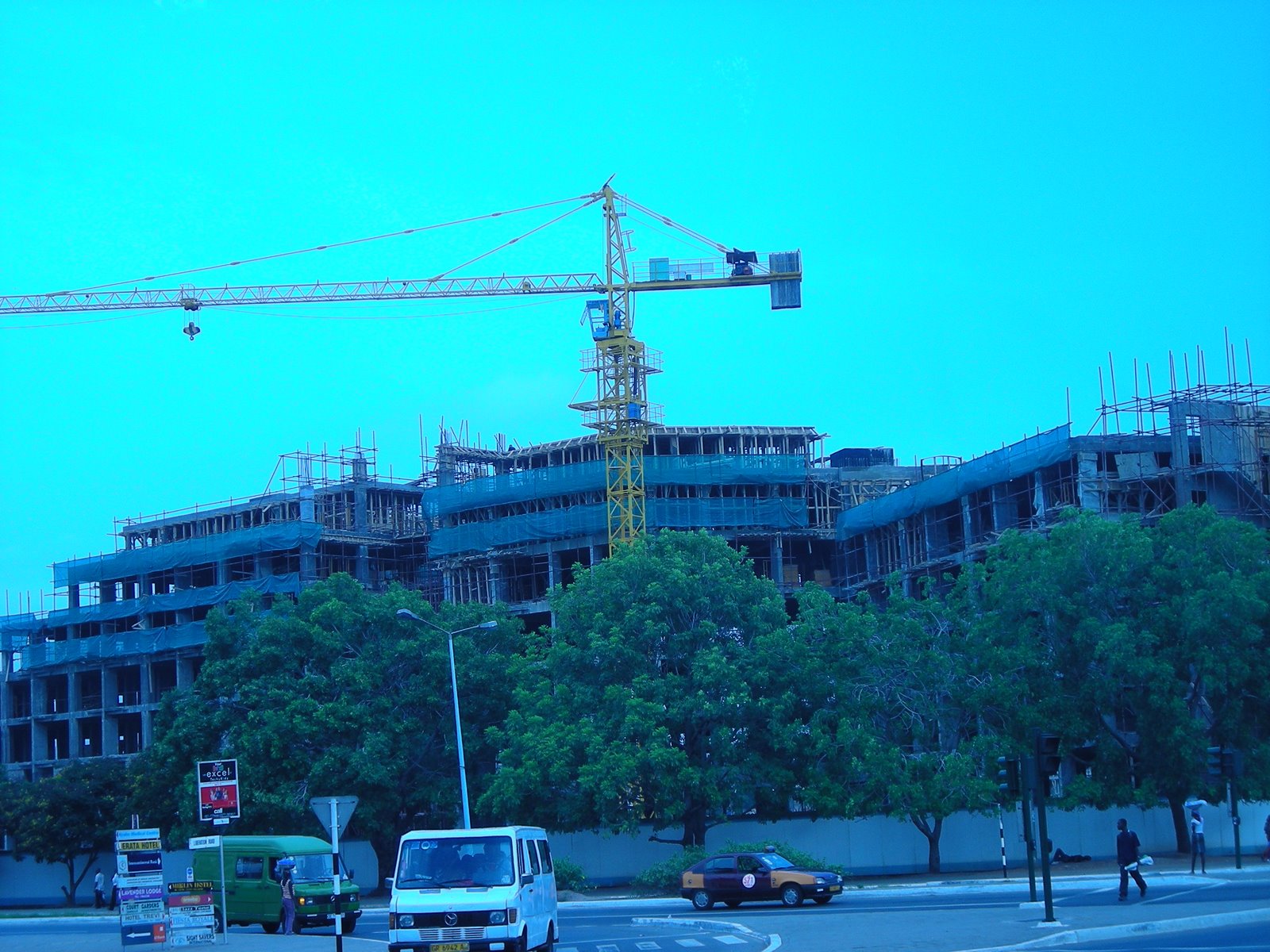
From our travels to the University and to lunch we were able to get our first views of the city of Accra. There is a lot of construction happening everywhere: hotels, apartments, shops, huge structures, a stadium, and more of which I have no idea what they will turn out to be. The economy must be doing very well in Ghana (global economy) from the boom in cocoa prices and the gold supply. As I have stated before it is much like Kampala, but there are is more developed buildings, road infrastructure, traffic lights, and no men with AK-47s at the store fronts. There are many skyscrapers and massive buildings built from foreign companies investing in the country. The traffic flows well, most of the time, because sometimes the stret lights do not work and it breaks down to the wanton driving that Accra’s taxis are known for. All over the place there are hawkers with anything and everything that you could want or need. From bags of water, plantain chips, fan-choco, toilet paper, pens, DVDs, posters, etc. – the list is really quite endless. These hawkers have made navigating the streets difficult and many accidents have occurred, but these hawkers also provide a walking grocery store for all the people on the move during the day. The majority of hawkers sell water during the day in bags, yes bags and it is safe. At night most hawkers are selling apples in bags of three or toilet paper rolls.

Our first lecture was from an ‘insider’ on Accra and Ghana. It was a bit boring and nothing that our amazing bus driver, Eric, had not already told us. After the first lecture we had a bus tour of campus. The University of Ghana, or Legon University as it is known to most Ghanaians is the best in the country. It is a very expansive campus and reminds me of MSU, but MSU is much more flat. Some of the buildings look nicer than those at MSU. There is now a threat of an exam boycott because the University is asking students to leave the University housing on campus to the more expensive hostels in Accra. On our tour we traveled all the way up the hill to the Vice-Chancellor’s house where we were met by an amazing view of Greater Accra below.

After the lecture and tour we went to the ‘art and culture market,’ or in better terms the Ghanaian way of saying tourist trap. It was an intense experience. As soon as the vendors saw a bus full of Obroonis they flocked and told of the wonders of their wares. It is customary for Ghanaians to ‘make a friend’ and so I had about 3 by the end of the experience. Every stall that you go past someone sticks out their hand to greet you, but you are not given your hand back and in return you receive an earful about a nice shirt, or cloth, or jewelry. After a while I met a very well spoken man who asked if I was looking for drums. Heck yes I was! So I followed him to his shop. He and his friends proceeded to bring over drum after drum and we worked on a price. Now in Ghana you have to bargain for everything. They give you the Obrooni price and we are told to cut that in sixths and offer that as a starting price. I bargained, probably not too well and not as far as I should have but we agreed on a price of 550,000 cedis, which is about $60 USD. I would say that is not bad for a handcrafted, quality drum from Ghana, when in other places you would be charged upwards of $300. Before we settled on the price I told him that before I bought the drum he had to teach me something, so we played a bit before finalizing the price. I was still a bit wary and told him that I did not have the full amount with me. No problem they would bring it to the hostel tonight and my new friend, Omar, would bring his group and we would play.

After dealing with all the ‘friends’ and sellors, I had to get away and join my friends who had already escaped and were watching a large football (soccer) game right next to the market. It was a great game, but the more interesting one was played by a group of players not in the larger game. They had tiny nets with nho goalie and used the area next to the market as well as the people in the market and the big football field as a game field. The were very skilled and cursed anyone who got in the way of the game, as it was a game that took away a major walking path.
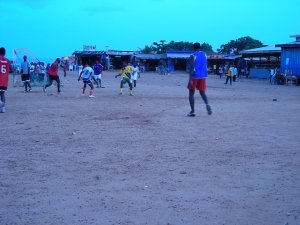
Later that night as we sat chatting in the hallway, one of the students came up and said that there were visitors for me. Omar brought the drum and his drum teacher. We sat and drummed and hung out for a while. I learned a lot and it was great to be learning of the traditional music. Omar’s drum master was a great teacher. He has dreadlocks, and the local people call them the rasta. They see the rasta as people who they can learn something from, however others see the rasta as bad people looking to make trouble. At any rate they were nice and I learned a great deal. Here are some great quotes from the drum master about life and living, “It is nice to be nice, we have the same color eyes and we bleed the same color blood” and “Africa is about much experience.” When he said the last line we were talking about travel and education. He said that it is great to be taking something back, experience, but also culture and music. It will be as if I did not just travel to Africa, but I will be able to give my friends a good idea of what it is like and I can, in turn, teach them. I would say he had a sharp mind and they told me that they could come by every night to teach me more.

The bus showed up and I was finally able to get away from the rasta lectures on life and we ventured back to the airport to get our ‘lost’ luggage. It was a fun trip. There was a long line, because many people did not get all their luggage on the same night as us, and they beat us there.
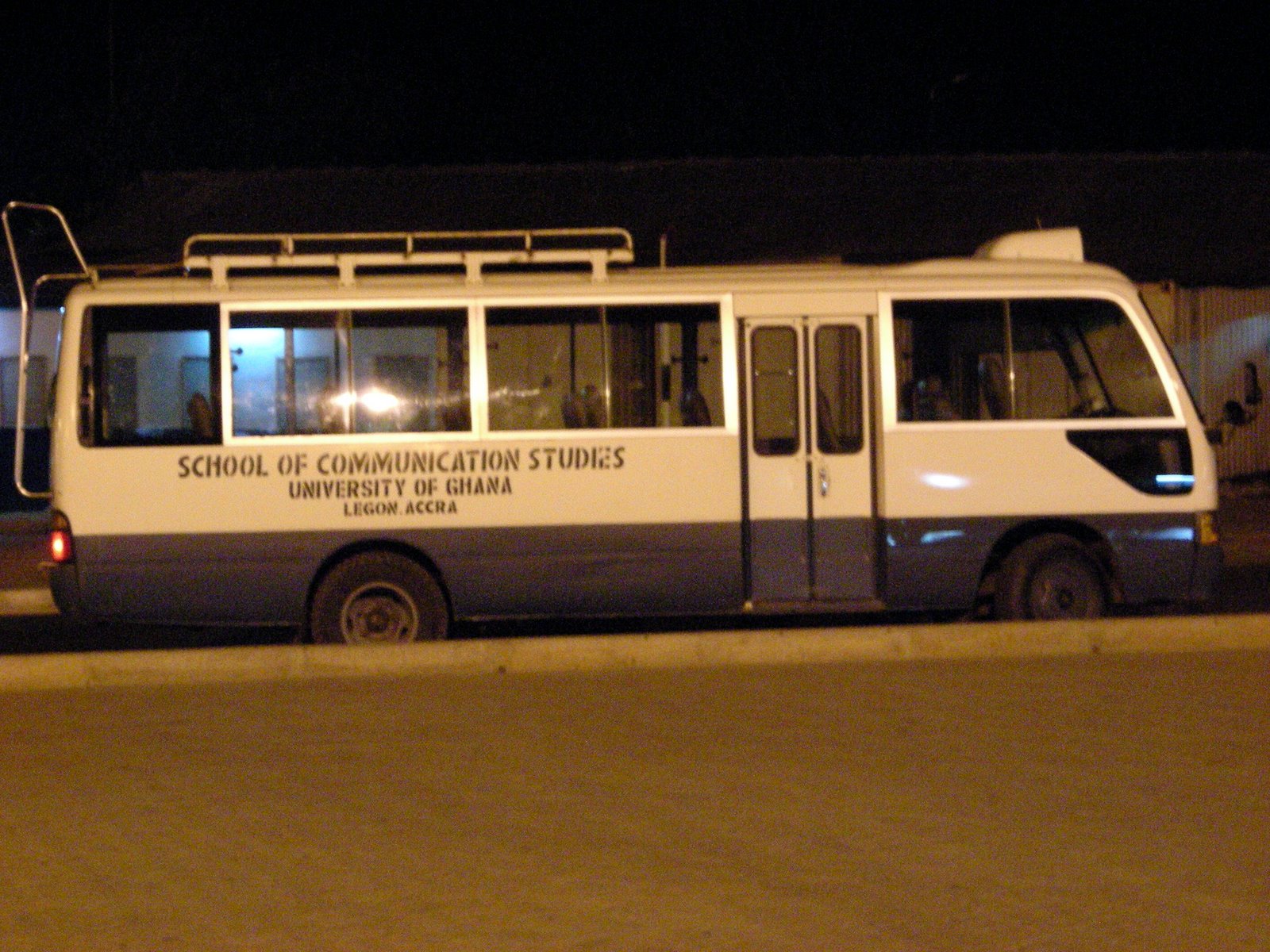
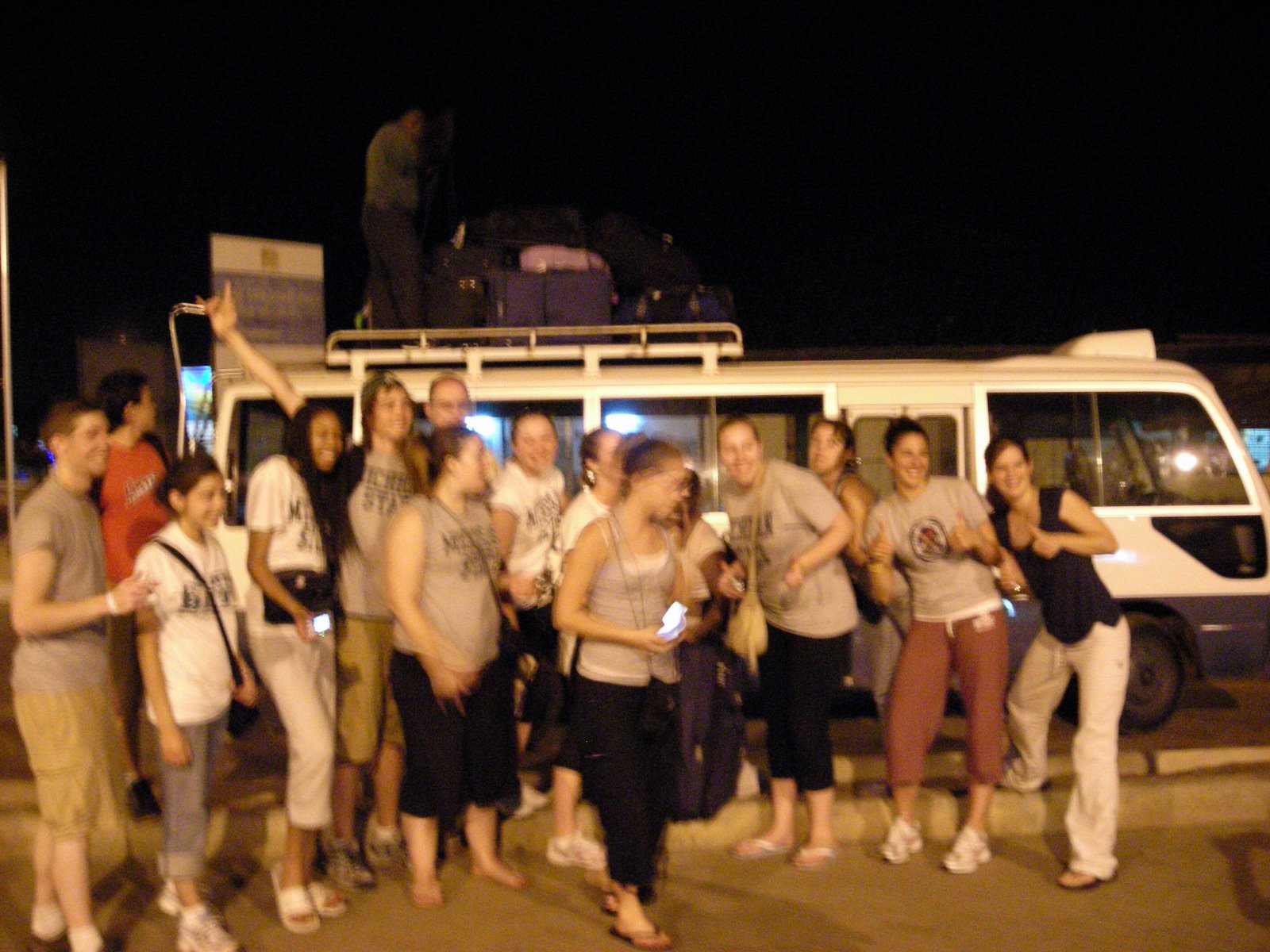
It was a tiny office where an man who exuded false importance sat to check your luggage and have you sign a large official book with your John Hancock, for what purpose? I have no idea, but it must have been important. There was a small room where all the luggage was crammed in. There was luggage dating back to last year still there as we rummaged to find our luggage. Some luggage was still missing and some people still had only one pair of clothes. Check out the bus before and after pictures:
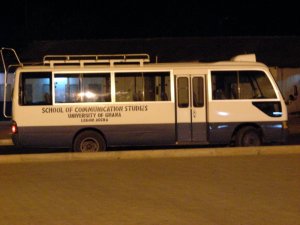
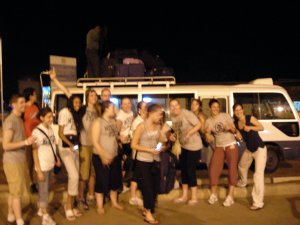
Day 4
The next day began again with waking up late finishing my french toast just as the bus pulled up – no time to shower (day 4 no shower, gross). We went straight to the University and had lecture from Professor Passah, head of the History Department, on the history of Ghana and its people, colonialism and its impact, and its positives and negatives. For an African Studies major these were not very interesting lectures as I had heard them all before, but learning more specifically about Ghana was great.

Super Fast History Lesson on Ghana:
In the 15th Century, the Portuguese discovered the vast gold wealth of the Ga people. They had been searching to find a gold source that was not throught the Middle East, since the Arab states had a sort of monopoly on the gold trade and the Christian Portuguese did not want to trade with the Muslims. The Portuguese also knew that the gold from the Middle East did not originate there, and so there must be a source elsewhere. With their great sailing abilities and inventions such as the compass and magnet, the Portuguese found the Gold Coast. The Portuguese had the goal of spreading their religion as well as gaining wealth, so they built a great education system to teach and convert. This is part of the reason that Ghana has such a high rate of educated citizens. Their discovery of gold sparked a gold rush and the Dutch, British, French, German, and other nations rushed to set up fortresses and trading posts along the Gold Coast. This began the trade in slaves as well. Later in 1807 the British abolished the slave trade in paper, but not in practice. The slave trade was perpetrated worst by the British. The castles of Cape Coast and Elmina (La Mina – The Mine) were finally both controlled by the British and the British were able to claim Ghana as its colony in 1901, when all other imperial powers had left. The Btisih also gained control by working out an agreement with the Ashanti people, who fought hard for access to the coast to trade, for peace. It was signed by the chiefs on 6 March 1844 in Palaver hall at Cape Coast Castle, and is called the Bond of 1844. And so now today the greatest influence is Britian as Ghana is surrounded by all french speaking countries. The slave and other trades have relegated Ghana to being solely dependent on cocoa and gold as its wealth is focused on its resources. No industries for production were created because everything was exported to the imperal powers where industry had developed.

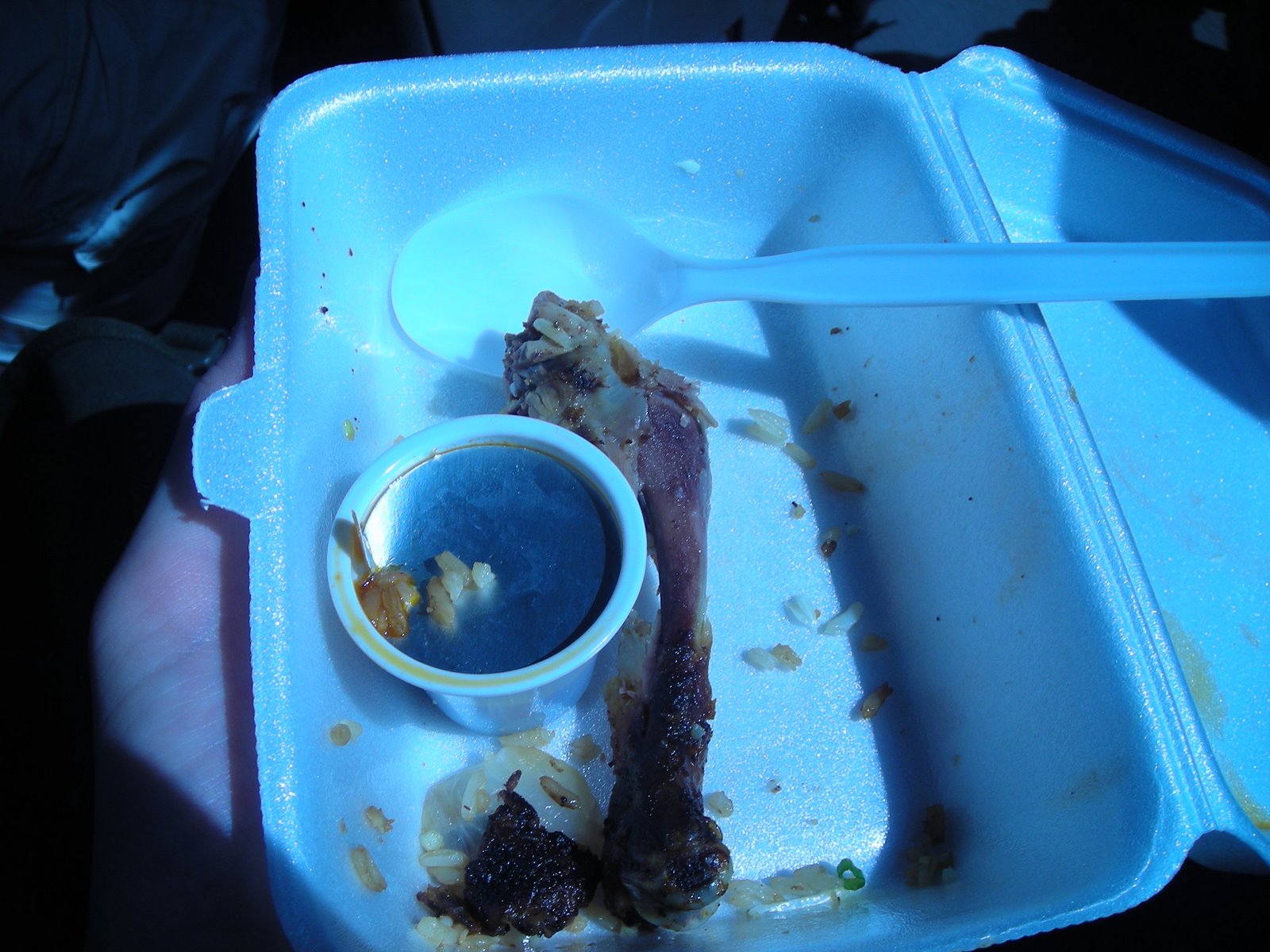
We learned about colonialism and its impacts which was nothing new to me. However, the professor claimed that there were positives of colonialism. Sue education was great, but forced and using unity as an argued positive will not work. Everyone here has a sense of being Ghanaian, but the imposed boundaries divided ethnic groups, increased tensions, and took no consideration for nations of people in the area which were already developed. Unity through division is not a positive. After the lectures we were let out for two hours to explore campus on foot. We headed down the main road,mostly lost, and found an internet cafe – I had to write to mom and let her know that I had indeed made it safely. As one could have guessed she had already emailed me with a slew of questions. I emailed back with not enough time to blog and we had to quickly find lunch. We stopped at a cafeteria and asked for some rice ‘to go.’ Our waiter thought that we wanted to eat outside or have food delivered. He finally understood and we briskly walked to the bus. We got some very cheap and delicious boxes of rice and chicken.

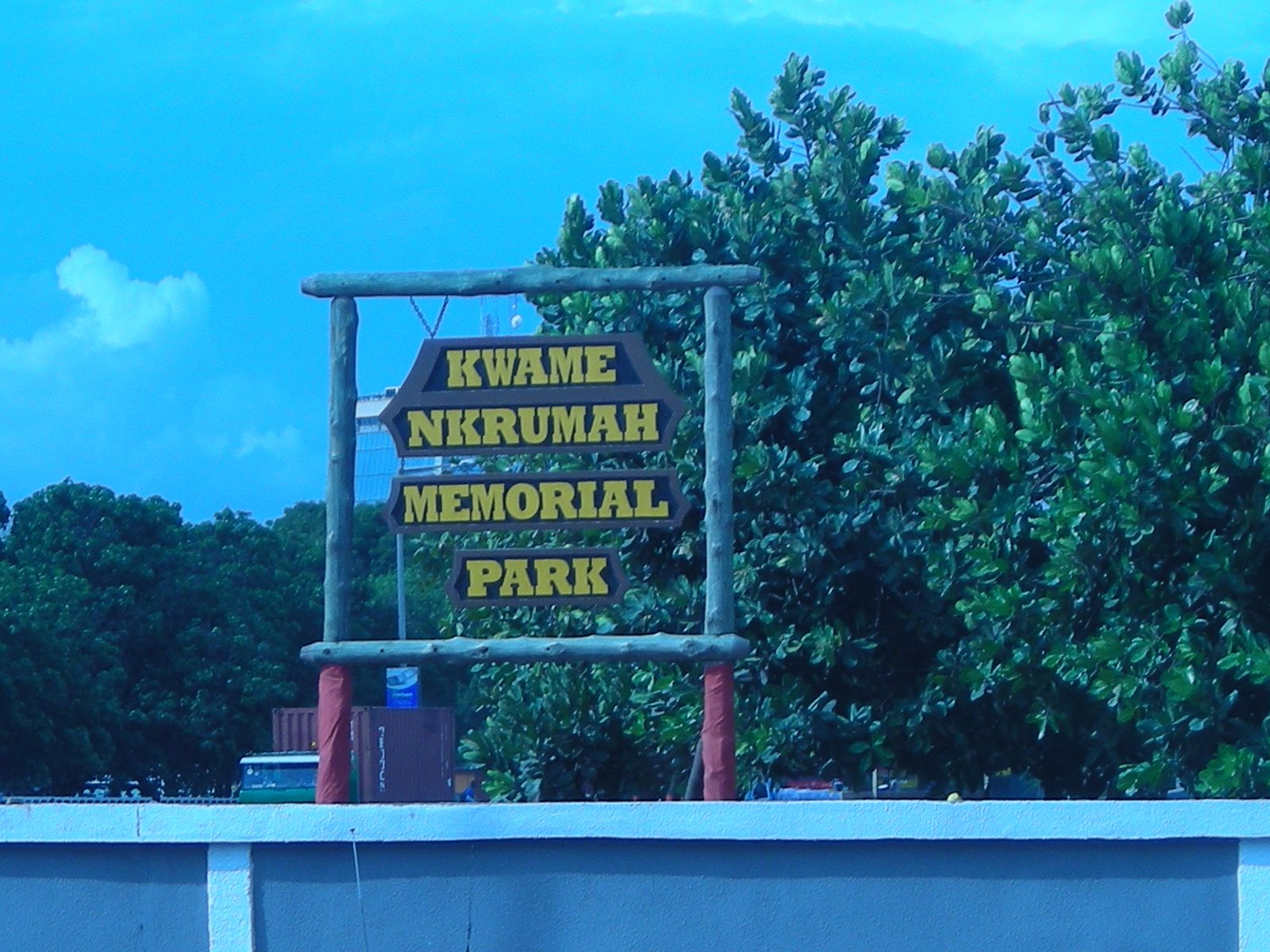
We reached the full bus and headed out to the Kwame Nkrumah memorial park. Many students had no idea who Nkrumah was or what he did for Ghana and Africa. So I was able to give a short history lesson to some. The park was an amazing place, with a great memorial structure representing the life of Nkrumah. There is a large statue of Nkrumah where he stood in 1957 to give his speech, which I had watched in history class at MSU, declaring Ghana’s independence and the moving forward of Africa from colonialism. The structure represented a tree trunk, with aspects of the Taj Mahal, the Eiffel Tower,and other famous monuments. Africa is supposed to have built upon that tree trunk, but it seems we have yet to see this tree blossom. Does Africa still realize this goal of Nkrumah? As you can imagine outside the park hawkers followed us everywhere. We then headed to the W.E.B. DuBois museum and toured his former house and work. At 93 he immigrated to Ghana to help with Nkrumah’s efforts, he also left the States because of his displeasure with the american people missing his message.

We headed back to the hostel after the museums and were on our own again until our 3rd trip to the airport to get the remaining luggage. We took our first solo adventures in Accra. Calling a taxi is very easy being Obrooni and because all you have to do is point your finger down to signal that you want a drop ride. Five of us crammed in a taxi for Osu. I sat in the front. I can tell you from that ride that this was the real Accra experience. Flying down the streets, honking the horn in short bursts, with exhaust and trash fire smoke in your face – This is Accra.

In Osu we ate at Frankie’s which is the hangout for the wealthy Ghanaians and Obroonis. We ordered a delicious pizza. After everyone ate some of us ventured to the streets (dangerous?, maybe) to find an internet cafe and phone cards. Stopping at a gas station to ask we finally located internet. We passed many Obroonis in the street, but none smiled – which is very odd in a city where everyone wants to be your friend. An hour spent online and we easily hailed a taxi to our hostel. We were hanging out and the drummers showed up again. They brought more drums to sell and more people played. It was a lot of fun, but I am still a bit wary of them as they are definitely looking for something. I learned more rhythms and perfected some skills. One of them told me, afterhearing me play, “this is a drummer,it is in your fingers, you can feel it.” What a great compliment.
Index of blog post series on Ghana.

something you can taste

Hello All from Ghana! I first have to send out a Happy Mother’s Day to my mom back home!

I have arrived safely and soundly in Ghana. The journey was long and tiring, but nothing I am not used to. My mom thought that my absent-mindedness might kill me, but now that I am here there is nothing more to worry about. (That’s for you mom) The reason that mom was worried was that I happened to forget after reading my flight departure that I was to leave in the PM and not the AM. The evening before planning to leave at 7AM the whole family went out to dinner to celebrate mother’s day and send me off to Ghana. We went to a great Chinese restaurant and my fortune interestingly read: “You are about to embark on a most delightful journey!” A good sign. When we arrived home it happened that we discovered that my flight was to leave at 7PM and I still had a whole day ahead of me in the States. Oops.

I have to begin my first post from Ghana with a disclaimer: There is no way that I can completely or even remotely express and capture the full Ghanaian experience. There is no way that I could even claim to have the ability to write in such a way.

Day 1 & 2
At the airport all the study abroad students met up to check in. We all were quite excited and began awkwardly talking about our hopes and fears of traveling to Africa. Many students had said their friends made jokes and asked, “Why Africa?” There really is no answer one answer for everyone and I wonder how many just played along with the joke. We made it through security and boarded our flight across the Atlantic. Many students had never crossed the Atlantic, this will build their waiting ability in Africa. British Airways is a very nice airline (or so we thought) with jovial stewards serving food and libations in their beautiful british accents. Each seat was outfitted with a screen and high-tech options for movies, music, news, etc. I watched the ‘Freedom Writers’ and ‘Last King of Scotland’. I will share my review of those movies later.

Arriving in London, the only way you could tell it was London was because of the constant rain and the small british cars. The airport Terminal 4 was not too exciting and there was a lot of sitting and learning Twi, the main language of Accra. In the airport I had my first real world test of french as a man asked me where I he could go to smoke. I fully understood him and had to reply that I had no idea. After sitting around for a long while, we then boarded our plane to head to Ghana. The flight was delayed I found out later. I had fallen asleep as we sat in the plane waiting to take off. Our first greeting from the African continent was a blazing red sunset – absolutely beautiful. Many studetns commented taht they would not believe that they were going to Africa yet, until they were actually there.

After much rest and a long plane ride we arrived in Accra, Ghana to the Kotoko Inernational Airport. We were welcomed by a slight drizzle.The green, red, and yellow colors of the Twi saying: “Akwaaba” (meaning welcome or ‘you have gone and come back)shone brightly as our first glimpse off of the tarmac. It was roughly 10PM and as soon as you stepped off the plane there was a heat and humidity that you couls almost taste because it was so thick. We enter the country and passed immigration with no problem, but our luggage did not arrive with our plane. For some reason British Airways decided not to send it along. Kotoko Airport is like many in Africa – a hint of colonialism in decay with many people walking around in official uniforms. After waiting in long lines for tickets to claim our luggage the next night, we boarded our University of Ghana bus and headed out into the nearly empty night. The bus was nice and air-conditioned, but had an odd smell of human sweat circulating. Accra looks much like Kampala, Uganda. However, I would say that they should call Uganda the Ghana of the East, not vice versa. The similarities are frightening, but I will touch more on the city later. One big difference is the bill boards celebrating 60 years of independence of Ghana.

The hostel is not far from the airport and is quite nice. It is definitely a luxury in Accra. There is AC, a television, a mini-fridge, private bathroom, and a type of bellboy. The Ghanaian music on Music Africa is great and we watch football (soccer) before bed. It is a very nice place to stay for a few months in Ghana.

I am a bit behind in my writing, but be sure to check back for Days 3 & 4 and more pictures.

Index of blog post series on Ghana.