music to your ears: this year with hiv/aids

This year, 2007, there is some good news about the HIV/AIDS pandemic. The percentage of people living with AIDS has leveled off and the number of new cases has fallen. This is attributed to the prevention programs. However, risk remains high in sub-Saharan Africa. Eight sub-Saharan African countries represent one-third of all new cases and total deaths around the globe. This year there are still 33.2 million people living with AIDS, 2.5 million newly infected, and 2.1 million deaths. (Read the 2007 AIDS epidemic update) As with all good reports, “much good has been done, but more is needed.” Events are happening all across the continent with dedication and promises. The theme of this year’s World AIDS Day is leadership and “Stop AIDS, Keep the Promise!” While there is a lot of talk (read the statements) already this year about what will be done about the HIV/AIDS epidemic.

It is not very often that the news of HIV/AIDS is music to the ears, but this may be one case. In Uganda, where HIV/AIDS was first discovered in the continent in 1981, there is a rising musical movement to increase education and promote prevention. Beginning to make her mark as a rising vocalist in the Ugandan pop music scene, Sylvia Nakibuule chose to go on television to declare her status as HIV positive. Sylvia gained became well known through her work with The AIDS Support Organization (TASO), which regularly puts on performances to educate people about the dangers of HIV/AIDS and how to prevent spreading the disease. Sylvia tells the youth, “I never wanted this to happen to me, so I don’t want it to happen to you. The message I want to give the youth is let us do our best to have a virus-free young generation. Be careful in the way you handle yourself.”

In Malawi, the BBC has been following the village of Njoho and their responses to the AIDS epidemic. Six months earlier one of the village elders had little hope for the people in the village to change their behavior to combat the effects. Now there is only hope. The stigma has left the village; Orphaned children are given help, there are monthly talks and support groups for people dealing with the burden of disease, and there are training programs on education and prevention. The village is fighting back. However, the recent efforts have been hindered by a lack of adequate medical facilities. The local hospital is not equipped to give HIV testing or to distribute anti-retrovirals. Patients with AIDS-related disease are instead sent to a district hospital 10 km away and most villagers cannot afford the bus fare. Yet again the lack of basic healthcare infrastructure adds another complication to an issue already too complex. But there is always hope. Njoho will be starting a clinic next year for voluntary counseling and testing, mother to child transmission prevention, and will provide bus fare for those who need anti-retrovirals.

the longest driveway

On our way to the village of Danfa, where we were to conduct our community health diagnosis, it all became clear to me why the roads that we had driven on were being so developed. I learned from one of our interpreters that there was a new presidential palace being constructed on the top of the mountain past Mampong Regional Hospital. I learned that the roads before had been very precarious and dangerous, but nevertheless the entire route from the main road near our hostel in Accra-Shiashie all the way up to the mountain communities near the palace saw road development to the extreme. It was to be the president’s new driveway. The longest driveway that I know of, but when you get a police motorcade that clears the roads to take you home, why not have a smooth path in the name of development? This makes me wonder. . . will the surrounding communities benefit? Will they get development help and road improvements? I think not as evidenced by the poor side roads and lack of interest in rural communities (or so it seems). Is a long driveway really necessary (too much snow in Michigan)?

17 June 2007
We arrived back in Danfa, as we had previously visited, and moved into our guest house near the community health clinic. The clinic was constructed back in 1969 with the help of the University of California (no one knows which one) and serves six local communities of over 60,000 people. Many medical students stay in the guest housing to conduct community health diagnoses. This is why ours was to be in the village of Otinibi, just down the road about two kilometers. We were to interview four individuals with pre-determined backgrounds to see how well the community was doing in regards to health. Here is where many students first saw a very rural village with not much development. However, here there was a fair degree of development due to the involvement of the University of California and other NGOs from the UK and Norway. This is where I felt most welcome and at ease. There is no rushing in the village, there are no hawkers, no one will lie to you for help, the scenery is beautiful – mountains in the background, heart wrenching picture opportunities of children, the freedom of the wilderness, there is just such a better atmosphere and disposition that it is very difficult to explain. It is because of villages like these that I fell in love with Africa. The guest house was a very nice place where we could all live, cook, clean, and work together. Everyone took turns cooking a meal and cleaning up, playing cards, singing songs, kicking a soccer ball around, and just having a good time. Hurrah for group bonding!

18 June 2007

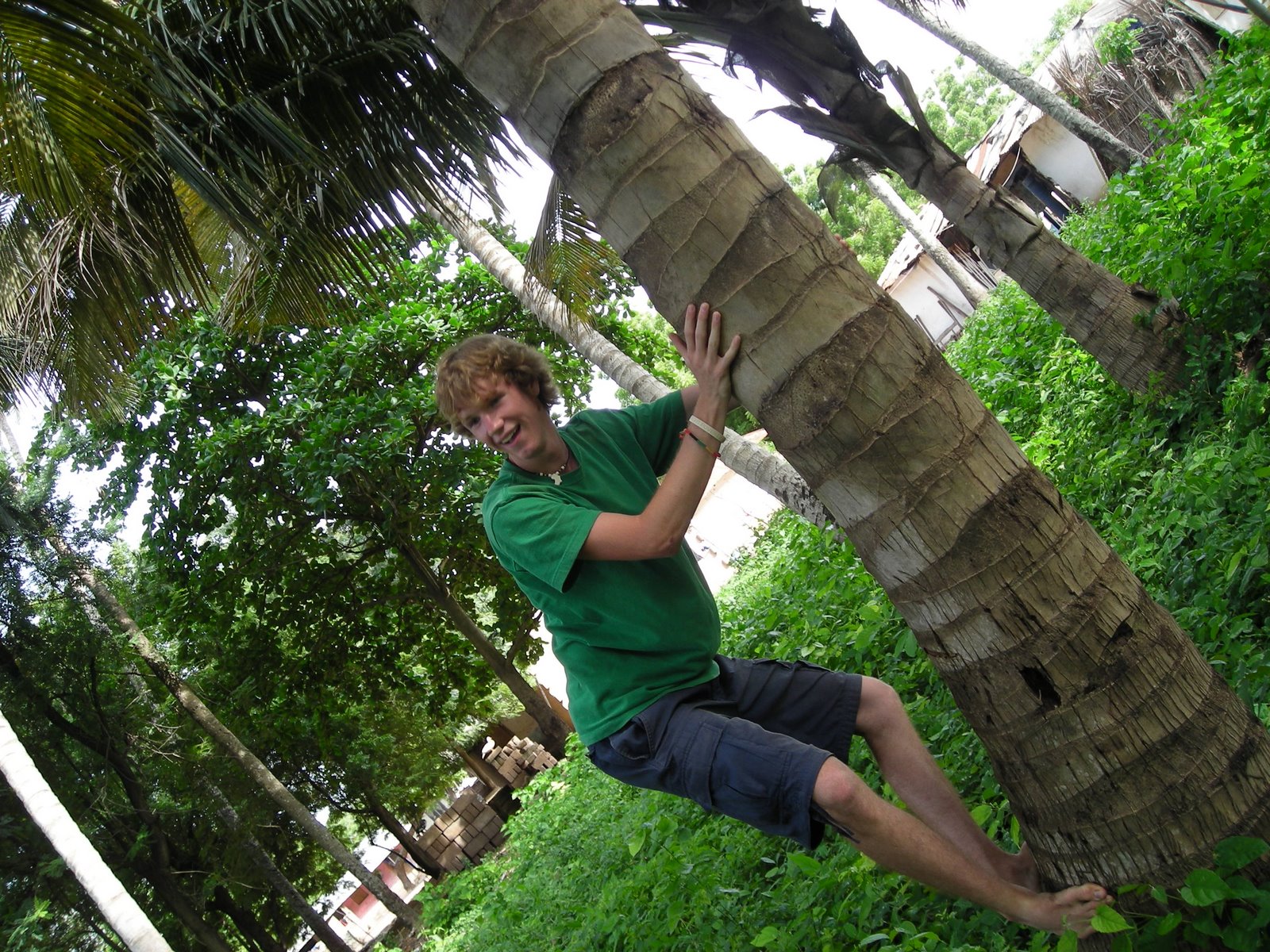
The very next day we awoke early to cook (Team 3) oats, eggs, and cinnamon toast – believe me this is an amazing breakfast. After eating we met our interpreters for the day. They would assist us in interviewing community members about health practices. We split into groups and were assigned an interpreter. Elkanne, 18 years old and son of our coordinator, was our interpreter. He was a very nice kid and was very good at helping us understand the health of the community. We walked the two kilometers to Otinibi and began interviewing. The village is like many that we have seen here. In the early stages of ‘development,’ a hardworking chief, mud buildings, sheet metal roofs, no defined pathways, a borehole for water, coconut trees, and lots of ‘bush.’ The village is beautiful and I can’t get enough of it. We conducted our interviews, meeting a great array of people from a man who spoke for his wife, a not so enthusiastic bachelor, and an awesome grandmother who supposedly grows the best of the best peppers. We learned of many different aspects of community health and saw a great deal of the community to assess its health. We chatted with the chief as he passed by and attempted to climb coconut trees. Elkanne was much better than I was.


While we were heading back to our guest house in Danfa, after completing interviews, we passed by a kente cloth weaving ‘factory’ of sorts. We came across a young boy weaving so fast and with such skill, it was amazing. Later we found out that this was a place of child labour and that these children did not attend school, which is against the law. On leaving we informed the chief and he said that he was going to register all the children in the area who were supposed to be in school. He would then confront the man running the operation and extend some help for the children.

The Interpreters:

Our Findings
We identified four key areas that contributed to the community health of Otinibi: Nutrition, Sanitation, Water Source, and Health Service Use. Each of the four people we interviewed told us that they ate only kenkey (pounded maize) and fufu (pounded cassava), none of then had anything else to supplement their diets. No fruits, no proteins, no vegetables. We wondered what effect this had on the community health as much of the diet was composed of starch. We then asked about waste removal and everyone told us that they used the dump by the bush, only the grandmother told us that sometimes they burned it. For human waste they all went to the bush, which as you may guess is very unhygenic. The public toilets have been broken for some years (collapsed). This moved us into asking where the families got their water. There is a newly installed pipe tap which everyone said they used, but we were told that it cost 200 cedis per bucket. Is this really the primary source of water? I can’t imagine everyone paying for a bucket of water every time they need it. Before the tap, the community used the borehole (pump well) to get water. Everyone told us that they knew the water was safe to drink because they drank it and didn’t get sick. Or did they? This is where we wondered if the common ailments of headache and fever, which were diagnosed as malaria, were really due to the water. There was also a stagnant pond that some people used to get water for bathing.

As far as the decision of what medicine to use, we observed self-medication, use of orthodox and traditional medicines. In the community everyone told us that the Danfa Clinic was their number one choice of medical care. I contributed this to the construction of the Danfa Clinic and the subsequent outreach programs conducted in the surrounding communities. No one, except the grandmother, even touched on the use of traditional medicine. The grandmother did not like the orthodox medicine because the pills made her sick. When we visited she was cooking some leaves from the bush for her fever and she said that these worked very well. However, she did not see an herbalist and knew what to use herself. This use of traditional practice when the modern approach does not work was also seen at the bonesetter’s clinic. One man did not want metal inserted in his arm another could not get placed in a modern clinic. In this scientific age the traditional herbalists/bonesetters are using modern x-rays to do their work and it seems to be working well. We also visited the traditional birth attendant (TBA). The one we visited happened to be trained and served the larger community including Otinibi. She was trained in 1996 and before that she just used her experiences and teachings from elders to do her work. We learned that in many cases traditional medicine is reverted to for reasons of proximity, emergency, and convenience. The vast majority of the Otinibi community used the modern medicine and ‘knew’ that it was the best option. The father we interviewed even went to the chemist (pharmacy) to pick up headache medication for his wife. When I asked Elkanne what he thought about traditional medicine he quickly responded that he only used the Danfa Clinic, but why not? His father worked at the Clinic and the parental influence is very strong in Otinibi. The parents we interviewed would take their children first to the clinic before themselves.

Our Recommendations
We observed a number of open pits and stagnant water sources. There was an old open well that had accumulated a disgusting degree of trash, fecal matter, and god knows what else. We recommended that these holes be filled in to reduce injury risk and mosquito breeding. Our next recommendation was for a separation of trash and regular removal. We also saw a positive in starting a composting project. This could help with the community’s subsistence farming. Since it was the rainy season many homes had closed windows and poor ventilation. For this we recommended screens or mosquito nets on the windows to keep out pests and provide ventilation. For nutrition we recommended maybe introducing beans to be grown and eaten as a source of protein. We also recommended that the people eat what they grow. A number of those interviewed grew vegetables and other foods, but only to sell. Eating the local fruits would also help the nutrition of the community. These were just the small ways that we saw to improve the community health. I would say that the community was for the most part healthy and just needed to act on some simple measures to ensure a greater wellbeing. I also noticed that there was a great lack of emergency transportation. There was none except for the local vehicles. I saw people hurriedly carrying sick people into the clinic, the TBA talked of childbirth emergencies with no transport, I have seen and heard this before – investing in an ambulance may help.

While in Danfa/ Otinibi we had number of delicious Ghanaian dishes:

Palava Sauce (spinachy) and Boiled Cassava

Groundnut Soup with Chicken and Rice Balls

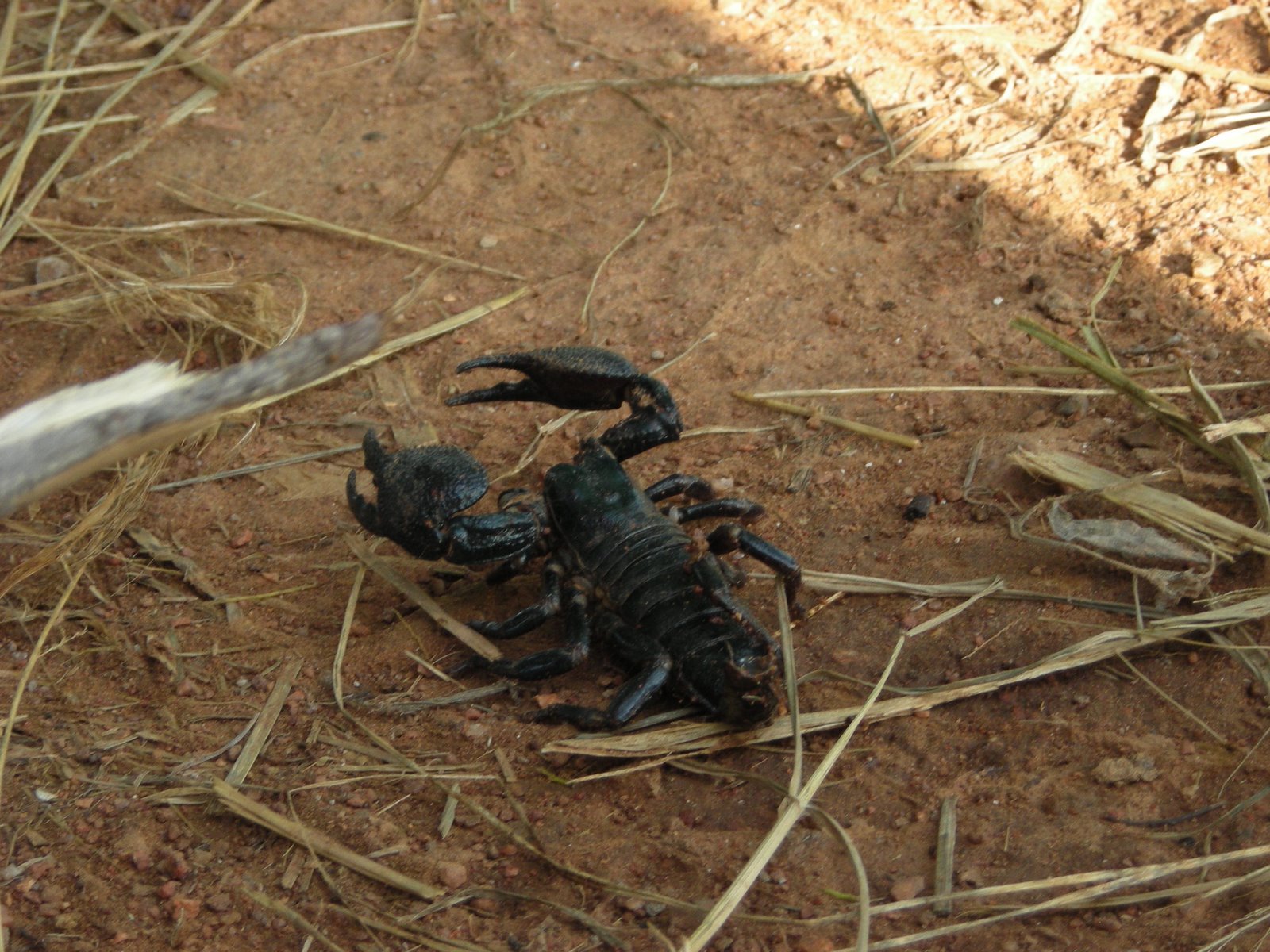
We saw a scorpion! In Ghana they are seen as very evil creatures and are the evil-doers of witches. This one was caught in the gutter and after we all took our pictures and left was probably smashed to a pulp. Scorpions are hated with the passion of a million fires in Ghana.

Index of blog post series on Ghana.

snapshot of health in ghana

We are now a week into our second course of out study abroad program, studying the disparities of the Ghanaian healthcare system. These disparitites range from Ghana to the US, urban to rural, and ever North to South. We have seen and learned about a number of different healthcare situations in Ghana. Since my interest is in access to basic healthcare I have been watching health clinics as we traveled around for the first 4 weeks and I have been trying to understand how the healthcare system worked, now all that I have observed is making more sense.

The Statistics
– one third of the 138 districts have no hospital
– high maternal mortality rate (hemorrage & infection)
– beyond the capital the road system is poor
– 40% of population is covered by the national insurance
– life expectancy is 57 (this has fallen with the emergence of HIV/AIDS)
– healthcare is geographically, financially, and culturally inaccessable

The key problem in Ghana is figuring out where the divide should be joined between traditional and western medicine. What is more interesting is the integration of traditional medicine into the very western Ghanaian health system. I noticed from my pre-healthcare course observations that there is a large number of missionary clinics, government hospitals, pharmacies, and other private health service centers in the Accra area. As we traveled from Cape Coast, Volta Region, and Kumasi I noticed that there was a lesser degree of healthcare services advertised or offered. Why was there such a change from the urban to rural was my first question. Even more so why was there such a disparity between the other regions and the Volta Region of Ewe people?

7 June 2007

Our first visit of the health systems in Ghana was to a health clinic and research center that was solely focused on using traditional medicines and herbs for cures of ailments. It was very interesting to observe the research being conducted and see that they were also running a full health clinic with their findings. The center claimed to have WHO (World Health Organization) funding, but I am not sure if that is true anymore. While there we met some students from the US who were interning at the center for the summer. This is a direct linkage between the traditional and western methods of medicine. This also brings up the issue of intellectual property rights – do the communities that the center learns from benefit from its revenue? Sure the health clinic, but otherwise? This is a reason that the center’s director gave for not partnering with large pharmaceutical companies – to not lose IP rights.


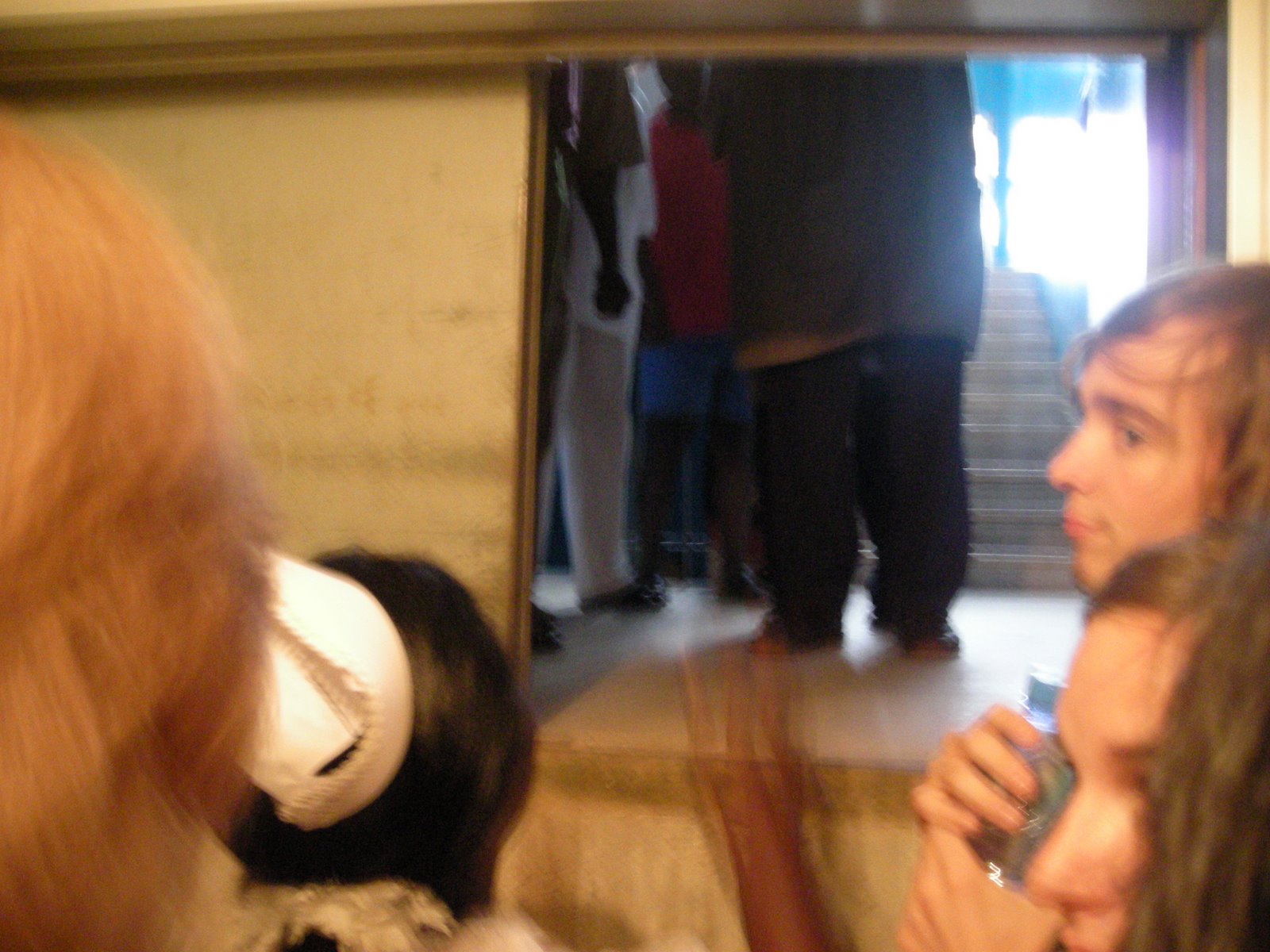
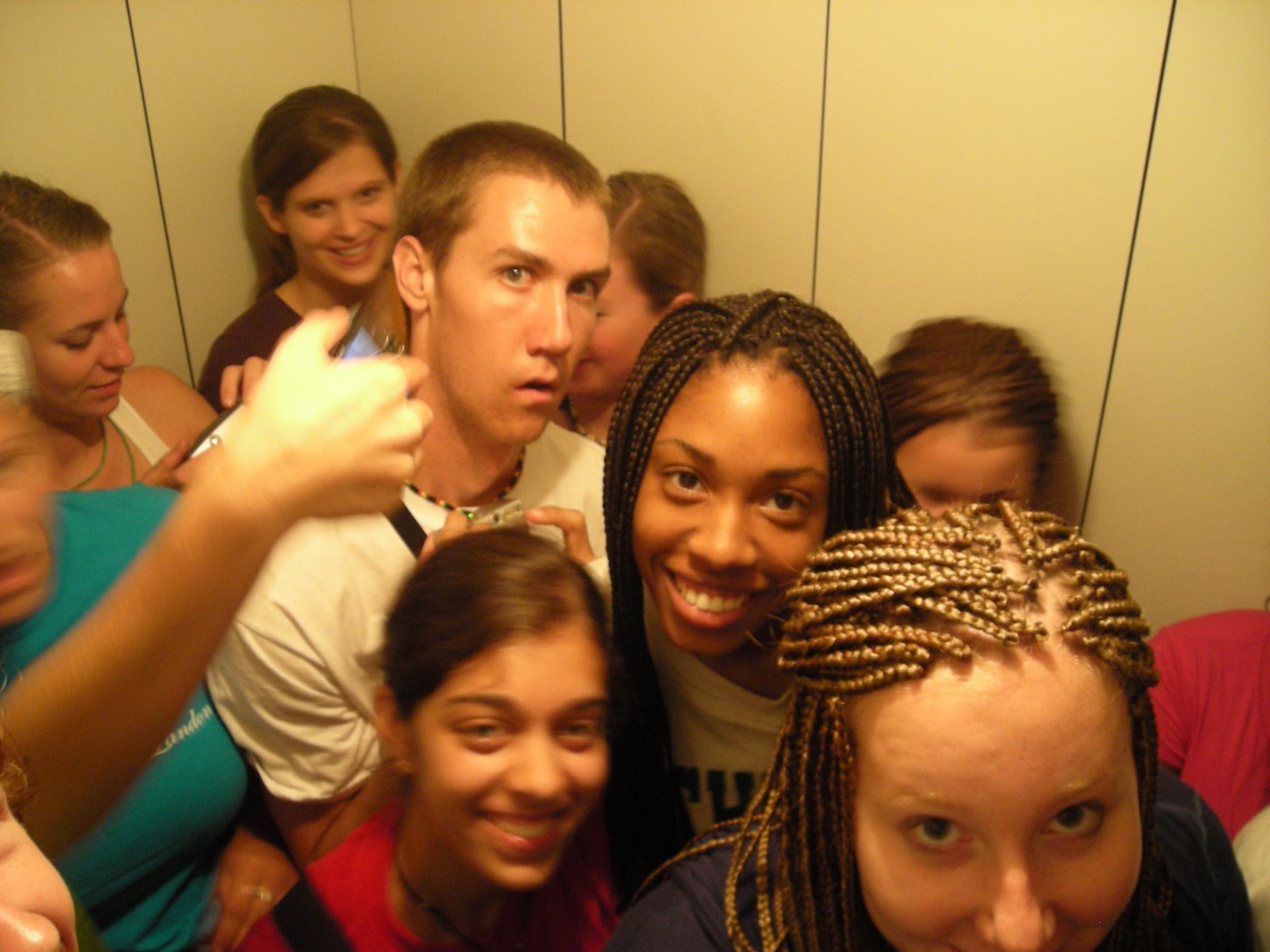
From there we went to the Mampong district outside of Accra to view the structure of the health systems and network of regional health services. We first visited the regional administration offices and talked with the head nurses. They gave us a very well run and organizaed outlook on healthcare in Ghana. At the offices there was also a counseling and testing clinic for HIV/AIDS and a peer educator class taking place. Here we learned that USAID (United States Agency for International Development) provided food rations for new mothers and mothers with malnourished children. I asked if this was true at all regional districts. The answer was yes, but I wonder if all the regions are as well established as Mampong. We then went to visit the regional hospital. It was a large, modern building, not very dissimilar from what you would find in America or Europe. But, there were obvious differences in the developed nature of the hospital. It was a nice hospital, but not one that I would want to stay in. We were given a tour of the entire premises and had a near-death experience in the elevator. Twenty plus people in an old hospital elevator in Ghana makes for exciting times. The elevator descended with the help of our weight and gravity – there was a loud bang as we hit the safety catch – there were still three floors to fall. The head nurse was not very keen on what to do next, but eventually we all climbed out from the gap left between the two floors to the wondering faces of what seemed like the entire hospital staff. Its the stairs from now on.
There seems to be a very good system of healthcare in the relatively developed areas of Ghana, but as for the villages I cannot say. It seems that we have visited mostly well put together centers and clinics. This made me think of the situation in Uganda, where it is the private and mission clinics that have all the supplies and the government run centers have absolutely nothing – very different.

At the Mampong regional administrative offices we learned that in many villages where there is no clinic or government hospital there is a nurse that lives in the community and is charged with the health of that community. However, I cannot speak to the degree of training or equipment that these community nurses have. This speaks to the obvious disparity between the urban and rural environments. There is not as much access to healthcare in the rural areas and so I wonder how much access there is in much of the rural North of Ghana? How many people do not have access?

11-13 June 2007
Some of the issues brought up in our classroom lectures about the health systems in Ghana relate to money. Not everything is covered and so some people cannot pay for access to services. There is bribery in medicine, we have not experienced this, but I do not doubt it. The basic insurance policy in Ghana costs about 72,000 cedis a year, this may not seem like a lot to ‘developed’ countries, but to a Ghanaian this could mean a great deal. In its health development, Ghana is still working on eradicating polio and guinea worm – even in metropolitian areas. Sanitation is a big problem. “The world is my toilet,” has become a joking phrase among the males in our group. If you are a male you can urinate just about anywhere, except where it says, “do not urinate here!” However, you still see people urinate by those signs. Sewage drains have stangant water and often do not drain anywhere. Trash is not collected and is often burned by the roadside. This reminded of Uganda where trash is just thrown out the window. In Kampala you cannot get away from the smell of burning trash, and there are not even drainage ditches.

Another issue brought up was that of ‘assembly line medicine.’ In Ghana there is such a high number of out patients (40% due to malaria) that the health workers often diagnos based on perception, not based on evidence. The issue of traditional and modern medicine is also a hotly contested topic. The health worker crisis in Africa seems to have been circumvented slightly in Ghana. Ghana has included traditional birth attendants in their health system and has just set up a new council for traditonal medical healers to have their say. The most fatal health issue in Ghana now is maternal motrality. Why? Good question, Ghana is ery developed in its understanding of health practices and so it makes no sense whatsoever that a mother should die due to complications of childbirth.

We next traveled to Ashesi University, a private, liberal arts university in Ghana (the most liberal in all of Africa, supposedly). Here we met a Fulbright fellow and a former fellow who is a profesor at Eastern Michigan University. Here we talked about the ‘brain drain’ and new ideas for Ghana’s health system. Currently a physician is in charge of managing the health center, but this means that often the physician has no idea how to manage and makes the staff unhappy and then does not practice medicine because he or she is too busy managing the center. The professor from EMU was working on publishing a study to help change this and introduce education for health managers. The incentives for staying in the country to work are minimal, but inticing. If you work in the Ministry of Health (MOH), then you can be sponsored to increase education and degree. The professor also talked of how Africa, “gets under your skin, you keep coming back.” It really made sense to me and I really don’t want to leave.

13 June 2007

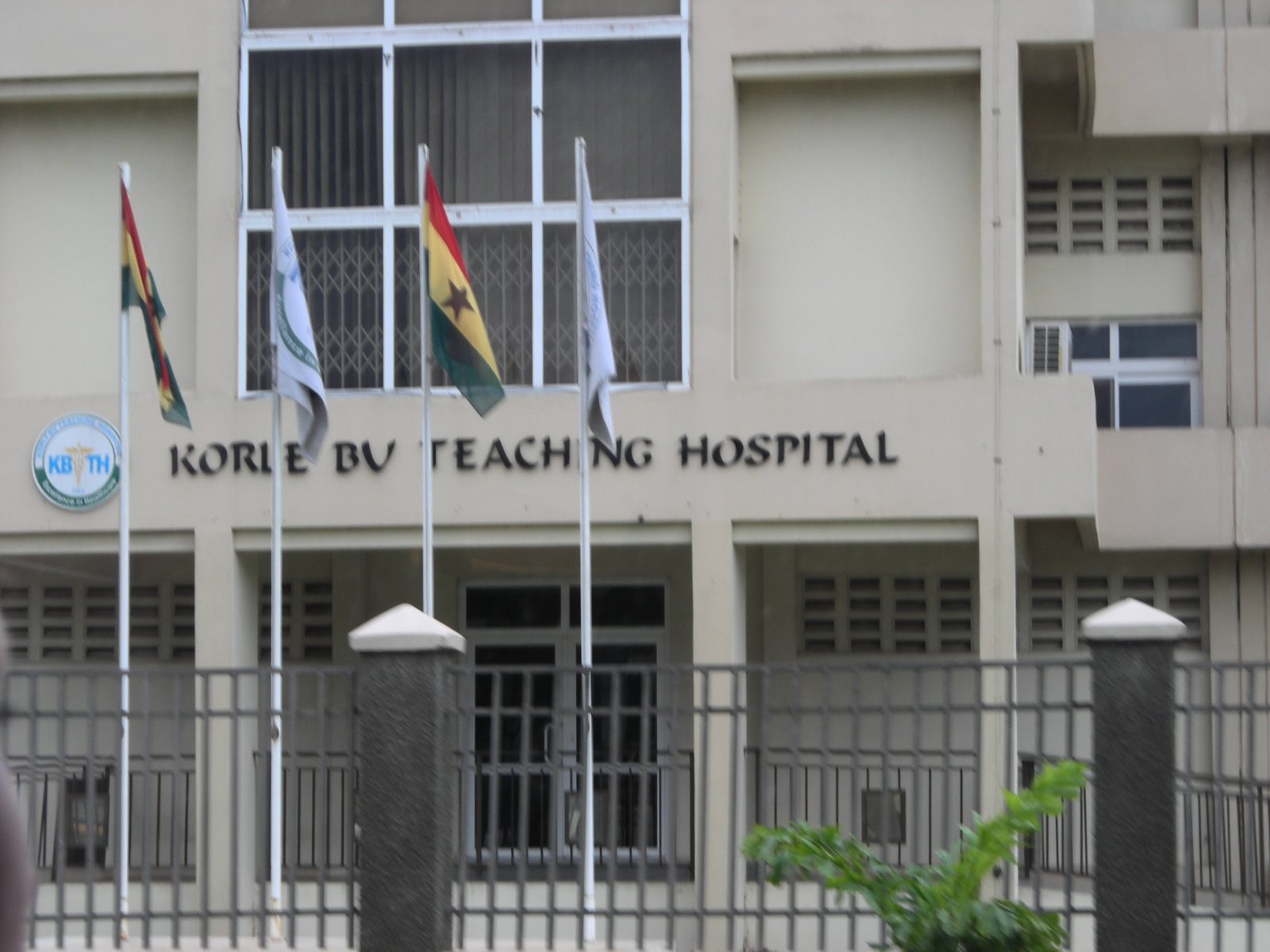
Today we visited the Korle Bu hospital, the best government hospital in all of Ghana. We were not able to tour the main clinic becuase we arrived late, but we did get a quick tour of the Department of Child Health. It was a very nice center, as you can tell from the pictures. This was again an amazing compund that constituted a village in itself. It was obvious that this center must receive a large amount of the government funding for health. There were a number of different center, housing for doctors and nurses, a bank, pharmacy, and a teaching hospital for the University of Ghana. Hopefully we can return later and get a tour of the main clinic to see how things are run there.

The recommended health center for the MSU program students, if they are to fall ill on the trip is Nyaho Clinic. It is a private center tucked away in a random area of Accra. We have had a few students go there, but I have not seen for myself the interior. I have heard it is very nice and Ghanaians in the health profession know it as a nice and expensive clinic.

So far most of the health systems we have seen are very well established and well run and seem to be in great condition. We have not seen the failings of the Ghanaian health systems and the picture for now seems very rosy. I have seen the many mission, private, and government hospitals and clinics in the fairly ‘developed’ regions of Ghana. What I have not seen is the lack of healthcare like I saw so vividly in Uganda. The EMU professor at Ashesi University told us stories of his experiences with health in Ghana. He told stories of overrun rural clinics, a family’s inability to pay for lifesaving medication, the long distances traveled wo receive attention when it is too late, the sheer numbers of people who just do not have access to basic healthcare. This is where I feel we should be, this is where it would make sense to me, this is where we can make a difference. We will now be leaving for the village of Otibini near Danfa to do a community health assessment. I think here is where we will get to feel the village life and true health crisis.

Index of blog post series on Ghana.

off to the continent of my dreams

It crowds my thoughts; it accompanies my dreams; it wrenches my heart; I am so close to arriving on its glorious soil: Africa. In less than three days I am going to travel back to the continent that stole my heart. Six years ago I was captivated and moved by my travels in Uganda and now I will be headed to Ghana to continue my journey. This summer I am going as part of an official study abroad through my university, Michigan State University’s study abroad program in Ghana: A Multidisciplinary Perspective. And so this blog’s title is about to become a bit oxymoronic, however regardless of title this blog will cover my experiences in Africa this summer and will continue to chroncile my work in and for Africa.

From the MSU Ghana Program Handbook:

Introduction to Ghana
The Republic of Ghana, the first country in colonial Africa to gain its independence in 1957, is roughly the size of the state of Oregon and lies about four degrees north of the equator in West Africa. Formerly the Gold Coast, Ghana bordered by Togo to the east, Côte d’Ivoire (Ivory Coast) to the west, Burkina Faso to the north and the Atlantic Ocean to the south. The country is divided into ten administrative regions, each with a capital city, and the capital of the country is Accra, a port city. English is the official language, and at least seventy-five African languages and dialects are spoken, generally divided into Akan, Mole-Dagbani, Ewe and Ga language groups. Twi is the main Akan language, it is the first language to approximately half of the population, including both the Ashanti and Fante, and is widely spoken in the central and southern parts of the country.

The current population of Ghana is approximately 20.7 million, 63% of Ghanaians are Christians, 16% are Muslim, and 21% practice indigenous beliefs. Christianity dominates the south and Islam is the predominant faith in the northern part of the country. Most Ghanaians maintain some traditional beliefs and customs no matter what their professed religion.

Politically Ghana is a constitutional democracy – John Kufuor is the current president, elected January 7, 2001. The currency is the cedi, $1 = 9,445 cedis.

Climate
Ghana’s climate is tropical. In the south it’s usually hot and humid (average daily temperature is 86 degrees F). There are two rainy seasons, from April to July and from September to November. The heaviest rains usually fall in May and June. The Harmattan, a dry desert wind, blows from the northeast from December to March, lowering the humidity and creating hot days and cool nights in the north. In the south the effect of the Harmattan is felt in January. In most areas the highest temperatures occur in March, the lowest in August.

University of Ghana
You will be spending much of your time on the University of Ghana at Legon campus, about 14 km outside of Accra. The University of Ghana began in 1948 as an affiliate college of the University of London. In 1961, however, the University of Ghana was, by an Act of Parliment, reorganizaed as the University of Ghana to award its own degrees. The University has over 20,000 students, including many international students. The campus is large with many buildings, dorms, cafeterias, a botanical garden, bookshop and library.

Field Trips
Elmina Castle in Cape Coast
Kumasi, capital of the Ashanti Region, home of the Ashanti, the richest and most powerful people in Ghana, with the largest open-air market in West Africa
– Bonwire to observe the kente cloth weavers
Volta Lake, the world’s largest artificial lake created by the Akpspmbo Dam in 1964
Kakum National Park

Be prepared to read of some great adventures and be sure to check back often for updates! I would say Africa awaits, but Africa does not wait for me, I am waiting for Africa.

Index of blog post series on Ghana.

the impact of conflict on health

The correlation between violent conflicts and health may seem to be very obvious, but there is more to the issue than what crosses the mind. Everyone can make the simple connection that there is direct impact of conflict on being unbenefittal for the betterment of health. For example it is easy to read this <a href="http://news.bbc.co.uk/2/hi/africa/6590965.stm
“>article and see the obvious connection to artillery shells hitting a hospital in Mogadishu. Internal clashes and conflict creates a more difficult situation for humanitarian operations all over Africa.

Africa represents the highest rates of internal conflict and disease, especially HIV/AIDS. This disease has been used as a weapon in conflict. Many times infected soldiers are sent to the front lines to spread disease and infect the opposition, which generally turns out to be the innocent population. Populations affected by armed internal conflicts end up experiencing severe public health consequences from food insecurity, displacement, and combat. All this ends in a collapse of basic health services which are essential to the survival of the population.

I could not find the article again, but the BBC had reported on the difficulties faced by those bringing humanitarian aid to Darfur, Sudan. They constantly faced issues with the government shutting areas down or denying them entrance. infrastructures for basic health, or created systems for basic health become neglected or destroyed. In many cases the impact of conflict can be felt at the very lowest levels of a population; women are unable to protect their families, fathers just might not be present anymore, children have no access to schooling, and everyone suffers from an absence of basic health – no food, no medications, no stable doctors, and no way to deal with the injury inflicted by the violence of conflict.

With the renewed peace talks for Uganda, the twenty year civil war seems to be coming to a close and the health of the northern Ugandan population may be improving. The rebuilding effort is going to be long and difficult, but there is hope. Many organizations are beginning efforts to improve the health situation and support hospitals and health centers that have been impacted by the conflict.

There are so many topics that can be covered as a result of conflict in a country and its correlation to health. However, I am not here to expound all of the information available, but know that it is out there: sexual violence, psychological impact on children, and especially the toll on health workers. Conflict impacts health plain and simple, but there is so much more as the impact trickles down to the population, the families, and the children. The future of a country in conflict lies in its ability to rebuild and provide aid to their populations after conflict.

s.c.o.u.t. b.a.n.a.n.a.

Our mission is to combine efforts to save lives with commitment and determination in Africa. S.C.O.U.T. B.A.N.A.N.A. as an organization has a purpose dedicated to converting passion into action. All too often people are presented with extremely moving and emotional experiences, but without an opportunity to act on their new found feelings of empathy. SB believes that ONE person can make a difference in the world. All ONE needs to decide is what kind of a difference they want to make. SB works to link individuals and groups in North America and Western countries with projects creating sustainable solutions to the crisis of access to basic healthcare in Africa. With the understanding that `big plans’ will not solve the problems of the world, SB seeks out the people and organizations, who are making effective and sustainable change on the ground in Africa. SB is focused on partnering student chapters in the West with projects in Africa.

The necessity of basic healthcare as a basic right of all people is huge issue in Africa as people die needlessly from preventable diseases and a lack of access to the right to health. Clean drinking water, secure sources of food, access to medications, need for emergency transportation, and supporting health infrastructures are the overarching goals of SB. We are committed to using the power and privilege of where we live to save lives in Africa. We are not imposing our ideas on the people of Africa, but working with them to find the best solutions to provide the necessary basic healthcare.

SB is not interested in giving handouts, but in providing sustainable aid for people and projects who will change and shape their communities in need. SB believes in the idea of a global community and that no matter where you live or what your desires – every person has the same wants and needs: to have clean water to drink, food to eat, medicines to get well, to be healthy. SB is dedicated to uplifting the oppressed and assisting them in turning their dreams into futures by way of health.

We are students, parents, teachers, activists, artists, musicians, and community leaders combining forces to create sustainable and healthy changes for the health crisis in Africa. We are an organization committed to working innovatively to provide what is most needed by people suffering from the health crisis. SB’s goal is to raise awareness about the health crisis in Africa and also raise funds to support projects effectively reaching the people in need on the ground in Africa.

People are dying, that is our reason for action; that is our rally cry. People are dying and they shouldn’t be. We have the access and the ability to give the dying a face and a voice and a life. The short time I spent in Uganda four summers ago, I ate, played, sang, smiled, and met with people who I know are no longer there and that is why I continue to tell their stories and ask for help.

something new for the new year

A group that has really captivated my interest this year has been the Acumen Fund. They do amazing work towards creating change and sustainable solutions to global poverty issues with people at the center. Check out their work and what they do, I would encourage you all to get involved in the new year! Have a good one!

Acumen Fund Philosophy
Who we are and why we exist:
Acumen Fund is a non-profit venture fund that uses entrepreneurial approaches to solve the problems of global poverty. We build financially sustainable and scalable organizations that deliver affordable, critical goods and services that target the four billion people living on less than $4 a day. We adhere to a disciplined process in selecting and managing our philanthropic investments as well as in measuring the social and financial returns.

How we work:
We identify some of the world’s best entrepreneurs and organizations focused on delivering critical, affordable goods and services – such as water, healthcare, and housing – to improve livelihoods, health and opportunities for the poor.

Our investment process:
Using the skills of business, the flexible capital of philanthropy, and the rigor of the marketplace, we aim to develop and deliver systems-changing solutions to the world’s problems. Our investment approach focuses on organizational sustainability, strong leadership and scalability through managerial support and financial investment.

Measuring results:
Within each investment organization, we focus on the areas of design, pricing, distribution and marketing of critical goods and services to the poor. We measure and share both social and financial returns of our investments, as well as our own financial sustainability and the strength of our community. Our risk management aims to generate positive returns where possible and recover a substantial portion of their capital to reinvest in new philanthropic ventures.

america and the greatest humanitarian crisis of our time and our children’s?

HIV/AIDS – Part I:

A silent call from a distant land
Crying for a helping hand, so
How long will it go on?
Ignorance and vanity
Supercede humanity, so
How long will it go on?
I want to know, how long will it go on?

We can’t wait any longer
They’re crying out, doesn’t it matter
We can’t wait any longer
No, no. Too long in a slumber
Shake it up, wake it up now.
We can’t wait any longer. No, no.

Another child is laid to rest
Another day of hopelessness, so
How long will it go on?
And every day we’re on the fence brings
Another fatal consequence, so
How long will it go on?
I want to know, how long will it go on?

Yuko awezayo kusikia kilio chetu? (Can somebody hear us crying out?)
Twaomba msaada wenu (Somebody help us)
Aweko mwenye kttoka (Somebody save us)
Aweko mwenye kutupa uhuru (Somebody free us)

From all that I have done and all that I have read the one thing that creeps into my mind every time the issues are talked about are invisible people, exploited people, dying people I cannot help but have the above song, “We Can’t Wait Any Longer,” run through my head (Michael W. Smith, 2004). The most important theme that the HIV/AIDS pandemic highlights, I believe, is the theme, plain and simple, that people are dying! People are dying! I think Smith speaks to the crisis well in his song and this important theme is what will eventually save lives and prevent the HIV/AIDS pandemic by inspiring people to act. The HIV/AIDS crisis is not just another growing problem prevalent in Africa, it is not just a media game of growing numbers, it is not just another cause to shirk and say someone else will take care of it. This pandemic is a cause that affects us all whether we live in Asia, Africa, or the Americas. The major theme of why people are left to die is what I will focus on, which will draw on America’s actions, structural violence, the impact of the disease, and, most importantly, indifference. Bringing people together in activism should be our biggest concern now if we are to change the course of history.

America, as Greg Behrman writes, has slept through the greatest humanitarian catastrophe of our time. How can America, the supposed greatest nation, remove itself from such a world-altering event – which is still taking place? It took some time to actually determine what the HIV/AIDS disease was and what it does, but even after discovering, the response was a hand waggle at best. You cannot get to know someone just by waving to them. You have to stop, talk, and listen – three things that America neglected to do. At the meeting on the Potomac, four years after the CDC discovered the disease, the President of the US publicly acknowledged that AIDS even existed. Four years! How can that be! Four years, by today’s numbers (still not accurate) is 12 million people! 12 million dead people! Two years ago the World Health Organization (WHO) was supposed to accomplish their plan of 3 by 5 (to get at least 3 million people on ARVs by 2005). That initiative failed, but why – indifference, lack of support, lack of passion. These themes keep coming back over and over. “It is difficult to see what is happening, harder to measure, easiest to deny.” (Barnett & Whiteside, 5) This great indifference is all too evident in politics. Politicians and policy makers and the media are all too concerned with the past and can’t look to the immediate present. HIV/AIDS is a huge issue of the present, but it has been too often in the media and newspapers and they now go for the more exciting, flash-bang issues of everyday life. People are dying, but the media needs people to read their papers and politicians need to look good in office to get re-elected for another term without controversy.

Authors, Barnett and Whiteside, point out that the US could have stepped up and emerged as an international leader at the 1987 International AIDS conference, but instead later that year Bush (Sr.) adopted a policy to keep all people infected with HIV/AIDS from entering the US. This action goes beyond indifference and speaks to the great ignorance that America and the world had and has about HIV/AIDS. This was not the first time that the US failed to take critical action. In the second presidential debate in 2000, Bush (current) was asked about the role of the US intervening on the continent of Africa to prevent humanitarian catastrophe. His response, “Africa is important. . . but there’s got to be priorities.” (Behrman, 246) Priorities! How about saving lives, how about preventing death – is that not a priority for the US political system? In 2002 the pandemic reached the mainstream media in full force. Behrman quotes an opening editorial by Sebastian Mallaby of the Washington Post,

“[…] sometimes the obvious needs stating, because it is taken for granted and then quietly ignored. A century from now, when historians write about our era, one question will dwarf all others, and it won’t be about finance or politics or even terrorism. The question will be, simply, how could our rich and civilized society allow a known and beatable enemy to kill millions of people” (297)

This quote sums up the ultimate American attitude of indifference. We were too caught up in politics and money and terrorism to even see the murder standing at our doorstep. The US as Behrman says, slept through the AIDS pandemic. His words and quote have a great impact on how we, as Americans, should view our response and caring nature. The AIDS crisis really asks the painful question of how “we” value other human beings. Are human beings of no importance unless they are advancing or helping to advance our country or position? Are human beings just numbers? 130 people die each day in Ugandan IDP camps, 3800 people die each month in the violence in the Democratic Republic of the Congo, 3 million people die each year from AIDS – are we just supposed to take those numbers in their pure numerical value or should we delve deeper into the true impact of those numbers?

This brings about another underlying theme, the impact of the HIV/AIDS Pandemic. Each number has the face of a person, out of those three million people is a life, a life just like yours or mine, a life just as valuable and precious, a life so intricately linked to a family, a community, a city, a country, a world. AIDS was not just a health problem, it was a catastrophe that touches on every dimension of national and international society. (Behrman 173) This story is based on true events:

A father, seeking work in the transport industry since work is scarce in his villag in Africa, dies after contracting HIV/AIDS from a sex worker at a truck stop. He leaves behind a family with 6 children. After HIV/AIDS was contracted, the first child born afterwards most likely died from in vitro infection. That family is now without a “breadwinner” and provider (in the typical patriarchal system). With the father gone, the mother will have to find a way to make an income for the family to survive. The children may not be able to attend school anymore, most likely only a few were going to school to start, because they are now needed to work or cut costs. Now the children are helping work at home and the mother is trying to find work so that the family can get the basic things they need to survive. Many women faced in this situation of extreme poverty can find only sex work to earn money. This increases the chances of becoming infected with HIV/AIDS, if she was not already infected from her husband. The mother, now having the added responsibility of generating income, will very likely contract HIV/AIDS from her work, if that happens then it is only a matter of time until she will succumb to AIDS. Due to her impoverished situation and lack of income, receiving treatment is not an option. Now her 6 children have watched their father die and now they have lost their primary care giver – their mother. Children now are out on their own, without a family structure, trying to survive, can we even imagine?

The HIV/AIDS crisis has the face of a woman says Stephen Lewis. That statement is all too true. Women are the most affected, most vulnerable, and most impacted by the HIV/AIDS pandemic. Women are, for one, more biologically vulnerable, they are bound by traditional and societal practices, they are forced to sell their bodies when their poverty becomes too much, all this on top of caring for a family and having the responsibility of providing food, clothes, and health. Stephen Lewis’ statement should more accurately read ‘the HIV/AIDS crisis has the face of a dying woman.’ Why must one family have to witness so much death? Just in this one family story there have already been three deaths and now six orphaned children fending for themselves in one of the harshest environments to survive. That environment is of a developing country. The family forms one root of a community and now that community is weakened by so much loss. The orphaned children will be left to fend for themselves since the it will be too much of a burden on their own families. Largely those infected with HIV/AIDS are members of the workforce (age 15-49) and when the workforce is disappearing due to AIDS, the economic impact is severe. The economic impact starts at the family, then the village community, and eventually that impact reaches the national level. How is a community to dig itself out of the already present poverty with a rampant disease coursing through and killing its people? As Barnett and Whiteside write:

“Where people lack material resources and do not have access to institutions and organizations beyond their limited and poor locality, they cannot be expected to take on extra costs and responsibilities in the absence of outside support. The great challenge for those who would assist communities, households, clusters and ultimately individuals to deal with the awful consequences of the AIDS epidemic is to face realities – to develop interventions and methods of support that recognize these realities, which can be effective at the local level and can take full account of the forces of globalization which will otherwise only exacerbate the already established processes of poverty and exclusion.” (195)

This quote is the key to what we all can do to intervene in the AIDS pandemic. Although it does tell us directly what a single individual can do, it should help us to remember reality when we do intervene or urge others to intervene. It does not tell us how to act, but why. We must intervene for the sole reason of the reality of the pandemic – people are dying! The main reason that people are dying is because of the all too prevalent structural violence. This also speaks to the earlier posed questions of: What kind of people are we? And How do we value human beings? Paul Farmer brings clarity to the thoughts of all these authors in speaking about structural violence.

“But the experience of suffering, it’s often noted, is not effectively conveyed by statistics or graphs. In fact, the suffering of the world’s poor intrudes only rarely into the consciousness of the affluent, even when our affluence may be shown to have direct relation to their suffering.” (31)

How can we be so indifferent? How can our government know and not act? How can people die without a name, without a face, without so much as a moment of silence. The world marches on. We know that we are privileged here in the US, and we must know that we are satisfied by the exploitation of the poor. Our affluence is a product, not a privilege of our circumstance. How can we not realize that with our affluence we can change the world? Farmer throughout his book suggests that we can. Suffering cannot be compared, it cannot be measured, and it cannot be put into one image. At the root of suffering is structural violence, a violence that does not necessarily involve physical means. It is a violence that is perpetuated by the government and imposed institutions of the world. The effects of structural violence are all too evident in the HIV/AIDS pandemic. The lack of basic health care, the lack of basic rights to live, and the lack of affluence all contribute to the structure of violence present in the HIV/AIDS pandemic. Another important theme that is tied in with structural violence is that of human rights in regards to health. From the Universal Declaration of Human Rights, article 25:

“Everyone has the right to a standard of living adequate for the health and well-being himself and his family, including food, clothing, housing, medical care and necessary social services, and the right to security in the event of unemployment, sickness, disability, widowhood, old age, or other lack of livelihood in circumstances beyond his control.” (Farmer, 213)

There is one thing that I cannot stop thinking. Everything looks good on paper, but in reality, as Barnett and Whiteside remind us, we need to see the actual situation. In reality this declaration is not upheld and I cannot help but wonder how many of the countries who signed the declaration can actually provide these promises to its people. I am sure most cannot due to the violence of structure. Farmer says:

“Social inequalities based on race or ethnicity, gender, religious creed, and – above all – social class are the motor force behind most human rights violations. In other words, violence against individuals is usually embedded in entrenched structural violence.” (219)

By saying this Farmer means that people are affected by the relationship between structural violence and human rights. People are dying because the social classes do not line up with the basic human rights of health and right to life. We need to not only realize this relationship, but also come up with a positive intervention. Farmer presents his ideas with the term ‘pragmatic solidarity.’ By pragmatic solidarity he means that our plan needs to involve a rapid response using our tools and resources to remedy the inequality in health care and human rights.

People are dying! However I don’t think you need someone to tell you the reality. The message and knowledge needs to be out first before we can even begin to know where to start. Indifference, impact, and structural violence are all prevalent themes that explain why people are dying. How long will this crisis go on? How long will the indifference linger? How much longer will it be before structural violence is remedied? How many more people will die? We can’t wait any longer and neither can those most affected by HIV/AIDS. Can someone hear their cries before another so needlessly dies? I for one will be listening and acting.

a small bite can topple a giant; malaria


This first story takes me back six years when I first became involved in basic healthcare activism for Africa. This story comes from my mother’s first trip to Uganda in 2001. My family became very good friends with Fr. Joseph from Uganda in the summer of 2000. He dealt with many medical issues in his traveling from village to village fulfilling his priestly duties, but he did not have any medical background. He asked my mother, who is a registered nurse, medical questions when he was here and sometimes called from Uganda to ask the best medical procedure or prognosis. She had found it very difficult since we had such a limited knowledge of what conditions were like in Uganda. So, that following summer my mother made the journey across the ocean to see the medical situation first hand. While she was there the realities were painfully obvious. Fr. Joseph owned a donated Toyota pick-up truck and while my mom was there she traveled around with him on his day to day work. An important note to make is that the pick-up truck doubled as the area ambulance. On one particular day, at a village stop to give mass, a pregnant mother needed transportation to the hospital because there were some complications. The nearest health clinic was seven hours away on the red, dusty, hole ridden ‘roads’. I can only imagine the ride in the back of a pick-up truck, dust thrown about, bouncing along so that a child may have a better chance. En route the pregnant mother went into labor. Still hours from the hospital the mother gave birth to a healthy baby girl and then died. They decided to name the baby after my mother – Baby Elizabeth. A family from the village adopted baby Elizabeth and she seemed to have a good chance in the world. Later the next year we were told that baby Eilzabeth had died. She had contracted malaria and since she lived in such a remote village, she and her family had no access to the $1- $2 medication that could have saved her life. If the access had been there baby Elizabeth might have lived to her fifth birthday, a rare occurance in many African communities due to poverty and disease.

Malaria is a parasite that is carried from human to human by mosquito. Malaria is a very preventable disease, yet kills over a million people each year. Over 90% of malaria deaths occuring in Africa making it Africa’s leading cause of death for children under five. Just recently President George W. Bush has said eight more African countries have joined a $1.2 billion US program to fight malaria. The five-year program works to provide funds to limit malaria’s spread by using insecticides and anti-mosquito bed nets, and also to provide drugs to people already infected. The renewed enthusism for the program has brought the World Bank and billionaire philanthropist, Bill Gates on board. Also on the scene are recent scientific advances, such as progress towards a vaccine, which prove to offer great hope to defeating one of the world’s great killers. A new treatment developed by British scientists collaborating with Kenyan experts is based on a technique for fluid replacement for children ill with malaria. The problem is that intensive care methods, only available at pediatric units in developed countries, is needed to treat infected children.

It is estimated that through partnerships working in Uganda, Tanzania, and Angola – US taxpayers already have helped approximately 6 million people to treat and prevent malaria. There are great hopes for the future prevention and defeat of malaria, but it requires the continued support of people in the developed world. US taxpayers need to push the Bush administration and future adminstrations to remain dedicated to the mission of saving lives affected by preventable disease. President Bush also announced at the Washington Summit on Malaria that the US Volunteers for Prosperity program will be expanded to recruit skilled US volunteers, doctors, and nurses to travel to at-risk countries to train local health care workers. The Gates Foundation has also expanded the number of projects it funds to research new malaria treatments. Likewise, there is a large private sector effort, such as, Nothing But Nets and the Acumen Fund, among others. Check out the blog of an Acumen Fellow working with a mosquito net facotry in Tanzania. There are so many opportunites to donate, to get involved, to volunteer, and to save a life. Check out some of the links posted and make a difference today!