a first glimpse: zonke

The next few entries will be a bit back logged since I have now been in South Africa for over 2 weeks. Many of the next entries will deal with issues and topic areas that I have encountered as opposed to the day to day happenings

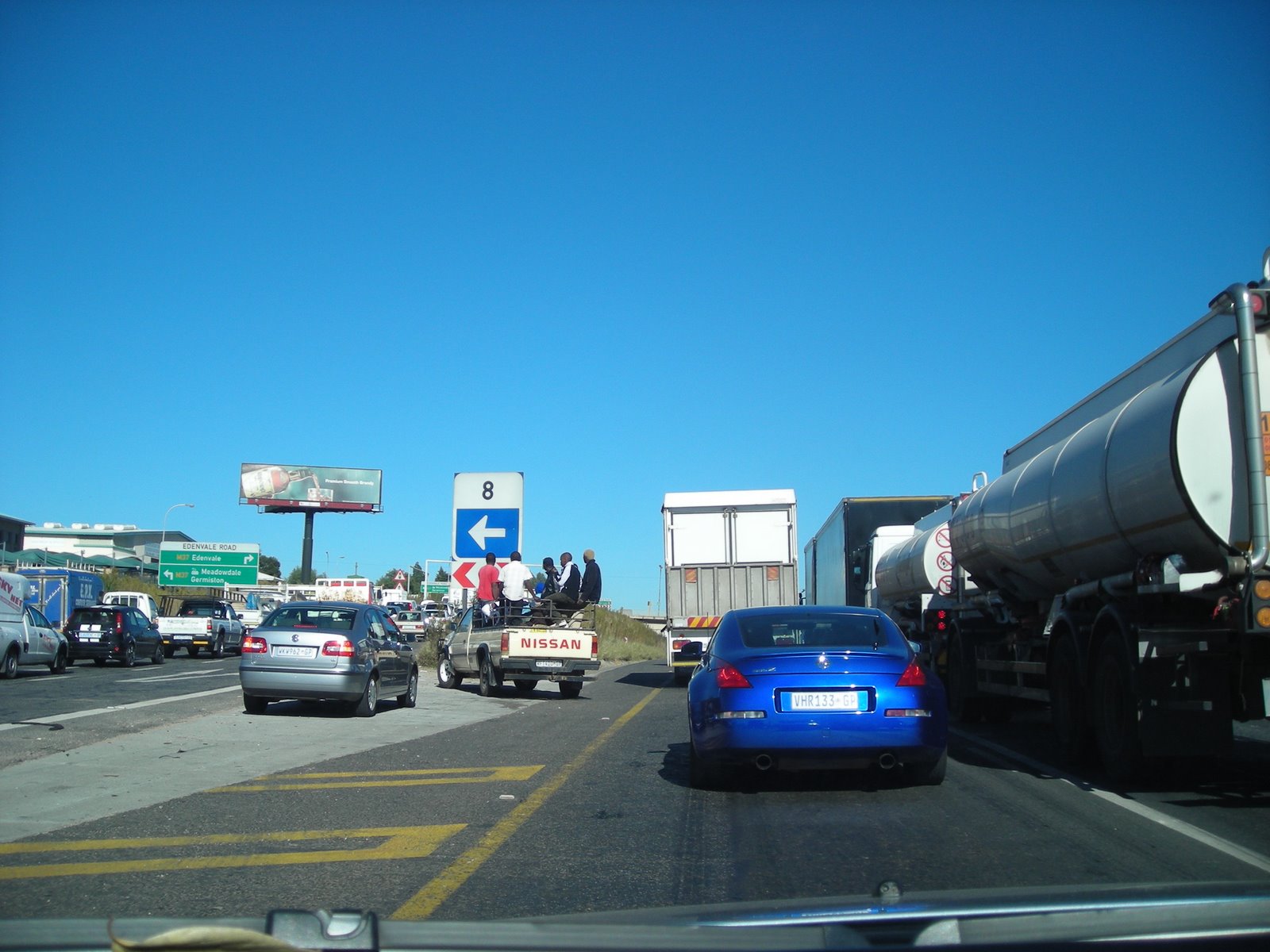
We woke up at 9am the next day to find our car nicely cooled down. I slept like a rock that night off the plane. We missed the breakfast at City Lodge and headed to Zonkiziwe. Rachel’s left-side driving is getting better. We were able to see more of Joburg in the light. It is like many African capital cities that I have visited – except wild driving is to a minimum (only on the shoulders), traffic lights work and road signs are followed, and there is the ever-present distinct smell of burning oil and gas. There were even police watching for speeders.

The informal settlements outside of Johannesburg are numerous and scenes from the Tsotsi movie were replicated in reality in an expansive wonder before my eyes. The South Africa seen by the majority of the population was nothing incredibly beautiful to behold – or was it? This would be my home for the next 3 months.

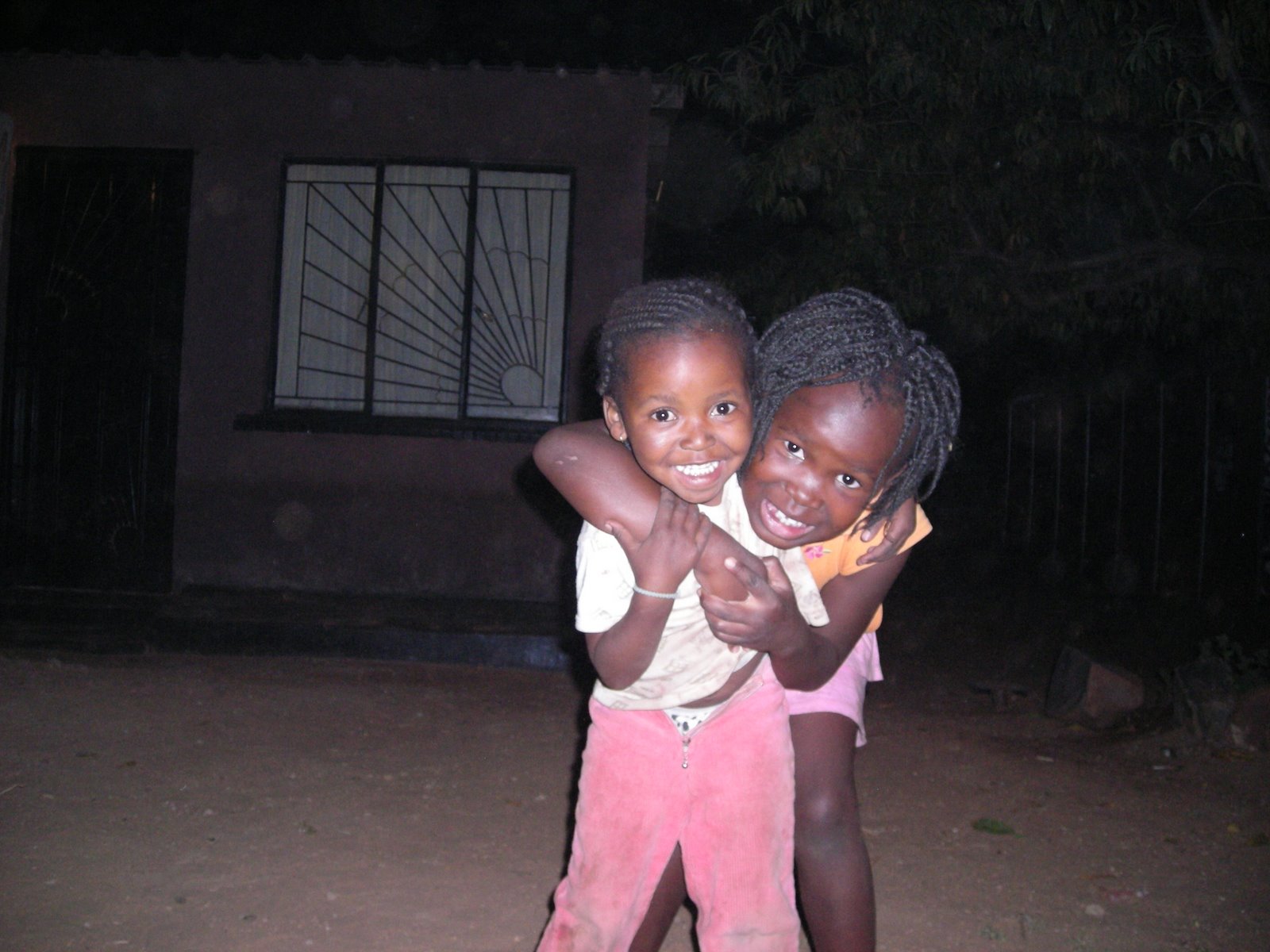
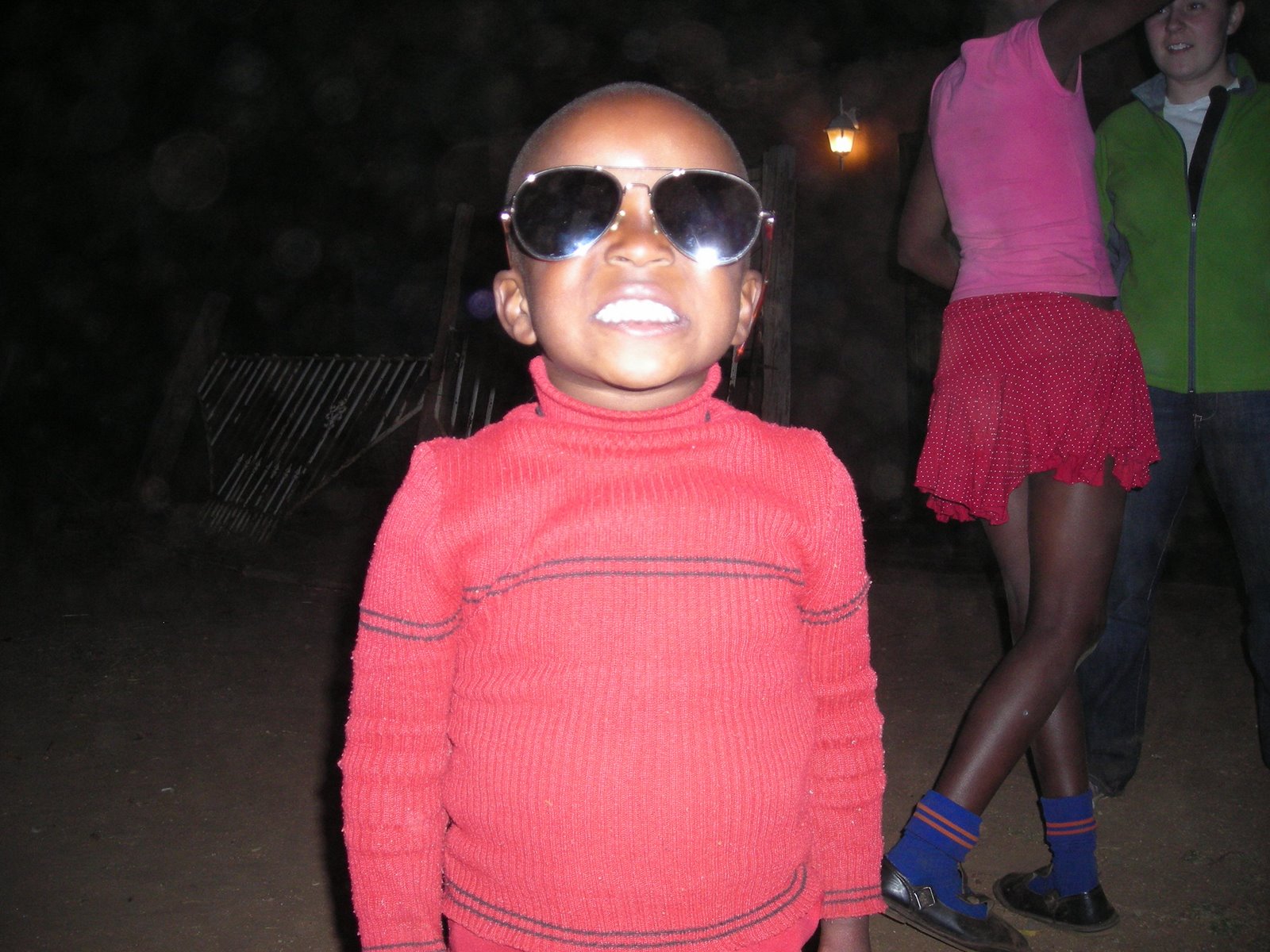
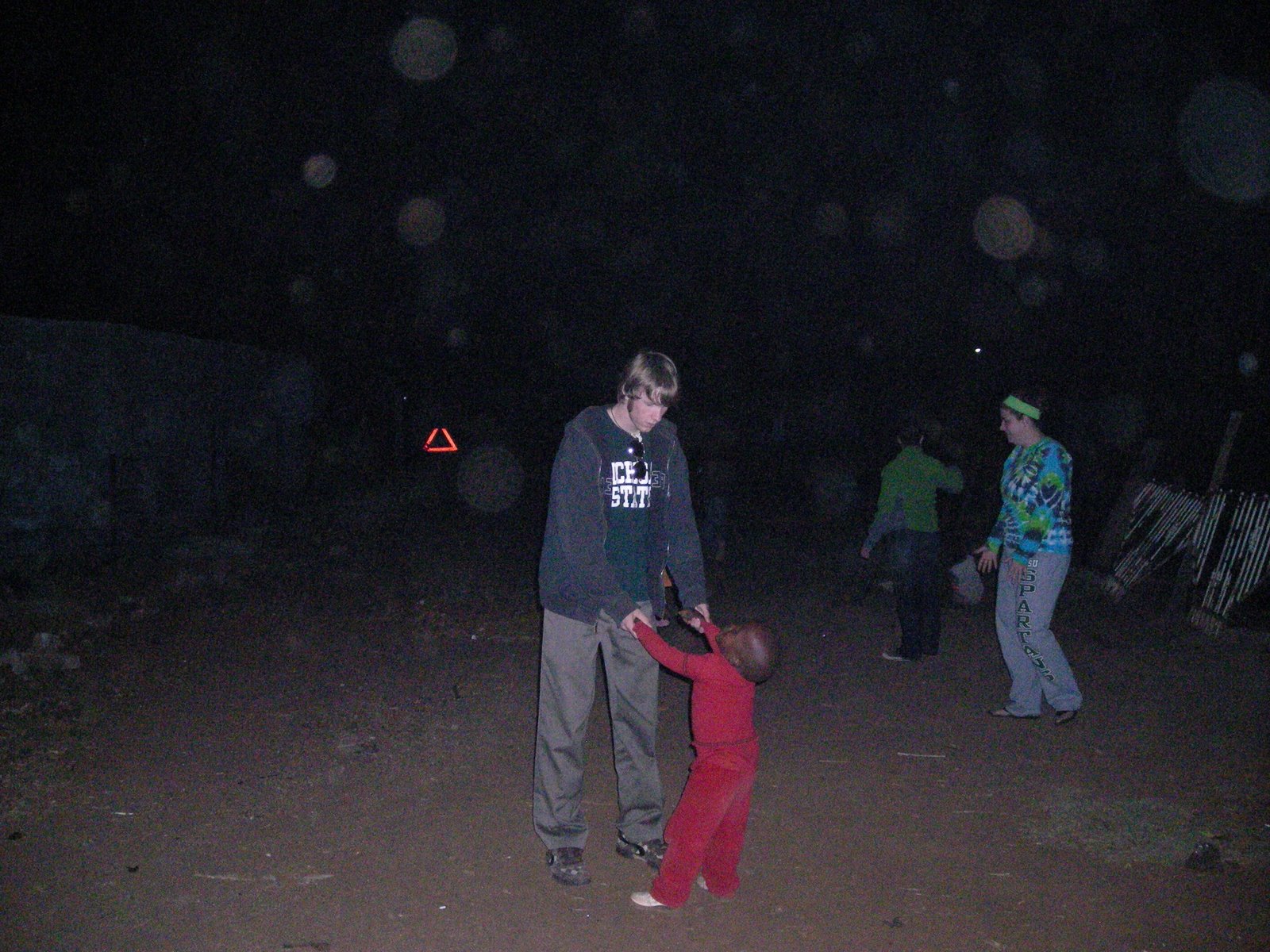
We finally found the correct, rock strewn street and arrived at the center. We met the director, Celumusa (Nomusa to those who cannot pronounce the click) and Phindile, China, and a whole group of excited youngsters. My introduction to the children was a lifting workout that included spinning one after another. China, not his real name, was very knowledgable and loved history. He likes to assert his dominance in repeating little remembered names and dates. We also later went shopping at a shopping center, very developed, but happened to almost take the wrong lane into head-on traffic.

It seems pictures will not work here either, wait a little bit longer.

Pictures Update: 29 December 2008
Sorry this is update is so late in coming, enjoy the newly posted pictures.

ten hours from amsterdam

We finally arrived in South Africa after the 10 hours flight from Amsterdam, the longest flight in my entire life. At theJohannesburg airport the customs and immigration procedures were possibly the quickest and esiest that I ahve ever experienced. Unfortunately the exchange banks were out of Rand at the airport and we decided to take care of that later. We had no problems working with the white Afrikaner rental employees, until we had loaded all of our luggage into the new Ford focus and realized that for some reason the car was not picking up speed like a regualar car. As soon as you took your foot off the gass it would stop completely. After driving a ways on R24 towards our hostel for the night we stopped at a red light. When we stopped a plume of horrendous rubber smelling smoke engulfed the car from behind. What was burning rubber? We soon realized that we had been driving with the parking brake on! Quickly release, we were well on our way.

We stayed at City Lodge, a very plush, under-construction hotel in the Johannesburg area. As far as I was able to see in the night Joburg is a large industrialized city like any other – the only difference may be the strret signs, languages spoken, and the zebra striped curbs. I have much more to write about the first week here and pictures to add – the internet at the Zonkizizwe library is extremely slow and I hope to find a faster connection soon! All is well in South Africa, check back for more updates.

what are we to do when our children are dying?

Yesterday the headlines in South Africa’s Times newspaper read, “Our children are dying.” In South Africa 75,000 children die before they turn 5 each year. As one of 12 countries, South Africa has a rising child mortality rate. Of these 12 countries the top causes of a rise in child mortality is war and HIV/AIDS (and the UN Security Council disregarded HIV/AIDS as not important enough). The statistics come from a report released two days ago by the national health department, the Medical Research Council and the University of Pretoria.

South Africa is experiencing one of the most severe HIV/AIDS epidemics in the world. It is said that one in five people in South Africa has HIV/AIDS. The Avert organization cites sources that say more South Africans spend time at funerals than they do “shopping or having barbecues” and “twice as many people have been to funerals in the past month than have been to a wedding.” In 1992, Nelson Mandela took the first big steps to deal with the HIV/AIDS crisis when he addressed the National AIDS Convention of South Africa (NACOSA) to develop a national strategy. In six years (1996-2001) the HIV prevalence rate among pregnant women doubled and since 2002 has steadily increased. In 2003, South Africa announced a plan to provide antiretroviral treatment to the public. Following in 2004, the South African government’s treatment program began in Gauteng Province and soon included other Provinces. In 2005 the prevalence rate was at a high of over 30% in pregnant mothers.

Why has South Africa faced such a difficult and severe epidemic? Why has it taken so long to get a government response prepared? During the time period of the 1990s into 2003 South Africa was in the midst of major political and social turmoil. While HIV/AIDS was a growing problem, the political issues were at the forefront. Responses to and a recognition of the epidemic was glancing at best. The fall of apartheid allowed leaders to focus on dealing with the epidemic and Mandela led the charge. However the leaders that followed were far from Mandela’s original plan. In 2000, President Mbeki denied, in front of the UN Assembly, that HIV caused AIDS. He had put together a committee of AIDS deniers to advise his HIV/AIDS response plan. Mbeki denied that HIV caused AIDS and instead focused on the idea that poverty was to blame. While the official position of the government has been stated as “HIV causes AIDS” (2002), Mbeki continues to question such a strong correlation. In other headlines that spread across the globe, former Deputy-President, Jacob Zuma went on trial for the rape of an HIV positive woman. In the court questioning he told the court that, “he thought the risk from HIV was small, and that he had taken a shower immediately after the sexual intercourse on the night in question, because – he believed – it was one thing that might reduce the chances of contracting HIV.”

As with many health and development topics there is no clear cut issue to focus on and so if you want to talk comprehensively about HIV/AIDS in South Africa you have to talk about the effectiveness of treatment programs, the stigma of the disease, the rape and sexual abuse of women from gender inequality, the inadequacy of school systems, the responses of government, HIV testing programs, and the effects of HIV/AIDS on children. This last issue I will focus more.

Today I am flying to South Africa to work for the next three months at a care center in a remote (urban) informal settlement called Zonkizizwe. Zonkiziwe is in the Ekurhuleni township in Gauteng Province. The center assists children affected by HIV/AIDS and as you can guess that is every child. With the statistic that one in five people are infected there is no way that each child is not potentially already infected, has lost a parent, or knows someone who is affected. Many women who are HIV positive do not receive the drugs that they need and so the disease is passed on to their babies – thus creating one of highest child infection rates. In a Department of Health survey (2006), it was found that 260,000 children under age 15 were living with HIV in South Africa. In Zonkizizwe this prevalence rate coupled with a poor schooling system is contributing to a ‘hopeless’ outlook for the future. Life in a township is difficult with poverty and inadequate schooling, but when HIV/AIDS is added into the equation there are lost parents, children missing school to work, and children infected without testing or treatment available. On being hopeless, Justice Cameron said, “We don’t accept ‘sad realities’ in South Africa. If we accepted sad realities, we would still have a racist oligarchy here.”

The center, VumundzukuBya Vana “Our Children’s Future” (VVOCF), seeks to be a place where children can actualize their potential through educational programs, learning about health and nutrition, self expression, and life skills development. VVOCF has a feeding program, a school uniform fund, and a number of smaller projects to help the children of Zonkizizwe advance. VVOCF was started through a partnership fostered by Dr. Jeanne Gazel through her research of the impacts of HIV/AIDS. With her connection to VVOCF she was able to bring Zonkizizwe closer to the MSU community as a Professor and Director of MRULE (Multi-Racial Unity Living Experience) by way of a pen-pal program. I first learned of the center and got involved through the pen-pal program. This summer I am looking forward to meeting my pen-pal as well as contribute to the development of the VVOCF center. Over the three months I spend in Zonkizizwe I will be helping to develop after school programs that can continue, staff development, English instruction, possibly a book club, and setting up the internship program for other students in future years. I am excited to see Johannesburg and the surrounding area and hope to travel to see Soweto, Durban, Lesotho, and visit a friend in Mozambique.

This summer brings another new and exciting view of the African continent and I cannot wait to learn about the people and culture where I will be living. As with all my experiences I enter with an open mind and an unburdened quest to learn. While in Zonkizizwe, South Africa the majority of my time will be spent learning. Even though I am going as an intern to work there is no way that I will be the only one providing education. I am excited to learn Zulu, hone my soccer (football) skills, and learn of life in Zonkizizwe from my pen pal and all the children that I will meet.

Read the VVOCF Blog.

Join the cause on <a href="http://www.facebook.com/group.php?gid=4478917646
“>Facebook.

your energy is not your own

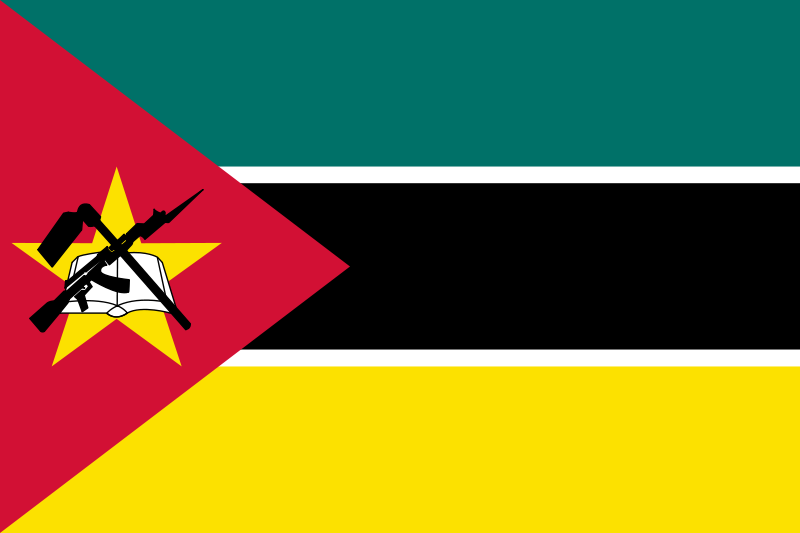
Earlier this month I wrote about how South Africa’s war into Mozambique has contributed to Mozambique checking in at one of the poorest countries in the world. It seems that the apartheid past is still too close at hand to allow Mozambique ample space to regain its footing.

Mozambique is supposedly going to increase energy supplies to South Africa to aid in its electricity shortages. What? Mozambique is going to aid South Africa when Mozambique is facing energy shortages of its own and has South Africa to thank for its apartheid debt? What I later read was that 75% of the energy produced by Mozambique’s Cahora Bassa Dam is already sold to South Africa. The reason for the increase is because the Dam recently received refurbishment that has increased production.

Disturbingly, in later research it came to light that the Cahora Bassa Dam was a joint project of Electricity Supply Commission (ESCOM, as it was known prior to 1987), latterly Eskom, Johannesburg, South Africa and Hidroelectrica de Cahora Bassa (HCB), a firm owned 82% by the government of Portugal and 18% by Mozambique. So it is not the government of Mozambique swaying to its former apartheid aggressor, it is the economic interest of two major energy companies one owned by South Africa and the other controlled by Portugal. Where is the voice of the Mozambican people? Why can they not benefit from the very energy that they produce? The answer to that question is all too easily given from the previous statement. The Eskom company is also known by its Afrikans name: Elektrisiteitsvoorsieningskommissie. Now we have arrived at the conclusion that an Afrikans company operating out of South Africa with a known past of the apartheid government decimating the Mozambican population. Did this company gain its assets on the river during the apartheid fueled war with Mozambique? Is the company now profiting from the current and war-time suffering of the Mozambican people? All signs point to yes in both questions. Apartheid is still alive and well in the energy industry of southern Africa.

An apartheid era company and the Portuguese, former colonial power, lay claim to the energy supply of southern Africa, Mozambique remains pushed aside, and South Africa gains from the increase in energy where I am sure the wealthy benefit the most. Resources need to rest in the hands of the people, so that the benefit lays in the homes of the people. We who would claim to support and promote democracy need to remember that the Greek, “demos” (prefix of democracy) means ‘the people’ or ‘the poor.’ Those who face the harshest challenges should receive the greatest benefit.

what apartheid has done with affordable transportation

A week of riots and clashes sparked in the capital as the government attempted to raise fuel prices by 50%. Mozambique is often unheard of in international news, but a week of violent riots in Maputo leaving 100 injured and four dead were enough to bring the world’s poorest country to the headlines. The fuel price jump was proposed as a response to the 14% rise in diesel fuel costs. Food prices have also experienced an increase due to the rise in fuel costs. The reason that riots erupted was not only because of rising fuel costs, but mainly because of the low wages that people in Mozambique make. The more interesting question may be why is Mozambique so poor and why would the government seek a 50% increase in price to meet the demand?

Mozambique is moderately large country on the East coast of Africa. With a history of Portuguese colonial rule, civil war, effects of apartheid, and a wide-reaching famine, Mozambique has had great difficulty in bringing its people out of desperate poverty. Mozambique gained independence in 1975, but was quickly pulled into war against white rule in Rhodesia and South Africa. The apartheid government of South Africa not only oppressed its own people, it engaged in near full-scale war with Angola and Mozambique as well as raiding and blockading Lesotho, Botswana, Zambia, Zimbabwe and Malawi. “This was a war against ordinary people, in which schools and health posts were primary targets and civilians were massacred on buses and trains. At least two million Mozambicans and Angolans died in the war South Africa waged against them; millions more had to flee their homes.” writes Action for Southern Africa and the World Development Movement in an Africa Action Report.

A generation of children never received education because schools were destroyed, mothers and children died because health services were devastated, and now the region cannot rebuild because they are asked to pay again for the injustices of the apartheid regime through debts. The war waged by the South African apartheid government made Mozambique one of the poorest countries in the world. Over one million people died between 1977 and 1992, the economy was destroyed along with the countryside, and the country was left with a legacy of landmines. The South African government supported a rebel group called RENAMO. RENAMO or Mozambican National Resistance was formed after independence as an anti-communist conservative political party. It fought against the FRELIMO (Mozambican Liberation Front) and the Zimbabwean government of Robert Mugabe which was overthrowing the white Rhodesian rule. RENAMO received support from South Africa as well as the Central Intelligence Organization of Rhodesia and the CIA of the United States. RENAMO was known for its widespread brutality and human rights abuses. It was instrumental in destroying the economy of Mozambique and ensuring that a southern African country under black rule could not be stable.

The US and South African backed RENAMO insurgency destroyed the basic infrastructure and industry of Mozambique. With this extreme loss of income Mozambique was forced to turn to the IMF and World Bank in order to create the infrastructure destroyed by apartheid. “Mozambique has been forced to delay universal primary education until 2010 because it has to repay the apartheid-caused debt.” notes the Africa Action Report. This debt cause by apartheid South Africa is easily deemed odious. Meaning the debts imposed were against the interests of the local populace, and as such should be written off as unlawful under international law.

On top of the apartheid debt and lack of infrastructure, in 2001 Mozambique experienced terrible flooding that has threatened nearly a quarter of the country with death by famine. Again in 2007 terrible flooding forced almost 60,000 people to be evacuated from the Zambezi River Valley. It was said to have been worse that the flooding in 2001. Roads were destroyed, bridges washed away, hundreds of homes disappeared under water – this on top of apartheid debt and a landmine scarred countryside. There is hope for Mozambique. Tourism is increasing and international investment is at a high, but at what cost? The government of Mozambique needs to ensure that it does not sell out its future in investment schemes that will rob indigenous peoples of their lands and leave the country empty of resources.

Mozambique has suffered and is still suffering from the white empowered South African apartheid government system backed by none other than the United States of America. If you would like to understand the current rioting in the capital of Maputo, you need only look back to apartheid to recognize why the 170th of 175 countries listed on the development index sits right next to the richest country in all of Africa.

security is better with south africans

An interesting topic that I came to by way of my African Studies professor. In a meeting of the Michigan Action Network on Africa (MANA), he was listing off a number of woes for Africa and among that list was a quick comment about many South Africans working in the controversial security firm Blackwater USA. I could hardly believe it. Could the US security firms really be recruiting from South Africa? I then caught an article in glancing and noticed that foreign diplomats believed that the best security personnel were the South Africans. I had to look into it further. While I could not find the article again I have found a few others that were just as helpful in my knowledge search.

Being involved in the private military or security business is not something to let everyone know. When Mrs. Durant’s husband was kidnapped in an ambush in Iraq she had no support group of weeping war wives to turn to. All she had was her silence. What the Chicago Times called South Africa’s silent war in Iraq has been a very vocal war in the US especially with the controversy over Blackwater’s killing of Iraqi civilians. However, former military and police in South Africa are not new to harsh conflict. In the 1990s thousands of white military personnel left with the apartheid transition. Many of those unemployed officers and soldiers join private security firms and became involved in wars all across Africa, including Sierra Leone and Angola. So it is not surprising that working in a private security firm is something that is not talked about in South Africa. I am sure it holds a very sore spot in the country’s history.

It seems that Blackwater will search every inch of the earth to find good mecenaries. From Chile to Brazil and now South Africa. The UN recently reported that South Africa is one of the
top three suppliers
for security personnel in Iraq. One South African security company received a multi-million dollar contract to train military recruits in Iraq. There are almost 43,000 South African private security personnel working in Iraq. The Institute for Security Studies wrote and article and in it mentioned the story of a doctoral student heading to Iraq to do research and a friend told him to make sure he was placed with the South African security because they were the best.

This may not mean much for South Africa because this is a practice that is not publicized. If you are involved in private security then it is best not to let that be known. You will not be welcomed home as a hero. Many note that after the ‘troop’ surge (or private security surge?) that South Africans will be again be out of security jobs, but maybe the Iraqi government will sign them on after to continue helping at oil stations. At any rate this becomes a larger issue for the US. How can the US government, using private security firms, allow security and war to be outsourced even more? How can there be any more accountability if they are signing on former, white army officers who supported apartheid? It can’t be long before people get fed up with outsourcing in the war-industry, especially the lesser paid and trained soldiers on the ground. It is a very worrisome topic for both the US and South Africa. South Africa seems to have an influx of military personnel, who gained no further skills after apartheid. The US looks to have an issue of controlling said security firms in their actions.

africans care about activism too

Many times I hear that I am fighting a losing battle here in the US trying to get people to care about providing access to basic healthcare in Africa because ‘Africans’ don’t care. I am told that the African people who I am trying to help are not at all trying to help themselves, so why do I bother? Now you see this claim could not be more bogus. Just looking back at the history of African action in the news media it is easy to see that ‘Africans’ care. Recently I came across a WireTap article on African Activism which provides numerous examples of people in Africa working towards progress.

The WireTap article highlights pushes towards democracy in Senegal and the use of hip hop to involve more people in the February 2007 presidential elections, especially involvement of young people. The article goes on to note other youth-led activist organizations working across Africa. In Bling: A Planet Rock, GenerationEngage working with the UNDP, a set of screening were made to bring light to American MTV hip hop’s focus on diamonds and the detrimental effect on Sierra Leone and other countries where ‘conflict diamonds’ are mined. This is very much linked to the youth of Sierra Leone and American in that American youth promote the hip hop culture and the youth in Sierra Leone are affected by it.

In Cape Town, South Africa a youth development organisation uses the performing arts to teach the youth about cross-cultural understanding, leadership and non-violent conflict resolution. Named City at Peace the organization puts on workshops and trainings that allow youth to build dialogue in a diverse atmosphere. “participants are trained in leadership for social change as well as artistic training in drama, dance and music. They are required to create an original production based on the stories of their lives, which will tour around the city, and they will have to use the material of that production to initiate community change projects in their homes, schools and communities.”

Liberia’s Save My Future Foundation works to fight the impact of the Firestone rubber company and the effects of the civil war on youth in the country. The organization wants to end the tensions between groups and work to protect the environment as well as human rights.

Here is an interesting link to the blog of a Skoll Foundation (SocialEdge) Fellow working on grassroots initiatives for social change in Sierra Leone. Alyson will be stationed for a year in the country and her blog will attempt to tell of both struggles and successes.

cynicism from a jaded summer

I have been away from writing for a while and this is my attempt to convince myself that is it still important to share what I think. I have been doing a load of thinking since my summer travels. Upon returning from Ghana I started work back at my blue collar job full of racist, sexist, mostly ignorant co-workers, using the term ‘rednecks’ would be too clique, but I just did. At any rate they started off the extreme of the comments that I knew I would receive. Why would I go to Africa? Did I get a number of different diseases? Did I get AIDS? Many co-workers noted that they wouldn’t have even stepped foot off of the plane onto the African soil and I must be either very brave or stupid. These and other questions are starting to not even phase me. They still bother me, but not as much as they once did. The most common question with a hint of no interest behind it is, “How was Africa?” Well if I could easily sum it all up in the few short sentences that will hold your interest for more than two minutes, then I might try and let you know. Sadly the majority of people really do not know how Africa is or have the slightest inkling to discover. This is again not new territory for me and I am not surprised. This is what most worries me. Am I becoming jaded and cynical to a degree? I like to pride myself in working to not become jaded and to always be an optimist, however – people make that difficult, as much as they make it easy. There are just so many interesting things taking place on the African continent and so many thoughts and reflections that tag along that I cannot possibly focus an entry on just one instance – and that is the idea of this blog – to create a place for the contents of my mind that need to spill.

Since returning I have been doing a lot of work with my organization, S.C.O.U.T. B.A.N.A.N.A. We are launching our Year of Water Project in Michigan to fund community wells in 8 different African countries with an organization called Charity:Water. Chapter Action Boxes are being sent out to all 18 North American chapters. The ‘Handbook to Making a Difference’ is almost complete and now we are just waiting on the button order. I have found that applying myself in action has helped to combat the negativity of all the questions asked after returning from Ghana. I have stayed away from reading too much of the news of Africa, kept to the simple ways of a small city life, and have attempted to relax a bit. Now I can do so for no longer. There is too much happening on the African continent, there is too much to do here to raise awareness and there to save lives, there is too much to remain idle for too long. And so I am back at it. There is a wealth of issue I am set to cover, so there may be a large influx in entries over the next few days.

I didn’t have much time to do any great reading from my long ‘List of Good Books to Read,’ but there was one in particular that I enjoyed a lot. I would like add a brief review of a book that I finished this summer. The Power of One by Bryce Courtenay was a book that I had difficulty putting down. It is based in the time period before World War II (1939) and follows the life of a young british boy from his difficult days as a child at a Afrikaaner boarding school, to his climb to intellectual superiority in a new town, and later to his days as an accomplished teenager. All the while the boy is growing in his educational, spiritual, and professional capabilities – and working dedicatedly to one day becoming the boxing welterweight champion of the world. It is called a classic novel of South Africa and I think this tag fits because the book follows the development of South African society. The boy has no difficulty in accepting a person for who they are and often works diligently to assist the oppressed African people. The boy becomes respected by both Africans, for his language abilities and assistance, and white settler descendants, for his academic skills and athletic accomplishments, alike. Definitely a story that was spearheading for the future and one that gives an exciting story of adventure, accomplishment, and Africa.

Index of blog post series on Ghana.

are the MDGs credible?

The ‘bright idea’ of the West very often comes under scrutiny from the rest of the world. In Tanzania the Millennium Development Goals (MDGs) are seen as the ‘hidden agenda’ of the West that is impossible for African countries to achieve. Many see South Africa’s ability to achieve the MDGs as an obvious reference to the Western powers’ foreign policy towards ‘developing states.’ Is it because South Africa is most Western and developed that it has achieved so much?

The MDGs can certainly be seen as worrisome, however I would not go so far to state that they are a tool for Western powers to control African countries or ‘underdeveloped’ countries. The ‘developed’ and Western powers do hold the power in the UN, but I know a good number of people who work for the UN and are dedicated to reducing poverty and providing access to the necessities that all people need to survive. I am not a proponent of big plans, such as the MDGs. As I have come to understand and know by way of William Easterly – big plans do not work, big plans do not succeed and there is a large cynical backlash when the big plans fail.

Many professionals say that the MDGs are unachieveable by African countries but the institutions say otherwise and claims that African countries are actually achieveing the goals. The UN newsletter on Africa, African Renewal, has facts and figures from the 2005 MDG report that outline how Africa is doing at achieveing the MDGs. Many of the goals are very far off track from the actual goal, but in the area of access to a clean water source and primary school education there is improvement.

Since the 1960s numerous, ambitious development goals have been set for the world to achieve. Every time that goals are set their deadlines for achievement are passed and new goals are drafted. Most recently we reached the new millennium and the most ambitious goals were set.

They are the most broadly supported, comprehensive, and specific reduction objectives the world has ever established. (UN Millennium Project)

The deadline is fast approaching and achievement is far off for many ‘developing’ countries. The first ‘decades of development’ (1960, 1970, 1980, 1990) focused on economic growth. Beginning in the 1990s, development started to focus on the need to create “macroeconomic stability, strong institutions and governance, enforce the rule of law, control corruption, and provide greater social justice.” From those aspects, the new MDGs reflected the emerging role of human rights in the international community, focusing on the economic, social and cultural rights enumerated in the Universal Declaration of Human Rights (rights to food, education, health care, and decent standard of living). Throughout the ‘decades of development,’ conferences upon conferences, meetings and more meetings were held to build the best plan for development in our world. Yet as this happened goals failed, new goals were created, and millions lost their lives. This is where I will end with a very important quote:

“Meetings are indispensable when you don’t want to do anything.” – John Kenneth Galbraith