outsource to detroit: it’s like brazil

I caught a recent news brief from the Detroit News reporting from the Mackinac Policy Conference put on by the Detroit Regional Chamber of Commerce and was surprised by the headline.

“Outsource to Detroit”

That’s a bit different than Chrysler’s “Imported from Detroit” tagline. I’ve been following this idea and imagery of Detroit. I’ve written previously about how misinformed the image of Detroit is, some critics call this “ruin porn,” while others (some academic professors) call Detroit Michigan’s “third world” city.

For these reasons I am not too surprised to read a headline that is generally associated with sending jobs to developing countries (“third world”). The article highlights the growth of businesses moving into downtown Detroit because of the low cost of office space and the surplus of technical talent. The technical talent may be reference to wider metro Detroit and the many existing technology companies, but I know that I often see billboards in Detroit promoting web and technology job opportunities.

In an interview with Tim Bryan, GalaxE Solutions, the CEO said,

“A hundred percent of the work we’re doing in Detroit is health-care related and is coming from outside Michigan. It validates our model to outsource to Detroit.” […] enable[ing] GalaxE to serve customers for roughly the same cost as operating from Brazil.

I would not call this outsourcing, since the primary idea with outsourcing is that the job leaves the USA for another country where business is cheaper. There are plenty of examples of companies shifting locations because of varying economic climates in different States. Case in point, GM moving production from Michigan to Tennessee because of different business regulations and tax breaks. Brazil is an up and coming developing economy with its hand in many international markets – is it bad to be like Brazil?

Detroit is quickly becoming an technology hub for Michigan, which is an amazing reversal from its manufacturing past, as well as innovating for better health care. Wayne State University School of Medicine is leading incredible research projects to improve health care along with the Detroit Medical Center’s (DMC) nine specialized hospitals, Henry Ford Health System, and Michigan State University’s College of Osteopathic Medicine.

If this is the future for Detroit, then things are looking good. This is an excellent example of economic growth in a downturn via two growing industries: health care and technology. If Detroit lawmakers play the cards right, everyone in Detroit could get the best of both worlds: job creation and city revitalization. These are important steps to pay attention to for a better Michigan future.

Recipe: Chisaya Mama Stuffed Peppers

Since moving to Ann Arbor, Nichole and I have had the chance to try out some new recipes, some of which we are very proud of and enjoy sharing. With my job working in healthy weight loss through education and healthy food choices and Nichole’s upbringing in healthful (lactose-free) foods, we have a wonderful repertoire of recipes for those with their good health in mind.

We picked up a stuffed peppers recipe from Meijer one day because it looked interesting, had lots of vegetables, and decided to make healthier with our own additions. We added more corn and quinoa. Quinoa was considered sacred by the Inca people, calling it chisaya mama or ‘mother of all grains.’

Ingredients:

  • 2 Bell Peppers (of any color preference) (30 cal./pepper)
  • (1) 16 oz Jar of Corn & Bean Salsa (from Meijer) (260 cal.)
  •  (1) 8oz Can of Whole Kernel Corn (120 cal.)
  • 1 Can of Black Beans (rinse before using) (330 cal.)
  • 1 Garlic Clove (4 cal.)
  • 1/4th of an Onion (1-2 cal.)
  • 1/2th Cup of Quinoa (Brown Rice can be substituted) (344 cal.)
  • 1/2 lb. of Ground Turkey (425 cal.)
  • Pam Cooking Spray with Olive Oil (0 cal.)

Steps:

  1. Spray a good sized pan to cook the ground turkey.
  2. Add finely diced the garlic and onion to the pan along with the ground turkey, cook until browned.
  3. Add 1/2th cup of quinoa & 1 cup of water to a pot. Set to boil until water is gone.
  4. In a large mixing bowl, combine: browned ground turkey, cooked quinoa, kernel corn, 1/2 – 1/3 can of rinsed black beans, and the jar of salsa.
  5. Cut 2 bell peppers in half and clear out the insides.
  6. Place the pepper halves in a glass pan or on a cookie sheet and fill the pepper halves with the stuffing mixture.
  7. Bake for about 15-20 minutes at 350 degrees.

One (1) stuffed pepper made with this recipe has about 325 Calories with lots of fiber, protein, and other nutrients to help you feel full for a long time.

Average cost for the meal, making 4 stuffed pepper halves: $17

is the IMF really like a credit union?

“You can think of it sort of like a credit union for countries”

This was the answer from Eswar Prasad talking to NPR‘s Planet Money about: “What is the IMF, anyway?” If the International Monetary Fund (IMF) is like a credit union, then democracy is like a dictatorship. Needless to say I am going to disagree strongly with Mr. Prasad and his possibly quick, false analogy to help others understand how the IMF works.

Macro/ Micro

One of the easiest differences between the IMF and a Credit Union is their scope. The IMF is very macro-economic focused. They intervene on international financial issues by lending to country governments, usually with conditions for deregulating and liberalizing markets so that they will be more open to foreign trade.  Better known as Structural Adjustment Programs (SAPs), these conditions had harsh negative effects on the populations of many developing countries as they were forced to repay loans instead of invest in health and education.

Credit Unions on the other hand are much smaller than the IMF. Some Credit Unions are large institutions, but on the whole Credit Unions are community focused. They offer great returns on invested savings, an international cooperative network of ATMs, and plenty of financing options that will bring you the most benefit as opposed to forcing you to take actions that might harm you or your family’s future.

Disparity/ Equality

Both the IMF and Credit Unions are membership style organizations. The difference is with representation.

IMF member countries are given a certain number of votes based on their “quota” with the USA as the only country able to block a supermajority vote. Much of the voting power is held by the developed, Western nations. Developing countries and emerging developed countries have a significantly smaller vote total. This representation continues to fuel inequality around the world as the rich get richer and the poor get poorer. The conditionalities associated with IMF loans generally benefit the economies of Western countries while harming those of developing countries. This unequal representation also makes it more difficult to reform the IMF because of the vote imbalance.

Credit Unions are based on one person – one vote. No matter how much or how little money you have in the Credit Union you are entitled to one vote. In the same regard the members of a Credit Union are the owners. Members’ one votes determine the policies, decisions, and leadership of the Credit Union. In the IMF, the leadership is appointed by the European Union (EU) leaders. Based on the voting disparities of the IMF the leadership is never someone who will make decisions that aren’t in the interest of the USA or EU. Not the best process to promote democracy coming from those who hold high the , if you ask me.

Monetary Capital/ Social Capital

In conclusion, the IMF and Credit Unions are far from similar. One is a multinational organization that is responsible for the world’s financial recovery as long as they will benefit the most developed countries, the other is a small-scale, democratic, cooperative financial institution that allows its member/owners to build serious social capital among their community. The IMF acts as a reactionary institution when it responds to financial crises around the world and often times perpetuates them with their SAPs and other programs. However, a Credit Union is a preventative financial institution bringing a community financial knowledge and resources before crises happen. Case in point, Credit Unions did not need any bailout and have never used tax-payer money to financially stable. The Credit Union system is self-sustaining and pushes a self-help community focus.

If our largest financial institutions, banks, the IMF, and World Bank adopted more cooperative approaches to finances and development, we wouldn’t see such disparity within our countries and communities, or around the world. A system driven by democratic process and cooperative power control can only lead to greater needs being met for a greater number of people.

congo is not a country

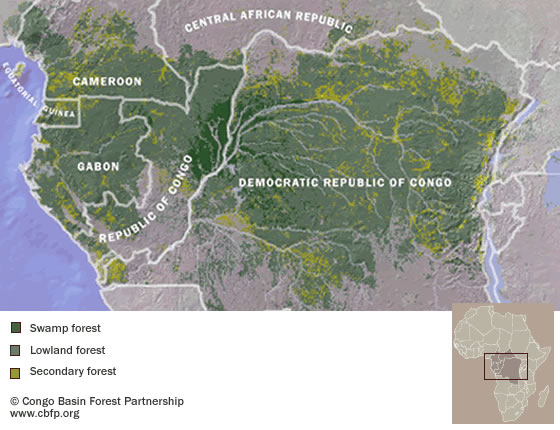
Recent research and commentary on atrocities in the Democratic Republic of the Congo (DRC) have fueled reference to a “Congo” that seems to include only one country, but “the Congo” is a large, resource rich region made up of many countries.

Traditionally “the Congo” refers to the region of Middle Africa (referred to as “Central Africa” by the UN) comprised of parts of ten (10) different countries, including: Angola, Cameroon, Central African Republic, Democratic Republic of the Congo, Republic of the Congo, Equatorial Guinea, Gabon, Sao Tome and Principe, Burundi and Rwanda.

The Congo is best understood as a geographic region, with lush tropical rainforests and a wealth of mineral deposits, that benefits from the drainage of the Congo River. As a result, interest in the Congo region has caused violence and atrocities arguably since its “discovery” by Henry Morton Stanley in the name of King Leopold II of Belgium. The King wanted to spread Western civilization and religion to the region, which has led to continually destabilization and conflict.

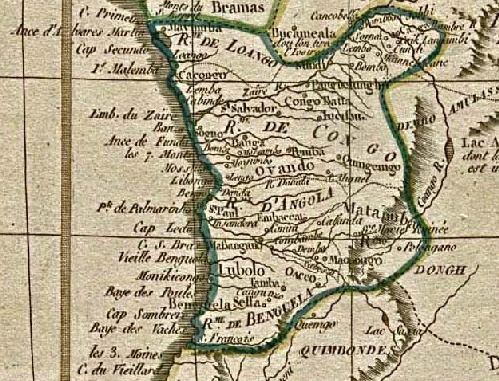
The geographic region known to us as “the Congo” was home to one of the advanced African civilizations as well as the Baka people (often referred to as pygmies). The Kingdom of the Kongo included parts of the DRC, Republic of Congo and Angola. As recorded by Europeans the Kingdom of Kongo was highly developed with a extensive trading network. As “explorers” and colonizers penetrated further into the interior of the African continent, the Kingdom of Kongo became a major source of slaves. As a result of political in-fighting, resource grabbing, and European invasion, the Congo region’s factions remained in civil war for almost forty years (1700).

Since European arrival, the Congo region has been in a regular flux of conflict either between political factions, against colonizers, or now among local militias fighting for control of areas of resource wealth.

Much like our misunderstandings of various aspects of the African continent, its history, and people fuel monolithic interpretations of Africa, so too do our misunderstandings of the Congo region’s governments, resources, and cultures.

Maybe our misunderstandings and myths of “the Congo” are driven by the Heart of Darkness (supposedly inspired by Henry Morton Stanley) narrative set on the Congo River that details atrocities committed against native peoples? Maybe history shows Western violence has created a culture of violence in the quest for control and resources? Either way Congo is not a country, but a vast region with deep history and amazing possibilities.

dictators and democracies for health

Politics can have serious consequences for health. We need look no further than the US legislature for examples of the politics of health. The recent deeply partisan budget cuts threatened women’s health across the country and debates over the Health Care Bill easily demonstrates a democracy’s inability to provide basic health for everyone in its population. Other examples come from the USDA’s support for corporate farms over the population’s health needs amidst the growing obesity epidemic. Some of the best examples of health being politicized come from our own government, yet we rarely have to think about how the form of our government and political system has an impact on our health.

Whether it is a democracy or a dictatorship, politics influences health. Cuba has long held a spot as one of the top national health care systems as well as one of the top countries for medical education. Their system is completely government-run with no private companies controlling hospitals or clinics. Cuba has been innovative with their computerized system for blood banks, patient records, etc. However, their government is a dictatorship and this has created some negative effects on health (depending on who you talk to). During the 1990s, the loss of Soviet subsidies combined with other political and economic factors created a countrywide famine. Manuel Franco describes the Special Period as,

“the first, and probably the only, natural experiment, born of unfortunate circumstances, where large effects on diabetes, cardiovascular disease and all-cause mortality have been related to sustained population-wide weight loss as a result of increased physical activity and reduced caloric intake”.

Recently we have seen the horrifying impacts of dictators and authoritarian regimes crushing their own health care systems at the expense of their populations. In Libya, health workers have been shot at, ambulances have been bombed, and hospitals have been razed. Gadhafi has ruled Libya since leading a bloodless coup d’etat against the then King of Libya.

In nearby Syria, similar atrocities have been committed. A recent video from the protest against the Syrian government showed a pro-government Doctor beating an injured protester out of an ambulance. The main hospital in Deraa has reportedly received 37 bodies of protesters killed. Syria is officially a republic with a constitution and elected leaders. The real story is of a country run by one party handed from father to son that has been governed under “The Emergency Law” which suspends constitutional protections since 1963.

Chris Albon, author of Conflict Health, wrote an informative piece on how the protests in Bahrain are centered on the health care system. Protesters seeking refuge in the hospitals have been denied treatment by government troops and ambulances have been blocked. He notes a new report from Doctors without Borders that says, “the government has attacked and militarized the health system, making protesters and bystanders afraid to seek treatment.” Bahrain is a constitutional monarchy where people have long protested over their lack of personal rights and freedoms.

In another example of the difficulties of democratic politics to support health, Nigeria’s recent elections have fueled intense fighting across the country. Hospitals reported that over 300 people were seen for bullet wounds. The ethnic and religious divisions in Nigeria have long plagued efforts to build a unified democracy. Nigeria’s history of military rule and oil wealth has also exacerbated these divisions. When a democracy can’t hold elections without widespread violence, how can they provide health for their people?

Both dictators and democracies have the potential to instigate situations that have serious health impacts. Whether it is frivolous debate or armed conflict, the politicization of health has lead to serious health deficits around the world. No matter what country you live in there is always room for development when it comes to providing for the health of a population.

Featured on the American for Informed Democracy Blog, where I’m writing as a Global Health Analyst.

middles classes & the globalization of #winning

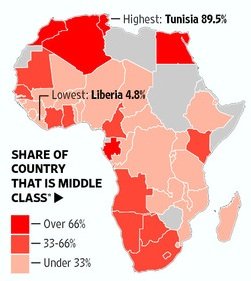
News agencies and development pundits have been hailing the news that one-third of all Africans are now categorized as middle class and can be compared/ compete with China and India’s middles classes. I see a number of problems with this news, the criteria used to define middle class, and the comparison between an entire continent of people and those of two large countries (both of which are increasingly involved in development in Africa). The recent report from the Africa Development Bank (PDF) says that:

34%, or 313 million Africans are now middle class (living on $2-$20 a day), after several decades without any change, a jump from 27% in 2000.

The Asia Development Bank published a similar report last year saying that 56% of the Asian population is living on $2 – $20 a day (PDF). This calls into question the definition of middle class. I consider myself middle class in the United States of America and my family has been characterized as middle class ever since I can remember. However, my family and I definitely live on more than $20 per day and I would never imagine being able to call myself middle class based on how much money I spend in a day. Its all about location. Here in the US, the term middle class is synonymous with the “American Dream.” It is not so much a hard and fast economic development term that we can use to compare ourselves with other countries, but rather a socio-cultural term that is used to compare ourselves to each other in our attainment of the “American Dream” (Western notions of success).

The Guardian cites MIT economists, Abhijit Banerjee and Esther Duflo, who point out that:

the middle classes are: likely to be less connected to agriculture; more likely to be engaged in small business activities; and benefit from formal sector employment, with a weekly or monthly salary, which enables them to adopt a longer-term perspective towards their finances.

Even with a more economic definition, nothing about the term middle class is set in stone and it varies widely between communities and countries (more economic definitions of middle class). The Guardian continued to note that $2 is the poverty line for most countries, so if you live on more than that you are middle class, but there is no in-between. This only continues to prove that “middle class” cannot be defined by economists or development pundits. If we look closer at the term in the United States, it has always been a fluid and flexible term that a wide range of the population wanted to use. The majority of Americans call themselves “middle class” even when many fall into “working” or “upper” class categories based on their income levels.

Middle class often means achieving higher education, holding a professional job position, owning a home, and having a well established lifestyle that is socially acceptable. All of these status symbols mean something different across culture and country of origin. Populations bend and shape their definition of being “in-between” poor and more well off by different standards that are generally unwritten. If we use the United States as an example again, the Pew Research Center conducted a study on social and demographic trends to find that there isn’t just one middle class in America, but four! The study found that people often held onto definitions of middle class that defied traditional stereotypes.

In conclusion, we are all middle class. Whether we want to call ourselves middle class or we truly fit the economic definition, the majority of individuals around the globe identify themselves in the middle class. There is a global middle class that has no financial boundaries, but rather includes all individuals who seek advancement, education, and something more than what they currently have. Economists and development pundits cannot create a definition of middle class for a continent let alone a country, nor can they compare the middle class of the USA to that of another country or especially a continent.

If we want to truly understand if 1 in 3 Africans are middle class, then there needs to be some serious work that includes understandings of success in various countries and asks a large segment of a country’s population how they identify their socio-economic status based on their cultural norms. Why tell someone that their success isn’t as important as another’s?

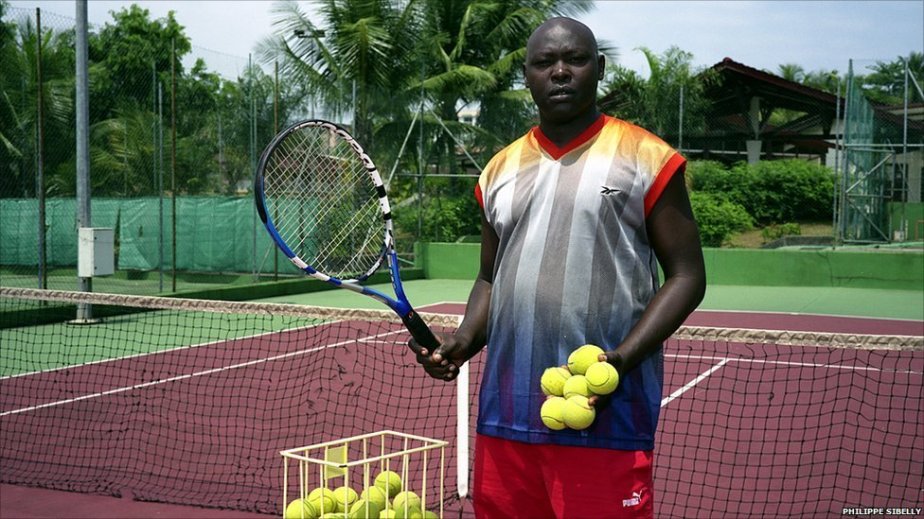
Photo credit: BBC News

More “African middle class” pictures from BBC News

education is more than a building

No more cups of any kind, number 3s, or beverage references. Let’s talk about root causes.

“Give a man a fish; you have fed him for today. Teach a man to fish; and you have fed him for a lifetime”

To build on this wonderful old adage (which was all too easy to add before writing anything original): If you give a community a school; they have a nice building until it decays. If you invest in an education system; they will have education for generations.

In a recent response to the Greg Mortenson controversy Rebecca Winthrop, Director of the Center for Universal Education at the Brookings Institute, gave a thoughtful response and criticism of Mortenson’s engagement methods on providing education.

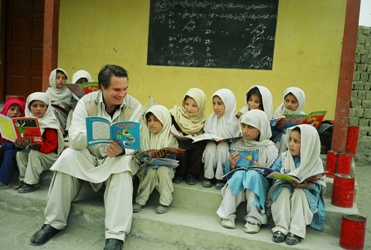
As I had written yesterday, my biggest take away from the book was the idea that it is necessary to build relationships and community connections before entering into any international project. However, Mortenson may not have followed his own advice. Like many development critics, I don’t see the benefit of building a school structure without engaging teachers and education systems. There are many accounts of corporations and notably oil companies that have built schools for communities where they exploited resources – but those structures remain empty. A school is no good if there are no teachers or if the local education system is not consulted or included in the process.

This has been noted to be an all too common problem in development projects and one that I saw firsthand during my experience in Nicaragua. The US based non-profit that I worked for utilizes the same method as Mortenson’s CAI: increasing education by building schools. During my trip to Nicaragua the organization was actually building a concrete school structure next to an existing wood school. Granted this old structure wasn’t the most amazing, but the root cause of the lack of education opportunities in this community was not due to a lack of a school building, rather it was a lack of dedicated teachers and adequate training among other issues.

The Nicaraguan education system didn’t have much influence in rural communities. There was no accountability to the community school or to any educational body for that matter. Some teachers choose to come whenever they pleased and others had never been given any formal or informal teacher training  even though they displayed incredible dedication.

We need to address structures that perpetuate the problems that we see if our work is going to have a real impact for those we seek to help. By asking communities what solutions  work best, we can change the way “development” has been done in the past and focus on our own accountability.

Recommended articles:

Three Cups of Deceit” by Jon Krakauer (on Byliner)

Three Cups of BS” by Alanna Shaikh (on Foreign Policy)

Photo credit: James Warden / S&S (from Empty Schools, Dashed Hopes Stars & Stripes)

four cups of tea

I had always been skeptical of Greg Mortenson’s work. Anyone who runs around the globe as a sole actor doing good works is opening themselves to lot of potential criticism. The Central Asia Institute seemed to be colonial in nature and mostly all I had heard about was how great Greg Mortenson was not about the level of success of his work. Working and studying international development, Three Cups of Tea was regularly suggested as recommended reading, but I held on to my skepticism and never ventured to read it. It wasn’t until I was working for a US based non-profit with the goal of building schools in developing countries and my older sister gave me the book for my birthday that I began to read Mortenson’s book in Nicaragua while building a school in a remote community.

It was on that trip that my fears of good intentioned non-profits that build schools came true. I witnessed first hand the manipulated stories told to better “sell” the non-profits’ good work. I saw a horrible lack of community engagement and understanding when the founder over stepped our welcome to reprimand the village leaders as if they were school children. I was appalled at the lack of respect for community members that occurred as well as the disempowerment of community members when it came to decisions related to the school building. As I was reading Three Cups of Tea I took away the powerful idea that it takes three cups of tea (or more) to really understand a community, its needs, and find the place where you can help without being an overbearing outsider. Mortenson did well to articulate the point that he went on multiple trips and met with many local stakeholders before starting construction of anything.

If nothing else I hope that Mortenson’s fame and best selling books spread this idea among the general population of people who would like to “do good” around the world. It is a complex task to take on development work and one that can’t be done lightly. Making a difference in the world takes time and patience. You have to develop relationships, meet with leaders and elders, and build credibility among a community as well as better understand community dynamics before you make a large donation let alone build a school or other structure.

Sadly there are many organizations doing more harm than Mortenson that pass under the radar because they know how to look good. Many international development non-profits can easily put on a good face by telling stories and publishing reports, but some are just as worthy of criticism as Greg Mortenson’s Central Asia Institute. We can’t continue to have organizations that seek to recreate the exotic travel and heartwarming “good” experiences over and again for their founders’ benefit. How can we better empower communities to work for themselves? How can we better educate future leaders to avoid these pitfalls of international development work? How can we learn to be quiet benefactors?

when conflict health becomes military tactic?

From refugee situations to border disputes, health crises that arise as a result of conflict are unfortunately quite common. Conflict health disrupts the ways that people access resources like food, water, and medicine. On the other hand, conflict health creates the circumstances where diseases spread, people are needlessly killed, and others are critically injured. These horrible results of conflict health are compounded by the destruction of infrastructure: roads, hospitals, etc.

What happens when conflict health becomes a military tactic? Since Medieval times (and before) armies attacking opposing castles would launch disease infested animal carcasses over the walls. In the 1800s, the US military gave smallpox blankets to indigenous North American groups in order to destroy their health and kill their populations. During apartheid in southern Africa, South African forces supporting RENAMO in Mozambique targeted health clinics and hospitals to cripple the health and infrastructure of the population.

During the World Wars, medics and vehicles with a red cross weren’t supposed to be targeted because they weren’t carrying out military actions. I had thought this idea was fairly widespread and that mercy was shown to health providers in times of conflict.

Recently, we have seen the complete opposite during the Libyan conflict. Libya’s pro-Gadhafi forces have targeted those attempting to provide health services to protestors and the population. In the early days of the protests it was reported that the military was entering the hospital to dump out blood supplies so that injured protestors could not be saved. In similar actions, Red Crescent medics and ambulances have been shot at, Colm O’Gorman, executive director of Amnesty International Ireland, said:

“This was a deliberate attack on medical professionals, who were wearing full medical uniform and arrived in two clearly marked Red Crescent ambulances.”

Ambulances have been bombed, The rebel spokesman confirmed that

“Gaddafi’s forces shoot three ambulances, killing two drivers.”

The Misrata hospital has been a flash point of intense shelling and fighting by Libyan forces. The hospital has been bombed from the air, shelled by tanks, and overrun by pro-Gadhafi troops.One person inside said,

“heavy tanks for Gadhafi troops start attacking the hospital – the bombs falling here 20 meters (66 feet) around us.”

The health of the Libyan people is under seige as much as the repressive dictatorship of Gadhafi. Many countries including Egypt, Morocco, and the UAE have established military field hospitals to be able to help the wounded who are leaving Libya. UNICEF is deeply concerned about the impact of the conflict on children and has distributed emergency health kits which contain enough drugs, medical supplies and basic medical equipment to cover the needs of 60,000 persons.

The conflict in Libya, through the blatant attacks on health providers and facilities, has demonstrated a new level of disregard for the basic health of a population. This is an obvious example that Gadhafi must be removed from power if the Libyan people are to regain their health and livelihoods.

Featured on the Americans for Informed Democracy Blog, where I’m writing as a Global Health Analyst.