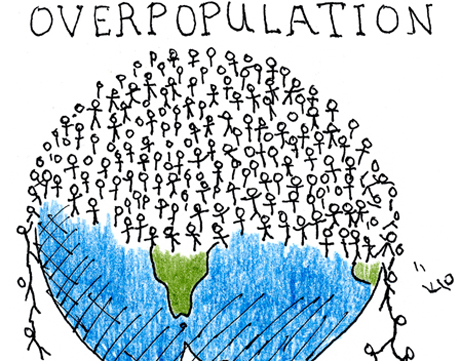
better health + growing population ≠ societal collapse #7billion

With each additional billion people on Earth, the collective news pundits, academics, development experts, and politicians freak out. Many pundits have been talking about the world’s population hitting 7 billion and how that relates to all the issues that we are seeing today. To many authors, talk show hosts, and even economic and development experts, population is the cause of everything. This is just fear-mongering and bandwagon journalism. The facts give a clearer picture.

If you’ve ever read Jared Diamond’s book, Collapse, the themes are all related to overpopulation and the Earth’s carrying capacity. We are constantly improving our health systems and keeping people alive longer than ever before in human history. As we grow in population there will be a breakdown in our social fabric and we will enter into international civil war over precious natural resources, like vegetation, water, etc. It happened on Easter Island, why can’t it happen on a global scale? In short, and to simplify: we are all screwed. I’m going to leave Malthus out of this conversation, but he is a good guy to read about if you are interested in population.

Environmentalism, Population Health, & Politics

Most of the pundits have talked about the impacts of overpopulation on the environment, but what about the impacts on health? This is an important area where the late Dr. Paul Epstein was world-renowned for his work connecting the growing environmental threats and their serious impacts on human population health.

By connecting climate change, exacerbated weather and environmental conditions, and the deep crises these create for the health of human populations, Dr. Epstein made the critical link between the health of our planet and the health of the people living on it.

Recent years have seen increased famines, droughts, and floods, loss of arable lands and increasing desertification, not to mention the inability of governments to respond to these crises. Some of Epstein’s work highlighted the increase of cholera after severe flooding and the increased range of malarial mosquitos as mountain tops warm up. Climate change and environmental issues are related to consumption, which is disproportionately carried out by wealthy countries consuming the majority of the world’s resources even with smaller percentages of total world population. Likewise, famines aren’t caused by too many people, but rather from bad government, violence, and global inequality.

The issues that many would like to attribute to the growing population are really fueled by politics. Population growth and climate change are above all else a political issues.

Fertility vs. Population Growth: (think incidence vs. prevalence in epidemiology)

Everyone needs to take a step back and look at the numbers. Population numbers are increasing with population growth increasing in a number of key countries, however we need to also look more closely at fertility rates rather than simply population growth numbers.

Many areas that have high birth rates also have high infant mortality rates, so it is not completely implausible that families would have a higher number of children to account for the poor health conditions their children might face and not survive. Likewise, areas with high fertility rates often see high infertility rates due to the increased risk to women of infection from multiple attempts to have children.This is where the debate about family planning and contraceptives enters the discussion.

Helen Epstein writes that if men and women have “frank conversations” that may be the best contraceptive. However, John Seager, President of Population Connection, offers a rebuttal that conversations cannot replace contraceptives. He notes that the need for access to knowledge and adequate health care is just as important. He writes,

“When women can control the timing and spacing of their childbearing, they can get an education and a job, and take better care of their own health and the health of their existing children. What could be more empowering than that?”

Population Control as Development

Following Word War II, population control became an important issue for the US to pursue around the globe. The  world food crisis in 1967 made Congress recognize the importance of population growth and it allocatd $35 million to USAID for population control activities. Today, USAID is single largest funder of population control activities in “developing” countries.

During the World Population Conference of 1974:

“Opposition came not only from traditional Roman Catholic quarters, but also from many Third World countries, which saw the focus on population growth as a way to avoid addressing deeper causes of underdevelopment, such as inequalities in international relations. […] India argued that ‘development is the best contraceptive,’ and criticized the high consumption of resources in the West.”

Many began calling for changes to the status quo, however no one asked why the needs of the poor weren’t being met in the first place. Glaring inequalities in distribution of income, land, and power were avoided. Politics came out on top as Western powers pushed “developing” countries, with the backing of international donors, to deliver family planning to the poor, “without fundamentally altering the social order in which they live.”

Developing countries and activists called for “integrated development” focused on addressing both poverty and population.

Solutions

Nothing is so cut-and-dry or simple when it comes to development, especially in regards to population health which pulls on issues ranging from: climate change, women’s rights, income equality, access to health care, infant mortality, family planning, and the list could go on. The population question touches on so many different issues that it only makes sense that health is at its core.

Seager makes good points about the need for women to be able to care for their own health and that of their existing children. Others have lauded similar ideas, specifically feminist groups who called for “voluntary motherhood” and the idea that unwanted children would become defective.

Recently, Bill Gates has touched on the issue of a growing population. He noted that a greater focus on infant/ child health could have a significant impact on slowing population rates and improving the health of populations around the world. As discussed in “fertility vs. population growth” – more surviving children will decrease population rates, in turn this would ideally improve the quality of health care available with smaller, healthier populations.

Gates pushes the idea that mobile technology can help to register new births and ensure that all children are vaccinated. However, the flip side of his optimism is the need to increase the capacity of health care systems to make this goal a global reality. Women play a critical role in this discussion and too often they are marginalized without the knowledge or resources to make changes. Women and health care systems need to be empowered to provide for newborns and children who will be the future of our world.

poverty, in landscapes of scarcity and abundance

I haven’t been posting any new writing in a while because I’ve been off getting married to the love of my life! Everything went amazingly with the food, pictures, families, and the party after the ceremony. I couldn’t have been a happier person on that day, nor will I ever be happier than I was that day – at least until some other huge life events.

We spent 10 days on our honeymoon in Peru. Many people asked us how in the world we chose Peru. The truth is that we found a great deal on plane tickets and it was cheaper than Hawaii. What sealed the deal was that we both had never traveled anywhere in South America and wanted to see one of the wonders of the world: Machu Picchu. As long as our horrible Spanish was deciphered, we could buy the lower deck seats on the overnight buses (top deck feels like riding in a boat), and could find some fresh produce to eat – all of which are not necessarily easy, then we did alright. People were helpful, the Plazas de Armas were beautiful and manicured, the mountain scenery was incredible, and there were plenty of tourists – Peruvian and foreign alike.

What most shocked me about the experience was going back to work the Monday after we returned from our honeymoon. Driving down areas near Grand Boulevard and Trumbull:

Detroit’s poverty hit me hard.

I know that poverty and urban decline in Detroit have become romantically connected to the grit of America and its loss of industry, but this was different. I wasn’t excited to see the “ruin porn” or the decay of Detroit’s empty landmarks. I was having true culture shock. Growing up near Flint, urban decay and vacant industrial buildings were nothing new. On this drive, however, I could see the downtown Detroit skyline from the expressway while on my left and right were neighborhoods falling apart and huge structures with broken windows and without any activity.

The stark contrast was the difference between the poverty of abundance and the poverty of scarcity. Peru is not a wealthy country. The country gets a steady stream of tourists from around the world due to its pivotal location hosting the Incan empire and its prized city on the hill, Machu Picchu. Beyond the Plazas de Armas and the tourist meccas, there are obvious signs of poverty. My wife commented that just two or three blocks away from the manicured Plazas seemed to be the boundary for where any wealth reached. I recently wrote about how Mount Kilimanjaro is known for having the highest percentage of tourist dollars go back into the communities nearby, Peru made me wonder where all the tourist dollars were going besides improving tourism. In every city, we were met with street vendors, but also women and children dressed in traditional clothing asking if we wanted to take pictures with them for a fee. It hurt to see because it seemed to be a selling of their spirit, their culture, but it was one of the few ways they had to get by. Taking the taxi from Cuzco to Poroy train station gave a clear visual of the layers of wealth and poverty based on access to tourist dollars. The housing became more and more rundown as we went further from Cuzco and down into Poroy, where the best looking building was the train station. On many long bus rides we also witnessed the vast, empty, barren spaces were dotted with square homes. The poverty of scarcity was obvious in Peru, but it was also mostly hidden from tourists.

Maybe the reason that Detroit’s poverty hit me hardest was because Detroit doesn’t try to hid its poverty. There is no large tourism industry in Detroit and buildings lie abandoned, burned out, and collapsed. Our honeymoon to Peru really highlighted the differences between poverty based in areas of scarcity and poverty in places of apparent abundance. Even while Detroit has a history of abundance, many could argue that it is just as much a landscape of scarcity.

world record for enriching the poor goes to. . .

Mount Kilimanjaro sets the example for tourism that directly benefits local development, says the Overseas Development Institute (ODI), the UK based think tank that promotes evidence-based development theory. ODI’s report on tourism dollars in Northern Tanzania indicates, “that local residents earn 28 percent of the total revenue raised at Kilimanjaro from foreign visitors.” Granted this report (full report available here) publishes data collected from May – October of 2008. A lot can change in three years, especially in developing economic areas.

The study’s conclusion was that this represented the world’s highest and most successful transfer of resources from tourists to local poor people. “This is the most successful transfer of resources from international tourists to poor people living around the destination that ever seen anywhere in Africa or Asia,” stated Mr Elibariki Heriel-Mtui the SNV Adviser in Private Sector Development (quote from allAfrica). It is very unclear where the measures come or other examples of tourist dollars transferring to local people. Rarely are there stories about how a local resources actually benefit local communities instead of being exploited by outside interests. However, is 28 percent really the best that can be done?

Mount Kilimanjaro is the highest peak on the African continent at over 19,000 feet and attracts roughly 35,000 climbers per year. The ODI averages total in-country tourist expenditures at around US $50 million. Therefore, the 28 percent that makes it into the local economy is around $13 million. That $13 million is considered “pro-poor expenditure” – I wonder if it can be written off as a tax deductible donation? The report goes on to talk about other high tourist areas of Tanzania including Ngorogoro crater, which attracts almost 400,000 visitors, but has only 18 percent of expenditures considered pro-poor.

What makes Kilimanjaro so much better? Is it the specialized skills needed to assist climbers to the peak? Is it the difficult and remote terrain? How can 28 percent be considered a world record of pro-poor expenditure? There must be other high tourist sites around the world where there is a higher percentage of expenditure that is returned to the local economy. Anyone have examples from other areas of the world?

carrenhos de chocque em mocambique (required to fight aid worker burn-out)

During my three-month long internship with a small-scale HIV/AIDS non-profit in South Africa, I visited a friend working in Mozambique with an HIV/AIDS activism organization as part of her Peace Corps placement. Beyond the entirely new experience of traveling to Mozambique, I met a very interesting crew of international development/ aid workers who gave me some great insights into who I might want to become if I entered the international development/aid arena. From working on a small operation in East Darfur, Sudan with a religious relief agency, to a technology focused firm constructing health curriculums funded by PEPFAR, to those doing backend all office-based, administrative work for USAID and the Clinton Foundation,  they were all at various stages in their lives and working in very different aspects of  development/ aid work. Some of the volunteers were in their 40s, others just out of college in Peace Corps, some had just come from extremely stressful environments where “guns were like sticks,” while others had just come to complete an internship for their Princeton graduate degree, all in all it was a motley group that gave a compelling snapshot of aid workers and the many directions they can come from and be headed towards.

4 August 2008

After walking from our hotel, my friend and I stopped at a “local” bar named Pirata (Pirate) to meet up with the motley crew of aid workers. We then headed into downtown Maputo for dinner at a restaurant recommended by one of the aid workers who had spent the longest time in and around Maputo (he had serious Mozambique cred). I had a supposedly traditional Mozambican dish of beans, rice, and shrimp which was very delicious or I was just supremely hungry from the day’s 8 hour bus ride from Johannesburg.

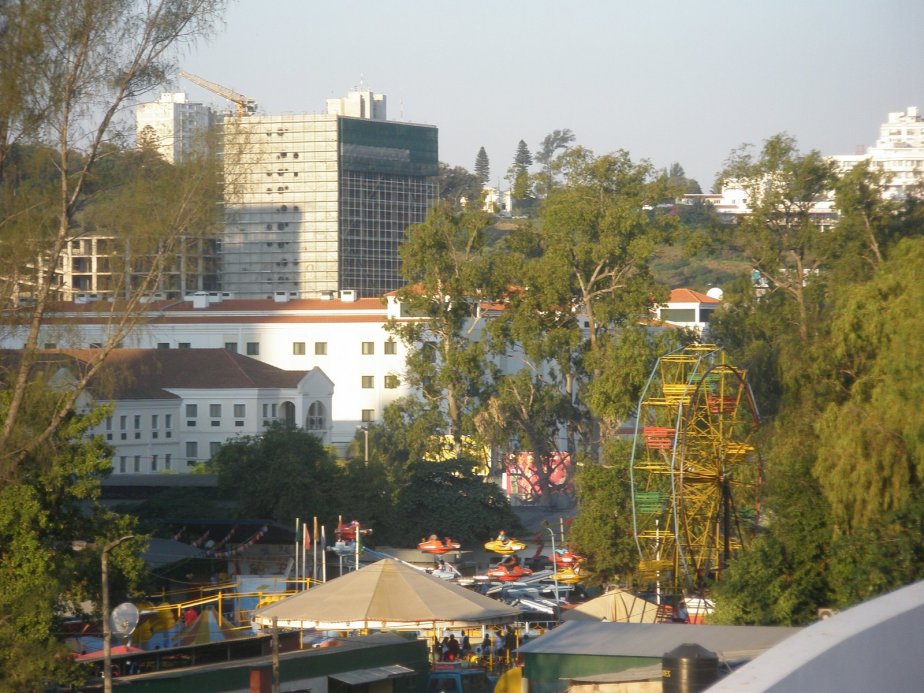
The Maputo based aid worker then took us to an odd sort of carnival hidden in what seemed like the middle of Maputo. It was randomly placed and not very large, but took me back to days of my earlier youth when we would visit the noise, lights, and crowds of the church carnival. We all were initially a bit shy about expressing our joy at the sight of children’s carnival games, but soon we were all reveling in the freedom from our assigned professional roles.

As we were the only ones at the carnival late in the evening, we had the whole place to ourselves. We all lined up and filled the bumper cars (carrenhos de chocque). The crackle of the electric wires, childish shouts of aid workers, and huge grins of pure joy made me realize that this should be a required exercise for all aid workers no matter if they are in the USA or based in a foreign country. We all need to take a step back every once in a while and just let ourselves enjoy being uninhibited by things as unimportant as bumper cars so that we can focus on important work.

A note for the future:

We all have to find what it is that helps us keep sharp and focused while also reducing stress, physical and emotional. The best thing to do is to schedule time when you can be unfocused, let loose, and enjoy time unencumbered by tasks, to-do lists, or responsibilities. My current job has a lot of frustrating client cancellations (currently the reason that I can sit and write this), long commutes with driving stress, and odd hours. As individuals who work in the field of aid, global health, and community development, we all want to love what we do, but the reality is that it is often a grind with harsh and far reaching social consequences that can cause us to resent a job. We all need to find those coping mechanisms that allow us to vent and rejuvenate our passions.


outsource to detroit: it’s like brazil

I caught a recent news brief from the Detroit News reporting from the Mackinac Policy Conference put on by the Detroit Regional Chamber of Commerce and was surprised by the headline.

“Outsource to Detroit”

That’s a bit different than Chrysler’s “Imported from Detroit” tagline. I’ve been following this idea and imagery of Detroit. I’ve written previously about how misinformed the image of Detroit is, some critics call this “ruin porn,” while others (some academic professors) call Detroit Michigan’s “third world” city.

For these reasons I am not too surprised to read a headline that is generally associated with sending jobs to developing countries (“third world”). The article highlights the growth of businesses moving into downtown Detroit because of the low cost of office space and the surplus of technical talent. The technical talent may be reference to wider metro Detroit and the many existing technology companies, but I know that I often see billboards in Detroit promoting web and technology job opportunities.

In an interview with Tim Bryan, GalaxE Solutions, the CEO said,

“A hundred percent of the work we’re doing in Detroit is health-care related and is coming from outside Michigan. It validates our model to outsource to Detroit.” […] enable[ing] GalaxE to serve customers for roughly the same cost as operating from Brazil.

I would not call this outsourcing, since the primary idea with outsourcing is that the job leaves the USA for another country where business is cheaper. There are plenty of examples of companies shifting locations because of varying economic climates in different States. Case in point, GM moving production from Michigan to Tennessee because of different business regulations and tax breaks. Brazil is an up and coming developing economy with its hand in many international markets – is it bad to be like Brazil?

Detroit is quickly becoming an technology hub for Michigan, which is an amazing reversal from its manufacturing past, as well as innovating for better health care. Wayne State University School of Medicine is leading incredible research projects to improve health care along with the Detroit Medical Center’s (DMC) nine specialized hospitals, Henry Ford Health System, and Michigan State University’s College of Osteopathic Medicine.

If this is the future for Detroit, then things are looking good. This is an excellent example of economic growth in a downturn via two growing industries: health care and technology. If Detroit lawmakers play the cards right, everyone in Detroit could get the best of both worlds: job creation and city revitalization. These are important steps to pay attention to for a better Michigan future.

is the IMF really like a credit union?

“You can think of it sort of like a credit union for countries”

This was the answer from Eswar Prasad talking to NPR‘s Planet Money about: “What is the IMF, anyway?” If the International Monetary Fund (IMF) is like a credit union, then democracy is like a dictatorship. Needless to say I am going to disagree strongly with Mr. Prasad and his possibly quick, false analogy to help others understand how the IMF works.

Macro/ Micro

One of the easiest differences between the IMF and a Credit Union is their scope. The IMF is very macro-economic focused. They intervene on international financial issues by lending to country governments, usually with conditions for deregulating and liberalizing markets so that they will be more open to foreign trade.  Better known as Structural Adjustment Programs (SAPs), these conditions had harsh negative effects on the populations of many developing countries as they were forced to repay loans instead of invest in health and education.

Credit Unions on the other hand are much smaller than the IMF. Some Credit Unions are large institutions, but on the whole Credit Unions are community focused. They offer great returns on invested savings, an international cooperative network of ATMs, and plenty of financing options that will bring you the most benefit as opposed to forcing you to take actions that might harm you or your family’s future.

Disparity/ Equality

Both the IMF and Credit Unions are membership style organizations. The difference is with representation.

IMF member countries are given a certain number of votes based on their “quota” with the USA as the only country able to block a supermajority vote. Much of the voting power is held by the developed, Western nations. Developing countries and emerging developed countries have a significantly smaller vote total. This representation continues to fuel inequality around the world as the rich get richer and the poor get poorer. The conditionalities associated with IMF loans generally benefit the economies of Western countries while harming those of developing countries. This unequal representation also makes it more difficult to reform the IMF because of the vote imbalance.

Credit Unions are based on one person – one vote. No matter how much or how little money you have in the Credit Union you are entitled to one vote. In the same regard the members of a Credit Union are the owners. Members’ one votes determine the policies, decisions, and leadership of the Credit Union. In the IMF, the leadership is appointed by the European Union (EU) leaders. Based on the voting disparities of the IMF the leadership is never someone who will make decisions that aren’t in the interest of the USA or EU. Not the best process to promote democracy coming from those who hold high the , if you ask me.

Monetary Capital/ Social Capital

In conclusion, the IMF and Credit Unions are far from similar. One is a multinational organization that is responsible for the world’s financial recovery as long as they will benefit the most developed countries, the other is a small-scale, democratic, cooperative financial institution that allows its member/owners to build serious social capital among their community. The IMF acts as a reactionary institution when it responds to financial crises around the world and often times perpetuates them with their SAPs and other programs. However, a Credit Union is a preventative financial institution bringing a community financial knowledge and resources before crises happen. Case in point, Credit Unions did not need any bailout and have never used tax-payer money to financially stable. The Credit Union system is self-sustaining and pushes a self-help community focus.

If our largest financial institutions, banks, the IMF, and World Bank adopted more cooperative approaches to finances and development, we wouldn’t see such disparity within our countries and communities, or around the world. A system driven by democratic process and cooperative power control can only lead to greater needs being met for a greater number of people.

middles classes & the globalization of #winning

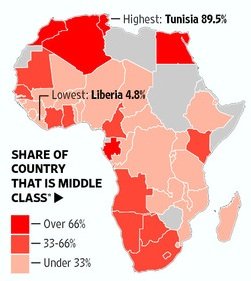
News agencies and development pundits have been hailing the news that one-third of all Africans are now categorized as middle class and can be compared/ compete with China and India’s middles classes. I see a number of problems with this news, the criteria used to define middle class, and the comparison between an entire continent of people and those of two large countries (both of which are increasingly involved in development in Africa). The recent report from the Africa Development Bank (PDF) says that:

34%, or 313 million Africans are now middle class (living on $2-$20 a day), after several decades without any change, a jump from 27% in 2000.

The Asia Development Bank published a similar report last year saying that 56% of the Asian population is living on $2 – $20 a day (PDF). This calls into question the definition of middle class. I consider myself middle class in the United States of America and my family has been characterized as middle class ever since I can remember. However, my family and I definitely live on more than $20 per day and I would never imagine being able to call myself middle class based on how much money I spend in a day. Its all about location. Here in the US, the term middle class is synonymous with the “American Dream.” It is not so much a hard and fast economic development term that we can use to compare ourselves with other countries, but rather a socio-cultural term that is used to compare ourselves to each other in our attainment of the “American Dream” (Western notions of success).

The Guardian cites MIT economists, Abhijit Banerjee and Esther Duflo, who point out that:

the middle classes are: likely to be less connected to agriculture; more likely to be engaged in small business activities; and benefit from formal sector employment, with a weekly or monthly salary, which enables them to adopt a longer-term perspective towards their finances.

Even with a more economic definition, nothing about the term middle class is set in stone and it varies widely between communities and countries (more economic definitions of middle class). The Guardian continued to note that $2 is the poverty line for most countries, so if you live on more than that you are middle class, but there is no in-between. This only continues to prove that “middle class” cannot be defined by economists or development pundits. If we look closer at the term in the United States, it has always been a fluid and flexible term that a wide range of the population wanted to use. The majority of Americans call themselves “middle class” even when many fall into “working” or “upper” class categories based on their income levels.

Middle class often means achieving higher education, holding a professional job position, owning a home, and having a well established lifestyle that is socially acceptable. All of these status symbols mean something different across culture and country of origin. Populations bend and shape their definition of being “in-between” poor and more well off by different standards that are generally unwritten. If we use the United States as an example again, the Pew Research Center conducted a study on social and demographic trends to find that there isn’t just one middle class in America, but four! The study found that people often held onto definitions of middle class that defied traditional stereotypes.

In conclusion, we are all middle class. Whether we want to call ourselves middle class or we truly fit the economic definition, the majority of individuals around the globe identify themselves in the middle class. There is a global middle class that has no financial boundaries, but rather includes all individuals who seek advancement, education, and something more than what they currently have. Economists and development pundits cannot create a definition of middle class for a continent let alone a country, nor can they compare the middle class of the USA to that of another country or especially a continent.

If we want to truly understand if 1 in 3 Africans are middle class, then there needs to be some serious work that includes understandings of success in various countries and asks a large segment of a country’s population how they identify their socio-economic status based on their cultural norms. Why tell someone that their success isn’t as important as another’s?

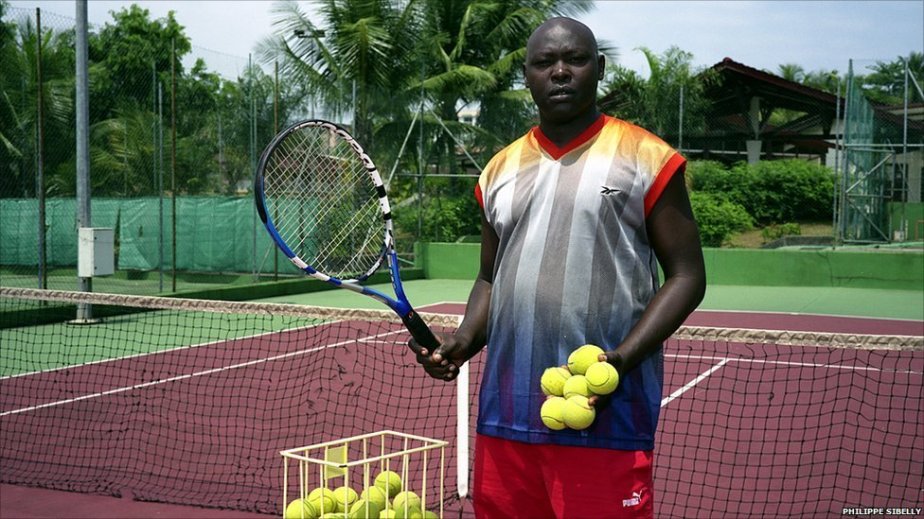
Photo credit: BBC News

More “African middle class” pictures from BBC News

education is more than a building

No more cups of any kind, number 3s, or beverage references. Let’s talk about root causes.

“Give a man a fish; you have fed him for today. Teach a man to fish; and you have fed him for a lifetime”

To build on this wonderful old adage (which was all too easy to add before writing anything original): If you give a community a school; they have a nice building until it decays. If you invest in an education system; they will have education for generations.

In a recent response to the Greg Mortenson controversy Rebecca Winthrop, Director of the Center for Universal Education at the Brookings Institute, gave a thoughtful response and criticism of Mortenson’s engagement methods on providing education.

As I had written yesterday, my biggest take away from the book was the idea that it is necessary to build relationships and community connections before entering into any international project. However, Mortenson may not have followed his own advice. Like many development critics, I don’t see the benefit of building a school structure without engaging teachers and education systems. There are many accounts of corporations and notably oil companies that have built schools for communities where they exploited resources – but those structures remain empty. A school is no good if there are no teachers or if the local education system is not consulted or included in the process.

This has been noted to be an all too common problem in development projects and one that I saw firsthand during my experience in Nicaragua. The US based non-profit that I worked for utilizes the same method as Mortenson’s CAI: increasing education by building schools. During my trip to Nicaragua the organization was actually building a concrete school structure next to an existing wood school. Granted this old structure wasn’t the most amazing, but the root cause of the lack of education opportunities in this community was not due to a lack of a school building, rather it was a lack of dedicated teachers and adequate training among other issues.

The Nicaraguan education system didn’t have much influence in rural communities. There was no accountability to the community school or to any educational body for that matter. Some teachers choose to come whenever they pleased and others had never been given any formal or informal teacher training  even though they displayed incredible dedication.

We need to address structures that perpetuate the problems that we see if our work is going to have a real impact for those we seek to help. By asking communities what solutions  work best, we can change the way “development” has been done in the past and focus on our own accountability.

Recommended articles:

Three Cups of Deceit” by Jon Krakauer (on Byliner)

Three Cups of BS” by Alanna Shaikh (on Foreign Policy)

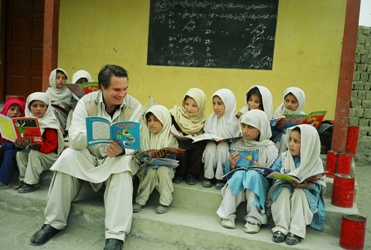
Photo credit: James Warden / S&S (from Empty Schools, Dashed Hopes Stars & Stripes)

four cups of tea

I had always been skeptical of Greg Mortenson’s work. Anyone who runs around the globe as a sole actor doing good works is opening themselves to lot of potential criticism. The Central Asia Institute seemed to be colonial in nature and mostly all I had heard about was how great Greg Mortenson was not about the level of success of his work. Working and studying international development, Three Cups of Tea was regularly suggested as recommended reading, but I held on to my skepticism and never ventured to read it. It wasn’t until I was working for a US based non-profit with the goal of building schools in developing countries and my older sister gave me the book for my birthday that I began to read Mortenson’s book in Nicaragua while building a school in a remote community.

It was on that trip that my fears of good intentioned non-profits that build schools came true. I witnessed first hand the manipulated stories told to better “sell” the non-profits’ good work. I saw a horrible lack of community engagement and understanding when the founder over stepped our welcome to reprimand the village leaders as if they were school children. I was appalled at the lack of respect for community members that occurred as well as the disempowerment of community members when it came to decisions related to the school building. As I was reading Three Cups of Tea I took away the powerful idea that it takes three cups of tea (or more) to really understand a community, its needs, and find the place where you can help without being an overbearing outsider. Mortenson did well to articulate the point that he went on multiple trips and met with many local stakeholders before starting construction of anything.

If nothing else I hope that Mortenson’s fame and best selling books spread this idea among the general population of people who would like to “do good” around the world. It is a complex task to take on development work and one that can’t be done lightly. Making a difference in the world takes time and patience. You have to develop relationships, meet with leaders and elders, and build credibility among a community as well as better understand community dynamics before you make a large donation let alone build a school or other structure.

Sadly there are many organizations doing more harm than Mortenson that pass under the radar because they know how to look good. Many international development non-profits can easily put on a good face by telling stories and publishing reports, but some are just as worthy of criticism as Greg Mortenson’s Central Asia Institute. We can’t continue to have organizations that seek to recreate the exotic travel and heartwarming “good” experiences over and again for their founders’ benefit. How can we better empower communities to work for themselves? How can we better educate future leaders to avoid these pitfalls of international development work? How can we learn to be quiet benefactors?