Polio Eradication Efforts: Militant or Ineffective?

Follow the Polio outbreak in real time with HealthMap

Smallpox has been globally eradicated since 1980, so why is the eradication of Polio so much more difficult? The World Health Organization (WHO) recently released that the Global Polio Eradication Initiative (GPEI) would be conducting a new targeted 15 country effort to vaccinate 72 million children in Africa. The new campaign follows numerous failed efforts of the past and reemerging outbreaks. Why does the African continent remain prone to Polio outbreaks that spread rapidly? Why did the organized campaign to eradicate Smallpox take only 21 years while Polio is going on almost 40 years?

Since 1796, when cowpox was used to protect humans from Smallpox, eradication efforts have taken place. It wasn’t until the WHO intensified the eradication of smallpox in 1967 that efforts were coordinated around the world. The Smallpox Eradication Program (SEP) was jointly run by the WHO, CDC, and National Ministries of Health in various countries. Doctors and epidemiologists from the US volunteered to help with the efforts. In many instances US volunteers were overbearing and controlling of their local counterparts. A report by Paul Greenough documented the use of intimidation and coercion in the final stages of the SEP. Foreign volunteers were sent to kick down doors (literally), force vaccination of those who refused, and fix the mistakes of local staff members (1995). These coercive tactics evoked resistance from local communities, but the SEP prevailed. The SEP was run in a structured, militant fashion, where individual human rights were overridden for the global public good. Similar issues with resistance have been seen in Polio eradication efforts, but responses to resistance have not been as militant. Could this be why Polio has continued to resurface?

The earliest documented case of Polio in Africa is traced back to 1580 B.C. in Egypt and still the virus continues to spread across the continent. The eradication of Polio relies heavily on National Immunization Days (NIDs), but these events are ineffective because they aren’t comprehensive vaccination efforts, positive cases are missed and some children aren’t vaccinated causing continued Polio outbreaks. Organized Polio eradication efforts began when the World Health Assembly launched the Expanded Programme on Immunization (EPI) in 1974, a program implemented through the NIDs . In 1988, the World Health Assembly said that by the year 2000 Polio would be eradicated and they launched the Global Polio Eradication Initiative (GPEI) to make it happen. Many prominent people and organizations put their support behind the program including Rotary International and Nelson Mandela, who in 1996 launched the “Kick Polio Out of Africa” campaign which vaccinated 420 million children. In the 90s, the UN Secretary General negotiated peace treaties to vaccinate in war-torn Liberia and Sierra Leone. Most recently in 2004, 23 African countries coordinated NIDs focused on Polio vaccination.

After all these efforts, Africa remains the only continent where Polio remains alive and well in multiple countries. A series of studies completed across West Africa showed that due to misconceptions about the vaccine, lack of adequate funding and corruption at the local level, and ineffective immunization campaigns, Polio has persisted on the African continent (Melissa Leach & James Fairhead, 2007). The year 2007 marked an outbreak of 25 cases in Angola which spread to 28 cases in the Democratic Republic of the Congo (DRC). In 2008, after an outbreak in northern Nigeria, where there have been vaccination conspiracy theories, spread to a dozen other countries, the WHO made Polio eradication their “top operational priority.”

Armed with a “more effective” version of the oral vaccine, the new GPEI organized effort across 15 countries hopes to eradicate Polio for good. However, just yesterday the New York Times wrote that the WHO reported 104 deaths and 201 cases of paralysis from Polio in the DRC. Is the renewed GPEI effort, launched Oct. 28, 2010, even working? Is eradication even a desirable goal at all, if past experience with Smallpox Eradication Program requires militancy?

Originally written for Americans for Informed Democracy (Dec. 4, 2010), where I wrote as a Global Health Analyst.
The History and Conflict of Food Access in Detroit

The food desert term has been readily applied to Detroit’s food system. However, the majority of academic and other research fails to take a comprehensive look at Detroit’s food system or its history. Following the New York Times article questioning whether the “food desert” term is just media buzz, I decided to share some of my initial findings in Detroit. I began researching Detroit’s food system about a year ago and started surveying grocery stores in Detroit 6 months ago because I could not believe the research coming out of the University of Michigan and other institutions that Detroit was devoid of fresh foods or healthy options. NPR recently published an article titled, What Makes a Food Desert Bloom, but fails to note the importance of food education on healthy eating to accompany increased visibility and access to healthy foods.

Detroit is a Food Desert or Food Swamp?

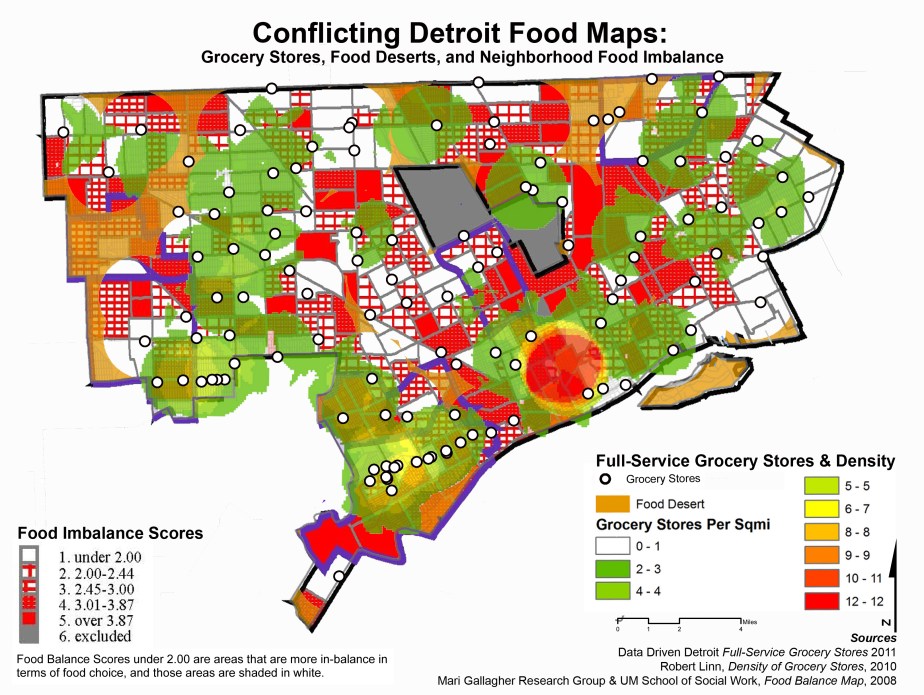
The map image accompanying this post is not the best illustration, but it is a complication of the best data sources on Detroit’s food system. The map represents the flaws and misunderstandings of outside consulting agencies and more general displays of either out-of-date or misguided information. Rob Linn has been creating some excellent maps of Detroit food stores data and now works with Data Driven Detroit. His maps are more current and show a cleaner picture of the actual data in Detroit. The surveys conducted by outside agencies have missed the mark and have published misguiding research to back up the “food desert” claim. The biggest problem with maps is that they are very “planner” focused and it is very easy to make broad claims based on maps. A recent PhD. out of the UM School of Public Health conducted research on African-American’s perceptions of food choice in Detroit and I’m very excited to read her findings. Understanding community perceptions and choices is going to be more important than placing food stores on a map.

Brief History of Detroit’s Food System

Currently, there is only one black-owned grocery store in Detroit where 4 out of 5 residents are African-American (DFPC Annual Report of Detroit Food System, 2009-2010). Detroit is a city with historic racial and economic divisions. These divisions often played out within the food system and its evolution up to today.

Small neighborhood grocery and convenience stores also hired few blacks. […] Few blacks worked where they shopped. Fewer felt any loyalty to neighborhood stores. Only a decade after the survey, inner-city grocery stores were among the most prominent targets of young looters. White-owned and -operated stores were the most prominent businesses in Detroit’s African American neighborhoods and the most convenient symbol of the systematic exclusion of blacks from whole sectors of the city’s economy. (Sugrue, Origins of the Urban Crisis, 113-114)

The title of “food desert” has been both accepted and refuted in Detroit. The majority of academic researchers lean towards labeling Detroit as a food desert, however others have come to that conclusion without adequate research into price and accessibility of foods the term is not helpful. Counting chain supermarkets and the 1 mile radius around those locations doesn’t give an accurate picture of food availability or access to quality fresh foods. Shannon Zenk (PhD ’04) while at the UM School of Public Health reported that Detroit was a food desert based on her research of “chain” supermarkets and their proximity to large numbers of residents. Her research found that, “supermarkets were farther away from African-American neighborhoods with the highest levels of poverty than they were from white neighborhoods with the highest levels of poverty (SPH Findings Spring/Summer 2009). This is an extremely inadequate picture of healthy food access and environment within the city.

Detroit has a long history of local grocers supplying neighborhoods while there have only been a few chain supermarkets to ever exist within the city limits. As of 1954-55, there were 69 supermarkets operated by Kroger, A&P, and other small local suppliers in Detroit. One of these small local suppliers was Food Fair, which in 1955 merged with Lucky Stores which operated as Food Fair markets under the Borman Food Stores Inc. In 1959, Borman bought up other smaller chains (State Super Markets, American Stores Inc., Lipson-Gourwitz Co.) and expanded to 46 stores in Detroit and Ferndale. In 1966, Borman announced the opening of three superstores under the name of Farmer Jack.

Farmer Jack was A&P’s most profitable division after the merger, but by the 2000s was having trouble competing with larger supermarkets like, Kroger, Meijer, K-mart and Walmart. Farmer Jack is recognized as the last chain supermarket to remain in Detroit before A&P put the stores up for sale and all locations closed in 2007. Kroger acquired twenty former locations while independent grocers collectively bought 21.

The flip side of the grocery and chain supermarket story in Detroit’s food system is that of community and urban gardens. Detroit Public School (DPS) student handbooks from the 1950s included a chapter on how to create a community garden. Urban farming and community gardens is a whole aspect of access to healthy food that needs its own post, so I won’t go into it here.


Detroit Food Map: access and environment

Contrary to popular belief and to oft-cited media, I have found that Detroit is not a food desert in its entirety. Detroit has a few neighborhoods and areas that lack a good number of options, but as a whole Detroit is a food swamp or as some say a “food grassland, rain forest, and jungle” (Rob Linn).

The families that I work with across Detroit tell me a similar story. They access food resources from a plethora of sources. One family told me that they try to get to Kroger whenever they can (outside Detroit), but otherwise get good fresh produce from a food bank since the Caregiver is out of work, they participate in the community garden, and visit an independent grocery store when they need to restock staple foods. Other family’s have told me similar stories of utilizing multiple food access points.

A food desert is defined as:

“any area in the industrialized world where healthy, affordable food is difficult to obtain. Food deserts are prevalent in rural as well as urban areas and are most prevalent in low-socioeconomic minority communities. They are associated with a variety of diet-related health problems. Food deserts are also linked with supermarket shortage.” (wikipedia)

Access is a key word when talking about food deserts and this is where many researchers count the number of stores and measure the distance from supermarkets to given populations. However, this often paints an inaccurate picture. There is more to access than the number of stores and how far away they are. Just because a grocery store is close by doesn’t mean that it has a huge fresh foods section or many healthy options. New research has noted that distance to healthy food may be psychological. This is where greater education on healthy food is necessary to create a more direct connection between people and healthy eating. I have been using the Nutrition Environment Measures Survey (NEMS) in order to attempt to get a more accurate picture of access to healthy foods. NEMS criteria focuses on comparing availability, price, and quality of foods between healthy food options and less healthy food options. Access is more than just distance and can include issues with the stores not stocking healthier food options, the quality of healthy foods available, and most importantly the price: is it cheaper to buy a bag of chips?

I have used the NEMS criteria to survey 20 grocery stores in Detroit (see Detroit Food Map) and what I have found has been entirely different from the large body of research that pegs Detroit as a “food desert.” All of the grocery stores had availability of fresh and healthy foods. Some produce sections were bigger than others and some carried more varieties, but all in all fresh foods were available and in good quality. The only items that were regularly low in quality were strawberries and cantaloupe. Likewise, I found in many stores that price could potentially be a hindrance for purchasing a healthier option, particularly with fruits, baked goods, meats, and juices. I spoke with a number of store owners and employees. Many said that they too have had a hard time with the “food desert” label and want people to know that they carry fresh foods. In some stores the owners noted that customers don’t regularly buy the healthier food options (i.e. ground turkey) or their fresh produce is purchased slowly, so it goes bad more quickly.

“It’s not enough. People always want more. We carry everything, many options, but people would rather shop at the super markets: Meijer, Wal-Mart. . . Is it because we don’t have the options? Look around!” – Staff Interview, Independent Grocer 02/02/12

My coworker, who has lived in Detroit her whole life and has been involved in improving the food system, has seen over the past 2 years an increase in farmer’s markets and community gardens in what she thinks is a response to food desert hype. Potentially, Detroit’s independent grocers have done the same and hopefully will continue improving their price, quality, and availability of healthy and fresh foods.

(image source)

Implications for HIPAA & Health Practitioners under the new Google Privacy Policy

Much worry, fear, and writing has already come out about Google’s new catch-all privacy policy. I for one am not surprised that they have finally created one privacy policy for their entire suite of services. Honestly, I had already assumed that Google was sharing information across its platforms about me. The one idea that really stood out to me in Google’s new privacy policy is that items in your Gmail and Google Voice would no longer be technically private. Working in a clinical research setting at a university-based School of Medicine with clients who are ensured confidentiality, I am worried. Isn’t Google violating HIPAA in some cases by sharing this information that we believe to be private?

Google and HIPAA

I am not the first to write about Google’s new privacy policy in relation to HIPAA (Health Insurance Portability and Accountability Act). The most important piece in understanding Google’s policy in regards to HIPAA is that Google says that it is not bound by HIPAA.

“Unlike a doctor or health plan, Google Health is not regulated by the Health Insurance Portability and Accountability Act (HIPAA), a federal law that establishes data confidentiality standards for patient health information.” (via Google)

This is unfortunately true. If you visit the Health and Human Services (HHS) website those bound by HIPAA are health care providers, health plans, and health care clearing houses. Google is none of these entities, so therefore it gets by. There is no way that any court of law would hold Google accountable in a HIPAA related case. Google is a private company that offers free services to users. By using their services, you don’t necessarily have the rights to control what happens to the services.

“if you’re not paying for something, you’re not the customer; you’re the product being sold” (via lifehacker.com)

Implications for Individuals

Many, including Congress, have come out against Google’s new privacy policy and especially as it relates to HIPAA and health information. Representative Mary Bono Mack worries that Google could track sensitive health information.

“[…] say you do a Google search for cervical cancer and you forget to sign out. Are you being tracked across all of the other products, and if so, that’s a violation of HIPPA. We’ve gone to great lengths in our society to protect people’s medical information. That question was raised.”

Google’s response is that those individuals can use Google services, like Google Search, without having to log in to their account. However, if you are also a Gmail user and maybe you email with your doctor’s office then Google has that information more directly linked to your personal data. Does Google violate HIPAA in that case? No, because they say (to paraphrase), ‘you don’t want us to track you, then don’t login.’

For individuals, the solution is to diversify online services or stop using Google. If you don’t want your information tracked and collected by one entity start using a different email service, use Word instead of Google Docs, and if you don’t want information linked to your specific Google account, don’t login and search for everything you want to know about. That isn’t to say that other companies don’t also track and collect our data, but at least it won’t all be in one place. The hard part is that Google is good at what it does and for many, myself included, it will be hard to let go of the ease of Google services.

Implications for Health Practitioners

For Practitioners the story is more convoluted. I work for a clinical research grant where clients are ensured of the confidentiality of their information, however I am a Google user; a dedicated citizen of the Google Nation. I love their services and the ease of connecting the information that I want to use. As a result I use Gmail to communication on sensitive client matters with my Supervisors and I use Google Voice to talk and text with the clients. With the new Google privacy policy, all this information fair game for them to index and share across their platforms.

Based on the correspondence between Google and Congress as well as their stated policy that they aren’t bound by HIPAA, the responsibility falls on the shoulders of the health practitioners. In our clinical research program every client gets a number to ensure the confidentiality of their data. I use client numbers with everything that I do on Gmail and Google Voice, but sometimes background information about clients is sent to my Gmail that could reveal their identities.

Recently the School of Medicine where I am working hosted a workshop for researchers to benefit from Google tools, such as Google Docs. I emailed the individual in charge of the workshop to ask how Google’s new privacy policy might affect the way researchers use Google services. The individual seemed to be less concerned than I and said she understood it as a, “take it or leave it” policy. If you are a researcher dealing with private health information and bound by HIPAA, then there are serious implications for using Google tools for your research project. Google may state that it is dedicated to the privacy between sender and recipient, but that doesn’t mean that your data isn’t fair game for Google to catalog and use for their own purposes.

The solution for practitioners is: Don’t use Google services or share confidential information within Google services because you have no way of ensuring confidentiality.

the limits of human research

*Please note, the names and details of program participants have been changed to ensure anonymity.

After working with one of my first families, we’ll call the teen Larry, I began to feel limited by the research aspect of my current program. Since it is a research program testing various protocols for successful weight loss, my options and actions were often limited in what I could or could not do to help the family. At the time Larry was the heaviest teen in the program. I remember he was late for our first session at his house because he had missed the bus. I saw him walking down the street and knew immediately that he was who I was waiting for. Larry had knee and ankle problems as well as hypertension at age 15. At the time he was the heaviest teen in the whole program.

I built a strong rapport with the family and really enjoyed going to their house twice a week to work with them. Larry‘s weight fluctuated often, spiking and dropping dramatically from week-to-week. The family often attributed it to the medications that he was taking that cause him to retain water. However, over the first half of the 6 month program, Larry had lost about 20 lbs. from his starting weight. His Mom reported losing about 25 lbs. from participating and helping Larry during the program. She no longer needed to regularly wear oxygen and could walk more often than she was previously able.

In the last two months, Larry began to gain the weight back. Since his weight fluctuated so much it was hard to tell if he was really gaining a significant amount or if it was just related to the medications. By the final session of the 6 month program Larry had returned to his starting weight. His weight loss is considered significant and for him to gain it back is a red flag for larger problems. Research shows that when lost weight is gained back quickly it is much more difficult to lose again. His Mom was worried, he was confused, and I was unsure what to do. I gave the family additional information about other programs that Larry could participate in, but focused on affirming the skills that they had learned and the successes they had over the last 6 months.

It was during the following couple of weeks, which turned into months, that I really began dissecting Larry‘s dilemma. He was a very bright student, had some nice friends who helped him be active, and a very caring mother and grandmother. He took on more responsibility than most because his Mom wasn’t very mobile and yet he was unable to maintain his success in the program. I began to think back to other issues that the family dealt with during the program. The major one that jumped right out for me was their access to food. Larry and his Mom were getting food assistance and usually shopped once a month when the Grandmother could drive them to Meijer, which was located in another city. The family mostly ate frozen dinners that Larry could heat up in the microwave.

Beyond Larry and his family’s motivations, their social and economic situation became their largest barrier. Since they couldn’t afford to purchase healthier foods because they would go bad before the month ended, they were somewhat stuck to buy foods that were cheap and could be frozen. Their lack of money to be able to be more financially stable affected their food security in a similar way. Larry also reported eating a lot more at the beginning of the month. This is common among families using food assistance. One study found

“[…] a corresponding decrease of 10 to 15 percent in food consumption over the course of the month, suggesting some recipients may eat well for the first couple weeks after they’ve shopped and then run low on food near month’s end. This kind of ‘binge–starvation’ cycle has been linked to changes in metabolism, insulin resistance and, ultimately, increases in BMI.” (2004)

Larry‘s Mom would often report that he had eaten all of some food after they returned from the grocery store. Further research has identified connections between obesity and food stamps. The research found that the majority of food assistance receipts went shopping once a month, right after the food assistance amount is credited.

“Obesity cannot be totally pinned on food stamps,” says Jay Zagorsky, a research scientist at The Ohio State University’s Center for Human Resource Research and lead author of the study, “but it certainly is related to how the program is structured.”

In this situation, regardless of how committed the family was to weight loss and helping Larry manage his obesity, they were economically stuck in a cyclical nutrition pattern that would negatively affect his weight no matter his level of motivation. Socio-economic factors will win out over motivations every time, no matter the intentions. This is where human research is limited because the cause for failure is not pegged on the systematic inequality related to racial minorities and food assistance programs, but rather it is placed on Larry and his family for being unable to keep up with the program guidelines.

I keep reminding myself that this research will be applied to other programs in the future. Those programs will be able to replicate tactics that were most helpful and hopefully help even more adolescents in programs with more room to address multiple issues: medical, social, and economic.

real life public health isn’t sexy

The field of public health does not lend itself to being glamorous or satisfying after a full day’s work.

I currently work as a Community Health Worker (CHW) in Detroit supporting a NIH funded grant using behavior change techniques to tackle childhood obesity among African-American adolescents.

Snapshot: Thursday, December 1st, 2011

After a meeting with my supervisor, I had three family appointments scheduled for the day. My first appointment was with a family that needed to be caught up after missing 2 weeks. We provide transportation for families that come into the office, so I had called them a cab. However, the cab company had not sent the cab after 45min. and the appointment had to be rescheduled for another day. My next appointment was with a Teen who obviously preferred not to be meeting with his Mom and me. We worked through topics on Hunger and Cravings, but had to finish early because I had another family appointment coming up. After waiting 10min., I called my last family to confirm and they had forgotten they were supposed to come in today.

I spent my 8 hours that day driving a lot and meeting with only my supervisor and one family. It was a long, trying day to only be able to check a few items on my weekly to-do list. The over-used quote that I have to keep reminding myself is:

“An ounce of public health is worth a pound of health care”

Hopefully somewhere down the line the families and Teens that I work with will someday use the skills and information that I share. All I can do is offer my knowledge and support for their efforts while reinforcing their positive changes.

Public health has become a buzzword along with the growth of the global health field. It’s great that health has become such a prominent topic of interest, but not everyone is going to save a life or change entire communities. Buzzwords don’t make the best career choices. It may be that you spend all day tracking people down and hoping some knowledge sticks, maybe you make posters for wellness events, or even get covered in dirt planting vegetables with kids who prefer to play video games. Public health isn’t sexy; work can be dirty, sometimes lonely, unappreciated and often unnoticed.

Public health is not a new field. It has been around for a long time, but in the media it has most often been portrayed by medical doctor drama series that always have to include twisted webs of personal relationships and hookups in broom closets from Boston to Kandahar.

Public health is intense and has its own great stories and dramas – can’t these stories tell themselves without the backdrop of casual sex and relationships gone wrong? When will the public be ready to watch a show that is about real public health?

The truth is that although public health may not be as glamorous as a television drama, but it is full of exciting adventures, dramatic endings, and stories of hope.

better health + growing population ≠ societal collapse #7billion

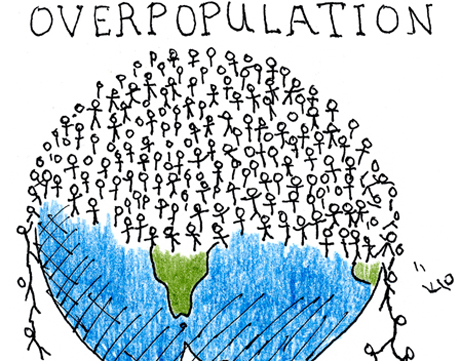
With each additional billion people on Earth, the collective news pundits, academics, development experts, and politicians freak out. Many pundits have been talking about the world’s population hitting 7 billion and how that relates to all the issues that we are seeing today. To many authors, talk show hosts, and even economic and development experts, population is the cause of everything. This is just fear-mongering and bandwagon journalism. The facts give a clearer picture.

If you’ve ever read Jared Diamond’s book, Collapse, the themes are all related to overpopulation and the Earth’s carrying capacity. We are constantly improving our health systems and keeping people alive longer than ever before in human history. As we grow in population there will be a breakdown in our social fabric and we will enter into international civil war over precious natural resources, like vegetation, water, etc. It happened on Easter Island, why can’t it happen on a global scale? In short, and to simplify: we are all screwed. I’m going to leave Malthus out of this conversation, but he is a good guy to read about if you are interested in population.

Environmentalism, Population Health, & Politics

Most of the pundits have talked about the impacts of overpopulation on the environment, but what about the impacts on health? This is an important area where the late Dr. Paul Epstein was world-renowned for his work connecting the growing environmental threats and their serious impacts on human population health.

By connecting climate change, exacerbated weather and environmental conditions, and the deep crises these create for the health of human populations, Dr. Epstein made the critical link between the health of our planet and the health of the people living on it.

Recent years have seen increased famines, droughts, and floods, loss of arable lands and increasing desertification, not to mention the inability of governments to respond to these crises. Some of Epstein’s work highlighted the increase of cholera after severe flooding and the increased range of malarial mosquitos as mountain tops warm up. Climate change and environmental issues are related to consumption, which is disproportionately carried out by wealthy countries consuming the majority of the world’s resources even with smaller percentages of total world population. Likewise, famines aren’t caused by too many people, but rather from bad government, violence, and global inequality.

The issues that many would like to attribute to the growing population are really fueled by politics. Population growth and climate change are above all else a political issues.

Fertility vs. Population Growth: (think incidence vs. prevalence in epidemiology)

Everyone needs to take a step back and look at the numbers. Population numbers are increasing with population growth increasing in a number of key countries, however we need to also look more closely at fertility rates rather than simply population growth numbers.

Many areas that have high birth rates also have high infant mortality rates, so it is not completely implausible that families would have a higher number of children to account for the poor health conditions their children might face and not survive. Likewise, areas with high fertility rates often see high infertility rates due to the increased risk to women of infection from multiple attempts to have children.This is where the debate about family planning and contraceptives enters the discussion.

Helen Epstein writes that if men and women have “frank conversations” that may be the best contraceptive. However, John Seager, President of Population Connection, offers a rebuttal that conversations cannot replace contraceptives. He notes that the need for access to knowledge and adequate health care is just as important. He writes,

“When women can control the timing and spacing of their childbearing, they can get an education and a job, and take better care of their own health and the health of their existing children. What could be more empowering than that?”

Population Control as Development

Following Word War II, population control became an important issue for the US to pursue around the globe. The  world food crisis in 1967 made Congress recognize the importance of population growth and it allocatd $35 million to USAID for population control activities. Today, USAID is single largest funder of population control activities in “developing” countries.

During the World Population Conference of 1974:

“Opposition came not only from traditional Roman Catholic quarters, but also from many Third World countries, which saw the focus on population growth as a way to avoid addressing deeper causes of underdevelopment, such as inequalities in international relations. […] India argued that ‘development is the best contraceptive,’ and criticized the high consumption of resources in the West.”

Many began calling for changes to the status quo, however no one asked why the needs of the poor weren’t being met in the first place. Glaring inequalities in distribution of income, land, and power were avoided. Politics came out on top as Western powers pushed “developing” countries, with the backing of international donors, to deliver family planning to the poor, “without fundamentally altering the social order in which they live.”

Developing countries and activists called for “integrated development” focused on addressing both poverty and population.

Solutions

Nothing is so cut-and-dry or simple when it comes to development, especially in regards to population health which pulls on issues ranging from: climate change, women’s rights, income equality, access to health care, infant mortality, family planning, and the list could go on. The population question touches on so many different issues that it only makes sense that health is at its core.

Seager makes good points about the need for women to be able to care for their own health and that of their existing children. Others have lauded similar ideas, specifically feminist groups who called for “voluntary motherhood” and the idea that unwanted children would become defective.

Recently, Bill Gates has touched on the issue of a growing population. He noted that a greater focus on infant/ child health could have a significant impact on slowing population rates and improving the health of populations around the world. As discussed in “fertility vs. population growth” – more surviving children will decrease population rates, in turn this would ideally improve the quality of health care available with smaller, healthier populations.

Gates pushes the idea that mobile technology can help to register new births and ensure that all children are vaccinated. However, the flip side of his optimism is the need to increase the capacity of health care systems to make this goal a global reality. Women play a critical role in this discussion and too often they are marginalized without the knowledge or resources to make changes. Women and health care systems need to be empowered to provide for newborns and children who will be the future of our world.

will big box grocers change access to food in Detroit?

You can quote me on this:

“more big box stores will not equal better food choices”

On January 20, 2011, First Lady Michelle Obama launched an initiative with Walmart and the Let’s Move Campaign to increase access to fresh and healthy foods. The program is supposedly bneing evaluated by the Partnership for a Healthier America, whose Chair, James Gavin said he would like to see Walmart double its US store count.

I don’t often shop in Walmart (actually I try to avoid it), but last month I had a reason to be in a Walmart store. Working in childhood obesity research and surveying food outlets for nutritional quality, I took the time to notice the advertisements and products on display. To say the least, none of the food items advertised or on display were healthy or fresh.

There were none.

Behavior Change & Food

My point is that more Walmart stores in “food deserts” doesn’t necessarily mean that more people are going to be eating healthier. I don’t doubt that Walmart making an effort to improve the nutritional quality of its food products and offering more fresh and healthy foods will have a negative impact, however it is going to take more. When a low-income family has the choice between the on-sale advertised frozen dinners or the larger amount of fresh vegetables they are more than likely going to choose the product where they get more for their money (or at least what seems like it).

“there needs to be more education, access, and a american cultural shift towards healthier eating”

Everyday I work with adolescents and their families on managing childhood obesity. We talk about making healthy changes to their food intake and often times we talk about how to shop for healthy foods on a budget. It is possible and varies in difficulty, depending on your situation. Some families that I’ve worked with went the entire six months of the program without changing much in their eating habits. Changing your food choice is not that easy.

Eating healthier is easier if you are wealthier, have greater options, and have been introduced to ideas of healthy eating from a young age or cultural norm. Classism in the slow food movement is another topic, but extremely relevant as we talk about access to healthy food, urban settings, and growing income inequality often reflected in racial disparities.

Grocery Stores in Detroit

The idea of having more big box stores address “food deserts” and the lack of healthy foods isn’t new. The idea easily makes sense; large chain supermarkets are better able to supply larger amounts of fresh produce on a regular basis if they want to. Save-a-Lot released a report on food deserts in April 2010 and has also signed on to First Lady Obama’s campaign.

For Detroit, Save-a-Lot represents a greater potential than Walmart to be able to address the need to greater access to healthy and fresh foods since there are already ten locations in Detroit, Highland Park, and Hamtramack. I have yet to be able to assess the level and quality of fresh food available at a Save-a-Lot store (coming soon).

Anyone following food in Detroit knows that a Whole Foods store is being built in the Midtown district, near the Henry Ford Health System, Detroit Medical Center, Wayne State University and on the way home for downtown workers leaving the city. This was not the step forward that so many people were hoping for when there was talk of bringing in a national supermarket. Whole Foods is a specialty food store that caters to a wealthier clientele (Midtown avg household income: $113,788), I only go there for wine and dessert. It may bring more fresh food to the Midtown area, but won’t help many Detroiters without access to healthy foods.

A new development with more potential to impact the Detroit fresh food scene is the re-purposing of a former Detroit high school into a Meijer supermarket. Meijer often promotes healthy food options, has a partnership to offer healthy kids recipes, and has a fairly well-stocked produce section.

Big Box vs. Small Grocer

Like many locations that lack necessities, people create solutions to address those needs. Detroit has a number of small grocers and food supply stores, not to mention the largest Farmer’s Market in the US. As the #Occupy protests address money in politics and the ills of corporations, we need to be mindful of where and how food is accessed. Food is a critical piece of our national health and unfortunately our national politics.

People’s needs should be placed over profit and neither ketchup nor pizza are vegetables!

following the money & the loss of primary care

Health statistics undoubtedly show the shortage of health workers and doctors around the world. Recently I wrote about the growth of hospitals in Detroit and the huge loss of primary care physicians. This is a health issue that is often associated with countries of the “developing” world, but the USA is facing a health shortage of a different kind: access to primary care.

Health financing has had the greatest effect on disparities in health care coverage as well as the structure of the health care system. Through our health care system, physicians have been incentivized to specialize as opposed to be a general medical practitioner. As technology has made medicine more efficient, it has not reduced costs, so “fees remained high, while the time and effort required to perform […] declined (Starr, 1982). The result was an increasing income disparity between physicians who specialized (Specialists) and primary care physicians (PCPs).

The advent of federal support for health care drove the income disparities between Specialists and PCPs. In 1946, the Hill-Burton Hospital Construction Act put $4 billion into the expansion of hospitals as opposed to ambulatory services (Starr, 1982). Ambulatory care services represent the single largest contributor to the increase of hospital expenditures and to decreased performance of the health care system in both the USA and many developing countries (Karpiel, 1994). In 1965, the start of Medicare and Medicaid allowed private insurance companies to continue their practice of providing higher reimbursements to procedural Specialists than to PCPs. Primary care was further marginalized when Medicare developed a policy that linked its teaching payments to a hospital’s level of inpatient, not outpatient, services. Medicare began giving extra payments to hospitals for residency training, pushing many hospitals to increase inpatient care in order to receive higher payments.

“Primary care brings promotion and prevention, cure and care together in a safe, effective and socially productive way at the interface between the population and the health system. The features of health care that are essential in ensuring improved health and social outcomes are person-centeredness, comprehensiveness and integration, and continuity care, with a regular entry into the health system, so that it becomes possible to build an enduring relationship of trust between people and their health care providers.”

“Primary Health Care – Now More Than Ever”
World Health Organization (WHO) Annual Report 2008

In a 2008 survey of Michigan physicians, 34% identified themselves as PCPs, which follows the national trend that two thirds of physicians are Specialists (Michigan Physician Profile, 2009). The report showed that numbers had not changed since 2005 and the number of PCPs entering the workforce equaled those leaving the workforce. The report also highlighted the rising costs of medical education and the debt that many young physicians will carry into the workforce. With this high level of indebtedness, why wouldn’t younger physicians look towards becoming a Specialist as opposed to a PCP with fewer financial incentives? A friend of mine studying to become a doctor noted that many of her colleagues were having conversations about whether to go into primary care or to specialize. Unfortunately the system seems to choose the path for young doctors as opposed to giving young doctors the choice to go into a medical field that they enjoy.

Health care reform has represents a huge win for those fighting for increased access to care along with the Affordable Care Act (ACA) providing a positive framework for many living in poverty. However, the largest reform may have been one that was minimally addressed by the ACA, including 10% bonuses for PCPs under Medicare and $300 million to recruit PCPs for underserved areas. I don’t think 300 million today goes as far as 4 billion did in 1946, nor does a 10% bonus equalize decades of subsidies for Specialists. The health care reform added $11 billion in support for community health centers, but some of that was cut in the 2011 budget deal. The inability of the current health care system to keep up with this new rising demand for PCPs on top of the increase of chronic diseases and an aging population that lives longer, represents the need for reform in our health care financing not just access to health care.

We have a health system that has subsidized specialized care for too long, taken health care to large technology driven hospitals, and limited the ability for new, young doctors to infuse our health system with much needed passion. The real health care reform should have included increasing support for primary care facilities (no cuts) and more for training.

If we want all people to be able to access health care affordably then we need to provide them with the necessary health workforce that can meet them where they are. For many urban poor the Emergency Department (ED) has become their primary care facility. Many individuals working in health care finance world note the cost of ED visits is covered by the premiums of the insured (roughly $1200-$2000/ year) .

Its exciting to see widespread support for increasing access for the uninsured, its amazing to see funding to bolster primary care facilities, but  if we are going to have young doctors who aren’t living paycheck to paycheck, then there needs to be a concerted effort to get doctors into those primary care facilities and greater incentives to join the growing trend in supporting community health through primary care.

too much health care in Detroit?

Detroit is a city where major landmarks are often its hospitals. The Henry Ford Health System (HFHS) operates three hospitals within the city limits and the Detroit Medical Center (DMC), recently bought by the private Vanguard Group, operates nine different health complexes. The St. John’s Providence group also runs two hospitals in the city. However, Detroit’s hospitals are just one side of health capacity in Detroit. The Detroit Wayne County Health Authority (DWCHA) lists thirty-six community health centers across the city, twenty of which are free or have a minimal fee to see a doctor. Not to be overlooked, Wayne State University’s (WSU) School of Medicine works with both HFHS and DMC as well as runs a number of health outreach programs for HIV, Diabetes, Asthma, Childhood Obesity, etc. to manage care for chronic conditions.

With such a wide array of health facilities and such a strong focus on health care it seems as though the population of Detroit should be one of the healthiest. Unfortunately, the socio-economic barriers faced by Detroit’s population leave it with the lowest numbers of individual with health insurance in the state, high rates of non-communicable/ chronic diseases, as well as a growing obesity crisis. From 2009 to 2010, in Detroit: median income dropped, numbers of insured decreased, and the numbers of those living below the poverty line increased. Likewise, the Michigan Department of Community Health (MDCH) doesn’t list all of Wayne County as a Medically Underserved Area/ Population (MUA/P), but much of the Detroit area has been given an MUA/P designation. So many health facilities, so little health care for the population.

American Public Media’s (APM) Marketplace and NPR’s Changing Gears ask if its health care overkill. With another new hospital proposed in Oakland County (next to Wayne County), politicians are hoping to bring in more jobs and revenue in the only sector that hasn’t been hit by the economic recession. “[…] there are already six existing hospitals within a 30-minute drive time that average occupancy is 55 percent. So it isn’t a hospital that’s needed by the community, it’s a hospital needed by one health system to capture market share from its competitors.” says Dennis McCafferty who represents a coalition of Michigan businesses and labor unions. Is it about the market or is it about access to care?

“Since about 1997, we’ve lost about 60 percent of our primary care physician capacity [in Detroit].” – Dr. Herbert Smitherman

As a result of the loss of primary care options, the cost of care is significantly increased for the uninsured. Over the past five years, Dr. Smitherman and the Health Centers Detroit Foundation, tracked 33,000 uninsured patients in Wayne County and moved 55% of them out of emergency rooms and into coordinated care through the Voices of Detroit program, which gave access to a primary care physician at reduced cost. The majority of patients are low income and uninsured, usually on medicaid. Dr. Smitherman says, “It is a very difficult population because often, when we want to adjust things and I want to prescribe a medication, they’re uninsured. People are literally having strokes and heart attacks because they can’t get access to a very simple medication. It is 50 times more costly to deal with that. It’s very frustrating as a practitioner that we don’t have the basic access to insurance products, etc. for people to cover their basic needs.”

With the Obama Administration’s health care overhaul Dr. Smitherman notes there will be added benefits for the uninsured.

About 56 percent of all those who are uninsured are people of color. Obviously, Detroit is 89 percent African American. – Dr. Smitherman

He notes that the many people who seek care in the most expensive environments: emergency rooms and hospitals, will have the opportunity to find a primary care physician instead of paying “10 to 20 times the cost” in the emergency room.

New options for the poor and uninsured are popping up across Detroit from the field of telemedicine. One such program is a partnership between CVS/Pharmacy and HFHS. CVS’s MinuteClinic’s, open 7 days a week and staffed by nurse practitioners and physician assistants, will have the added benefit of having the Henry Ford Physician Network doctors on-call. Henry Ford doctors won’t actually see patients in the clinics, but will consult with MinuteClinic staff as needed and will work with them each month to review patient charts. Patients who are visit a MinuteClinic and don’t have a primary care doctor will be given a list to help them find one. RiteAid is also launching NowClinic, which gives people a free call with a nurse or the option to pay $45 to talk with a doctor.

Governor Rick Snyder has called for better health and wellness across the state. Snyder’s proposal highlights the economic connections to a healthy population. He notes that everyone has a part to play whether business, nonprofit, or government.

Health is the foundation for Michigan’s economic transformation—it allows our children to thrive and learn, it readies our graduates for meaningful careers, and it permits our current workforce to grow and adapt to a dynamic economy. In this message, we lay the groundwork for a healthier Michigan, a Michigan in which residents of all ages prosper and contribute.

He has been innovative in hoping to create a database of children’s BMI’s to track the rise of childhood obesity and has called on the Michigan legislature to take action on a Michigan health insurance marketplace, where all can be insured to receive the proper health care. This seems to be the one area where Snyder isn’t cutting benefits for the poor or making it harder for them to access services.

To conclude, the health care landscape is rapidly changing across the State of Michigan and across the world. Many people are developing solutions to solve our lack of capacity in the health system through innovative programs and technologies. Politicians are on board, private companies are creating ideas, and nonprofit groups are making important connections for people without the right resources. What will be critical moving forward is to focus on patient needs as opposed to simple outcomes. People need solutions that they can control and maintain for themselves and their families. The future of health care must be collaborative.