the missing ingredients from Jamie Oliver’s #FoodRevolution

Since November 2010, when I started working with adolescents in the Detroit area tackling childhood obesity, television shows that deal with weight loss and healthy eating have become more interesting. I diligently watched The Biggest Loser and similar shows to re-examine the tactics they use and how successful they were.

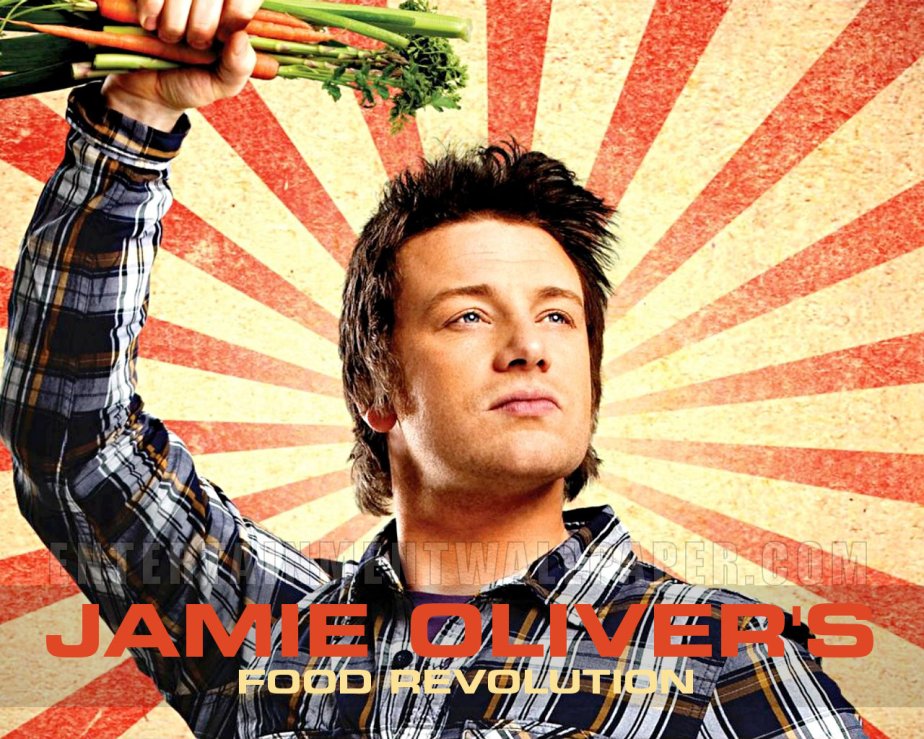
More recently I’ve been caught up in Jamie Oliver’s “Food Revolution” because what children and adolescents eat at school is a critical piece if the current trends of obesity are going to be reversed. I’ve been very interested in Jamie Oliver’s attempt to become a healthy food “rockstar” from the UK (sorry Jamie, you can’t compete with First Lady Michelle Obama). Watching the most recent season in Los Angeles, I can’t tell you how many times I yelled at the screen about how ineffective Jamie’s tactics were or how naive he was going up against an institutionalized system.

I don’t doubt Jamie’s good intentions or his passion for the work, but if this is going to be a real revolution then there needs to be some basic understandings of behavioral change and social change as well as community engagement. I’m not sure if this is just a case of making good TV by “making noise” vs. making social change by public health, but there is room for improvement.

Behavioral Change

With the recent release of new cigarette packaging and the tactics used on Jamie Oliver’s show, it has become obvious that many people disregard research in lieu of “making noise as public health.” Any first year public health student (or someone in close proximity) could tell you that the “Health Belief Model” (HBM) of making people change their habits by highlighting fears no longer works, especially among young people. The HBM relies on scare tactics, some of the best example are from old posters from the 1940-50s that feature skeletons, sharks, and death if you don’t immunize your child, cover your cough, etc. The posters and messages worked for the time period when people were scared of new health issues and followed the messages, but we live in a different time. People don’t respond to scare tactics or negative messages. This is true across the board: in politics, with non-profits, and especially within public health interventions.

The scare tactics that Jamie uses, predictably, have minimal impact on changing people’s minds or getting more people involved. People prefer to be told what is going right or what can easily be done to make things better. Messages that empower individuals and reinforce positive behaviors are more likely to receive a respond. People want to know that they have the ability to make the changes themselves. When Jamie has a classroom discussion with adults who are facing health problems as a result of their past bad eating habits and lack of activity he fails to realize earlier that this is something the teens are facing already with their own family members. Studies have shown that young people respond even less to HBM tactics like these, largely because out of all age groups young people like to know that they have control of their lives – and they do!

Tactics for Social Change

I know its a TV show, but one man cannot make a revolution happen. Any community organizer will tell you that it takes many hands and years to make real and lasting changes to systems and structures that are doing harm. Jamie Oliver stands in a great position to include more people, spread awareness, and organize communities to work together to change their political and educational systems for better school health. However, that is not what happens. Jamie is always surprised by the low turnout and minimal impact of filling a bus with sugar or getting upset with the LAUSD superintendent. Telling parents that they are doing everything wrong won’t create community buy-in.

It isn’t until the final episode that Jamie encounters a group of parents protesting high sugar flavored milk in the schools that a first real attempt to meet people where they are happens. There are many people who want a food revolution and they are already doing the hard work. The final episode is also where Jamie brings together a group of top chefs in LA to run a competition with school cooking teams. This is a great example of the necessary coalition building and community engagement that needed to happen closer to step one.

If you want to change the policies of structure of a system, then you can’t start at the top. The superintendent, as we saw, has the power to kick people out, but not change whole policies. Jamie needed to start by building relationships with people within the system who have more power to push for change. The cafeteria workers would have been a great start. When Jamie finally met some of them, they were overjoyed with his message and could have been  a big force for change in food preparation. The superintendent wasn’t on board, but maybe one of the Board members was sympathetic to the food revolution message and could have been an important ally inside. You have to work on smaller targets before you can take on your primary target.

Building a coalition of people both inside and outside the system that you want to change is critical to making real social change. Jamie kept trying to take on his primary target, the superintendent, as an outsider with no community backing. You have to start with the hard organizing work of bringing together other influential community members, workers in the system, and individuals with power inside the system in order to effectively push for change.

Community Engagement

Throughout the whole season it was painfully obvious that the community wasn’t behind Jamie’s antics, but there weren’t very many opportunities for collaboration. Many of the points I want to make about community engagement are already listed above, but I do have one key ingredient that was missing in Jamie’s outreach.

Listening. From Jamie’s first show in LA he was telling people what was wrong. He used a series of scare tactics about school meat by waving inedible raw pieces of cow in parents’ faces. It was gross and it made a point, but it didn’t give anyone the opportunity to get involved.

Thinking back between the first show and the final show, if Jamie (or his crew) had taken the time to LISTEN and find people who were already championing the cause of better school food then he might have had a more successful season.

Conclusions

Jamie ended this season by saying, “It’s not about me. […] We all gotta start stirring the pot.” I have more hope for Jamie Oliver’s Food Revolution after the final show where he did some community listening, some great community engagement, and even some coalition building. Maybe he is even beginning to recognize that the problem isn’t all on his televised shoulders, but it is shared across the community – and they want change too.

Here are a few improvements to tactics that could revolutionize the food revolution:

  1. LISTEN to a community before acting on their behalf
  2. Focus on systems change, not just people in power
  3. Practice patience: the problem wasn’t created overnight, its not going to go away overnight
  4. Use inclusive tactics: don’t reprimand or scare
HIV solution: decentralizing treatment & patient empowerment

At the core of successful health programs are powerful community systems. Whether they are strong local governments, community-based organizations, or just informal groups of individuals – these types of community centered systems keep health programs focused on serving people and meeting needs in ways that will be most effective for the community.

In what has been called a model for Africa and US health programs by CDC Dr. Kebba Jobarteh, Mozambique is leading the way in restructuring how HIV treatment and support is delivered. Most countries in southern Africa have very high HIV prevalence rates as well as difficulties in providing treatment to those who need it. While there are many people in need of HIV treatment, there is a critical lack of adequate health infrastructure, clinics, hospitals, and health workers, to deliver the necessary services.

Providing treatment is just the beginning of the battle. Once an individual starts treatment with antiretrovirals (ARVs) they need to continue to adhere to a regular regimen of ARVs. Access to the medications and clinics along with regularly taking ARVs present a two-fold problem in areas where health services have long been weakened by a plethora of misfortunes: apartheid, structural adjustment programs, lack of development, under-investment, etc.

The new model developed by Doctors without Borders (MSF) puts communities at the forefront. By creating “patient groups,” treatment is decentralized to small health clinics in communities. This model spreads the responsibility to communities where there is the greatest need. The patient groups act as both a delivery system for ARV drugs as well as a support network for those with HIV. In many rural areas, people don’t have the time to travel long distances for extended periods of time to get their ARV drugs. The members of a patient group take turns traveling the distance to the health clinic. Likewise, members record whether each member of their group has taken their ARVs regularly and on time, which is then reported to the health clinic.

The model is very similar to that of “community health workers” (CHWs), who are members of the community that share knowledge and provide services when health systems can’t. As a solution to the inadequate health systems seen around the world, the “patient group” model puts those who need health services in control of their own treatment with the backing of a support network from their community. This may be a more effective model than CHWs since those who need treatment are providing the treatment. What better way to understand patient needs than to listen to the patients?

The CHW model has been popularized by organizations such as Partners in Health working in communities in developing countries. The model has now spread to urban areas and “developed” countries around the world. The patient model is yet another example of rural solutions from developing countries setting the bar for gaps in health care treatment in developed countries. A patient-centered/ people-centered approach to health delivery will make health systems more effective and successful around the world.

Featured on the Americans for Informed Democracy Blog, where I’m writing as a Global Health Analyst and reposted by Partners in Health.

dictators and democracies for health

Politics can have serious consequences for health. We need look no further than the US legislature for examples of the politics of health. The recent deeply partisan budget cuts threatened women’s health across the country and debates over the Health Care Bill easily demonstrates a democracy’s inability to provide basic health for everyone in its population. Other examples come from the USDA’s support for corporate farms over the population’s health needs amidst the growing obesity epidemic. Some of the best examples of health being politicized come from our own government, yet we rarely have to think about how the form of our government and political system has an impact on our health.

Whether it is a democracy or a dictatorship, politics influences health. Cuba has long held a spot as one of the top national health care systems as well as one of the top countries for medical education. Their system is completely government-run with no private companies controlling hospitals or clinics. Cuba has been innovative with their computerized system for blood banks, patient records, etc. However, their government is a dictatorship and this has created some negative effects on health (depending on who you talk to). During the 1990s, the loss of Soviet subsidies combined with other political and economic factors created a countrywide famine. Manuel Franco describes the Special Period as,

“the first, and probably the only, natural experiment, born of unfortunate circumstances, where large effects on diabetes, cardiovascular disease and all-cause mortality have been related to sustained population-wide weight loss as a result of increased physical activity and reduced caloric intake”.

Recently we have seen the horrifying impacts of dictators and authoritarian regimes crushing their own health care systems at the expense of their populations. In Libya, health workers have been shot at, ambulances have been bombed, and hospitals have been razed. Gadhafi has ruled Libya since leading a bloodless coup d’etat against the then King of Libya.

In nearby Syria, similar atrocities have been committed. A recent video from the protest against the Syrian government showed a pro-government Doctor beating an injured protester out of an ambulance. The main hospital in Deraa has reportedly received 37 bodies of protesters killed. Syria is officially a republic with a constitution and elected leaders. The real story is of a country run by one party handed from father to son that has been governed under “The Emergency Law” which suspends constitutional protections since 1963.

Chris Albon, author of Conflict Health, wrote an informative piece on how the protests in Bahrain are centered on the health care system. Protesters seeking refuge in the hospitals have been denied treatment by government troops and ambulances have been blocked. He notes a new report from Doctors without Borders that says, “the government has attacked and militarized the health system, making protesters and bystanders afraid to seek treatment.” Bahrain is a constitutional monarchy where people have long protested over their lack of personal rights and freedoms.

In another example of the difficulties of democratic politics to support health, Nigeria’s recent elections have fueled intense fighting across the country. Hospitals reported that over 300 people were seen for bullet wounds. The ethnic and religious divisions in Nigeria have long plagued efforts to build a unified democracy. Nigeria’s history of military rule and oil wealth has also exacerbated these divisions. When a democracy can’t hold elections without widespread violence, how can they provide health for their people?

Both dictators and democracies have the potential to instigate situations that have serious health impacts. Whether it is frivolous debate or armed conflict, the politicization of health has lead to serious health deficits around the world. No matter what country you live in there is always room for development when it comes to providing for the health of a population.

Featured on the American for Informed Democracy Blog, where I’m writing as a Global Health Analyst.

when conflict health becomes military tactic?

From refugee situations to border disputes, health crises that arise as a result of conflict are unfortunately quite common. Conflict health disrupts the ways that people access resources like food, water, and medicine. On the other hand, conflict health creates the circumstances where diseases spread, people are needlessly killed, and others are critically injured. These horrible results of conflict health are compounded by the destruction of infrastructure: roads, hospitals, etc.

What happens when conflict health becomes a military tactic? Since Medieval times (and before) armies attacking opposing castles would launch disease infested animal carcasses over the walls. In the 1800s, the US military gave smallpox blankets to indigenous North American groups in order to destroy their health and kill their populations. During apartheid in southern Africa, South African forces supporting RENAMO in Mozambique targeted health clinics and hospitals to cripple the health and infrastructure of the population.

During the World Wars, medics and vehicles with a red cross weren’t supposed to be targeted because they weren’t carrying out military actions. I had thought this idea was fairly widespread and that mercy was shown to health providers in times of conflict.

Recently, we have seen the complete opposite during the Libyan conflict. Libya’s pro-Gadhafi forces have targeted those attempting to provide health services to protestors and the population. In the early days of the protests it was reported that the military was entering the hospital to dump out blood supplies so that injured protestors could not be saved. In similar actions, Red Crescent medics and ambulances have been shot at, Colm O’Gorman, executive director of Amnesty International Ireland, said:

“This was a deliberate attack on medical professionals, who were wearing full medical uniform and arrived in two clearly marked Red Crescent ambulances.”

Ambulances have been bombed, The rebel spokesman confirmed that

“Gaddafi’s forces shoot three ambulances, killing two drivers.”

The Misrata hospital has been a flash point of intense shelling and fighting by Libyan forces. The hospital has been bombed from the air, shelled by tanks, and overrun by pro-Gadhafi troops.One person inside said,

“heavy tanks for Gadhafi troops start attacking the hospital – the bombs falling here 20 meters (66 feet) around us.”

The health of the Libyan people is under seige as much as the repressive dictatorship of Gadhafi. Many countries including Egypt, Morocco, and the UAE have established military field hospitals to be able to help the wounded who are leaving Libya. UNICEF is deeply concerned about the impact of the conflict on children and has distributed emergency health kits which contain enough drugs, medical supplies and basic medical equipment to cover the needs of 60,000 persons.

The conflict in Libya, through the blatant attacks on health providers and facilities, has demonstrated a new level of disregard for the basic health of a population. This is an obvious example that Gadhafi must be removed from power if the Libyan people are to regain their health and livelihoods.

Featured on the Americans for Informed Democracy Blog, where I’m writing as a Global Health Analyst.

privilege is a key determinant of health

In our world of abundance there are growing areas of scarcity, our urban cities. These growing areas of scarcity once used to be bastions of wealth, but are now best known for their decaying infrastructures and lack of resources.

In some cases urban cities have faced industrial decline, in others its an issue of poor residents being marginalized. Either way, the health disparities that accompany low-income and minority communities is abhorrent.

One of the top health indicators related to privilege that can be seen in these communities is access to healthy food options. From Los Angeles to Detroit to Philadelphia, various communities lack basic nutritional resources like fresh produce and as a result have been disproportionately hit by health conditions related to lifestyle such as diabetes, high blood pressure, and obesity.

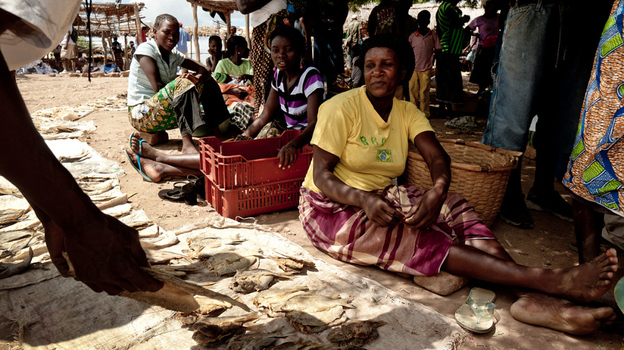
In the Ramona Gardens projects of Los Angeles, residents have to travel 3 miles by bus to reach the closest supermarket for fresh produce. The other small shops in the community just can’t stock as much as larger stores because they don’t sell the same quantities or they would have to charge higher prices. The health impacts such as hypertension and childhood obesity noted by a free clinic in the community show how critical access to healthy food options can be. The Ramona Gardens project is a great example of privilege playing a role in the health of low-income and minority communities by way of accessibility of resources.

photo credit: Dr. Hillier (NPR)

Similar issues have been found in black, low-income communities of Philadelphia. Like many urban areas, grocery stores fled to the suburbs where there was more space for larger stores and safer neighborhoods, not to mention higher paying customers. As a result of a community mapping survey, almost 20 supermarkets have opened in Philadelphia with the help of state funding. This brought access to healthy food for many low-income communities in the city.

As recently as 2007, large grocery stores have pulled out of Detroit. Not many have attempted to stay and Farmer Jack was the last standing. Detroit is often called a “food desert” because it lacks a major chain supermarket. The problem is not necessarily a lack of supermarkets, but rather the scarcity of healthy food options. Martin Manna, the Executive Director of the Chaldean American Chamber of Commerce of Southfield said,

“There usually is a market within walking distance of nearly every area of Detroit. It might not be a supermarket. That might be why there are so many people eating potato chips rather than wholesome foods in Detroit.”

Other Detroit residents have noted the lack of options at Detroit stores. Some stores claim to be serving a “black clientèle,” but  Gordon Alexander, who lives on the East side, says its just an excuse for stocking bad quality goods. This is a perfect example of racial privilege compounding income disparities when it comes to healthy food options in Detroit.

Our world of abundance needs to be able to serve everyone. There should be no reason that low-income communities struggle to purchase fresh produce or healthier foods. We can’t allow fast-food chains to make profits in the “marketplace of the poor” and add to the health disparities of minority communities. If anything, we should be able to find a way to offer healthy food to all citizens of our country regardless of race, income level, or location.

Featured on Americans for Informed Democracy Blog where I’m contributing as a Global Health Analyst.

bicycles are for global health

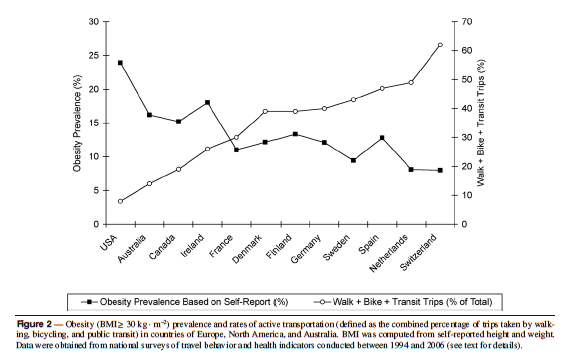
In many cities across the US, cycling is growing in popularity and local governments are working to implement bike-friendly urban planning initiatives, but is it growing fast enough? The US ranks first in the world for percentage of population that is obese (34% for adults age 20 and older). Not surprisingly, the US also ranks near the low end for bicycle usage with 1% or less of its population using a bicycle.
Graph (above, Figure 2) from: Bassett, Jr., et al.,

Walking, cycling, and obesity rates in Europe, North America, and Australia, Journal of Physical Activity and Health, 5, 795-814

Bicycles have been around for a long time. There is a sketch for an early bicycle design in one of Leonardo da Vinci’s pupils’ notebooks from 1493. Over the years bicycles have been upgraded and modified, moving from being a luxury of the wealthy to the transportation of the masses. The advent of cars slowed bicycle usage in industrialized countries, but in less economically developed countries bicycles are still a primary mode of transporting people and goods. Likewise the production of bicycles has remained nearly double that of cars.

For many countries bicycles are at the front lines of public health, they just may not realize it. The US has been watching a steady rise in obesity rates as a result of inactivity and unhealthy diet choices. Many states and cities are working to implement programs to increase bike usage including: Rails to Trails projects, Bike sharing in Washington DC and Nashville, as well as increased bike lanes linking residential areas to commercial zones. These programs will all have a big impact of the health of the US population. The CDC states that the number on strategy for increasing physical activity is shifting from car trips to walking or biking. Bicycling Magazine notes that new bicycle commuters can expect to lose up to 13 pounds their first year of biking to work.

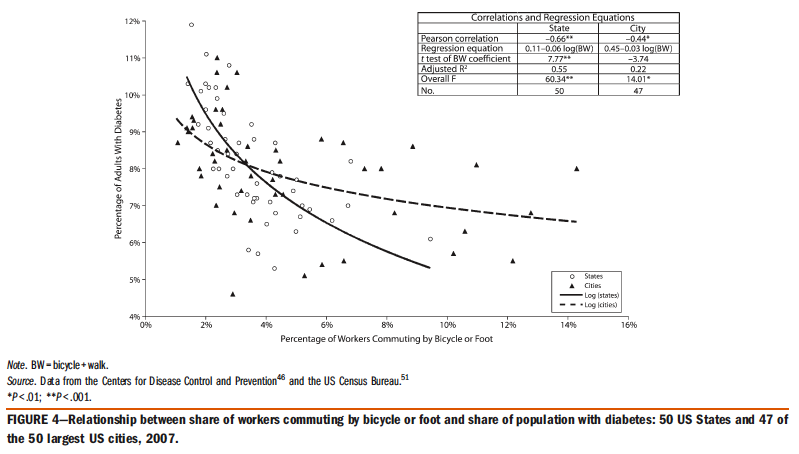
Graph (above, Figure 4) from: Pucher, J., et al., 2010

Walking and cycling to health: A comparative analysis of city, state, and international data, American Journal of Public Health, published online ahead of print

The benefits are huge, but that doesn’t always make it easy for people to jump right on a bike. A recent study led by Dr. John Pucher of Rutgers University found a direct correlation between percentages of adults with diabetes and percentages of commuters biking or walking to work in 47 of the 50 largest US cities (Walking and Cycling for Health, August 2010). To state the obvious, the increase in programs that promote bike usage and the increase in people biking will have a very positive effect on the health of populations

However, the US isn’t the only country working to get its citizens moving. Copenhagen (Denmark), known for being a biking city, launched “You won’t believe it… You’re safer on the bicycle than on the sofa!” A campaign run by the city’s Public Health office, their goal was to get more people biking to work instead of taking their car for a short trip. The campaign told Copenhagen residents, “Lack of movement in everyday life is harmful to health, while physical activity keeps the body healthy. Daily exercise for at least 30 minutes prolongs life by up to 5 years, and cycling can thus help to prolong life.” Even as a strong biking city even Copenhagen felt the need to better educate and mobilize its population. As can easily be guessed Denmark has a low rate of obesity at 9.5%.

In “developing” countries of the world obesity rates aren’t the greatest health risk, nor is low physical activity often a common unhealthy lifestyle. The health risks in “developing” countries are often related to access to health services and emergency transportation. Surely this isn’t an area where bicycles can have an impact!

In many low resource setting around the world, Community Health Workers (CHWs) travel from village to village, home to home to deliver health education and services. In many places CHWs rely on bicycles as their only means of getting from one place to another. Bikes Without Borders highlights the work of CHWs in Malawi utilizing bikes to increase their effectiveness and to help more people. Bicycles for Humanity collects almost 50,000 bikes a year and sends them to organizations that distribute them most often to healthcare workers and women. Since women do a majority of traveling in “developing” countries, a bike can help them to transport themselves, water containers, and goods to market.

Bicycles have even been modified to serve as ambulances in areas where there is no emergency transportation. The Bicycle Empowerment Network (BEN) in Namibia has implemented a very effective model for faster transportation where there is none. Drivers of the bicycle ambulances come from local organization and they receive training on use and maintenance.

Whether it is in the post-industrial cities of the US, modern cities of Europe, or in some of the world’s poorest regions, the simplest transportation technology can have huge impacts on the future health of our population.

Featured on the Americans for Informed Democracy Blog, where I’m blogging as a Global Health Analyst.

ambulances run in the family

Lights and sirens, high speeds down the expressway, ER doctor drama on top of insane accidents, not to mention Grey’s Anatomy – behind all the loud noises, dramatic depictions, and hit television shows there is a lot to learn before entering the world of emergency medicine.

On September 1st (the same day Nichole started her MPH classes!), I began an Emergency Medical Technician (EMT) course with Huron Valley Ambulance in Ann Arbor. I have longed to have more advanced medical knowledge and skills and this seemed like the perfect avenue. The story of my medical interests begins with my grandpa.

During World War II my grandpa, Myron Schlott, served as a Navy Medic serving in the Aleutian Islands, visiting Hawaii and Australia, and finally on a submarine. In the above picture he is standing on the right with his arms crossed. Behind him is the ambulance that he drove. My grandpa was an important figure in my childhood, Scouting, and in the development of who I am today.

My grandpa was also a strong supporter of my project to fund an ambulance for a rural health center in Uganda. From that project and my trip to Uganda I gained a serious understanding of the need for emergency transportation and medicine in Uganda and at home.

Since the 5th grade I’ve been first aid and CPR trained through the Red Cross and the Boy Scouts, which included: wilderness survival, back country first aid, and cold weather survival training. Last year I completed a Wilderness First Responder (WFR) course with the Wilderness Medical Associates (WMA) and thoroughly enjoyed it.

I knew this was the right next step for me when my fiancee, Nichole, told me that I was getting excited about taking vital signs and blood pressures. Thankfully I have only had rewarding experiences with ambulances thus far and I can only see it continuing to be positive.

A desire to help others was instilled in me at an early age and I can only imagine that is why I have a strong desire to get more involved in medicine.

How many of you reading this are currently involved in or studying health care, medicine, etc.? What are you doing and where?

ending charity: alone, is not the answer

>

“Giving in its purest form expects nothing in return.” – Anonymous

There are a lot of confusing buzzwords being thrown around these days: ending charity, dead aid, patient capitalism, impatient optimists, and investment over aid. What does it all mean?

My initial thoughts on this subject were spurred by zyOyz founder Steve Jennings’ repost of an article titled: “Charity alone not the answer to tackling poverty”. Well I agreed with the article’s basic premise that just giving money is not the only solution or the best, I was troubled by the article’s absolute statements that business models and capitalism will save the world.

The article, reposted from the Financial Times, notes the work of the Acumen Fund founded by Jacqueline Novogratz, which invests in small businesses with a social impact termed as “patient capital.” It has become a highly successful model, however Novogratz is quoted as saying: “We need creative approaches to reinvigorate capitalism and make it more inclusive.” The most inclusive business model that I know, with high degrees of success, is the cooperative model based on needs of those involved, inclusion, and participation. Looking at history, capitalism has generated exclusion: great amounts of wealth for many people, but it has also perpetuated extremely flawed systems that create great degrees of poverty for many people. The evidence is in any major city where the consequences of capitalism lay bare the desperation of good people who are left with nothing.

At the root of the article, “Charity alone not the answer to tackling poverty,” is the long-running debate on whether investment is more effective than aid. Professor Bill Easterly made popular the fact (through his book, “White Man’s Burden”) that over $1 trillion in aid has been given to Africa over the last 50 years with limited positive results, Dambisa Moyo has termed this “dead aid” and calls for a complete end of aid to Africa. Others like Bill and Melinda Gates, who have given vast amounts of aid (which they often call “investment”) to Africa with their foundation, label themselves as “impatient optimists.” They are hopeful for the future and want more done at the present time.

However, there is a problem with their impatience that many have critiqued. Impatience tends to push solutions that are ineffective. Ian Wilhelm gets further into this topic in a blog about “irrational aid.” In the post he writes about Alanna Shaikh’s critique of ineffective aid, such as outdated pharmaceuticals and medical equipment that has no use in the field. This argument is countered by Isaac Holeman’s disagreement that well that aid may be irrational, it provides immediate personal stories of need to bring in more donors. I have to agree with Alanna in saying that this irrational, possibly impatient, aid does more harm and basically no good.

How have we now moved from decrying the failures of charity and aid to highlighting the benefits of business models and the capitalist system back again to smiling about greater benefits of monetary investment in people and ideas? Where is the line drawn between investment and aid? As far as I can tell it is mostly semantic. Isn’t aid when transparent, effective, and driven by best practices an investment? Giving an investment is essentially the same as giving aid or charity.

Investment is the buzzword used by social enterprises, microfinance, and has become the new fad in international development organizations. I think that it is important to make a distinction between what is effective and what is not. Aid can be very effective and investment can be very ineffective. The reverse is also true. Where does effective aid change from being a type of investment? When experts talk about the broken aid system do they forget that the broken aid system is merely a reflection of the broken financial system. The same interests and individuals who have run financial systems have run foreign aid systems.

The real issue in this debate need not be if businesses are better than charities or who’s money is better spent. What is most important needs to be the question of, “How?” The systems, structures, and practices that implement aid and drive investment need to be cooperative, inclusive, needs based, and people-centered – in one word: effective. If you are looking for a return on investment (ROI) or accolades for your donated or invested dollars, then maybe you should reconsider why you give?

Written for the SCOUT BANANA blog. 

the coming revolution in african health care


african power fist Pictures, Images and Photos

Before you have anything else, you have your health. Hopefully if you have nothing else, at least you have your health. Unfortunately, for millions across the African continent this is not an absolute fact. Even more unfortunate is the fact that many Africans have no ability to change their health status. They are trapped in a system that is driven by Western market based, profit driven health care systems. As the failures of Western development practices come to light, alternatives to what has been are becoming increasingly visible. These alternatives will form a revolution in African health care delivery. This revolution will be fueled by health care delivery models that will give local communities agency in the provision of their own health care. Community-based models involving cooperative financing, proven para-professional training, new information technology, and social enterprise for the social good will drive the revolution in African health care. People will be able to determine for themselves, their level of health.

What does “Health” mean anyway?
This is a question often left to remain ambiguous. For the purposes of my writing I will provide a comprehensive view of “health” and all that is entailed in sustaining and maintaining health. “Health” in all instances will refer directly to the “basic needs” of a person in regards to health care.

Healing, like health, is obviously rooted in the social and cultural order. […] To define dangerous behavior, and to define evil, is to define some causes of illness. As the definition of evil changes, so does the interpretation of illness. To understand change in healing, we must understand what it is that leads people to alter the definition of dangerous social behavior. It can easily be accepted that health and healing in Africa are shaped by broad social forces.

As Feierman and Janzen state, health (and healing for that matter) are directly linked to social forces. If a comprehensive understanding of health is to be understood, it must be studied in the context of politics, economics, and other societal structures.

Health is defined by the World Health Organization (WHO) as, “a state of complete physical, mental, and social well-being and not merely the absence of disease or infirmity.” The WHO and many other international organizations recognize that this broad and encompassing definition of health. Where this definition becomes ambiguous is what qualifiers meet, “a state of complete physical, mental, and social well-being.” In 1978 the WHO made primary health care its number one objective with the Declaration of Alma Ata. However, even this statement had no clear definition of health or its qualifiers.

Feierman and Janzen provide a more clear definition of the qualifiers of health in the preface to their volume: The Social Basis of Health and Healing in Africa,

[…] it [health] is maintained by a cushion of adequate nutrition, social support, water supply, housing, sanitation, and continued collective defense against contagious and degenerative disease. Such a view is necessary if we are to understand those contexts in today’s Africa where health levels deteriorate, and where they improve.

These authors provide a complete set of qualifiers, or “basic needs,” of health that can be researched further to understand where political, economic, and social structures interfere with sustaining and maintaining health and where health care is inadequate.

Health care should thus be understood as the system and structure that works to provide the above defined “basic needs” to each individual. Often this role falls to governments, but sometimes is taken up by communities and organizations when government’s fail to provide these basic needs.

This blog series will cover four key areas identified that will fuel this revolution in African health care: cooperative financing, para-professional training, information technology, and social enterprise. SCOUT BANANA works to tackle social medicine (social, economic, structures) while enabling others to provide medical services. Be sure to follow closely to learn more!

Written for the SCOUT BANANA blog.