hangin’ in joburg

If you have been following this blog, I apologize for the extended interruption. The last post that I wrote was on the xenophobic violence, I was not a victim of that, no worries. The place where I am staying has very sporadic and unreliable internet, so my blogging and picture posting has been slowed because of that.

Short update: The xenophobia was near where I was staying (10km away), but never reached Zonkizizwe. I am still doing great and working hard at the VVOCF center for HIV/AIDS affected children. Yesterday was Zonke Testing Day, which was a huge success. Tomorrow I am leaving early in the morning to visit a Peace Corps friend in Mozambique.

Be sure to check back in later to read about the many adventures, success, and difficulties of my summer along with all the great pictures. My time in southern Africa is almost over as my flight leaves on the 10th of August. Sizobonana,

– Alex

eruptions from the fault lines: race is class

What follows below is a chronology of my journal entries leading up to and during the violence. My thoughts and analysis will be limited by internet cafe time

“The greatest legacy of apartheid is the enduring poverty. And the vexing reality that lives just beyond view is this: apartheid lives on in South Africa. It endures in the profound contradictions of the white wealth and black poverty […]” (16)
– David Goodman in Fault Lines: Journeys into the New South Africa

Economic power and privilege still only reside in the white suburbs of South Africa: Sandton, Alberton, Greater Johannesburg, etc. Mandela came to power by political concessions, but not economic privilege – apartheid lives on. Why is it that the countries of great leaders fall into such contradiction. Mandela’s rainbow nation – trapped in pseudo-apartheid, Nkrumah’s Ghana in the throughs of neo-colonialism. . .

18 May 2008
We left for Florida at around 1pm. No this is not the Florida of beaches, spring breaks gone wrong, palm trees, or tropical weather accompanied by ocean spray – this was the Florida of South Africa, a former white-only suburb now mixed with multicultural paradox. We went to visit with Pat and Sharon who used to work with the VVOCF Center and who Rachel, our intern coordinator, stayed with last year. They left the Center under confusing and troubled circumstances – with white South African fervor and knowledge of systems and black South African desire and quest for understanding conflicting on constant miscommunication. At any rate it was very interesting to see a former white-only area. With the gated houses that are common of many elite and wealthy communities in Uganda, Ghana, and South Africa that I have seen. On our way we passed the cushioned suburbia of Alberton yet again nestled neatly in the foothills without a view of the townships or informal settlements to taint the eye. I can’t help thinking – Is this South Africa? – with the supermarkets, sprawling malls, and neatly divided rows of red brick roofs and the beauty of modern Dutch architecture all packed into the pockets far from the reality of oppression and poverty of another South Africa. The collision of “first” and “third” world landscapes and lives is something to write more on later.

(Pat and Sharon talked with us about many things, but what I will write here is relevant to this entry.) They talked of the growing violence and offered to be our escape route if we ever needed to get out of Zonke. The recent violence in Alexandra and xenophobia spreading to other settlements. Thokoza just down the road is on of the latest flashpoints in a travel advisory email that Rachel received today.In today’s City Press there was an excellent article on the violence in Alexandra and what that means for African unity. Here are some quotes from Ngila Michael Muendane’s article:

“Constitutions can be written over-night, but mindsets can linger for generations unless there is a programme to educate the public.”

“The anger of Africans against one another is caused by two factors, namely low self-esteem and perceived deprivation.”

“Taking the spirit of African renissance to the grassroots is what it is all about.”

Muendane made sure to note the history of dividing African people in colonial times and during the apartheid of South Africa into Bantustans which then later pitted ANC against IFP, Zulu against Xhosa.

I feel no threat from the violence in Alex. (My name was used as the short version for Alexandra, the newspaper headlines where worrisome: “Alex has disgraced Africa” – crap what did I do?)

20 May 2008
The violence is no longer just so far away in Alexandra and nearby Thokoza. It is much closer. The students at the center held a debate on Friday about whether Zimbabwean immigrants should be allowed into South Africa. It was very heated on Friday and was decided that it would be formally debated on Monday. Some of the community volunteers (China and Mr. Idaba) were coaches for the teams and gave too much of their personal opinions. Today we found out that one of the girls at the center is Shonga, from Zimbabwe, and felt threatened by the debate. Especially with the recent violence directed against Zimbabweans I am not surprised. The girl’s aunt had confronted the parents of students who had made comments about not allowing Zimbabweans and the center was blamed for promoting the troubling conflict. The center must be seen as inviting and inclusinve for everyone and so this is an issue we will address asap. The violence is now spreading to the center of Joburg and in other settlements – expected to hit Cape Town area soon. Celumusa talked about what that it could happen here, even though the community held a meeting saying that there would be no tolerance for violence. It is still a near possibility.

At the debate, they asked my opinion. Reluctantly , I prefaced by saying that I was not a South African and I was no where in any position that should influence their thoughts. I said that Zimbabweans should be allowed and related it back to the issue in the US with the Mexico border. Granted South Africa needs to develop an immigration policy because as of now there is none. The European/ imperialist imposed borders, the colonial divide and conquer methods, and the need for accepting societies have led to this – eruptions from fault lines. Nigerians are also much despised here because they are often drug-runners – but again, as in Ghana, generalizations are made.

I am still not afraid, but worried of what I might experience. I am not a target because I am not taking jobs, or money, or housing, but a mob mentality is far from predictable in a land devastated by foreign controls.

Later on 20 May 2008
Exacerbated conditions of poverty pit African against African in overblown, colonial ethnic divisions that a new government has called a rainbow, but has failed to deliver on its widesweeping promises. Language of oppressors is turned by the oppressed against the oppressed when a classic Romeo & Juliet dramatic conflict is taken too far. Whether called upon or not, a pox will befall all houses involved. A pox has already plagued and now is grown into new strains that infect the already colonized minds of those oppressed.

The people at the center have already seen so much violence. Bongani is five years older than me and has told us his story – he has seen so much violence. All I can think about constantly is how as a child growing up, I knew nothing of the struggle in South Africa. I grew up carefree – everyone I meet here around my age grew up0 in conflict and violence.

21 May 2008

the power is out
i know only one rout
i hear children cough
sickness wearing cutoffs
dogs bark in the street
i can hear a drumbeat
accompanied by horns
i hope the streets – not adorned
with the xeno violence(ts)
spurred by past and non-repents
boiling over to town
where no one holds crown
as “all the nations” converse
of a tolerance perverse
a whistle breaks the night air
as at the full moon, i stare
holding witness to fire
if a situation so dire
as the minds conflated
are not soon deflated
a witness i will be
to death upwards of three

dog, drum, whistle, and trombone
tension grows that i do not condone
zonkizizwe now a freeway
for all peoples and times
who compose many rhymes
of their homes and history
wrought with death and misery
a time like this is telling
of a new constitution spelling
rights and freedoms with letters
when clamped still remain the fetters
of three hundred and fifty years
of sadistic white men’s careers
bent on separation and greed
there is now such a need
to turn the power on –
so that the division may be gone
from this country of contradiction
mixed in violence and conviction
of a founded, free, and failed peoples
grasping tightly now to steeples
that will give them life after
or so says the pastor
but heaven and hell are now
if you just read the Tao (Dow)
Jones is falling fast
as the chills of the past
haunt the night of regrets
while placing our bets
a hand descends upon yours
before taking the tours
you fall hard and WHACK,
through the fingers and cracks
the invisible hand
can no longer stand
without a body and mind
that is conscious and kind
recognizing the truth
bearing forth from its roots
the Power is ON

– Alex B. Hill (21 May 2008)
As township violence grows, informal settlements banish their brothers – 30,000 & kill those undesired (30+), I pray nothing happens in Zonke.

The above poem was written a few nights after the xenophobic violence spilled over into a settlement down the road, Thokoza, and other larger areas, greater Johannesburg and Durban. I could hear drums, and horns, and whistles and I was not sure why else a commotion was growing into the night, but I was worried that this signaled the entrance of others into Zonkizizwe who were determined to kick-out all foreigners. Zonkizizwe had become a place for all people to live. Many foreigners fled to ZOnkizizwe because they had heard that it was safe and no violence would be tolerated in Zonke. Others from nearby said, if Zonke people do not kick-out foreigners, then we will go to Zonke.

I have heard and know so many personal stories and problems, but it is not my place to sit here and repeat them. A child that nearly became a failure from family neglect and stigma, a woman wracked with passion facing community neglect, young adults up against every kind of unknown anmd unseen danger. Is this South Africa? Can hope really spring from so much pain?

The violence is worrisome, but if nothing happens here tonight then the worst is past. There is much noise tonight (in poem) and so I am troubled – all should be well. Sixteen areas are affected now including a home burning in Durban. I can only think back to reading Fault Lines, which highlighted glaring contradictions in the “new” South Africa. The author assessed that much needed to change when writing in 1997 if this “new” rainbow nation was to take hold and be successful.

The current violence is a direct result of the “new” South African government’s failure to deliver on promises and assist people in recognizing that a 350 year evil takes more than 10 years to reverse. History can only truly be flipped on its head by your elementary and high school textbooks that fail to teach you the truths of slavery, the horrendous extermination of indigenous peoples of america and the blaring evil that was apartheid with US support. We claim to know and study history, but what do we really know? Who is teaching you history? (His)story – who’s story are you learning? What story will you hold on to and teach your children? His, hers, or yours?

22 May 2008
The Sowetan
“The struggle for the few resources among the poor is a cause for hatred.”

“Mbeki deploys army to quell violence – People have realised that they cannot eat votes, live in votes, or wear votes.”

a first glimpse: zonke

The next few entries will be a bit back logged since I have now been in South Africa for over 2 weeks. Many of the next entries will deal with issues and topic areas that I have encountered as opposed to the day to day happenings

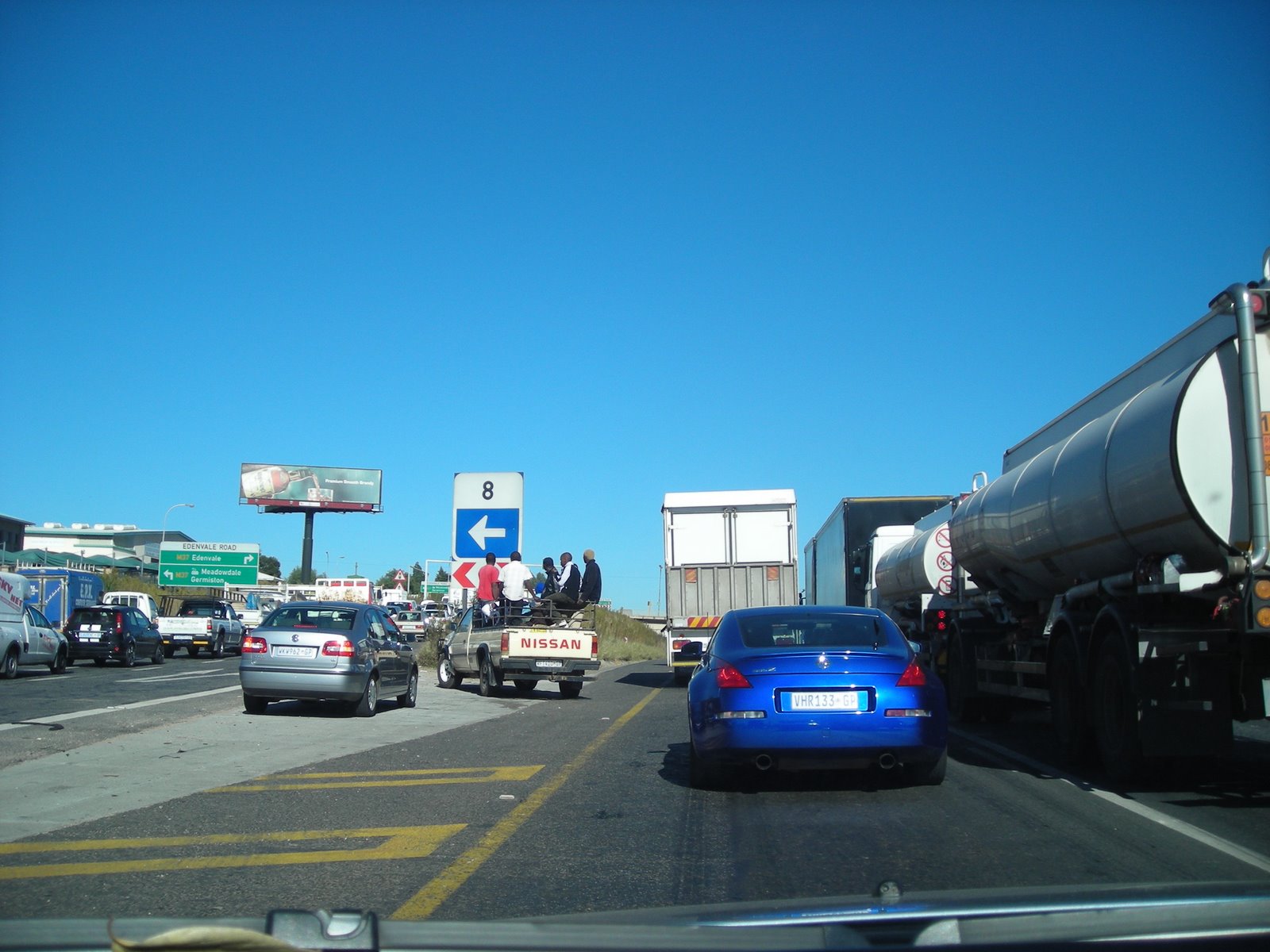
We woke up at 9am the next day to find our car nicely cooled down. I slept like a rock that night off the plane. We missed the breakfast at City Lodge and headed to Zonkiziwe. Rachel’s left-side driving is getting better. We were able to see more of Joburg in the light. It is like many African capital cities that I have visited – except wild driving is to a minimum (only on the shoulders), traffic lights work and road signs are followed, and there is the ever-present distinct smell of burning oil and gas. There were even police watching for speeders.

The informal settlements outside of Johannesburg are numerous and scenes from the Tsotsi movie were replicated in reality in an expansive wonder before my eyes. The South Africa seen by the majority of the population was nothing incredibly beautiful to behold – or was it? This would be my home for the next 3 months.

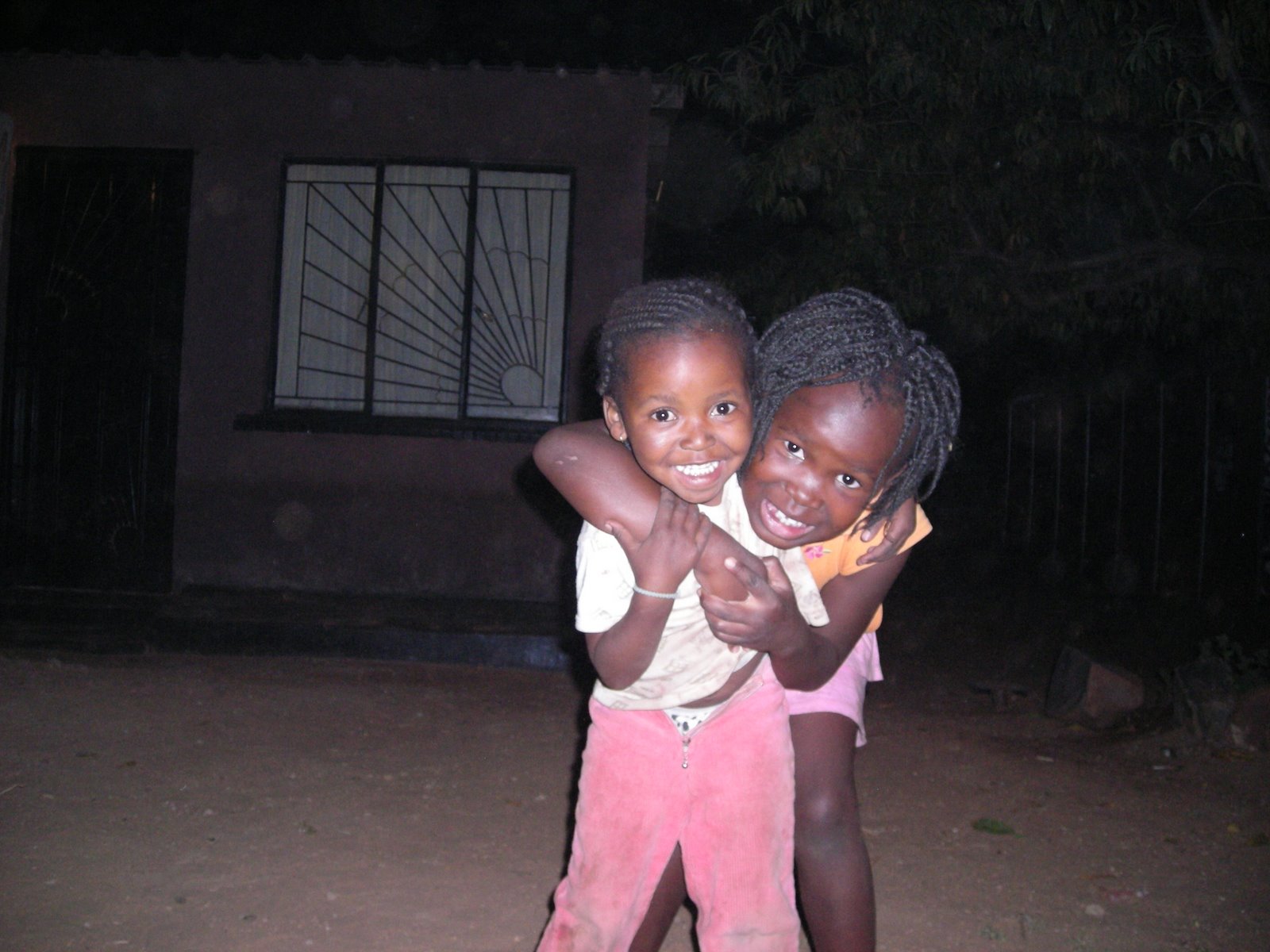
We finally found the correct, rock strewn street and arrived at the center. We met the director, Celumusa (Nomusa to those who cannot pronounce the click) and Phindile, China, and a whole group of excited youngsters. My introduction to the children was a lifting workout that included spinning one after another. China, not his real name, was very knowledgable and loved history. He likes to assert his dominance in repeating little remembered names and dates. We also later went shopping at a shopping center, very developed, but happened to almost take the wrong lane into head-on traffic.

It seems pictures will not work here either, wait a little bit longer.

Pictures Update: 29 December 2008
Sorry this is update is so late in coming, enjoy the newly posted pictures.

ten hours from amsterdam

We finally arrived in South Africa after the 10 hours flight from Amsterdam, the longest flight in my entire life. At theJohannesburg airport the customs and immigration procedures were possibly the quickest and esiest that I ahve ever experienced. Unfortunately the exchange banks were out of Rand at the airport and we decided to take care of that later. We had no problems working with the white Afrikaner rental employees, until we had loaded all of our luggage into the new Ford focus and realized that for some reason the car was not picking up speed like a regualar car. As soon as you took your foot off the gass it would stop completely. After driving a ways on R24 towards our hostel for the night we stopped at a red light. When we stopped a plume of horrendous rubber smelling smoke engulfed the car from behind. What was burning rubber? We soon realized that we had been driving with the parking brake on! Quickly release, we were well on our way.

We stayed at City Lodge, a very plush, under-construction hotel in the Johannesburg area. As far as I was able to see in the night Joburg is a large industrialized city like any other – the only difference may be the strret signs, languages spoken, and the zebra striped curbs. I have much more to write about the first week here and pictures to add – the internet at the Zonkizizwe library is extremely slow and I hope to find a faster connection soon! All is well in South Africa, check back for more updates.

when in ghana

This is just a brief note before I leave Ghana from my six week study program. Our group is leaving for the airport in less than an hour and the despicable aspect of time and its restrictions have come to hit me full in the face. While in Ghana you come to forget about the importance of time – nothing is too fast (some would say that everything is too slow), there is no defined tiem to meet or eat or finish, everything is done as it comes and finished in whatever time it takes. This I have come to love and I dread the jump back into the society of extreme time management. I stopped wearing my watch 4 weeks ago and I stop asking for the time. I do things when they present themselves and never do I rush.

I have learned a lot in Ghana, not so much about myself, but more about other people and the way the world works. More importantly I have been able to think about and study how the world should work (obviously my opinion). I have loved my time here, but I do not want anyone to think that it is over. I will be back someday and I stil have much to write about related to Ghana, when I return. One of the most painful things that I have learned in Ghana is that here sunscreen doesn’t work. No matter how many times I apply SPF 50 to my body, especially my nose, I get a nice burn and peel. Sunscreen just has no place in Ghana – I would hate to think what would happen if I just didn’t wear any at all – I might have lost a limb.

At any rate this is goodbye for now from Ghana. I will resume with the regularly scheduled blogging about when I am not in Africa as soon as I get a nice long night’s sleep, some Mexican style food, and a tall glass of cold cow’s milk with a box of cheez-its. America here I come, you’d better be ready. Be sure to check back for some awesome videos of traditional drum and dance and other interesting thoughts on issues. I am sure I will have some interesting reflections on being back in the US after a month and a half in Ghana.

Signing off from Accra, Ghana. . .

Index of blog post series on Ghana.

the longest driveway

On our way to the village of Danfa, where we were to conduct our community health diagnosis, it all became clear to me why the roads that we had driven on were being so developed. I learned from one of our interpreters that there was a new presidential palace being constructed on the top of the mountain past Mampong Regional Hospital. I learned that the roads before had been very precarious and dangerous, but nevertheless the entire route from the main road near our hostel in Accra-Shiashie all the way up to the mountain communities near the palace saw road development to the extreme. It was to be the president’s new driveway. The longest driveway that I know of, but when you get a police motorcade that clears the roads to take you home, why not have a smooth path in the name of development? This makes me wonder. . . will the surrounding communities benefit? Will they get development help and road improvements? I think not as evidenced by the poor side roads and lack of interest in rural communities (or so it seems). Is a long driveway really necessary (too much snow in Michigan)?

17 June 2007
We arrived back in Danfa, as we had previously visited, and moved into our guest house near the community health clinic. The clinic was constructed back in 1969 with the help of the University of California (no one knows which one) and serves six local communities of over 60,000 people. Many medical students stay in the guest housing to conduct community health diagnoses. This is why ours was to be in the village of Otinibi, just down the road about two kilometers. We were to interview four individuals with pre-determined backgrounds to see how well the community was doing in regards to health. Here is where many students first saw a very rural village with not much development. However, here there was a fair degree of development due to the involvement of the University of California and other NGOs from the UK and Norway. This is where I felt most welcome and at ease. There is no rushing in the village, there are no hawkers, no one will lie to you for help, the scenery is beautiful – mountains in the background, heart wrenching picture opportunities of children, the freedom of the wilderness, there is just such a better atmosphere and disposition that it is very difficult to explain. It is because of villages like these that I fell in love with Africa. The guest house was a very nice place where we could all live, cook, clean, and work together. Everyone took turns cooking a meal and cleaning up, playing cards, singing songs, kicking a soccer ball around, and just having a good time. Hurrah for group bonding!

18 June 2007

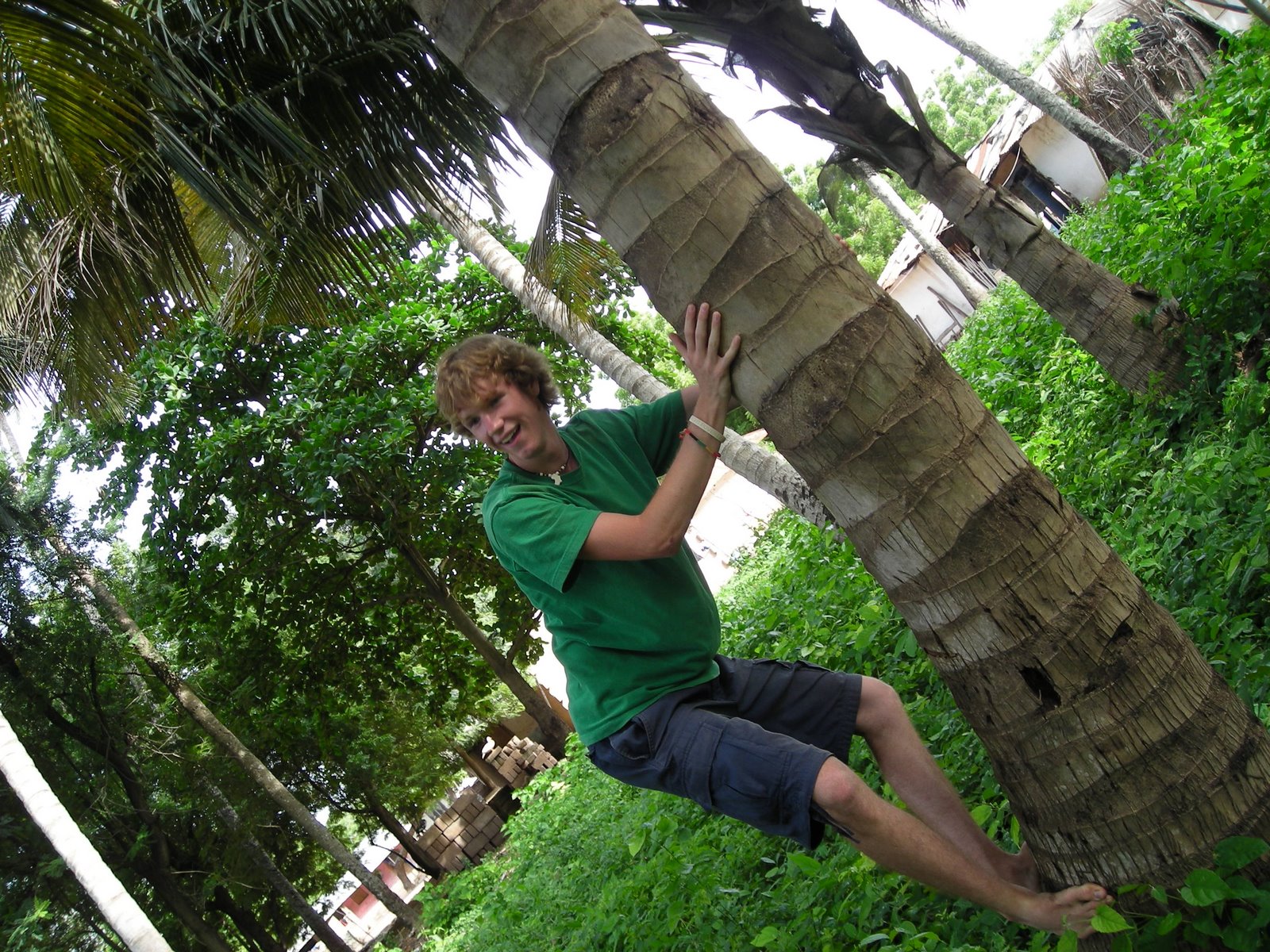
The very next day we awoke early to cook (Team 3) oats, eggs, and cinnamon toast – believe me this is an amazing breakfast. After eating we met our interpreters for the day. They would assist us in interviewing community members about health practices. We split into groups and were assigned an interpreter. Elkanne, 18 years old and son of our coordinator, was our interpreter. He was a very nice kid and was very good at helping us understand the health of the community. We walked the two kilometers to Otinibi and began interviewing. The village is like many that we have seen here. In the early stages of ‘development,’ a hardworking chief, mud buildings, sheet metal roofs, no defined pathways, a borehole for water, coconut trees, and lots of ‘bush.’ The village is beautiful and I can’t get enough of it. We conducted our interviews, meeting a great array of people from a man who spoke for his wife, a not so enthusiastic bachelor, and an awesome grandmother who supposedly grows the best of the best peppers. We learned of many different aspects of community health and saw a great deal of the community to assess its health. We chatted with the chief as he passed by and attempted to climb coconut trees. Elkanne was much better than I was.


While we were heading back to our guest house in Danfa, after completing interviews, we passed by a kente cloth weaving ‘factory’ of sorts. We came across a young boy weaving so fast and with such skill, it was amazing. Later we found out that this was a place of child labour and that these children did not attend school, which is against the law. On leaving we informed the chief and he said that he was going to register all the children in the area who were supposed to be in school. He would then confront the man running the operation and extend some help for the children.

The Interpreters:

Our Findings
We identified four key areas that contributed to the community health of Otinibi: Nutrition, Sanitation, Water Source, and Health Service Use. Each of the four people we interviewed told us that they ate only kenkey (pounded maize) and fufu (pounded cassava), none of then had anything else to supplement their diets. No fruits, no proteins, no vegetables. We wondered what effect this had on the community health as much of the diet was composed of starch. We then asked about waste removal and everyone told us that they used the dump by the bush, only the grandmother told us that sometimes they burned it. For human waste they all went to the bush, which as you may guess is very unhygenic. The public toilets have been broken for some years (collapsed). This moved us into asking where the families got their water. There is a newly installed pipe tap which everyone said they used, but we were told that it cost 200 cedis per bucket. Is this really the primary source of water? I can’t imagine everyone paying for a bucket of water every time they need it. Before the tap, the community used the borehole (pump well) to get water. Everyone told us that they knew the water was safe to drink because they drank it and didn’t get sick. Or did they? This is where we wondered if the common ailments of headache and fever, which were diagnosed as malaria, were really due to the water. There was also a stagnant pond that some people used to get water for bathing.

As far as the decision of what medicine to use, we observed self-medication, use of orthodox and traditional medicines. In the community everyone told us that the Danfa Clinic was their number one choice of medical care. I contributed this to the construction of the Danfa Clinic and the subsequent outreach programs conducted in the surrounding communities. No one, except the grandmother, even touched on the use of traditional medicine. The grandmother did not like the orthodox medicine because the pills made her sick. When we visited she was cooking some leaves from the bush for her fever and she said that these worked very well. However, she did not see an herbalist and knew what to use herself. This use of traditional practice when the modern approach does not work was also seen at the bonesetter’s clinic. One man did not want metal inserted in his arm another could not get placed in a modern clinic. In this scientific age the traditional herbalists/bonesetters are using modern x-rays to do their work and it seems to be working well. We also visited the traditional birth attendant (TBA). The one we visited happened to be trained and served the larger community including Otinibi. She was trained in 1996 and before that she just used her experiences and teachings from elders to do her work. We learned that in many cases traditional medicine is reverted to for reasons of proximity, emergency, and convenience. The vast majority of the Otinibi community used the modern medicine and ‘knew’ that it was the best option. The father we interviewed even went to the chemist (pharmacy) to pick up headache medication for his wife. When I asked Elkanne what he thought about traditional medicine he quickly responded that he only used the Danfa Clinic, but why not? His father worked at the Clinic and the parental influence is very strong in Otinibi. The parents we interviewed would take their children first to the clinic before themselves.

Our Recommendations
We observed a number of open pits and stagnant water sources. There was an old open well that had accumulated a disgusting degree of trash, fecal matter, and god knows what else. We recommended that these holes be filled in to reduce injury risk and mosquito breeding. Our next recommendation was for a separation of trash and regular removal. We also saw a positive in starting a composting project. This could help with the community’s subsistence farming. Since it was the rainy season many homes had closed windows and poor ventilation. For this we recommended screens or mosquito nets on the windows to keep out pests and provide ventilation. For nutrition we recommended maybe introducing beans to be grown and eaten as a source of protein. We also recommended that the people eat what they grow. A number of those interviewed grew vegetables and other foods, but only to sell. Eating the local fruits would also help the nutrition of the community. These were just the small ways that we saw to improve the community health. I would say that the community was for the most part healthy and just needed to act on some simple measures to ensure a greater wellbeing. I also noticed that there was a great lack of emergency transportation. There was none except for the local vehicles. I saw people hurriedly carrying sick people into the clinic, the TBA talked of childbirth emergencies with no transport, I have seen and heard this before – investing in an ambulance may help.

While in Danfa/ Otinibi we had number of delicious Ghanaian dishes:

Palava Sauce (spinachy) and Boiled Cassava

Groundnut Soup with Chicken and Rice Balls

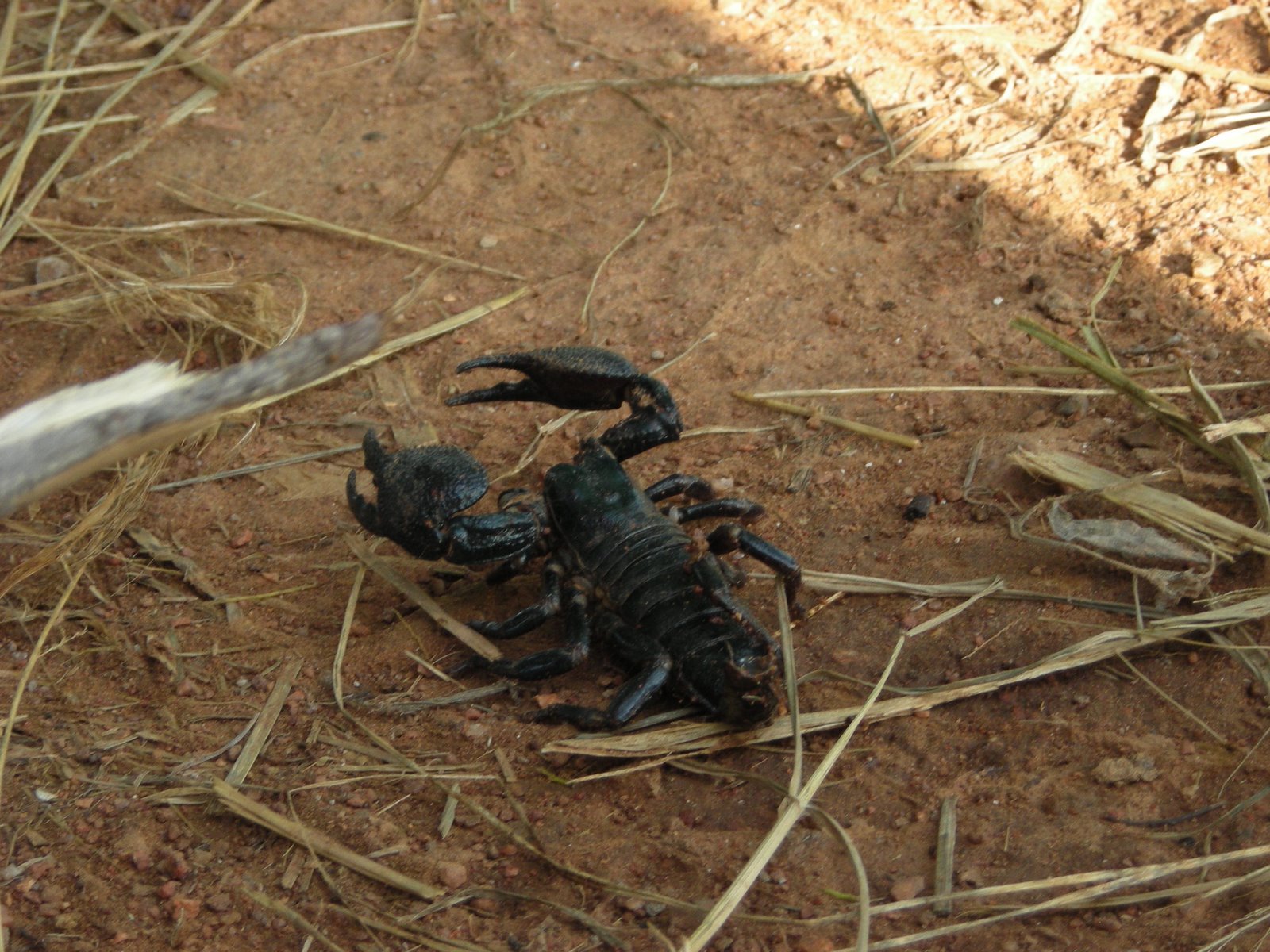
We saw a scorpion! In Ghana they are seen as very evil creatures and are the evil-doers of witches. This one was caught in the gutter and after we all took our pictures and left was probably smashed to a pulp. Scorpions are hated with the passion of a million fires in Ghana.

Index of blog post series on Ghana.

a mixture of black, white, red

14 June 2007
Our third visit to the Volta Region.
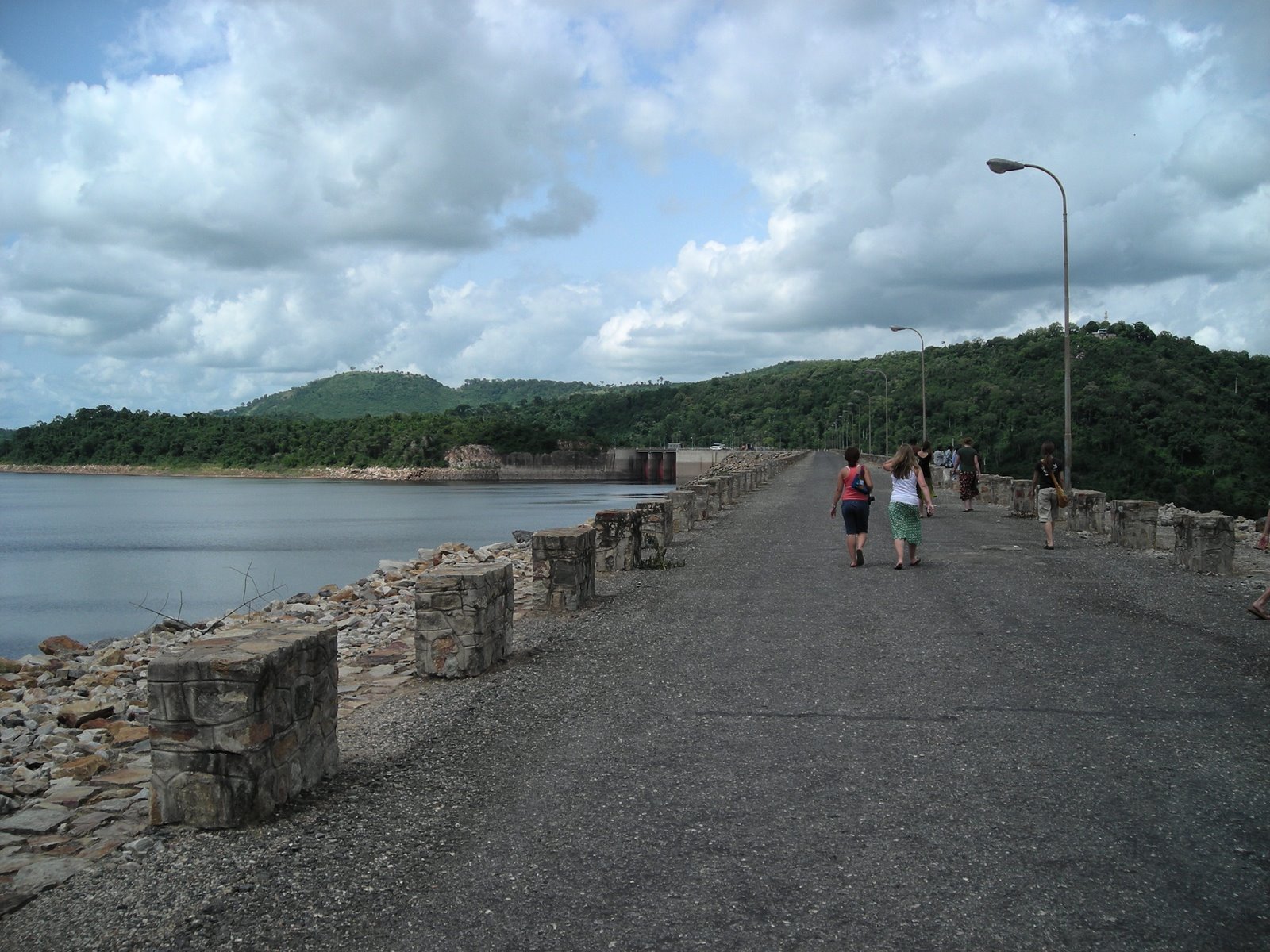
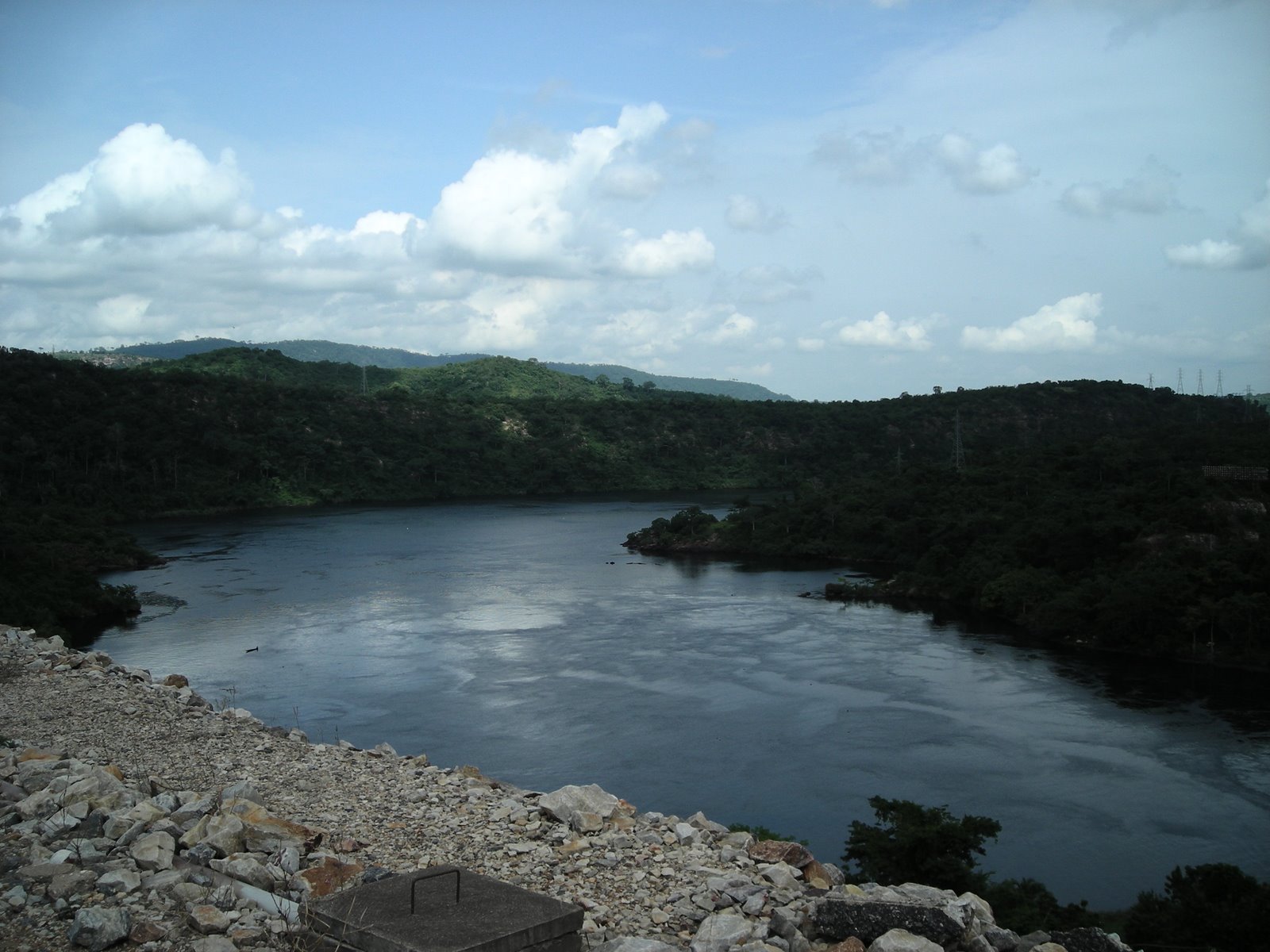
We visited the Akosombo Dam, creator of the largest man-made lake in all the world. This dam was constructed in a brief three years by Italian engineers. The Lake is formed from the Black, White, and Red Volta Rivers coming from Togo, Benin, and Cote d’Ivoire. Volta in the local language means ‘rapids,’ now there is just a giant dam. The dam was built to be used for electricity and to create a source for fishing. The dam was huge and presented a great mark on the landscape of Ghana’s lush forests near the Volta Region. The dam provides all the power for Ghana, but currently there is an energy crisis. We have experienced this crisis with frequent black outs and power outages al across Ghana. We discovered why this is happening by viewing the extremely low water levels for the operation of the dam. Our guide told us that they are waiting for the rainy season to get into full swing to fill the Lake Volta and increase the power.
No pictures were allowed of the operational side of the dam, but here they are. After learning all about the dealings and history of the dam and how it works we walked back across the bridgeway and I noticed that there were less power lines heading to the north of Ghana and a great number headed to the Accra city center and southern Ghana. This seemed to be an all too common theme and yet again more evidence of the disparitites between North and South in Ghana. Kyle noted correctly that this was a great scar of development. The dam stopped up the rivers that now create the Lake Volta which covers one fourth of the country. It harnesses the water for electricity and development. It sits high and heavy on the once beautiful landscape on Ghana and screams of a continued practice of harmful ‘development.’

Seeing Lake Volta for the first time reminded me of an article that our professor showed to us about child labour in the fishing industry on lake Volta. The article was from the New York Times and followed the stories of families that could not eat and sold their children into labour for money with the promise of seeing their child once a year and being sent more money. Those promises rarely hold up and often the children are beaten, overworked, and never return home. The article covered the story of a young boy who worked on Lake Volta, fishing in the potentially dangerous waters with little sleep or rest, and a lot of work. Child labour is not beyond the ‘most developed’ country in Africa. It happens here, in the very eyes of development.


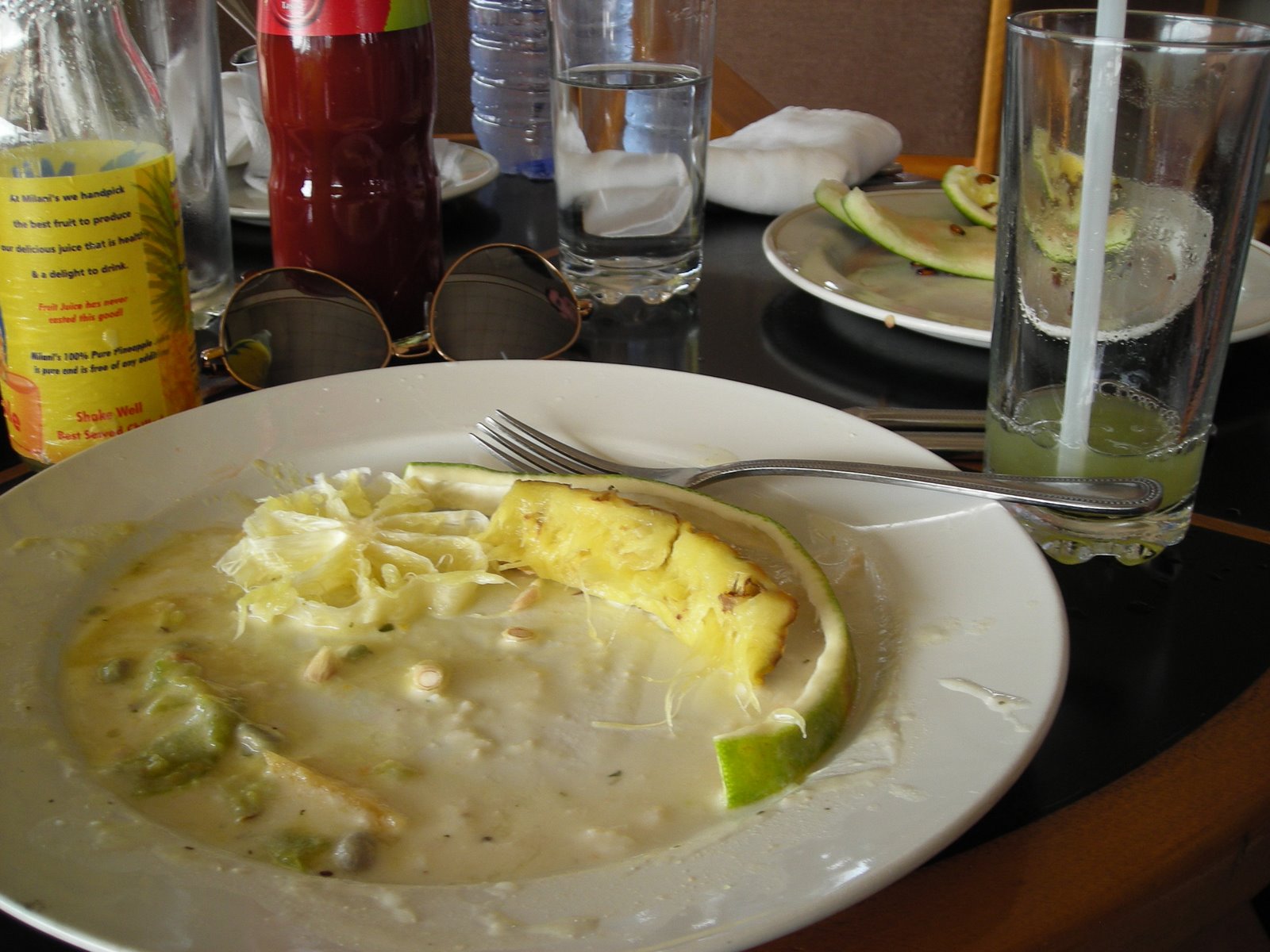
We headed over to the Volta Lake Hotel to have lunch. The hotel was a great Western hub catering to Obrunis (this is the correct spelling) and providing one of the most delicious meals yet. I forgot to take a picture before the meal, but here is the after picture of my ravaged plate. I was quite hungry by this time and the fillet of perch with a cocktail fruit drink and fresh fruit hit the spot.
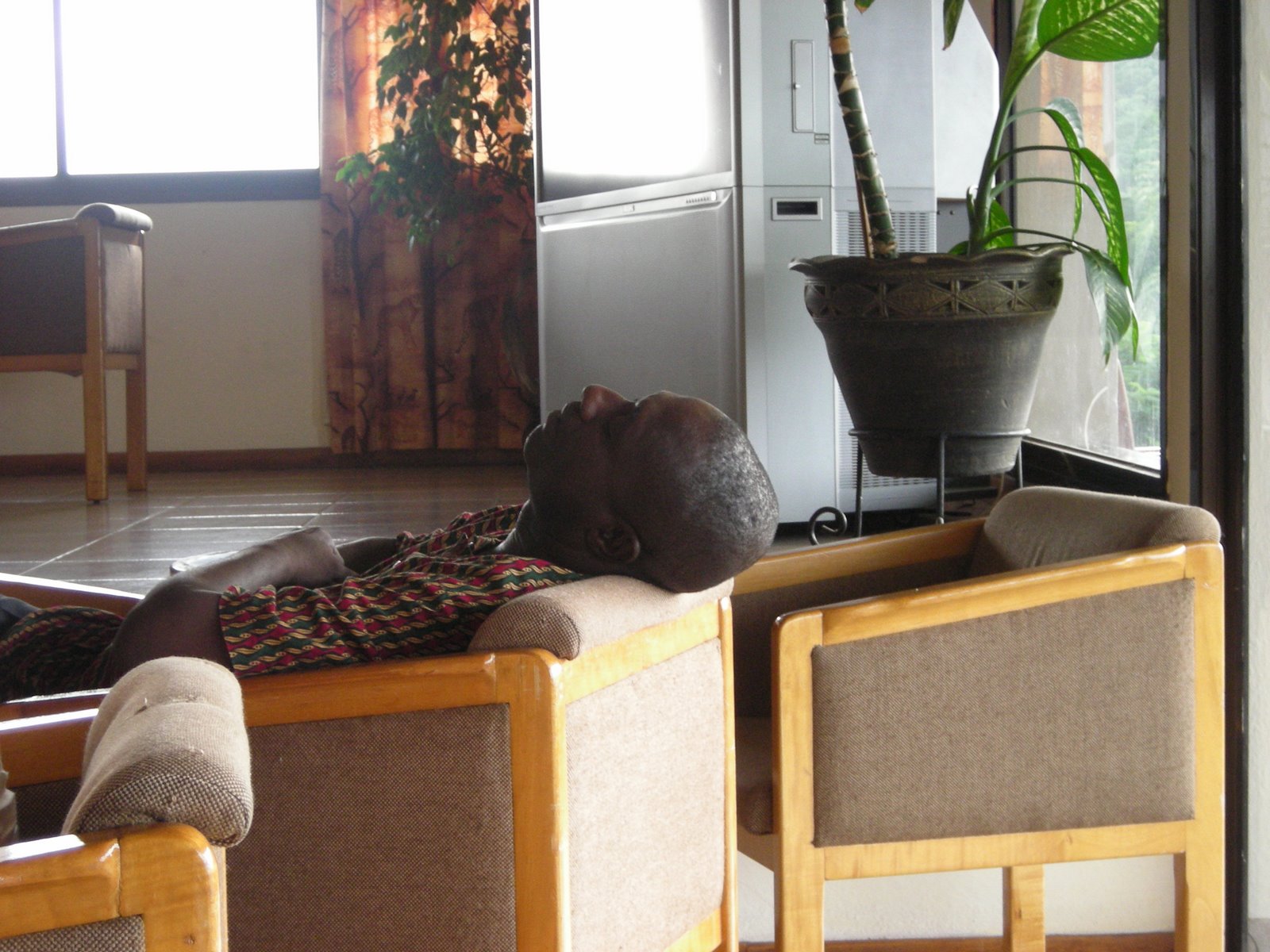
Our bus driver was very tired this day since the day before the bus needed repair and there was trouble finding the part, he had been up since 5 am that day. He took a little nap.

Index of blog post series on Ghana.

snapshot of health in ghana

We are now a week into our second course of out study abroad program, studying the disparities of the Ghanaian healthcare system. These disparitites range from Ghana to the US, urban to rural, and ever North to South. We have seen and learned about a number of different healthcare situations in Ghana. Since my interest is in access to basic healthcare I have been watching health clinics as we traveled around for the first 4 weeks and I have been trying to understand how the healthcare system worked, now all that I have observed is making more sense.

The Statistics
– one third of the 138 districts have no hospital
– high maternal mortality rate (hemorrage & infection)
– beyond the capital the road system is poor
– 40% of population is covered by the national insurance
– life expectancy is 57 (this has fallen with the emergence of HIV/AIDS)
– healthcare is geographically, financially, and culturally inaccessable

The key problem in Ghana is figuring out where the divide should be joined between traditional and western medicine. What is more interesting is the integration of traditional medicine into the very western Ghanaian health system. I noticed from my pre-healthcare course observations that there is a large number of missionary clinics, government hospitals, pharmacies, and other private health service centers in the Accra area. As we traveled from Cape Coast, Volta Region, and Kumasi I noticed that there was a lesser degree of healthcare services advertised or offered. Why was there such a change from the urban to rural was my first question. Even more so why was there such a disparity between the other regions and the Volta Region of Ewe people?

7 June 2007

Our first visit of the health systems in Ghana was to a health clinic and research center that was solely focused on using traditional medicines and herbs for cures of ailments. It was very interesting to observe the research being conducted and see that they were also running a full health clinic with their findings. The center claimed to have WHO (World Health Organization) funding, but I am not sure if that is true anymore. While there we met some students from the US who were interning at the center for the summer. This is a direct linkage between the traditional and western methods of medicine. This also brings up the issue of intellectual property rights – do the communities that the center learns from benefit from its revenue? Sure the health clinic, but otherwise? This is a reason that the center’s director gave for not partnering with large pharmaceutical companies – to not lose IP rights.


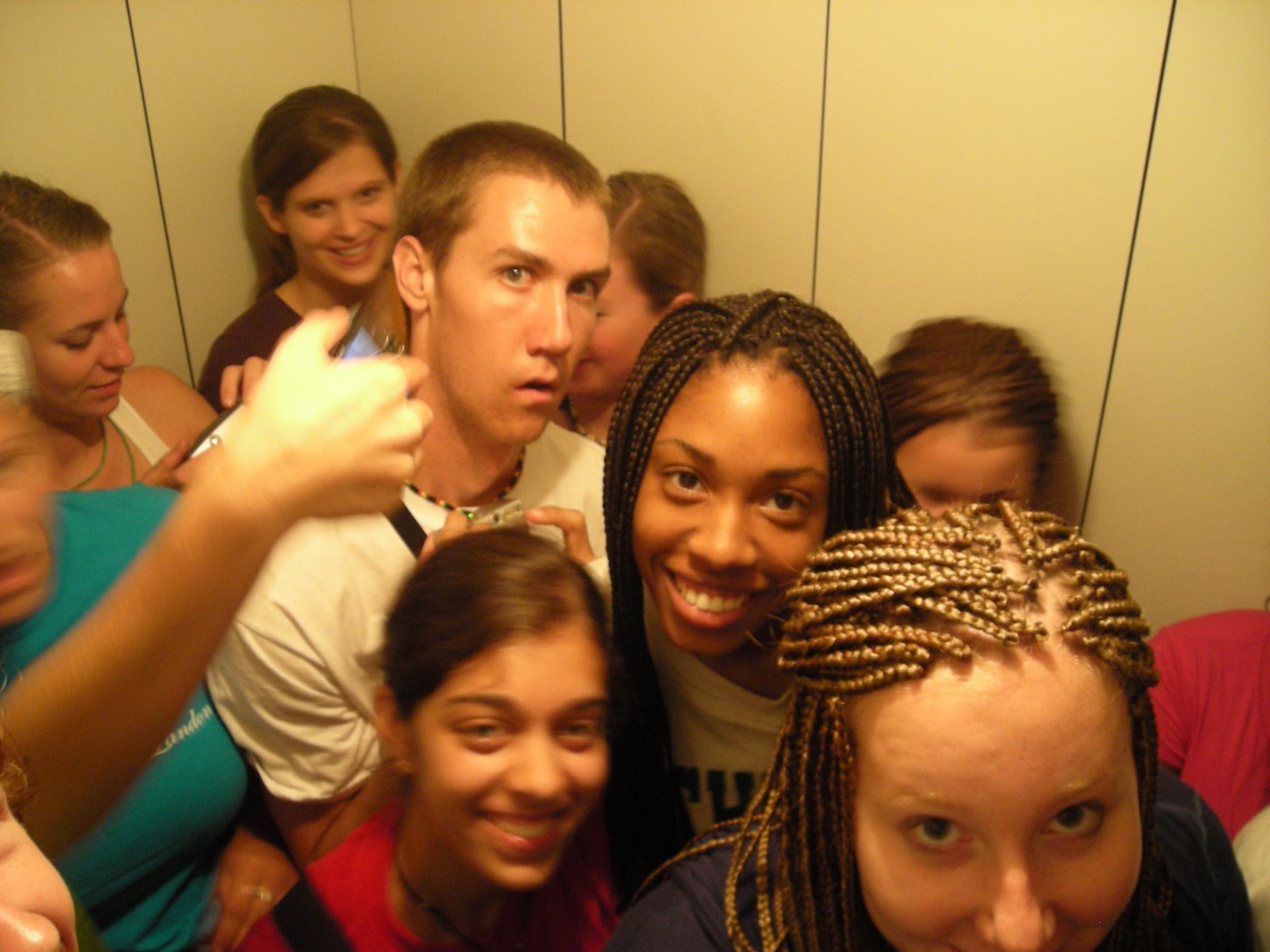
From there we went to the Mampong district outside of Accra to view the structure of the health systems and network of regional health services. We first visited the regional administration offices and talked with the head nurses. They gave us a very well run and organizaed outlook on healthcare in Ghana. At the offices there was also a counseling and testing clinic for HIV/AIDS and a peer educator class taking place. Here we learned that USAID (United States Agency for International Development) provided food rations for new mothers and mothers with malnourished children. I asked if this was true at all regional districts. The answer was yes, but I wonder if all the regions are as well established as Mampong. We then went to visit the regional hospital. It was a large, modern building, not very dissimilar from what you would find in America or Europe. But, there were obvious differences in the developed nature of the hospital. It was a nice hospital, but not one that I would want to stay in. We were given a tour of the entire premises and had a near-death experience in the elevator. Twenty plus people in an old hospital elevator in Ghana makes for exciting times. The elevator descended with the help of our weight and gravity – there was a loud bang as we hit the safety catch – there were still three floors to fall. The head nurse was not very keen on what to do next, but eventually we all climbed out from the gap left between the two floors to the wondering faces of what seemed like the entire hospital staff. Its the stairs from now on.
There seems to be a very good system of healthcare in the relatively developed areas of Ghana, but as for the villages I cannot say. It seems that we have visited mostly well put together centers and clinics. This made me think of the situation in Uganda, where it is the private and mission clinics that have all the supplies and the government run centers have absolutely nothing – very different.

At the Mampong regional administrative offices we learned that in many villages where there is no clinic or government hospital there is a nurse that lives in the community and is charged with the health of that community. However, I cannot speak to the degree of training or equipment that these community nurses have. This speaks to the obvious disparity between the urban and rural environments. There is not as much access to healthcare in the rural areas and so I wonder how much access there is in much of the rural North of Ghana? How many people do not have access?

11-13 June 2007
Some of the issues brought up in our classroom lectures about the health systems in Ghana relate to money. Not everything is covered and so some people cannot pay for access to services. There is bribery in medicine, we have not experienced this, but I do not doubt it. The basic insurance policy in Ghana costs about 72,000 cedis a year, this may not seem like a lot to ‘developed’ countries, but to a Ghanaian this could mean a great deal. In its health development, Ghana is still working on eradicating polio and guinea worm – even in metropolitian areas. Sanitation is a big problem. “The world is my toilet,” has become a joking phrase among the males in our group. If you are a male you can urinate just about anywhere, except where it says, “do not urinate here!” However, you still see people urinate by those signs. Sewage drains have stangant water and often do not drain anywhere. Trash is not collected and is often burned by the roadside. This reminded of Uganda where trash is just thrown out the window. In Kampala you cannot get away from the smell of burning trash, and there are not even drainage ditches.

Another issue brought up was that of ‘assembly line medicine.’ In Ghana there is such a high number of out patients (40% due to malaria) that the health workers often diagnos based on perception, not based on evidence. The issue of traditional and modern medicine is also a hotly contested topic. The health worker crisis in Africa seems to have been circumvented slightly in Ghana. Ghana has included traditional birth attendants in their health system and has just set up a new council for traditonal medical healers to have their say. The most fatal health issue in Ghana now is maternal motrality. Why? Good question, Ghana is ery developed in its understanding of health practices and so it makes no sense whatsoever that a mother should die due to complications of childbirth.

We next traveled to Ashesi University, a private, liberal arts university in Ghana (the most liberal in all of Africa, supposedly). Here we met a Fulbright fellow and a former fellow who is a profesor at Eastern Michigan University. Here we talked about the ‘brain drain’ and new ideas for Ghana’s health system. Currently a physician is in charge of managing the health center, but this means that often the physician has no idea how to manage and makes the staff unhappy and then does not practice medicine because he or she is too busy managing the center. The professor from EMU was working on publishing a study to help change this and introduce education for health managers. The incentives for staying in the country to work are minimal, but inticing. If you work in the Ministry of Health (MOH), then you can be sponsored to increase education and degree. The professor also talked of how Africa, “gets under your skin, you keep coming back.” It really made sense to me and I really don’t want to leave.

13 June 2007

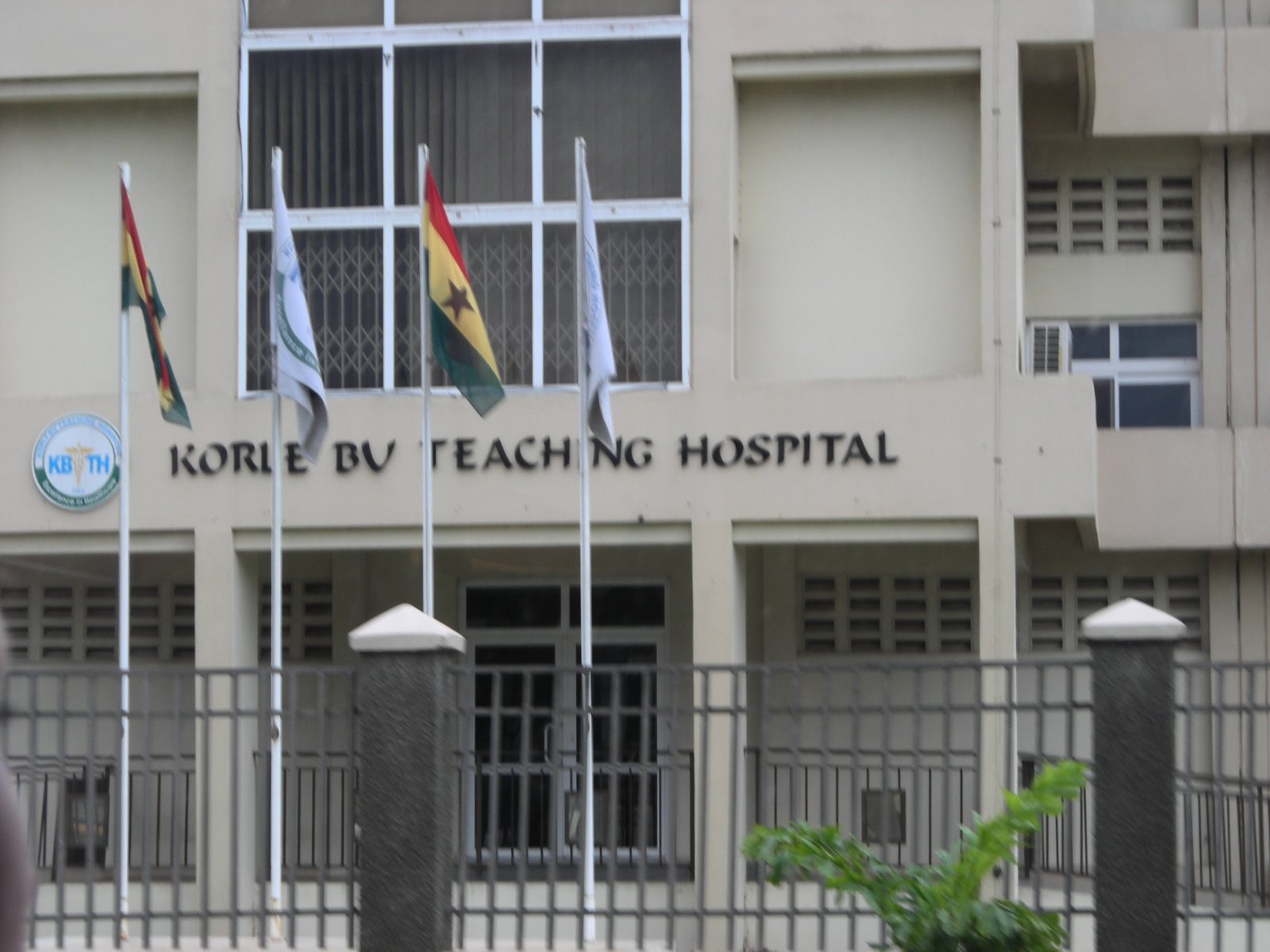
Today we visited the Korle Bu hospital, the best government hospital in all of Ghana. We were not able to tour the main clinic becuase we arrived late, but we did get a quick tour of the Department of Child Health. It was a very nice center, as you can tell from the pictures. This was again an amazing compund that constituted a village in itself. It was obvious that this center must receive a large amount of the government funding for health. There were a number of different center, housing for doctors and nurses, a bank, pharmacy, and a teaching hospital for the University of Ghana. Hopefully we can return later and get a tour of the main clinic to see how things are run there.

The recommended health center for the MSU program students, if they are to fall ill on the trip is Nyaho Clinic. It is a private center tucked away in a random area of Accra. We have had a few students go there, but I have not seen for myself the interior. I have heard it is very nice and Ghanaians in the health profession know it as a nice and expensive clinic.

So far most of the health systems we have seen are very well established and well run and seem to be in great condition. We have not seen the failings of the Ghanaian health systems and the picture for now seems very rosy. I have seen the many mission, private, and government hospitals and clinics in the fairly ‘developed’ regions of Ghana. What I have not seen is the lack of healthcare like I saw so vividly in Uganda. The EMU professor at Ashesi University told us stories of his experiences with health in Ghana. He told stories of overrun rural clinics, a family’s inability to pay for lifesaving medication, the long distances traveled wo receive attention when it is too late, the sheer numbers of people who just do not have access to basic healthcare. This is where I feel we should be, this is where it would make sense to me, this is where we can make a difference. We will now be leaving for the village of Otibini near Danfa to do a community health assessment. I think here is where we will get to feel the village life and true health crisis.

Index of blog post series on Ghana.

the chinese influence

The Chinese influence in Africa is a topic that I have been researching for a few years now. I have conducted most of my research by way of news sites and journals in the States and with the help of the internet, but now I have the opportunity to see firsthand the impact of the Chinese influence in an African country. This entry will follow my experiences and insights on how China is involved in Ghana.

The first thing that someone traveling in Ghana will notice is that there are so many Chinese restaurants. They are just about everywhere. Chinese food is almost as prevalent as Ghanaian food. Sadly, the Chinese food is not at all what you would find in America or for that matter China. The menus are often 15 pages long and with only minimally Chinese named dishes. Nevertheless, Chinese restaurants are everywhere. Also in the service industry there are a number Chinese themed hotels that host a number of Chinese tourists and business people. On our walks down East Legon we see them buying bread and other food stuffs at the market.

As some of you may know, China is currently one of the highest (maybe the number one) foreign aid provider. This is often called ‘rogue’ aid because it is not administered through an aid institution without any restrictions on aid usage. This aid is evident in Ghana with a number of projects sponsored by the Chinese government. One day on a tour of Accra, near the Kwame Nkrumah moselium a police escorted motorcade shot through the traffic with a handful of Chinese officials. The wonders of Chinese aid is prominently displayed in the construction of the National Theatre, it was completely funded by the Chinese government. I wonder if there is any linkage between Kwame Nkrumah’s administration and the remaining Chinese connection. During his rule Nkrumah often hosted Chinese officials and received help from China.

The people, the aid, the food, the history is all here. There is a deep worry, that I often agree with, China is seeking to gain natural resources from African countries. They make a number of aid packages for ‘development’ and sign bilateral trade agreements, but what does it all mean? Is China’s motive in Ghana to reach a growing market economy? Is it to cash in on the mineral wealth of Ghana? It cannot be just to build a National Theatre and assist the Ghanaian government with ‘development.’ I really wonder what the specific trade-off for China is.

China is not the only big aider that I have noticed while in Ghana. Iran is sponsoring a number of projects and many of the government ambulances are donated by the Republic of Iran. I will touch more on this in ‘A Snapshot of Health in Ghana.’

Index of blog post series on Ghana.