from the noble savage to the poor entrepreneur

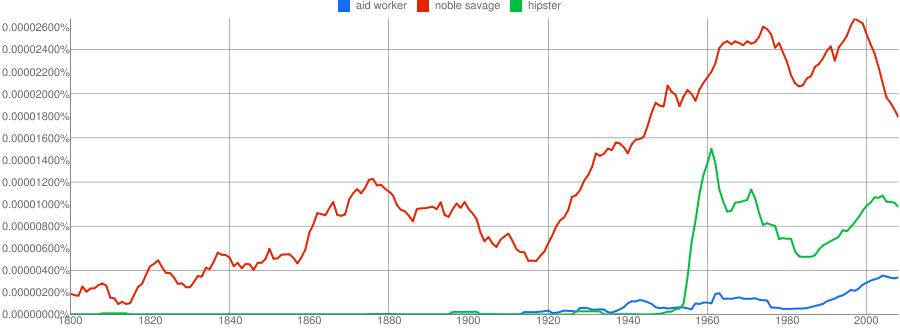
The idea of the “noble savage” has long held a lofty place in our American psyche. The desire to return to our roots, become “nature’s gentleman” (or nature’s lady), and live traditionally and without excess has been around since the early 17th century with the school of thought known as “romantic primitivism.”

In nature humans are essentially good – Earl of Shaftesbury

What we often forget in emulating the “noble savage” that we are utilizing our privilege to throw out the burdens of modernity, technology, and convenience when many who live “closer to nature” do not have the luxury of changing their social status or well-being by choice. We also forget that we sit in privileged positions where our culture is considered “on top” while other cultures are labeled as: savage, backward, weird, or crazy.

The Noble Savage

Thanks to Disney  (“Disneyification“) we all have a pretty good understanding of the “noble savage” from the movie, Pocahontas. The life of Pocahontas’ people is so appealing that John Smith desires to join them. An even more recent example comes from the movie, Avatar, where a marine from the “civilized” world works to be accepted by a the nature-connected native inhabitants of a newly discovered planet loaded with mineral wealth, which corporations want to exploit. These examples all go without mentioning classic tales of the first Thanksgiving, where “noble savages” show pilgrims how to farm and gave gifts of food to the starving new worlders.

We all like to look at the simple pleasures of natural living, hard work and closeness to nature that other cultures and ways of life exhibit, but we rarely think about the reality of how “simple” those lives really are. The beauty of nature and peoples unburdened by technology and “development” seem appealing, but we often hold misunderstandings about them and overlook the deep complexity of the “other.” More importantly we prefer to look past the hardships they face due to the impacts of our own country’s economic and political policies.

The Hipster

In our own American culture we have seen the inevitable rise of “hipster” driven by a desire to appear to live and enjoy a life of poverty as denoted by attachment to various social markers: old clothing, cheap beer, bicycles, and lofty ideals. Everyone has most likely encountered these noble savages in a city nearby. This has become a large sub-section of our popular culture. Sadly many of these individuals who appear “poor” are pretending; spending $500 on cool wheel sets for a custom fixed gear bike or purchasing expensive meat substitutes with food stamps.

Privilege is a pretty damn easy thing to deal with, it just takes self-awareness and humility. I suggest you get some.
(source: recoveringhipster.tumblr.com)

We are becoming “designer tribalists;” Working so hard to look a certain way in order to prove that we hold a morally high ground for being poor or downtrodden. The unfortunate side of this image effort is that being poor isn’t cool. Using our own social mobility and wealth to exploit the image of those who are actually poor only shows how misguided we are that “looking poor” is cool. If we truly cared about the poor we might change our image and instead use our privilege to support the poor.

The Aid Worker

Countless examples can be taken from individuals working internationally in the Peace Corps and other development organizations. We latch onto the new culture, language, and customs of the people with whom we are working with. We emulate the local culture, look down on tourists who don’t speak the local language, and sometimes prefer to identify with this new community as opposed to our own community back home. We become the perfect examples of those who follow the “noble savage” and desire to join them.

Often aid workers decide its their number one job to blend in: adopt local clothing, language, habits, etc.

You eat their food, you wear their clothes, you’ve learned enough of their language to buy food and clothes. If you blend in well enough, they might mistake you for one of them. And there is no higher honor for the expat aid worker than to be mistaken for local.
(source: stuffexpataidworkerslike.com)

Yet again this is an exercise of privilege. As aid workers we will only be involved for a short time. We can leave whenever we choose because of our international social mobility, yet the community that we have come to emulate is stuck and has no ability to travel beyond its country’s boundaries as we so easily do.

The Poor Entrepreneur

The noble savage seems to have shifted these days to rely less on primitive and traditional images of native peoples in nature to the idea of the resilient, “poor entrepreneur.” Individuals in the “developing” world who would been categorized as noble savages in an earlier century are now referred to as poor and entrepreneurial. Their poverty makes them business-minded and innovative, however this is not so much a  function of their ingenuity, but more a symbol of the growing inequality of our global system. To look at a person in poverty and say that their innovation is so pure is to remove their unprivileged history. They fashioned their own door hinges out of shoe soles because it was either too expensive to afford metal hinges or there was just nowhere to purchase them. They find new ways to keep cars running, use bicycles parts for windmills, and turn microfinance funds into a livelihood.

The “poor entrepreneur” is a social commentary on global inequality, and thus privilege, around the world. As aid organizations and micro-lending groups prop up the stories of these new “noble savages” we have to remember the reasons for innovation in poverty. If we all faced the same levels of oppression, inequality, and poverty – wouldn’t we all innovate a little more to improve our outlook on life?

Why are they poor in the first place?

This is the burning question. How do families, groups, or populations become poor in the first place? Through structural inequalities. How do the poor become “entrepreneurial?” Is it from Western education, funding, and influence or are the poor in “developing” countries already innovating for themselves? Many organizations and NGOs would have us believe that the poor have become entrepreneurs through their care and influence. However, there are countless examples that allow us to say that Western intervention or dollars are not required to make an entrepreneur. I don’t necessarily believe that entrepreneurs are born or taught, but rather it is a confluence of knowledge, circumstance, and opportunity. Anyone can be an entrepreneur, but not everyone has the same privilege or resources to overcome the structural inequalities that often block entrepreneurs from “developing” countries. We regard these poor people “entrepreneurs” without truly understanding the difficulties that they have faced trying to make ends meet and get their innovations recognized by large NGOs and companies.

Beyond the “developing” world, we are all attempting to become more entrepreneurial. As national economies struggle, we all face harsh economic times and often debt realities. If to be poor and innovative is to be an entrepreneur than to face an economic downturn must only be a bump in the road. There is more to poverty than innovation. The privilege of where you are born into the world is impossible to control and yet we still want to say that some people are better than others based on their income level. Privilege drives the world economy and it is a hard battle to take that privilege from the hands of those who have not earned it.

real life public health isn’t sexy

The field of public health does not lend itself to being glamorous or satisfying after a full day’s work.

I currently work as a Community Health Worker (CHW) in Detroit supporting a NIH funded grant using behavior change techniques to tackle childhood obesity among African-American adolescents.

Snapshot: Thursday, December 1st, 2011

After a meeting with my supervisor, I had three family appointments scheduled for the day. My first appointment was with a family that needed to be caught up after missing 2 weeks. We provide transportation for families that come into the office, so I had called them a cab. However, the cab company had not sent the cab after 45min. and the appointment had to be rescheduled for another day. My next appointment was with a Teen who obviously preferred not to be meeting with his Mom and me. We worked through topics on Hunger and Cravings, but had to finish early because I had another family appointment coming up. After waiting 10min., I called my last family to confirm and they had forgotten they were supposed to come in today.

I spent my 8 hours that day driving a lot and meeting with only my supervisor and one family. It was a long, trying day to only be able to check a few items on my weekly to-do list. The over-used quote that I have to keep reminding myself is:

“An ounce of public health is worth a pound of health care”

Hopefully somewhere down the line the families and Teens that I work with will someday use the skills and information that I share. All I can do is offer my knowledge and support for their efforts while reinforcing their positive changes.

Public health has become a buzzword along with the growth of the global health field. It’s great that health has become such a prominent topic of interest, but not everyone is going to save a life or change entire communities. Buzzwords don’t make the best career choices. It may be that you spend all day tracking people down and hoping some knowledge sticks, maybe you make posters for wellness events, or even get covered in dirt planting vegetables with kids who prefer to play video games. Public health isn’t sexy; work can be dirty, sometimes lonely, unappreciated and often unnoticed.

Public health is not a new field. It has been around for a long time, but in the media it has most often been portrayed by medical doctor drama series that always have to include twisted webs of personal relationships and hookups in broom closets from Boston to Kandahar.

Public health is intense and has its own great stories and dramas – can’t these stories tell themselves without the backdrop of casual sex and relationships gone wrong? When will the public be ready to watch a show that is about real public health?

The truth is that although public health may not be as glamorous as a television drama, but it is full of exciting adventures, dramatic endings, and stories of hope.

Recipe: Sweet Potato and Black Bean Chili

My wife discovered an excellent recipe that is great for a “meatless Monday” in the hardy months of cold, wind, and snow.

We’ve made it a number of times now and absolutely love how quick, delicious, and nutritious it is. Sweet potatoes and black beans are both considered “superfoods,” which means that they are full of great nutrients that will make your body (and your stomach) happy! We adapted our recipe from EatingWell.com.

Ingredients:

  • 2 teaspoons of olive oil
  • 1 small onion, diced
  • 1 sweet potato, diced (also called a yam in the US, but any yam sold in the US isn’t a yam unless its sold at an international market or specialty food store)
  • 2 garlic cloves, minced
  • 1 tablespoon of chili powder
  • 2 teaspoons of paprika
  • (1) 15oz can of black beans (or soak and boil dry black beans the night before for lower sodium)
  • 1 cup canned, diced tomatoes
  • 2 teaspoons lime juice
  • 1 and 1/3 cups of water

Steps:

  1. Heat olive oil in a pan and add diced onion and chopped sweet potato until onion starts to brown.
  2. Reduce heat and add enough water to cover the chopped sweet potato. Let simmer until the chopped sweet potato pieces are soft.
  3. Meanwhile, heat tomato sauce and black beans (and/or kidney beans) in a large pot, add as much spices and herbs as you desire.
  4. Once sweet potato pieces are soft mix them into the tomato sauce with black beans.
  5. Serve hot with crackers, tortilla chips, or bread.

Serving size: 2 cups

Calories: 374 calories (14 g protein & 15 g fiber)

better health + growing population ≠ societal collapse #7billion

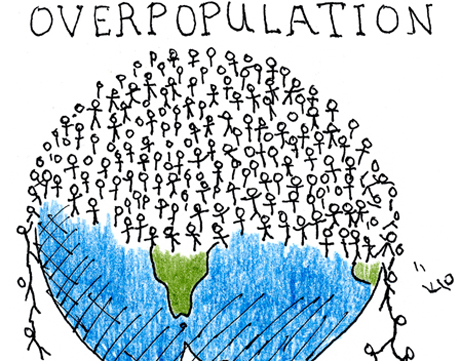
With each additional billion people on Earth, the collective news pundits, academics, development experts, and politicians freak out. Many pundits have been talking about the world’s population hitting 7 billion and how that relates to all the issues that we are seeing today. To many authors, talk show hosts, and even economic and development experts, population is the cause of everything. This is just fear-mongering and bandwagon journalism. The facts give a clearer picture.

If you’ve ever read Jared Diamond’s book, Collapse, the themes are all related to overpopulation and the Earth’s carrying capacity. We are constantly improving our health systems and keeping people alive longer than ever before in human history. As we grow in population there will be a breakdown in our social fabric and we will enter into international civil war over precious natural resources, like vegetation, water, etc. It happened on Easter Island, why can’t it happen on a global scale? In short, and to simplify: we are all screwed. I’m going to leave Malthus out of this conversation, but he is a good guy to read about if you are interested in population.

Environmentalism, Population Health, & Politics

Most of the pundits have talked about the impacts of overpopulation on the environment, but what about the impacts on health? This is an important area where the late Dr. Paul Epstein was world-renowned for his work connecting the growing environmental threats and their serious impacts on human population health.

By connecting climate change, exacerbated weather and environmental conditions, and the deep crises these create for the health of human populations, Dr. Epstein made the critical link between the health of our planet and the health of the people living on it.

Recent years have seen increased famines, droughts, and floods, loss of arable lands and increasing desertification, not to mention the inability of governments to respond to these crises. Some of Epstein’s work highlighted the increase of cholera after severe flooding and the increased range of malarial mosquitos as mountain tops warm up. Climate change and environmental issues are related to consumption, which is disproportionately carried out by wealthy countries consuming the majority of the world’s resources even with smaller percentages of total world population. Likewise, famines aren’t caused by too many people, but rather from bad government, violence, and global inequality.

The issues that many would like to attribute to the growing population are really fueled by politics. Population growth and climate change are above all else a political issues.

Fertility vs. Population Growth: (think incidence vs. prevalence in epidemiology)

Everyone needs to take a step back and look at the numbers. Population numbers are increasing with population growth increasing in a number of key countries, however we need to also look more closely at fertility rates rather than simply population growth numbers.

Many areas that have high birth rates also have high infant mortality rates, so it is not completely implausible that families would have a higher number of children to account for the poor health conditions their children might face and not survive. Likewise, areas with high fertility rates often see high infertility rates due to the increased risk to women of infection from multiple attempts to have children.This is where the debate about family planning and contraceptives enters the discussion.

Helen Epstein writes that if men and women have “frank conversations” that may be the best contraceptive. However, John Seager, President of Population Connection, offers a rebuttal that conversations cannot replace contraceptives. He notes that the need for access to knowledge and adequate health care is just as important. He writes,

“When women can control the timing and spacing of their childbearing, they can get an education and a job, and take better care of their own health and the health of their existing children. What could be more empowering than that?”

Population Control as Development

Following Word War II, population control became an important issue for the US to pursue around the globe. The  world food crisis in 1967 made Congress recognize the importance of population growth and it allocatd $35 million to USAID for population control activities. Today, USAID is single largest funder of population control activities in “developing” countries.

During the World Population Conference of 1974:

“Opposition came not only from traditional Roman Catholic quarters, but also from many Third World countries, which saw the focus on population growth as a way to avoid addressing deeper causes of underdevelopment, such as inequalities in international relations. […] India argued that ‘development is the best contraceptive,’ and criticized the high consumption of resources in the West.”

Many began calling for changes to the status quo, however no one asked why the needs of the poor weren’t being met in the first place. Glaring inequalities in distribution of income, land, and power were avoided. Politics came out on top as Western powers pushed “developing” countries, with the backing of international donors, to deliver family planning to the poor, “without fundamentally altering the social order in which they live.”

Developing countries and activists called for “integrated development” focused on addressing both poverty and population.

Solutions

Nothing is so cut-and-dry or simple when it comes to development, especially in regards to population health which pulls on issues ranging from: climate change, women’s rights, income equality, access to health care, infant mortality, family planning, and the list could go on. The population question touches on so many different issues that it only makes sense that health is at its core.

Seager makes good points about the need for women to be able to care for their own health and that of their existing children. Others have lauded similar ideas, specifically feminist groups who called for “voluntary motherhood” and the idea that unwanted children would become defective.

Recently, Bill Gates has touched on the issue of a growing population. He noted that a greater focus on infant/ child health could have a significant impact on slowing population rates and improving the health of populations around the world. As discussed in “fertility vs. population growth” – more surviving children will decrease population rates, in turn this would ideally improve the quality of health care available with smaller, healthier populations.

Gates pushes the idea that mobile technology can help to register new births and ensure that all children are vaccinated. However, the flip side of his optimism is the need to increase the capacity of health care systems to make this goal a global reality. Women play a critical role in this discussion and too often they are marginalized without the knowledge or resources to make changes. Women and health care systems need to be empowered to provide for newborns and children who will be the future of our world.

will big box grocers change access to food in Detroit?

You can quote me on this:

“more big box stores will not equal better food choices”

On January 20, 2011, First Lady Michelle Obama launched an initiative with Walmart and the Let’s Move Campaign to increase access to fresh and healthy foods. The program is supposedly bneing evaluated by the Partnership for a Healthier America, whose Chair, James Gavin said he would like to see Walmart double its US store count.

I don’t often shop in Walmart (actually I try to avoid it), but last month I had a reason to be in a Walmart store. Working in childhood obesity research and surveying food outlets for nutritional quality, I took the time to notice the advertisements and products on display. To say the least, none of the food items advertised or on display were healthy or fresh.

There were none.

Behavior Change & Food

My point is that more Walmart stores in “food deserts” doesn’t necessarily mean that more people are going to be eating healthier. I don’t doubt that Walmart making an effort to improve the nutritional quality of its food products and offering more fresh and healthy foods will have a negative impact, however it is going to take more. When a low-income family has the choice between the on-sale advertised frozen dinners or the larger amount of fresh vegetables they are more than likely going to choose the product where they get more for their money (or at least what seems like it).

“there needs to be more education, access, and a american cultural shift towards healthier eating”

Everyday I work with adolescents and their families on managing childhood obesity. We talk about making healthy changes to their food intake and often times we talk about how to shop for healthy foods on a budget. It is possible and varies in difficulty, depending on your situation. Some families that I’ve worked with went the entire six months of the program without changing much in their eating habits. Changing your food choice is not that easy.

Eating healthier is easier if you are wealthier, have greater options, and have been introduced to ideas of healthy eating from a young age or cultural norm. Classism in the slow food movement is another topic, but extremely relevant as we talk about access to healthy food, urban settings, and growing income inequality often reflected in racial disparities.

Grocery Stores in Detroit

The idea of having more big box stores address “food deserts” and the lack of healthy foods isn’t new. The idea easily makes sense; large chain supermarkets are better able to supply larger amounts of fresh produce on a regular basis if they want to. Save-a-Lot released a report on food deserts in April 2010 and has also signed on to First Lady Obama’s campaign.

For Detroit, Save-a-Lot represents a greater potential than Walmart to be able to address the need to greater access to healthy and fresh foods since there are already ten locations in Detroit, Highland Park, and Hamtramack. I have yet to be able to assess the level and quality of fresh food available at a Save-a-Lot store (coming soon).

Anyone following food in Detroit knows that a Whole Foods store is being built in the Midtown district, near the Henry Ford Health System, Detroit Medical Center, Wayne State University and on the way home for downtown workers leaving the city. This was not the step forward that so many people were hoping for when there was talk of bringing in a national supermarket. Whole Foods is a specialty food store that caters to a wealthier clientele (Midtown avg household income: $113,788), I only go there for wine and dessert. It may bring more fresh food to the Midtown area, but won’t help many Detroiters without access to healthy foods.

A new development with more potential to impact the Detroit fresh food scene is the re-purposing of a former Detroit high school into a Meijer supermarket. Meijer often promotes healthy food options, has a partnership to offer healthy kids recipes, and has a fairly well-stocked produce section.

Big Box vs. Small Grocer

Like many locations that lack necessities, people create solutions to address those needs. Detroit has a number of small grocers and food supply stores, not to mention the largest Farmer’s Market in the US. As the #Occupy protests address money in politics and the ills of corporations, we need to be mindful of where and how food is accessed. Food is a critical piece of our national health and unfortunately our national politics.

People’s needs should be placed over profit and neither ketchup nor pizza are vegetables!

how can the #occupy movement influence policy?

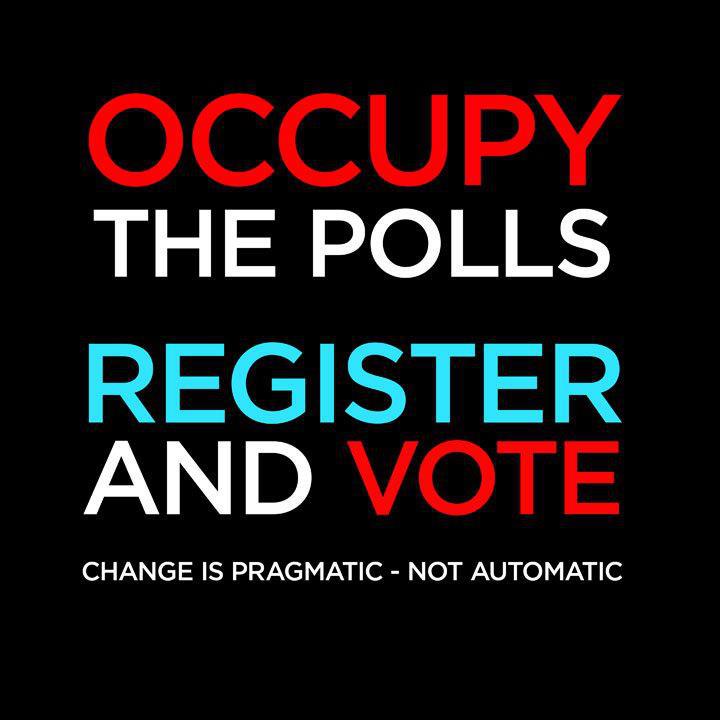
I’ve been following the #Occupy efforts across the country and recently I’ve heard more that the energy spent “camping” could be better applied to making real changes. No movement has been successful without people working both inside and outside the system. It is critical to have those protesting and putting pressure on the system as well as those allied in positions of power to make change happen.

There are a few instances of #Occupy efforts having real local impacts on people’s lives and some policies, but not many. The major outcomes that the #Occupy movement seems to desire are real changes to policies and structures within government and business. I think that locally based #Occupy movements across the country can easily change direction from fending off police crackdowns to making serious changes to local policies and structures. A little “power mapping” can go a long way. Well not everyone can take the time to “occupy” a space or drop their commitments to protest, there are likely many sympathizers sitting in office buildings and at working at home who are important allies. Likewise, there are likely many local and state level politicians who agree strongly with the #Occupy ideals, but need the extra push from citizen involvement to stand up and make changes to policy.

“collective challenges, based on common purposes and social solidarities, in sustained interaction with elites, opponents, and authorities. […] Riots and other flashes in the pan aren’t a social movement–it isn’t a movement unless it is “sustained.” – Tarrow, Power in Movement


1. Local Politics:

One of the best things about the #Occupy movement is that it is decentralized. Not every city is the same, not every occupation has the exact same goals. There are local nuances to politics, policies, and structures that can be changed with a critical mass of people working together. Anger with the system is a positive. Take the time to look through local policies and ordinances that cause undo difficulty or harm to people, whether its related to corporations or not. Enough people can get an issue added to the local ballot with enough signatures. The Occupy Wall Street protesters have decentralized themselves even further to subway stations and other locations to spread their message. I can easily see local #Occupy groups canvassing for a local ballot initiative to change the way corporations can operate within their city. Supporting local candidates for City Council and for State Congress who share the values of the #Occupy movement are a great way to influence policies and structures.

I’ve been fighting to keep this building for the community,” Blakely said. “But I’m an old lady. I had no man-power.

The Occupy Wall Street efforts have a great example of local action with a real impact in Harlem. Protesters staged a sit-in to prevent the gentrification of an apartment complex where the landlord was hoping that withholding heat would make the current tenants leave. The occupiers efforts forced the landlord to grant access to the boiler room and, by emergency order of the city, install a brand new one. This is an excellent example of the potential for #Occupy movement to have real local impacts on people’s lives.

2. Credit Unions:

Now more than ever, people are conscious of who takes care of their money and where it’s going. Big Banks have conducted predatory lending for decades, large lending institutions have collapsed, and the economic crisis has highlighted a need to have greater control of ones finances.

The best place to save your money, have greater control of it, and know that it is helping your local community is in a credit union. Credit unions are cooperative banking institutions that typically operate as non-profit institutions dedicated to serving its members, those who set-up banking accounts and keep their money there. Many credit unions also run programs to teach financial literacy and participate in community efforts.

The Credit Union National Association (CUNA) reported 600,000 new credit union members in 2010. Since September 29, 2011 until reported on November 3, 2011 roughly 650,000 people had become new members of a credit union. One month saw more credit union members than an entire year. The spike in membership coincides with Bank of America’s $5 fee for debit, but also matches with the growing discontent with the financial system and the #Occupy protests. The important thing to note is that joining credit unions isn’t a partisan issue.

3. Cooperative Institutions:

Another key issue that many people have highlighted with the #Occupy protests is that of the harmful practices of corporations. Some of the best places of work have been companies that are worker-owned and run.

“Cooperatives are a reminder to the international community that it is possible to pursue both economic viability and social responsibility.” – UN Secretary-General Ban Ki-Moon

The United Nations has marked 2012 as the “International Year of Cooperatives.” Arguably one of the world’s largest and most influential institutions has decided to highlight businesses and organizations that utilize people power. The UN is talking about cooperatives building a better world: greater food security, balance between profit and people’s needs, and focus on self-help. Some have argued that the #Occupy movement needs to embrace the cooperative movement.

While cooperatives have been around for a long time and they hold great prospects for the “developing” world, they also offer great opportunities for US businesses and organizations. Not too long ago in 2008, the Republic Windows and Doors workers occupied their factory after receiving 3 days notice that the company would be shutting down. After a 6 day occupation, rally at Bank of America, and support from local organizations and politicians, the workers won their fight for the pay they were owed. After winning their occupation, the workers considered restarting the company as a worker-owned cooperative business. In the end they were bought by a eco-building company. It was noted that due to a lack of greater support for cooperative business development in the US they had difficulty finding the resources they needed to put together a cooperative business.

This is a perfect example of what dedicated workers can do at their businesses today. Instead of occupying streets and parks, why not help workers occupy their businesses and establish worker-owned cooperatives. Joining or starting a cooperative organization is an important first step to changing the structures that develop policies that will directly impact our well-being.

The future of the #Occupy movement may seem to be uncertain, but with greater involvement in local politics and policy, increased control over finances, and more people-focused power structures – the #Occupy movement could have a dramatic effect on how our world works.

If you’ve heard of any #Occupy political platforms, candidates, or efforts to influence policy please post them here. Thanks!

“How’s Married Life?”


Alex B. Hill's avatarEight Twelve Eleven

Yesterday, November 12th, marked our third month of married life – but it feels like we’ve been married for longer.

We’ve heard the “How’s married life” questions many times now and I can’t help but think that a one word answer of “great, amazing, or wonderful” just doesn’t suffice. Honestly, married life for us is very similar to the year before our wedding. We were living in Ann Arbor together, paying bills, figuring out each others’ habits, and enjoying finally living in the same city together.

Married life is less of a married thing and more of a good communication thing. Being married didn’t fix anything or alter how we treated each other, but rather it solidified the connections that we had already made with each other. It also officially and legally bonded us, but the most important piece is that we have learned to understand and cherish one another.

View original post 6 more words

Recipe: Thai Curry Pumpkin Soup

We have discovered the perfect Halloween/ Autumn seasonal recipe! Nichole and I had been searching for a good meal to make that included pumpkin  (besides the famous pumpkin dark chocolate cookies). Many of the dishes we found were made with squash or didn’t sound very appetizing, until Nichole found this great spicy pumpkin soup recipe.

This is a great meal to use the season’s favorite vegetable to boost your list of healthy, delicious, and warm meals as the weather cools off and (hopefully) before any snow falls.

We adapted our recipe from this entry on 101cookbooks.com

Ingredients: (serves 4)

  • 2 pie pumpkins (seasonally available)
  • (1) 14oz can of coconut milk
  • Red Thai curry paste
  • Olive oil

Steps:

  1. Cut the pie pumpkins into quarters (I suggest using a strong knife, serrated is better – see above), be sure to save some of the pumpkins seeds to roast and add to the finished soup.
  2. Roast the pumpkin quarters at 350° for an (1) hour.
  3. When the pumpkin has cooled, scoop it off of the skin into a good sized pot.
  4. Put light olive oil on a cookie sheet and roast the saved pumpkin seeds for about 6min on each side, until crisp and crunchy, but not burnt.
  5. Add the can of coconut milk and 6 teaspoons of Red Thai curry paste and bring to a simmer.
  6. Use a food processor, blender, or hand mixer to puree the delicious mixture while adding cups of water to attain the desired consistency.
  7. Eat with garnish of parsley leaves, sourdough bread for dipping, and a chilled glass of Reisling wine.

following the money & the loss of primary care

Health statistics undoubtedly show the shortage of health workers and doctors around the world. Recently I wrote about the growth of hospitals in Detroit and the huge loss of primary care physicians. This is a health issue that is often associated with countries of the “developing” world, but the USA is facing a health shortage of a different kind: access to primary care.

Health financing has had the greatest effect on disparities in health care coverage as well as the structure of the health care system. Through our health care system, physicians have been incentivized to specialize as opposed to be a general medical practitioner. As technology has made medicine more efficient, it has not reduced costs, so “fees remained high, while the time and effort required to perform […] declined (Starr, 1982). The result was an increasing income disparity between physicians who specialized (Specialists) and primary care physicians (PCPs).

The advent of federal support for health care drove the income disparities between Specialists and PCPs. In 1946, the Hill-Burton Hospital Construction Act put $4 billion into the expansion of hospitals as opposed to ambulatory services (Starr, 1982). Ambulatory care services represent the single largest contributor to the increase of hospital expenditures and to decreased performance of the health care system in both the USA and many developing countries (Karpiel, 1994). In 1965, the start of Medicare and Medicaid allowed private insurance companies to continue their practice of providing higher reimbursements to procedural Specialists than to PCPs. Primary care was further marginalized when Medicare developed a policy that linked its teaching payments to a hospital’s level of inpatient, not outpatient, services. Medicare began giving extra payments to hospitals for residency training, pushing many hospitals to increase inpatient care in order to receive higher payments.

“Primary care brings promotion and prevention, cure and care together in a safe, effective and socially productive way at the interface between the population and the health system. The features of health care that are essential in ensuring improved health and social outcomes are person-centeredness, comprehensiveness and integration, and continuity care, with a regular entry into the health system, so that it becomes possible to build an enduring relationship of trust between people and their health care providers.”

“Primary Health Care – Now More Than Ever”
World Health Organization (WHO) Annual Report 2008

In a 2008 survey of Michigan physicians, 34% identified themselves as PCPs, which follows the national trend that two thirds of physicians are Specialists (Michigan Physician Profile, 2009). The report showed that numbers had not changed since 2005 and the number of PCPs entering the workforce equaled those leaving the workforce. The report also highlighted the rising costs of medical education and the debt that many young physicians will carry into the workforce. With this high level of indebtedness, why wouldn’t younger physicians look towards becoming a Specialist as opposed to a PCP with fewer financial incentives? A friend of mine studying to become a doctor noted that many of her colleagues were having conversations about whether to go into primary care or to specialize. Unfortunately the system seems to choose the path for young doctors as opposed to giving young doctors the choice to go into a medical field that they enjoy.

Health care reform has represents a huge win for those fighting for increased access to care along with the Affordable Care Act (ACA) providing a positive framework for many living in poverty. However, the largest reform may have been one that was minimally addressed by the ACA, including 10% bonuses for PCPs under Medicare and $300 million to recruit PCPs for underserved areas. I don’t think 300 million today goes as far as 4 billion did in 1946, nor does a 10% bonus equalize decades of subsidies for Specialists. The health care reform added $11 billion in support for community health centers, but some of that was cut in the 2011 budget deal. The inability of the current health care system to keep up with this new rising demand for PCPs on top of the increase of chronic diseases and an aging population that lives longer, represents the need for reform in our health care financing not just access to health care.

We have a health system that has subsidized specialized care for too long, taken health care to large technology driven hospitals, and limited the ability for new, young doctors to infuse our health system with much needed passion. The real health care reform should have included increasing support for primary care facilities (no cuts) and more for training.

If we want all people to be able to access health care affordably then we need to provide them with the necessary health workforce that can meet them where they are. For many urban poor the Emergency Department (ED) has become their primary care facility. Many individuals working in health care finance world note the cost of ED visits is covered by the premiums of the insured (roughly $1200-$2000/ year) .

Its exciting to see widespread support for increasing access for the uninsured, its amazing to see funding to bolster primary care facilities, but  if we are going to have young doctors who aren’t living paycheck to paycheck, then there needs to be a concerted effort to get doctors into those primary care facilities and greater incentives to join the growing trend in supporting community health through primary care.