
Bringing African Perspectives into US Activism (#USSFafrica)

Thursday and Friday I attended many of the Africa focused workshops – most were very exciting and engaging. They really brought the African perspective into the ideas of the US Social Forum and made delegates think about the US role in issues affecting communities on the African continent.

24 Thursday 10am-12pm

African Unity Towards What? (Pan-Africanism & Nationalism is not enough!) by: University of Kmt

I still haven’t exactly figured out this group and what they do. They run the Kmt Press which publishes books and journals, but all of their sessions that I attended were focused on teaching with an African historical perspective. Their missions states that they are dedicated to educating the new generation of African leaders. Interesting that they are in Detroit and I wonder if they know of the Detroit Public School (DPS) Initiative starting in 1992 where Africa was integrated into school curriculums from math to literature. 

24 Thursday 1-3pm

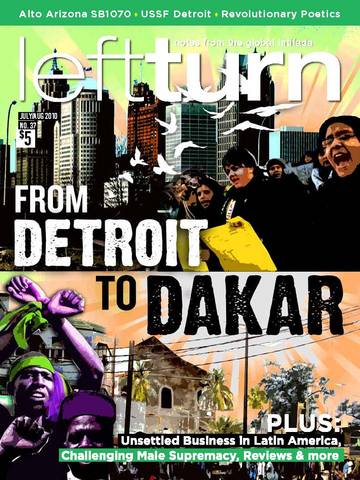
Prioritizing Africa & the African Diaspora Agenda from Detroit to Dakar (D2D) by: Priority Africa Network (PAN)

This People’s Movement Assembly was geared towards bringing African perspectives into the US Social Forum and continue the discussion as preparations are made for the 2011 World Social Forum in Dakar, Senegal. The room was full of delegates from many African countries, Detroit, and US Africa Advocacy groups. 

Briggs Bomba, Director of Campaigns at Africa Action, spoke strongly about building solidarity with those most affected in Africa. He said, “corporate led globalization has harshest effects on those in the perifery, the underdeveloped.” He reminded us that all of us the privilege to attend conferences like these and make the policies need to prioritize the communities most affected.

A delegate from South Africa spoke eloquently about the social apartheid of displacement – ideologically, locations, in decision-making and governments; in voting process lack of people power and transformational action, and in the social mainstream. “We cover many issues, but it is the same struggle. We come from different areas, but share common experiences.” (i.e. colonialism)

Some top issues that came out of the PMA:

  • Militarization in the Congo (DRC)
  • HIV & STDs from Detroit to Africa
  • political economy – effects seen in everyday Africa
  • African defense (defend communities), liberation (not yet liberated), and autonomy

An exciting and dynamic session that really makes me excited for the World Social Forum in Dakar!

24 Thursday 3:30-5:30pm

The New Africa Command & U.S. Military Involvement in Africa by: African Security Research Project (aka: Daniel Volman)

This session was an interesting overview of AFRICOM by some leading scholars on the topic of US national security interests in Africa. The attendees were less diverse than the Detroit to Dakar session and most people came to learn more because it looked interesting and had studied Africa to some small degree in the past. 

Most interesting was when the discussion turned to private military contractors (PMCs) in Africa responsible for fighting wars in Libera, Southern Sudan, and Somalia. A Ugandan delegate actually talked about being trained by PMCs in Iraq to then return and fight the Lord’s Resistance Army in Northern Uganda. Great to hear the perspective of the Ugandan delegate and Dan Volman as well as to see so many people interested in learning more about African issues!

25 Friday 1-3pm

Power-sharing Deals in Africa: Implications for Democracy – The Case of Zimbabwe & Kenya by: Africa Action

This was by far the most organized session that I attended at the US Social Forum. The Africa Action team did an amazing job of gathering great speakers, formatting the session, and bringing people into the room for the discussion. Many African voices were heard from delegates representing Zimbabwe and Kenya. 

In both cases of power-sharing, the speakers agreed that the power-sharing deal was a sigh of relief that stopped the fighting and opened their doors to the international community and economy again. However, they also all recognized that power-sharing was a positive in the short-term, but can be positive as in the case of South Africa when Mandela and de Klerk signed a power sharing deal until the national democratic elections.

Here are some take-aways:

  • A weak state can and will be manipulated (i.e. Museveni in Uganda – waiting for a similar situation as Kenya and Zimbabwe soon, elections next year)
  • “The people” are separated from the power – people-centered in needed
  • Power-sharing allows for lessened tensions and time to create national unity towards something better
  • Coalition governments show defeat of “people power”

Crossposted from SCOUT BANANA

The Africa Track at the US Social Forum (#USSFafrica)

There are a number Africa-related organizations represented at the US Social Forum focused on bringing Africa into the larger US social justice context and ensuring that there are African voices represented.

During the June 22-25 conference there will be 14 workshops presented by: Africa Action, TransAfrica, HealthGAP, Support Darfur Project, All African Peoples Revolutionary Party, University of Kmt, Priority Africa Network, Community Alliance for Global Justice, African Security Research Project, Athletes United for Peace, Detroit to Dakar, and International Development Exchange (IDEX). See list below:

24 Thursday (10am-12pm)

  • Africa & Pan- Africanism in this hemisphere: fighting neo-colonialism, racism, class, and gender oppression
    • All African Peoples Revolutionary Party @ Cobo Hall – Rm. W2-61
  • Building a Pan-African Solidarity Movement in North America
    • Support Darfur Project @ WC3 – Rm. 317
  • AIDS isn’t over: Solidarity in the fight for justice for people with AIDS worldwide
    • HealthGAP @ WA – Rm. 1472
  • Gender Militarism and US Corporate Violence in Oil Producing States
    • Priority Africa Network (PAN) @ Cobo Hall – Rm. O2-40

24 Thursday (1-3pm)

  • Africa Unity Toward What? (Pan-Africanism & Nationalism are not enough!)
    • University of Kmt @ Cobo Hall – Rm. O2-38
  • The Politics of Exploiting Need: AGRA (Alliance for a Green Revolution in Africa), the Gates Foundation, & the Food Crisis
    • Community Alliance for Global Justice @ UAW – Rm. Taurus
  • Migration & Militarization of U.S. and European Borders: A Comparison & Contrast
    • Priority Africa Network @ Cobo Hall- Rm. O2-40
  • Youth-led Activism in NYC’s Public High Schools
    • Support Darfur Project @ WBC – Rm. WB2
  • The World Cup, Sports & Social Justice: The Beautiful Game & Beautiful Struggle, Together
    • Athletes for Peace @ WSU S – Rm. 29

24 Thursday (3:30-5:30pm)

  • International Financial Institutions & Climate Change: Community Impacts in the Congo
    • Africa Action @ WC3 – Rm. 337
  • The New Africa Command & U.S. Military Involvement in Africa
    • African Security Research Project @ UAW – Rm. Pres

25 Friday (1-5pm)

  • Prioritizing Africa & the African Diaspora Agenda from Detroit to Dakar (D2D)
    • Priority Africa Network @ Cobo Hall – Rm. W2-69
  • Educating African People: K12 through Ph.D. levels
    • University of Kmt @ Cobo Hall – Rm. O2-38
  • GM Crops – the poisoned chalice: perspectives & victories from South Africa
    • International Development Exchange (IDEX) @ Cobo Hall – Rm. D3-23
  • Power Sharing Deals in Africa: Implications for Democracy – The Case of Zimbabwe & Kenya
    • Africa Action @ WSU S – Rm. 261

Crossposted from SCOUT BANANA.

Gray Panthers, Youth in Action, and the Non-Profit Industrial Complex (live blogging #USSF)

Here are summaries of some of the workshops I attended today:

Organizing Across Communities: Age & Youth in Action by the Gray Panthers of Metropolitan Washington

A workshop run by a sweet group of older (wise) people focused on bridging the gap of age in activism and building an intergenerational movement. Gray hair = gray panthers. Some critical thoughts on organizing with age in mind: 

  • #1 = Build Common Values!
  • utilize mentors – teach activist history, learn from older movements and successes
  • Listen! old and young listening to each other
  • Build skills – young activists can learn from old
  • Mutual RESPECT
  • Both young and old, ask each other for what is needed

Movement Building: Storytelling, Framing and Messaging by: Dream Act

Caught this workshop at the end with YP4 2008 Fellow, Sonia Guinansaca! Working with the Dream Act, Sonia spiced up the Youth Space (Basement of Cobo Hall near Michigan Rooms) with some excellent tips on telling your story to build support. She focused on making your cause personal. Awesome work! 

Growing Wings – Evolving out of the Nonprofit by: The Movement Strategy Center (MSC)

Tackling the concept of the Non-Profit Industrial Complex elegantly with a fun skit, one of the key members of the MSC who helped build the YP4 blueprint curriculum, Jidan Koon and colleagues from Serve the People, APAL, and Anak Bayan packed the 7th floor room of the Wayne State University Student Center. The building’s shifting and shaking could not deter the young leaders’ voices as they talked about operating within and without non-profits. Some key concepts to take away: 

  • Meet people where they are: house meetings, coffee shops, events at clubs
  • Connect to project with field trips
  • Create a collaborative/ cooperative organizational model
    • delegate responsibility
    • distribute leadership
    • collective decision-making/ agreements
    • build family/ organization culture of helping each other
    • create voluntary levels of involvement
  • Have a 40/60 gender rule to keep balance

reporting from "ground zero" (live blogging US Social Forum #USSF)

The United States Social Forum launched in 2007 based on the successes and excitement of the World Social Forums. The year 2010 is being marked by various regional events like the US Social Forum to take the place of the World Social Forum. So the fact that Detroit was chosen to host the US Social Forum (USSF) is very exciting.

As exciting as it is, it also happens to enable numerous aspects of privilege. As over 10,000 people converge on Detroit, people often to refer to the city as “ground zero” for the economic crisis. The weekend before the USSF, Young People For (YP4) held their regional training at the Renaissance Center for their Midwest fellows. I attended the opening event with alumni and partners to meet the new class of fellows. Like the World Social Forum, YP4 is breaking their national training into regionally based events. Many of the fellows noted that before they came to Detroit they had thought of the city as a place NOT to visit. With a view over the riverfront, looking across at Canada, many mentioned that they had no idea Detroit was so beautiful. Others commented that they had no idea Detroit had a downtown and tall buildings.

These large convergences of people bring Detroit into a brighter light and change the perceptions of many. There are plenty of things to be worried about in Detroit, but not just because it is “Detroit.” Likewise, as the city fills with activists and radicals of all shades, the majority of Detroit residents are unaware of what is even happening. YP4 Director, Rebecca Thompson, informed us that many of her family members in Detroit and friends had no idea that the USSF was happening the next day. I’ve worked with a few local Detroit organizations that canvassed some neighborhoods to let people know about the USSF, but the impact was minimal at best. How can this happen? How can residents of a city, businesses, and even some government not know that 10,000 people are coming to their city to infuse it with new ideas, people, and solutions to social problems?

This could be a result of the slightly disorganized activities of the USSF organizing committee. I won’t go into the stories that I have heard of the power struggles between organizations working to put this event together, but it is worth noting that thoughtful improvement can be made. A thought that occurred to me the other day was: What if the USSF was organized with local groups tackling specific issues host a topic and organize like-minded groups across the nation so that this conference is less focused on talking and more on building potential solutions that Detroit organizations can use and others can take home?

After hanging around, surveying the organizations tables with my girlfriend (Nichole :-D), we headed about 2 miles away for the march. We were a bit behind and stopped in the shade to watch the chanting crowd go by. At the length of almost 8 city blocks (or more) it was an incredible sight to see in a city often referred to as a “ghost town.” And yet privilege came out again as local Detroiters asked, “What is going on?!” and the Detroit Red Cross asked me, “Do you know what all these people are doing?” YP4 staffer, William noted that if this was in DC, everyone would know with posters, twitter updates like crazy, and just the general buzz.

Unfortunately residents of Detroit are not as privileged to be as connected as those in DC. Likewise, residents, in the case of the USSF, have not been a focus of organizing or informing. This has become a common theme that I have noted within government and other activities to rebuild Detroit. Focus on the people who are actually in Detroit! The activists who come for this weekend may hold some new ideas about the city, but in the end they will leave and what will be left for the city of Detroit?

your thumbprint stays the same

Over the course of your life you will grow and your fingerprints will grow along with you, except for your thumbprint. Michigan is much like your fingerprints and Detroit is the thumbprint. As the state has grown (sometimes negative growth), Detroit has remained the same, “trapped” if you will, in its post-automobile slump. Alright, so I know Detroit isn’t in the thumb of Michigan, but it was nice analogy. Beyond the images of Detroit’s destruction lie the seeds of real growth. The economic situation of Detroit isn’t all lost and the state doesn’t need to sign on to stimulating reforms to make it happen.

Few people seem to grasp that the economic situation of Detroit reflects that of the state of Michigan. Where, unfortunately, politics plays a larger role. For many years there has been an unspoken clash between the former economic power that was Detroit and the political power that is Lansing. With Detroit’s decline, no region of Michigan has been able to match and replace the city’s production power and “driving” economic engine. To the rest of the world Michigan is Detroit and until politicians in Lansing recognize that fact – then the state may be doomed. However, the issue goes far beyond image, as I wrote before. One important point made in Professor Ritchie’s post, Is Michigan a Third World Economy?, is the need for “strong political leadership” which is missing in both Detroit and the state of Michigan as a whole.

The one thing that I have found to be a constant in Detroit is the sense of community. From people who live in the city at large, the various enclaves and districts of the city, and the groups and organizations that work to make Detroit a better place. Unlike any other major city, this sense of community needs to be fostered and developed. The city needs to stop trying to bring in people from the suburbs and from outside the city. There needs to be a greater focus on the people who are already here. Living the struggles of Detroit and working to make the solutions.

Thankfully there are examples from initiatives in other struggling cities across the US to give direction as to how Detroit can begin to thrive again. The Governor and many experts have talked about innovative industries. Detroit and dense city centers like it can capitalize on the new “green” industry. But will “green” be enough to “save” Detroit? Hardly, and the third installment about Detroit will highlight solutions happening and the people who are pushing to make their communities better.

detroit is gotham without a batman

batman_truck

Michigan’s “third” world city, as it is often referred to, is a place where community stands out over commerce. It is best known as a place you would not want to visit and best recognized (on the big screen) through scenes of armageddon and the end of the world as opposed to its architectural prowess; qualified as “the nation’s finest.” Since the race riots of 1967, and earlier, the city has never been able to recover its image. Continually in movies and the news Detroit is marked as a pit of a city resembling in some parts a war torn city where bombs have reduced neighborhoods to rubble. Where is this gothic city’s batman? How is it that Detroit matches the “third” world?

I will answer the second question first.

Since August I’ve been living and working in Detroit focusing on youth empowerment and community service/ engagement. What I have seen has been this common image of a destroyed Detroit, but I have also had the privilege of seeing some of the incredible initiatives launched by the communities and people of Detroit. I have to disagree with the many who would say Detroit is “third” worldly. The majority of its population may fall far below the poverty line, but it is absurd to describe the city as a “third” world.

The recent Time Warner “Assignment Detroit” journalists “embedded” in the city have taken to writing similarly scathing articles of Detroit and have perpetuated the destroyed image of Detroit. Example from the New York Times: Ruin with a View. There are a few organizations attempting to recover and reclaim the image of Detroit from these corporate story weavers, notably Inside Detroit tasked with getting more people to know about Detroit: “they know it, they love it.”

Many people that I have worked with talk about the similarities between the developing “third” world and Detroit. Poverty has many similarities and often looks the same from the outside, but poverty has many stories and the circumstances are never the same. My friend Cory recently described what is and has been happening in Detroit as a man-made disaster. I couldn’t agree more. It is no hurricane, flood, or earthquake, but definitely comparable: from rapid industrialization, capitalism, racial tensions and white flight to relying on a solitary automobile industry, even the long running political climate in Detroit has been a contributing factor. “Third” world is just another negative descriptor for the city and an attempt to glamorize the city’s economic decline.

Stay tuned for the my answer to the first question this week (to be continued. . .)

* Note: I am not really giving “answers,” but my thoughts based on learning about and being located in Detroit over the past year. I wouldn’t dream of giving Detroit answers after just one year.

twelve to twenty-two

A lot happens in 10 years.

Around new year’s (2010), my Aunt handed back letters that family members had written to themselves at a new year’s celebration in 2000. I was apprehensive to open my letter; was I a profound twelve year old, was it going to be embarrassing, how much had I changed?

The letter, written in my poorly scribbled cursive, read:

Yo Al,
Right now im at a 2000 millenium new years party. I’m making an aircraft carrier in lego’s. I am twelve years old. When you are reading this you will be 22. Hope you are having fun. With lego’s I have humvees, F-14s, a harrier, jeeps, chinook, and working on an aircraft carrier. I hope you made it out of high school and into college.
Love, Alex Hill

I may have been mostly preoccupied with my lego creations at the time, but at least I had some ambitions for my future self: having fun, graduating high school, getting into college. On January 1st, 2010 I had definitely achieved all three. I was spending the new year in New Orleans with my girlfriend, Nichole, of almost a full year, watching the fireworks over the Mississippi River. I had definitely graduated high school and gone on to college. It may have been an uncertain choice as to where I went to college, but ended with a great experience at the end of 4 long years of study at Michigan State University’s James Madison College. I unfortunately never completed the lego aircraft carrier and can’t look back and remember how amazing that turned out.

Legos seem to have been the most important aspect of my life at twelve. I guess I need to evaluate what that means for my development as a child and 10 years later. I love legos! For as long as I can remember I’ve been constructing things out of legos, but I was very particular as to how this worked. I was very conscious of color and design. I had a meticulous system of organization for all my lego pieces and enjoyed the creative problem solving that occurred. My lego corner in the basement was my safe haven for all my thoughts and creations to come to life. Legos taught me success and failure, they allowed me to deconstruct, learn by doing, and try again.

So, legos were important, but did my twelve year old self have any idea what was to come next? In just one year I would be thirteen and my entire life would be given purpose and direction. That summer I would meet Fr. Joseph Birungi and found the organization, SCOUT BANANA, the following summer I would travel to Uganda and see the harsh realities of our world at the ripe age of 14. The years that follow after that were just as loaded with significantly life altering experiences, people, and places, but thirteen was the pivotal year from which all of my current life springs.

Its crazy to look back and see that in just one year, my thirteenth year in this world, my life would be impacted beyond my wildest dreams. That year following the beginning of the new millennium would set me on a path taking me across three continents, to 16 different countries, having critical experiences that would lead me to meet hundreds of amazing individuals who would all have a profound impact on how I developed as a person, a friend, and a leader.

A lot happens from twelve to twenty-two. In just two months I’ll be turning 23 and I have no idea what the next year will bring. I’m grateful to my twelve year old self, but even more grateful for the people who made it all happen: my parents, grandparents, leaders, mentors, friends, girlfriend, colleagues, trainers, co-workers, randos and strangers – Thanks!

ending charity: alone, is not the answer

>

“Giving in its purest form expects nothing in return.” – Anonymous

There are a lot of confusing buzzwords being thrown around these days: ending charity, dead aid, patient capitalism, impatient optimists, and investment over aid. What does it all mean?

My initial thoughts on this subject were spurred by zyOyz founder Steve Jennings’ repost of an article titled: “Charity alone not the answer to tackling poverty”. Well I agreed with the article’s basic premise that just giving money is not the only solution or the best, I was troubled by the article’s absolute statements that business models and capitalism will save the world.

The article, reposted from the Financial Times, notes the work of the Acumen Fund founded by Jacqueline Novogratz, which invests in small businesses with a social impact termed as “patient capital.” It has become a highly successful model, however Novogratz is quoted as saying: “We need creative approaches to reinvigorate capitalism and make it more inclusive.” The most inclusive business model that I know, with high degrees of success, is the cooperative model based on needs of those involved, inclusion, and participation. Looking at history, capitalism has generated exclusion: great amounts of wealth for many people, but it has also perpetuated extremely flawed systems that create great degrees of poverty for many people. The evidence is in any major city where the consequences of capitalism lay bare the desperation of good people who are left with nothing.

At the root of the article, “Charity alone not the answer to tackling poverty,” is the long-running debate on whether investment is more effective than aid. Professor Bill Easterly made popular the fact (through his book, “White Man’s Burden”) that over $1 trillion in aid has been given to Africa over the last 50 years with limited positive results, Dambisa Moyo has termed this “dead aid” and calls for a complete end of aid to Africa. Others like Bill and Melinda Gates, who have given vast amounts of aid (which they often call “investment”) to Africa with their foundation, label themselves as “impatient optimists.” They are hopeful for the future and want more done at the present time.

However, there is a problem with their impatience that many have critiqued. Impatience tends to push solutions that are ineffective. Ian Wilhelm gets further into this topic in a blog about “irrational aid.” In the post he writes about Alanna Shaikh’s critique of ineffective aid, such as outdated pharmaceuticals and medical equipment that has no use in the field. This argument is countered by Isaac Holeman’s disagreement that well that aid may be irrational, it provides immediate personal stories of need to bring in more donors. I have to agree with Alanna in saying that this irrational, possibly impatient, aid does more harm and basically no good.

How have we now moved from decrying the failures of charity and aid to highlighting the benefits of business models and the capitalist system back again to smiling about greater benefits of monetary investment in people and ideas? Where is the line drawn between investment and aid? As far as I can tell it is mostly semantic. Isn’t aid when transparent, effective, and driven by best practices an investment? Giving an investment is essentially the same as giving aid or charity.

Investment is the buzzword used by social enterprises, microfinance, and has become the new fad in international development organizations. I think that it is important to make a distinction between what is effective and what is not. Aid can be very effective and investment can be very ineffective. The reverse is also true. Where does effective aid change from being a type of investment? When experts talk about the broken aid system do they forget that the broken aid system is merely a reflection of the broken financial system. The same interests and individuals who have run financial systems have run foreign aid systems.

The real issue in this debate need not be if businesses are better than charities or who’s money is better spent. What is most important needs to be the question of, “How?” The systems, structures, and practices that implement aid and drive investment need to be cooperative, inclusive, needs based, and people-centered – in one word: effective. If you are looking for a return on investment (ROI) or accolades for your donated or invested dollars, then maybe you should reconsider why you give?

Written for the SCOUT BANANA blog. 

the coming revolution in african health care


african power fist Pictures, Images and Photos

Before you have anything else, you have your health. Hopefully if you have nothing else, at least you have your health. Unfortunately, for millions across the African continent this is not an absolute fact. Even more unfortunate is the fact that many Africans have no ability to change their health status. They are trapped in a system that is driven by Western market based, profit driven health care systems. As the failures of Western development practices come to light, alternatives to what has been are becoming increasingly visible. These alternatives will form a revolution in African health care delivery. This revolution will be fueled by health care delivery models that will give local communities agency in the provision of their own health care. Community-based models involving cooperative financing, proven para-professional training, new information technology, and social enterprise for the social good will drive the revolution in African health care. People will be able to determine for themselves, their level of health.

What does “Health” mean anyway?
This is a question often left to remain ambiguous. For the purposes of my writing I will provide a comprehensive view of “health” and all that is entailed in sustaining and maintaining health. “Health” in all instances will refer directly to the “basic needs” of a person in regards to health care.

Healing, like health, is obviously rooted in the social and cultural order. […] To define dangerous behavior, and to define evil, is to define some causes of illness. As the definition of evil changes, so does the interpretation of illness. To understand change in healing, we must understand what it is that leads people to alter the definition of dangerous social behavior. It can easily be accepted that health and healing in Africa are shaped by broad social forces.

As Feierman and Janzen state, health (and healing for that matter) are directly linked to social forces. If a comprehensive understanding of health is to be understood, it must be studied in the context of politics, economics, and other societal structures.

Health is defined by the World Health Organization (WHO) as, “a state of complete physical, mental, and social well-being and not merely the absence of disease or infirmity.” The WHO and many other international organizations recognize that this broad and encompassing definition of health. Where this definition becomes ambiguous is what qualifiers meet, “a state of complete physical, mental, and social well-being.” In 1978 the WHO made primary health care its number one objective with the Declaration of Alma Ata. However, even this statement had no clear definition of health or its qualifiers.

Feierman and Janzen provide a more clear definition of the qualifiers of health in the preface to their volume: The Social Basis of Health and Healing in Africa,

[…] it [health] is maintained by a cushion of adequate nutrition, social support, water supply, housing, sanitation, and continued collective defense against contagious and degenerative disease. Such a view is necessary if we are to understand those contexts in today’s Africa where health levels deteriorate, and where they improve.

These authors provide a complete set of qualifiers, or “basic needs,” of health that can be researched further to understand where political, economic, and social structures interfere with sustaining and maintaining health and where health care is inadequate.

Health care should thus be understood as the system and structure that works to provide the above defined “basic needs” to each individual. Often this role falls to governments, but sometimes is taken up by communities and organizations when government’s fail to provide these basic needs.

This blog series will cover four key areas identified that will fuel this revolution in African health care: cooperative financing, para-professional training, information technology, and social enterprise. SCOUT BANANA works to tackle social medicine (social, economic, structures) while enabling others to provide medical services. Be sure to follow closely to learn more!

Written for the SCOUT BANANA blog.